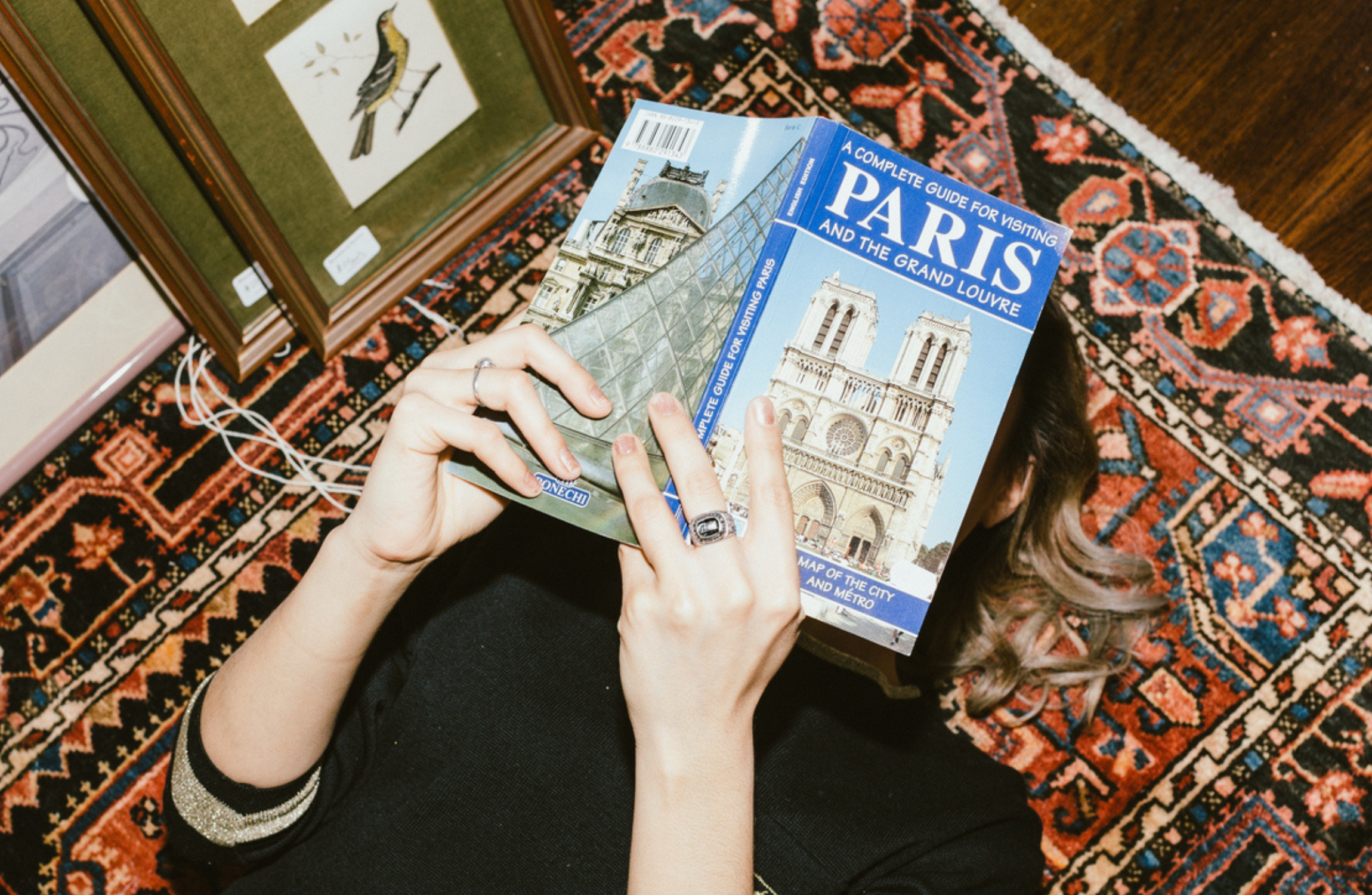
Go on a wayward literary treasure hunt in this new exclusive short fiction by a Peter Carey Short Story Award-winning writer.


I must have heard him tell the story of the Island of the White Crocodile a thousand times during the years we spent together, often in the company of starry-eyed fans or adoring creative writing majors, and more often than not when he’d had too much to drink. The first time I heard it fit both those criteria. We were in a whisky bar at the welcome drinks for a writers’ festival in Poitiers, a town somewhere in southern France I couldn’t point to on a map now if you asked me. The crowds were small but the tab appeared infinite.
The story goes, he said to all within earshot, that a bountiful pirate treasure was buried somewhere in the Sulu Sea, on a strip of land, its coordinates lost to time, known only as the Island of the White Crocodile. For those who sought to dig up these riches, there was one pivotal condition: if at any point while digging you conjured the image of a white crocodile in your mind, the treasure would vanish. He liked the story, he said, as a metaphor for the power of naive art-making—for the Rousseaus and Grandma Moseses of the world. True wealth came only to those who did not seek it; beauty lay in discovery rather than design.
I was his literary agent by the end of that week, having swooped in and poached him from that green young thing in Sydney. As we moved up in the world together I heard every permutation of the story: sometimes it wasn’t the Sulu Sea but the Caribbean; sometimes the treasure was ancient Filipino artefacts, other times stolen Nazi gold. But it was always a white crocodile and that same impossible challenge: just don’t think of it. Like trying to get a song out of your head.
Long after Poitiers we were at another festival, this one in New Orleans, with much larger crowds but a far leaner bar tab, when he asked me for the first time whether I’d ever heard the story told by anyone other than him. I gave it some thought, then said I didn’t think I had. This seemed to displease him, and he scratched a careless hand through his greying goatee.
‘It’s one of those stories I’ve always carried with me,’ he said. ‘I’ve been telling and retelling it for as long as I can remember. But recently I was thinking about working it into a new book, so I went to look it up online—double-check its origins, do my due diligence—and I couldn’t find a trace of it. Nothing. A few folk legends about albino crocodiles in Borneo, but nothing whatsoever about vanishing treasure. I searched for weeks. I even roped in Eve—’
(his assistant’s name was Eva)
‘—but she came up stumps as well. So then I asked a few friends—’
(unlikely, as he had none other than me)
‘—and I even asked Mother—’
(clearly a lie; he’d shipped her off to a remote care facility and called her strictly once a year on the anniversary of his father’s death)
‘—but none of it got me anywhere. I went through all my old notebooks. I dug up short stories I wrote back in kindergarten. We’ve known each other how long?’
‘Eighteen years,’ I said.
‘So I’ve been parroting this silly old story for that long at least, if not even longer. But where did it come from? Did I make it up? Dream it? And then convince myself I’d heard it from someone else? You’ve heard me prattle on at these things, I’m a walking bloody encyclopaedia. It’s not like me to forget one of my references.’
I let him mull it over while I picked up the cheque, and didn’t think about vanishing treasure or white crocodiles again until a few months later when he missed the deadline on a new manuscript—a first for him. I called his studio from the back of a cab and could tell I was on speakerphone.
‘Greta—’
(the new assistant)
‘—posted about it on Reddit. It only took two days before someone replied. A librarian from Texas. Can you believe that? Listen to this—’
(the clearing of papers, the clacking of keys)
‘—he says: “this story of buried treasure and a white crocodile is mentioned in Memory (2008), edited by AS Byatt and Harriet Harvey Wood, which in turn quotes Art and Illusion: A Study in Psychology of Pictorial Representation (1960) by Ernst Hans Gombrich:
…a man who promised his dupe a wonderful treasure-trove at a certain spot at midsummer midnight. There is only one condition attached to it—on no account must he think of a white crocodile while digging, or the treasure will vanish.”’
The line went quiet, and I realised he was waiting for some sort of marvelled reaction. I clicked my tongue and whistled excitedly as I paid for my cab.
‘Still,’ he said, ‘hardly a definitive source. A reference in one old out-of-print book to another reference in another. It’s all a lot of hearsay. Stories within stories. And I don’t know about this “midsummer midnight” malarky, that’s new to me. Anyway, Gombrich is dead—’
(clearly a great personal inconvenience to him)
‘—but his daughter might be willing to show me his notes from Art and Illusion. Apparently the old coot was a rabid archivist.’
Before I could remind him he was well over deadline—before I could invoke the phantoms of all the editors, copyeditors, proofreaders, printers, designers, marketers, social media managers, sales agents, booksellers, BookTokkers and adoring public waiting for him to complete his next novel—the line had gone dead, and when I checked the email inbox Greta had given me access to, sure enough, I discovered a first-class ticket to Vienna.
‘It’s one of those stories I’ve always carried with me,’ he said. ‘I’ve been telling and retelling it for as long as I can remember.’
That was the last conversation I ever had with him. It would take me close to a year to piece together what he really learned from Ernst Hans Gombrich’s daughter, through a trail of digital breadcrumbs later augmented by the in-person testimony of a Malaysian boatman named Choi, and a young Kiwi writer named Camilla, who claimed for many years (but no longer) to be his number-one fan. She was exactly his type: lithe and precocious, independent but deferent. Naturally he had met and wooed her in the bar at a writer’s festival, this one in Auckland, not long before our final phone call. I was unable to attend, thus cannot attest to the robustness of the bar tab. She was there promoting her debut novel while he was rounding out the publicity trail for his twelfth, and they hit it off and spent a week together holed up in a greige three-and-a-half-star hotel. Many months later, when he asked if she would join him for a spontaneous getaway to a remote Philippine island, she must have still had their time in that hotel in mind. Or perhaps she was imagining his name attached to a blurb on the cover of her second book. Either way, she said yes, packed a bag and boarded a plane—poor thing.
More deadlines came and went. Greta, at my request, granted me access to his iCloud browser tabs, his Google Maps history, his AirTag locations and the Dropbox folder where he gathered all his notes. There were receipts for exorbitant lunches and more first-class plane tickets filed under ‘research expenses’. From Vienna he travelled to London then Malmö. Emails between him and his assistant spoke again of ‘stories within stories’, while the increasingly harried emails from me and his publisher—civil at first, becoming quickly litigious—were filed away separately and rarely if ever opened.
According to his notes, Lena Gombrich, daughter of the late art historian, had volunteered an archive box of research pertaining to her father’s Art and Illusion. This included the transcript of an interview between Gombrich Senior and a London-based Indo-Chinese folklorist, who in turn mentioned a Swedish salvage diver who in his old age consulted on recovery operations for the Nord Stream pipelines, but as a young man had run with a heroin smuggling crew between Macau, Mindanao and the tip of Borneo in the 1940s, using the tail end of the war as cover, their motorboats slaking past in the shadows of American warships beneath the wide tropical sky. From his Chinese, Filipino and Malay crewmates, this Swede had heard the story of the Island of the White Crocodile, one of many such legends they shared to pass the time. But the details were mutable. Yes, the treasure had to be dug up (as Byatt and Wood had quoted by way of Gombrich) on a specific night of the year, but ‘midsummer’ was an alien concept in the tropics, so other retellings stipulated ‘the night of a typhoon’ or ‘the night of a fingernail moon’. Some versions claimed the treasure was a haul of solid gold finery hidden by a rogue Ming dynasty trade ship in the mid-1400s; others believed it to be Spanish doubloons lost in the aftermath of the Battle of Mactan in 1521. But one thing remained consistent with every retelling, from the smugglers to the Swede to the folklorist to Gombrich to Lena to my client to me: that white crocodile.
I watched silently from my Melbourne office as the days rolled past and the new book went unfinished and his browser tabs blossomed with legendary reptiles. I read about white crocodiles in Setu Babakan and the Kallang River, and three variations of the myth of Seri Pahang, a white crocodile demon that inhabited Malaysia’s Chini Lake. I learned a great deal about Yamashita’s gold, and the dozens of Manila galleons, their bellies split with bullion, lost by Spanish colonists en route to Acapulco. Then I discovered more tickets (business class) to Kota Kinabalu airport on the northern tip of Borneo. It appeared that the Swede (now in his nineties) had pointed my client to Choi, the grandson of one of his old crew mates, who ran a tour boat business out of Kudat on the waters of Maruda Bay.
Before I tell you about Borneo though, and before I bring poor Camilla into the story, I should express, for my own conscience’s sake if nothing else, that by this point I was worried—not just for the new book and my own stake in that, but for my client, who I did also consider my friend. Ever since that phone call in the back of that cab, I’d been trying to wrap my head around what might compel him, a globally successful author of moderately diverting crime thrillers, to throw it all away on some hypothetical scavenger hunt. He certainly didn’t need the money.
But then I thought back to what I really knew of him—what I’d learned in the fallow moments between drinks at fellow authors’ launches and long publishers’ lunches, when the conversation lulled and the background music in the bar paused between songs and suddenly, for just one moment, there was nothing there to distract him from himself. I thought back on all the times a request would come in for him to blurb an up-and-coming author’s book, and he would see that they were some ingenue who had ‘pivoted’ from a career in law or medicine to write a semi-autobiographical breakout novel that had already collected more literary accolades than he’d earned in a lifetime of redrafting and drudgery, and he would say: no. Or rather, he would tell me to tell them no. He’d been educated at Sydney’s best schools, studied literature at Oxford and clawed his way into the Iowa Writers’ Workshop at the age of twenty-eight. Fiction had been burned into him like a hot branding iron, but every word he’d ever written, every sentence he’d ever formed had to be prised out of him, screaming, like a cat from its carrier. There was nothing he hated more in others than natural talent. I believe he wished, more than anything in the world, that beautiful things would come easily to him. But of course the moment you wished for it, that easy beauty disappeared; such wealth comes only to those who do not seek it.
Subscribe to stay in the loop
Be the first to read new stories, discover publishing opportunities, and access resources. For people who love great writing.
Long before I personally set out to find Choi in his rusted boatshed in Kudat, I read about him. More emails to Greta and more morsels from Dropbox spoke of long nights looking out across the Sulu Sea, Choi and my client hunched over a navigator’s table, drinking from sweaty bottles of Tiger, analysing old maps and dissecting the legend that Choi’s grandfather had passed on to the Swede. As it turned out, there was one more crucial detail to the story which Choi’s uncle, nephew of the heroin smuggler himself, had revealed over an impromptu dinner with Choi’s extended family: this treasure, whether of Filipino or Spanish or Chinese or Malaysian origin, was to be found at the base of the tallest cherry tree on the island. This narrowed things down significantly; within the Sulu region, true cherry trees only flourished in the Cavite and Palawan regions of the Philippines.
He spent months traversing the coast from Brunei to Sandakan. He flew to Davao, Hong Kong and Taipei, raiding ports, antiques stores and libraries to acquire more half-disintegrated maps. Back in Kudat, with Choi and Greta’s help, he translated them from Malay to Tagalog, Mandarin to Spanish, English to Cuyonon. Then he spent another month (screening my calls while sending eggplant emojis to Camilla all the while) cross-referencing the names of every one of the almost two thousand islands in Palawan and Cavite across each of those languages. Until one day, just before dawn, he came sprinting with a whoop from the boatshed, right out into the warm waters of Maruda Bay like a backwards Archimedes leaping from his bathtub.
In the northern reaches of Palawan, halfway between El Nido and the Cuyo Archipelago, was a volcanic island five kilometres long and three kilometres wide; a Dutch freehold purchased by the wealthy hotelier Johan Ambroos not long after the end of Japanese occupation. According to Google, Apple and any modern atlas it was named as such: Ambroos Island. But on the maps my client had cobbled together and spent the better part of seven months in Kudat deciphering, it had another name, common across every language: Palawan sailors from Puerto Princesa called it Isla ng Buwaya Puti; Malaysian fishermen in the 1800s knew it as Pulau Buaya Putih; Chinese traders as far back as 900 CE dubbed it 白鱷魚島. And one ancient map, purchased from a witch doctor on the island of Siquijor with the remainder of the advance for his new (still unfinished) book, showed the route of Spanish pirates in the mid-1600s, including their preferred stopover en route from Coron Bay to the Sulu Archipelago: Isla del Cocodrilo Blanco.
A far cry from a desolate smuggler’s cove, today the island was the pride of Ambroos Hotels. One side of the atoll boasted a private beach, three dozen villas built into the jungle, four different restaurants with a range of international cuisines, a spa and wellness centre with temperature-controlled plunge pools and an infrared sauna, and a private airstrip. Meanwhile the northern side of the island remained uninhabited and inhospitable: a prickly crown of virginal volcanic mountains pitted by fifty-foot drops into the churning sea below, but also—according to the Ambroos Sulu website—home to one of Palawan’s most stunning groves of cherry trees.
I thought back to what I really knew of him—what I’d learned in the fallow moments between drinks at fellow authors’ launches and long publishers’ lunches.
He paid for the villa with his last valid credit card and arrived—as either luck or design would have it—on the 24th of June. Midsummer’s eve. Once he checked in, witnesses say (and bank statements confirm) he spent the day at the bar, piling up empty San Miguels and Red Horse lagers. At one point, he wandered back down to the docks and struck up a conversation with one of the boatmen there. Camilla arrived just after 3pm on a twelve-seat Cessna from Puerto Princesa which only just made the cutoff; a tropical depression was brewing in the east and the flight crew would be forced to stay overnight. The resort staff went table to table, delicately reassuring guests that while the typhoon would be passing safely to the north, they should still be prepared for heavy winds and rain. Any pre-booked snorkelling lessons or excursions to the island’s volcanic peak would have to be postponed for at least forty-eight hours. Refunds were available on request. At hearing this, my client laughed. Not just a laugh, Camilla recalled, but a giddy half-scream. Conspiratorially, breath stinking of beer, he whispered to her of serendipity: What were the odds? The two of them there on a midsummer’s eve, on the night of a typhoon. A choir of Filipina women moved through the bar, singing local folk songs. Camilla listened attentively while the music washed over my client. He ordered more drinks and made sure she’d drunk her fill. Then he leaned back in his rattan chair and raised a glass to the fingernail moon.
Later that night, Camilla woke on a black sand beach. She didn’t recall when or how she’d lost consciousness, let alone suspect it had anything to do with an illicit compound procured in an alleyway during one of my client’s many trips to Kuching. Her skull was throbbing and her skin prickled with tropical rain. Fine volcanic granules clung to her hair as she lifted her head to get her bearings. The lights of a catamaran were disappearing around the north-east corner of the island. The dark ocean grabbed at her ankles, and she found a duffel bag deposited in the sand near her feet. Inside it: rope, a compass, a torch, a pickaxe, a collapsible shovel and, mercifully, a raincoat. She wrapped it around her shoulders and found a note in the pocket:
Before you can go home, you must do one thing for me. Find a grove of cherry trees. Locate the tallest one. Dig at its base, as deep as you can.
Do this by midnight. Thank you. I’m sorry.
Camilla swiped the rainwater from her watch face; she’d left her phone in the villa before heading to the bar. Quarter past nine. She stood, swaying, and let out a scream. The sound dissipated instantly in the howl of the storm.
When he’d first invited her, over a string of lascivious texts, she’d assumed he was joking—making a bit out of his well-known impulsiveness. But then the itinerary had arrived in her inbox the following day. She didn’t ask questions. She didn’t even tell her housemates she was leaving. And now she knew nothing about the island she was stranded on.
Of course, I understood this was all by design. In organising everything and offering no detail about their romantic getaway, my client had avoided any potential references to a certain reptile. Camilla was a blank slate, an ingenue: someone to whom beautiful things came easily. She never knew that he’d refused to blurb her debut novel. He’d never even read it. He’d found a different use for her instead.
The tide was coming in. Black seawater drowned the surrounding rock pools in even blacker spume, and the wind whipped warm needles of rain against her eyelids. Terrified though she was, Camilla figured her best chance of getting off that beach, and getting off that island, was to do what the note (scribbled in the same languid cursive that had signed the title pages of a dozen books on her shelf back home) instructed.
The tallest trees, she reasoned, would grow in the most fertile soil. So she headed west, upland, towards the island’s volcanic peak. The moon sat invisible behind the churning storm clouds. Her only usable light came from the cheap plastic torch and the futile glow of her (wi-fi only) smartwatch. The jungle looked too dark, too impenetrable, so she took her chances negotiating the ragged sandstone karst. Once her fingers were shredded and bloody enough, the pain ceased to be remarkable and became blandly consistent. She gripped the rock face whole-handedly and surged forwards, pushing the agony and betrayal down below to the place where bad relationships and great writing tends to come from.
Her navigational gamble paid off: after two hours of groping her way half-blind through the downpour, Camilla came upon a thick grove of cherry trees. The tallest sat at the very foot of the volcano’s incline, a grey skeleton abandoning the last of its May blossoms to the typhoon. It looked anaemic, sick; Camilla almost felt sorry for it. But after checking her watch and finding it thirty-five minutes to midnight, she took the pickaxe and shovel and desecrated it further, rending its roots and flinging clumps of black soil back over her shoulders, the wet earth ceding easily to her tools. Not knowing exactly where at the base to aim for, she dug an impressively deep doughnut-shaped rut around the entire circumference of the embattled tree. With every swing she anticipated the clang of metal and a sudden vibration up her burning forearms—because why else would a person go digging on a remote island at midnight? She knew there must be something hidden there, something deemed more valuable than her own life. Believing that only this buried secret could save her, she dug so deep the whole tree gave way.
The typhoon passed. Midsummer midnight came and went. After five hours of digging, Camilla found nothing.
Flashlights scythed the jungle. A search party wrapped her in hypothermia blankets and carried her back to the hotel, where she found her room ransacked—every drawer emptied and every bag turned inside out. As dawn broke the hotel staff performed a full headcount. Even having recovered Camilla, one guest was missing.
It is unwise to travel the globe shooting your mouth off about buried treasure. The wrong kind of people get ideas. Witnesses say that a trio of muscular foreigners, adorned with the sort of neck tattoos that conjure up assisted coups and mouths gasping under washcloths, surrounded my client in the hotel bar not long after he’d taken his young companion to the docks and returned without her. They’d gone with him to his villa, ostensibly to keep drinking and wait out the storm, but from that morning onwards every email went unread and the Dropbox sat dormant.
So I stopped being a reader and stepped into the story. I flew to Vienna and took a taxi from the airport. I asked Lena Gombrich about her father’s book, the folklorist in London, the Swedish smuggler and the Macanese-Filipino-Malay heroin route. She looked at me, bemused, before patiently repeating what she’d apparently told my client almost a year earlier: the Island of the White Crocodile was a story in a children’s book her father used to read to her on holidays in a great big hotel. It aligned with the themes of Art of Illusion, so he’d borrowed it wholesale, putting his own European spin on it with the reference to ‘midsummer’. There was no further mention of it in his research. No folklorist in London. As far as she knew, and as far as I know now, there was never any Swedish salvage expert or motorboats stuffed with junk slaking past in the shadows of American warships.
I stopped being a reader and stepped into the story. I flew to Vienna and took a taxi from the airport.
There was a man named Choi, though. I skipped London and Malmö—reasoning that all my client had done there was take himself out for long lunches, then walk around digesting, supplying me with tantalising AirTag data—and flew straight to Kota Kinabalu. In his boatshed on Maruda Bay, Choi told me how my client, clearly undeterred by the dead end in Vienna, had appeared out of thin air and paid for a year of his services upfront. They’d pinpointed Ambroos Island by its local name alone—Isla ng Buwaya Puti—shortly after he’d arrived in Kudat, meaning the rest of his South East Asian scavenger hunt was all for show; a self-inflicted farewell tour. Choi had no living relatives, let alone a wizened uncle with in-depth knowledge of Palawan flora, but my client had recounted to him recurring dreams of a tall cherry tree at the base of a volcano. It seemed the closer he got to the treasure, the louder it spoke to him—even though he knew that at the end of the day, someone else would have to dig it up for him. Camilla quite literally, but in another sense: me.
…a man who promised his dupe a wonderful treasure-trove…
I walked from Choi’s boatshed down to the water and let it lap at my calves, just as my client had in his moment of revelation—though now I realised that was likely a fabrication too. In lieu of Spanish doubloons, he’d left me a story—a digital treasure trove—and I’d been fooled, enthralled, the whole time sifting through it.
Not long after I returned from Borneo, bitter and deflated, a calendar alert informed me of the anniversary of his father’s death. Normally it would be my job to remind him to call his mother. This year I called instead. The nurse at the care home put me through to her room. I tried to explain that her son would not be visiting anymore, but she didn’t seem fazed. She thought he was still in Iowa.
Feeling a little sick with myself, I asked offhandedly if she’d ever heard a story about a white crocodile and vanishing treasure. The memory came back to her with absolute clarity: a picture book they used to read on holidays in a great big hotel.
On the same day I engaged a ghostwriter to complete the unfinished manuscript, I contacted the head of marketing for Ambroos Hotels. She happily confirmed the existence of an illustrated children’s book—complimentary in-room merchandise—which recounted traditional folk stories from each of the hotel chain’s exotic destinations. Ambroos Madagascar. Ambroos Reykjavik. Ambroos Sulu. It had been out of print since the early 1980s—something of a collector’s item on eBay now, apparently—but she found an old photocopy, scanned it and sent it to me.
I hung up the phone and stared at a picture of a cartoon crocodile, pale as snow, wrapping its thick tail around an overflowing chest of treasure beneath a cherry tree. It grinned at me from the page, and I felt myself teetering on the brink of the same void that had swallowed my client whole. Somebody drew this cartoon. Somebody wrote this book. They must have heard the legend somewhere. I could call back the head of marketing, ask for names and access to their archives. I could pick things up right where he left off.
But then I remembered my role in the story: I was to follow his clues, tell the tale as I’ve told it, and then, having done all that—stop digging.
Even though Camilla returned empty-handed that night, each of us profited from the legend of the white crocodile in different ways. My client found something that had eluded him his whole life: a story he believed only he could tell. I was the sole beneficiary of his will and, in turn, the massive uptick in sales from his old catalogue once his disappearance made the news. And Camilla got her second book out of it: a highbrow thriller about a young writer seduced by one of their literary heroes. I’m ashamed to say I didn’t read it at first—I believed I knew the story as well as I cared to. But one night in my apartment, dreaming as I had been for months of typhoon winds whipping petals through a grove of cherry trees, and of wet fingers clawing not down into mud but up from underneath it, I woke in a sweat and went out to my balcony and read it in a single sitting. It was good—excellent, in fact. I saw much of his influence in it. I called her that morning to offer my services, but she was already spoken for by one of the big New York firms. Even over the phone, I could tell she was speaking to me from within a whirlwind of people. I knew those sounds, that energy, and it made me weary. Her life was just beginning, though. I wished her well.
Before I let her go, I asked one more thing—to help clarify fact from fiction. In interviews with police and press, she’d mentioned a choir of women who had sung for them that night in the hotel bar—but only now, in her book, had she specified what they were singing: a folk song in their native tongue that recounted how the island got its name. Was that true?
It was. And if my client had ever bothered to read her first book—the one she’d asked him to blurb and he’d told me to reject—he would have known it was a book about Camilla’s grandparents, Filipino migrants to New Zealand after the Second World War. He would have known that his carefully chosen mark, flown to Ambroos Island specifically for her naivety, was fluent in five languages including Tagalog.
‘A white crocodile,’ Camilla said to me. ‘That’s what they sang about. I could picture it so clearly. This might sound bizarre but later that night, when I was alone on the island, digging in the muck—that whole time, even when I thought I might die, I simply could not get the image from my mind.’
This story features in our New Short Fiction series. Read writing by Melanie Cheng and Elizabeth Tan, with more to come. Think your story should be next? We’re looking for short fiction from the country’s best and brightest writers—find out more!