The heyday of the girlboss has left a complicated legacy, as Lena Dunham’s Famesick attests.


The 2010s were peak main character energy for millennial women. Early 2000s hipsters were put to pasture, along with their skinny jeans (though I’ve never stopped wearing mine), and girlbosses dominated the culture. We were ‘leaning in’ to success. Julia Gillard’s misogyny speech rang through our ears. Hillary was going to be president. Beyoncé’s ‘***Flawless’ amplified the words of Chimamanda Ngozi Adichie’s ‘We Should All Be Feminists’ to the world. The future was female. We had the branded merchandise to prove it.
We were also, in true millennial vernacular, problematic. The book of the times was Roxane Gay’s manifesto Bad Feminist, a rejection of purity politics. A survivor of sexual assault, Gay argues for the desperate need to dismantle sexism, while also advocating for a more inclusive and intersectional movement. Women could be loud, have blind spots, contradict themselves. ‘I embrace the label of bad feminist because I am human,’ writes Gay. ‘I am messy. I’m not trying to be an example. I am not trying to be perfect. I am not trying to say I have all the answers.’
The future was female. We had the branded merchandise to prove it.
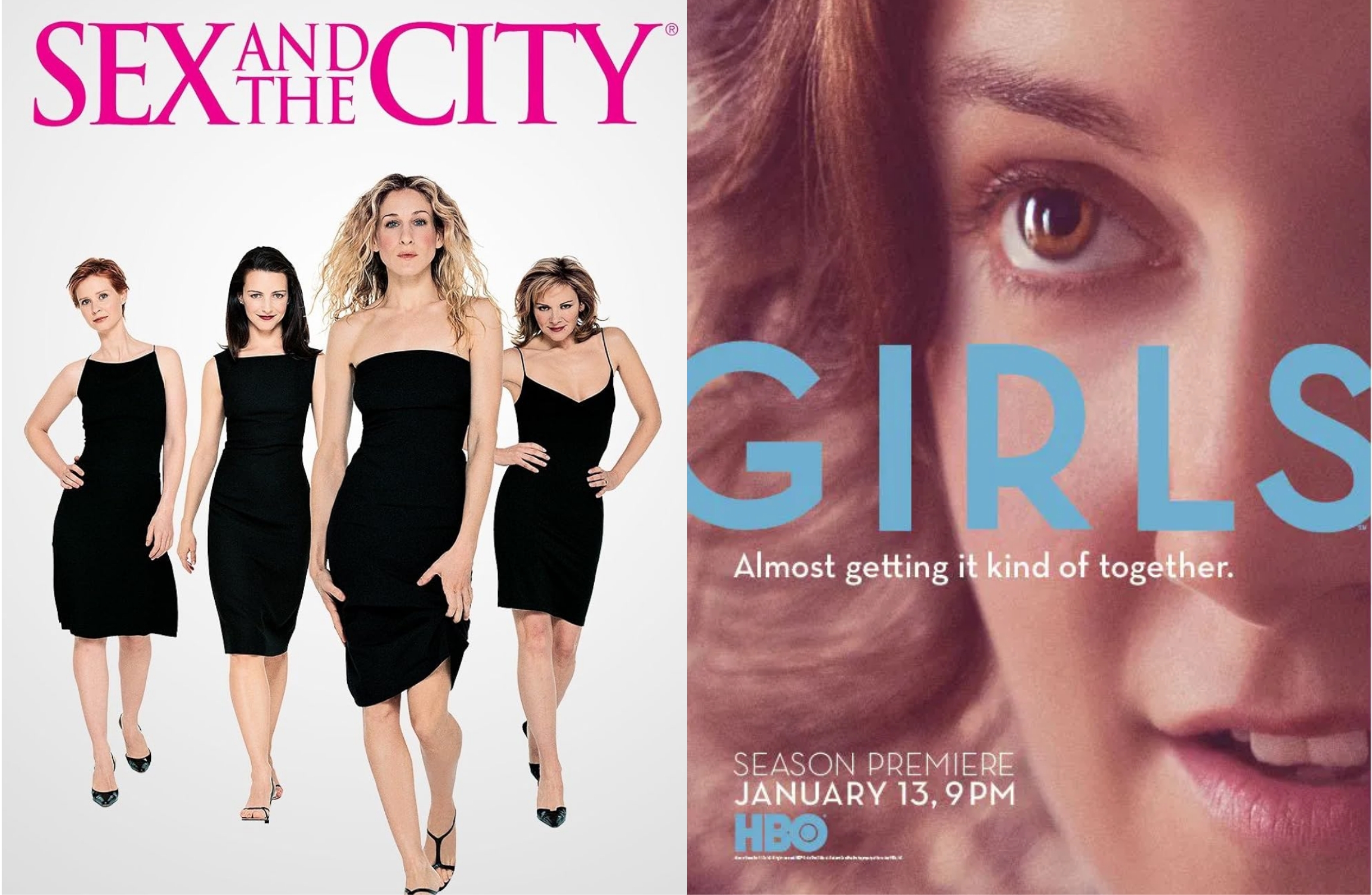
Representation itself became both a political act and a cultural battleground, with a tendency towards the confessional. We could see this ethos captured in feminist media like The Cut, Rookie and, most notably, Jezebel, where commentators, including rising-star staff writers Lindy West and Jia Tolentino, explored issues like body politics, misogyny, identity and the perils of self-optimisation through a personal lens. The era-defining shows like Girls, Fleabag and Orange is the New Black depicted the teeth-chattering humiliations of modern life through the stories of imperfect, complicated women—a sharp turn from the glamour of Sex and the City’s independent women.
Feminist writers were building on decades of activism and art when they wrote about their bodies, sexualities, and working and living conditions in the 2010s. At the height of #MeToo in 2017, a movement initiated by Black feminist activist Tarana Burke’s efforts in the early 2000s and supercharged by fallout from the investigation into sexual abuse perpetrated by Hollywood producer Harvey Weinstein and other media elites, feminist millennial writers were influential voices that had contributed to its mainstreaming.
In Australia, we saw iterations of this new cultural force in places like Mamamia and Feminartsy and in the rise in profile of writers like Clementine Ford, Jamila Rizvi, Ruby Hamad, Rosie Waterland, Clem Bastow and Nakkiah Lui, as well as our own eventual reckoning with sexual discrimination. The Stella Prize was founded in 2012, with the aim of addressing the gender imbalance in local literary prizes, as well as in review coverage.
It was a formative era for the world as we know it today, and yet some say its feminism is now dead. In an op-ed in the Atlantic on Lindy West’s now infamous polyamory memoir Adult Braces, a lightning rod on the subject of what a progressive woman should be like that has seldom been experienced since the height of the mid-2010s blogosphere, staff writer Helen Lewis decided:
It is also the tombstone for Millennial Feminism—that swirling brew of Media Twitter, blog snark, the Great Awokening, whaling on Lena Dunham, fat positivity, and boring straight people identifying as queer through accounting tricks.
Little did Lewis know that millennial feminism’s death knell had already been inadvertently sounded by one of its most high-profile proponents, Lena Dunham—if not in 2012 when Girls first hit screens, then in 2014 when she published her own debut memoir, Not That Kind of Girl. The tell-all, rumoured to have received a $USD3.5 million advance, came on the heels of her meteoric rise as the twenty-four-year-old creator and star of the HBO series Girls which positioned her as the voice of the generation, or as her character Hannah Horvath famously went on to qualify, ‘a voice…of a generation’.
Subscribe to stay in the loop
Be the first to read new stories, discover publishing opportunities, and access resources. For people who love great writing.
By that point, Dunham was already a figure of feminist adulation and controversy. She was lauded for challenging beauty standards, calling out misogynistic behaviour, incorporating pro-choice plot lines into the show and was a prominent, outspoken advocate for Planned Parenthood. She was also accused of being the beneficiary of nepotism and privilege, and admonished for lacking diversity in her casting. When her memoir came out, the hot-take climate—which is worse now as short-form videos and large language models erode our attention spans and critical thinking skills down to a nub—had reached new levels of furore, accusing Dunham of unchecked narcissism at best and at worst of molesting her own sibling. As Dunham writes in her new memoir, Famesick, published in April, her name ‘became a mark of excellence, then a signifier of a kind of millennial absurdity and finally, a punchline that felt more like a slur’.
Not That Kind of Girl suffered from the same blinkered naivete as Adult Braces, the hurried presentation of something put out into the world without consideration of whether it’s needed or how it will be received. For Dunham, this was ‘the beginning of a long cycle of publicly airing and apologising, airing and apologising’. Reflecting eleven years later in the Famesick chapter ‘Female Author’, Dunham notes on an early leak to the press: ‘I had included things I wasn’t even sure I was ready to share. It had seemed so abstract until it wasn’t.’ Famesick, on the other hand, is not that.
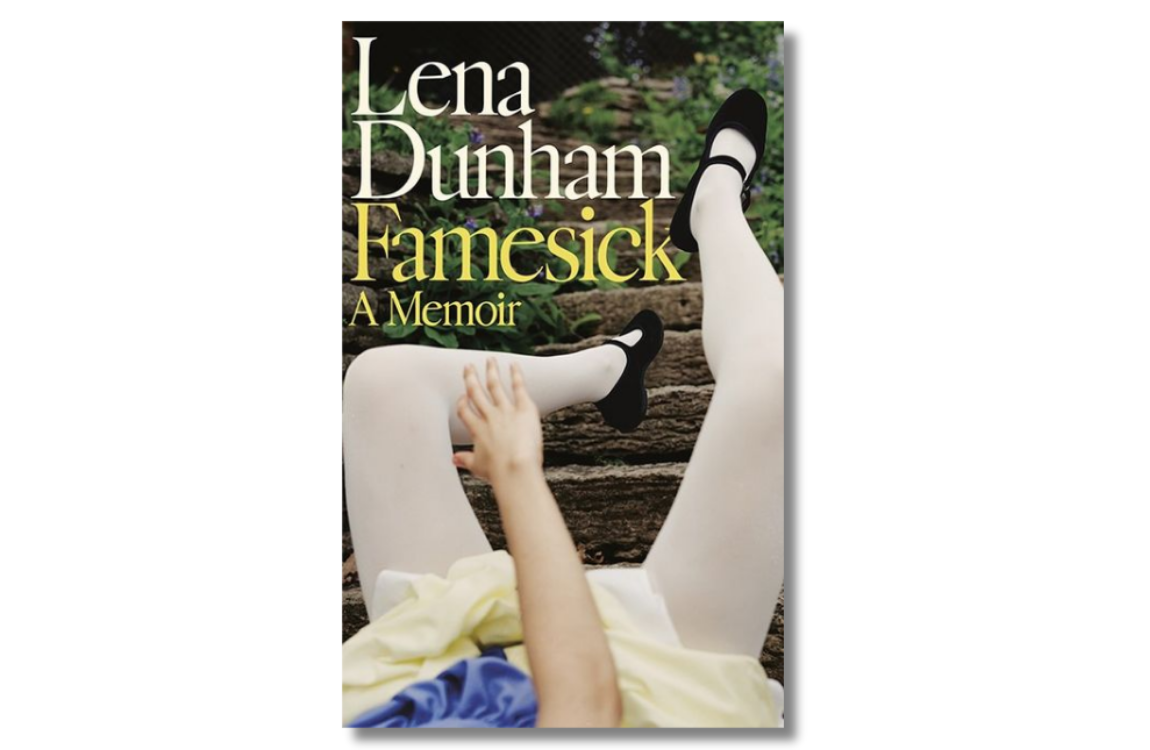
It took Dunham eight-and-a-half years to write her follow-up—and it shows. With the benefit of hindsight and time away from the bright spotlight that swallowed Dunham during her Girls years, she writes about that time in her life with a clarity, self-awareness and bittersweet wit that puts those of us who lived through that time—seeing our world reflected through the show, shuddering at her highly publicised missteps—right alongside her.
Highlights include bringing her short-film Tiny Furniture to life on a shoestring budget and developing the first season of Girls. Less pleasant are the horrors of her early dating life, tinged with low self-worth and violent and indifferent sexual partners, even worse than what she weaved into the show, and the turbulence that comes with success. Her looks were incessantly scrutinised by online trolls and the media, including, ironically, by Jezebel, which put a bounty out for unretouched images of her Vogue cover. She also became a highly visible subject of political ire from both the right and the left as an active campaigner for Barack Obama and Hillary Clinton. (‘I wish I’d just posted a BERNIE sign in my window instead,’ Dunham writes of the failed 2016 Clinton campaign.)
Little did Lewis know that millennial feminism’s death knell had already been sounded by one of it’s most high-profile proponents.
Famesick reveals that the dark side of fame was compounded by a sense of imposter syndrome and a need to people-please—inclinations that millennial feminism was at pains to dismantle in the 2010s. Despite her status as the driving-force of Girls, she notes that cruelty was levelled from all corners. Friends became alienated by her success, while requests for favours quickly turned hostile. ‘If you make yourself out to be a bottomless resource, people will frack. They can’t help it,’ she writes. Adam Driver’s weirdness on the set is just as prevalent as in the character he played on the show, though taking on a more sinister tone with allegations of screaming, spitting and throwing chairs.
Meanwhile the painful dissolution of her friendship and creative partnership with Jenni Konner, the writer fifteen years her senior with whom she created Girls and the feminist newsletter Lenny, is palpable. The once ‘symbiotic’ female alliance is revealed to be more complicated, with an entrenched power imbalance based on their age gap. Funnily enough, her breakup with Jack Antonoff, the subject of public scrutiny and at least one famous PowerPoint presentation, seems to hurt Dunham less. Readers get the sense that her first respectful, egalitarian relationship is inextricable from Dunham’s simultaneous professional ascent. ‘This was the prize I was being given for every encounter that had left me bruised and bleeding, every boy and man who had used my body as a cum sock,’ she writes.
More debilitating is chronic illness (the ‘sick’ part of the book title) and mental health issues. Dunham has suffered from severe endometriosis, Ehlers-Danlos syndrome, fibromyalgia and a traumatic episode with a Q-tip that destroyed her eardrum, as well as OCD and disordered eating. She details her struggles, including dissociative episodes, addiction to pain medication and coming to terms with infertility, with introspective candour. Read alongside the pressures of her ascent, the book becomes another instalment in what Katie Gatti Tassin calls the ‘ambition-to-burnout’ canon.
Where Famesick is lacking, though, is in Dunham’s addressing of her and Konner’s 2017 defence of Girls writer Murray Miller, who was accused of rape by the actress Aurora Perrineau, an assault she alleges occurred in 2012 when she was seventeen. Dunham doesn’t specify this incident by using Perrineau or Miller’s names, but says she was high on pain meds after undergoing a hysterectomy and does not remember writing the statement. This is a point of contention for many, myself included, who wish Dunham would take more accountability. As think pieces abound about how harshly she was treated during her heyday, the statement, what she calls ‘a terrible mistake’ and ‘the narcissism of fame in its purest form’, is arguably her worst one. She writes:
I could try—would have tried, if I had written this book any earlier—to explain to you all of the backstory that informed the statement I don’t remember writing, the specificity of the relationships, the obligations and emotions bound up in the decision to defend someone against an accusation I had no business attempting to debunk, no clear reason to fight, no fucking right to an opinion on. But none of that matters. It does not materially change what happened, the shame I feel about it, or—most crucially—the pain it caused. I was so deep in my own distress—physical, emotional, existential—that I had ceased to be able to imagine or invest in anyone else’s.
This perhaps explains why she hasn’t yet addressed the recent allegations surrounding the Safdie brothers, who she depicts in the book as ‘the smartest boys [she] ever met’, with their crew of ‘boys, always boys’. To be fair, neither has the rest of Hollywood, with Josh Safdie being feted as a Best Director nominee at the Academy Awards earlier this year.
It took Dunham eight-and-a-half years to write her follow-up—and it shows.
But as with West, and their contemporary Jia Tolentino, recently under fire for her own acts of political inconsistency and self-delusion, the backlash Dunham experienced in response to the Miller statement was a sign that ‘bad’ feminism has its limits. This is something society—and perhaps Dunham, in capturing its paradoxes so acutely in Girls—has always known, even if the breakneck speed of social media means we’ll move on to our next target of criticism in no time.
However, Helen Lewis—who falls under the umbrella of ‘reactionary feminism’, the 2021 term coined by Mary Harrington to describe former progressives who have since veered rightwards or into TERFism—and others critical of millennial feminism want to throw the baby out with the bathwater. They seem to think the cultural changes of the 2010s are what we have to thank for the current backlash against women’s rights and progressive politics more broadly. Lewis writes of ‘liberals driven into the arms of MAGA by a brush with cancellation’ and that Roe v. Wade ‘fell in part because Ruth Bader Ginsburg refused to retire’, a fact that makes her wince because ‘one of the most-lauded books of Millennial Feminism was Irin Carmon’s Notorious RBG’. In other words, we woked too hard and turned people against our cause. Or, to use the parlance Lewis denounces, we girlbossed too close to the sun.
But all waves of feminism have been met with concerted efforts to roll back women’s gains: second-wave feminism gave rise to Ronald Reagan and Phyllis Schlafly in the 1980s. The raunch culture of the 2000s could be seen as a call and response to the riot grrrl and girl power movements of the 1990s. As writer and attorney (and millennial feminist) Jill Filipovic states in Slate, it was the ‘decades-long brick-by-brick work of the anti-abortion movement’ that overturned Roe.
The rise of the manosphere and the tradwife may be new phenomena thanks to social media, but their values are retrograde in nature. ‘One of the saddest things about Bad Feminist is most of the essays are still timely,’ Roxane Gay said recently in a Service95 interview with Dua Lipa. And in a world where Gen Z women are more likely to identify as feminist than both Gen X and millennials, ‘we do ourselves a disservice,’ as Filipovic argues, ‘to look at the current cultural climate in a vacuum separate from the gains women made in 2010s’.
All waves of feminism have been met with concerted efforts to roll back women’s gains.
The feminist beliefs of millennial women, nor their cultural impact, aren’t dead and buried—they’ve evolved. For as much heat as Dunham and Girls garnered for her messy vision of progressive womanhood, she clearly hit an enduring nerve as Gen Z audiences are finding and loving the show more than ten years after it premiered. A voice of a generation indeed and one you’ll find making TikToks while she bed rots, writing on Substack and sharing her thoughts on her podcast, utilising the platforms that have replaced Tumblr and Twitter in her carefully plotted comeback.
Despite my disappointment with the way Dunham handled Perrineau’s rape allegation against Miller, this time around she’s using her popularity for a good cause, as millennial feminist icon Cher Horowitz would say. Dunham is shedding light on women’s pain and reproductive health in a time when healthcare is in the gutter. She’s also standing counter to recent trends that have re-amped punishing beauty standards, criticising the current obsession with thinness she calls the ‘ozempiced-out moment’. So, too, West, Tolentino and Gay—and a whole generation of progressive women who made a name for themselves in the 2010s—are not relics from a long-gone era but active, thinking writers. To completely dismiss them, as Lewis encourages? Well, that’s not very feminist—bad, millennial or insert your word of choice here—of us now, is it?