Local writers are refusing to give up on creatively fulfilling lives.
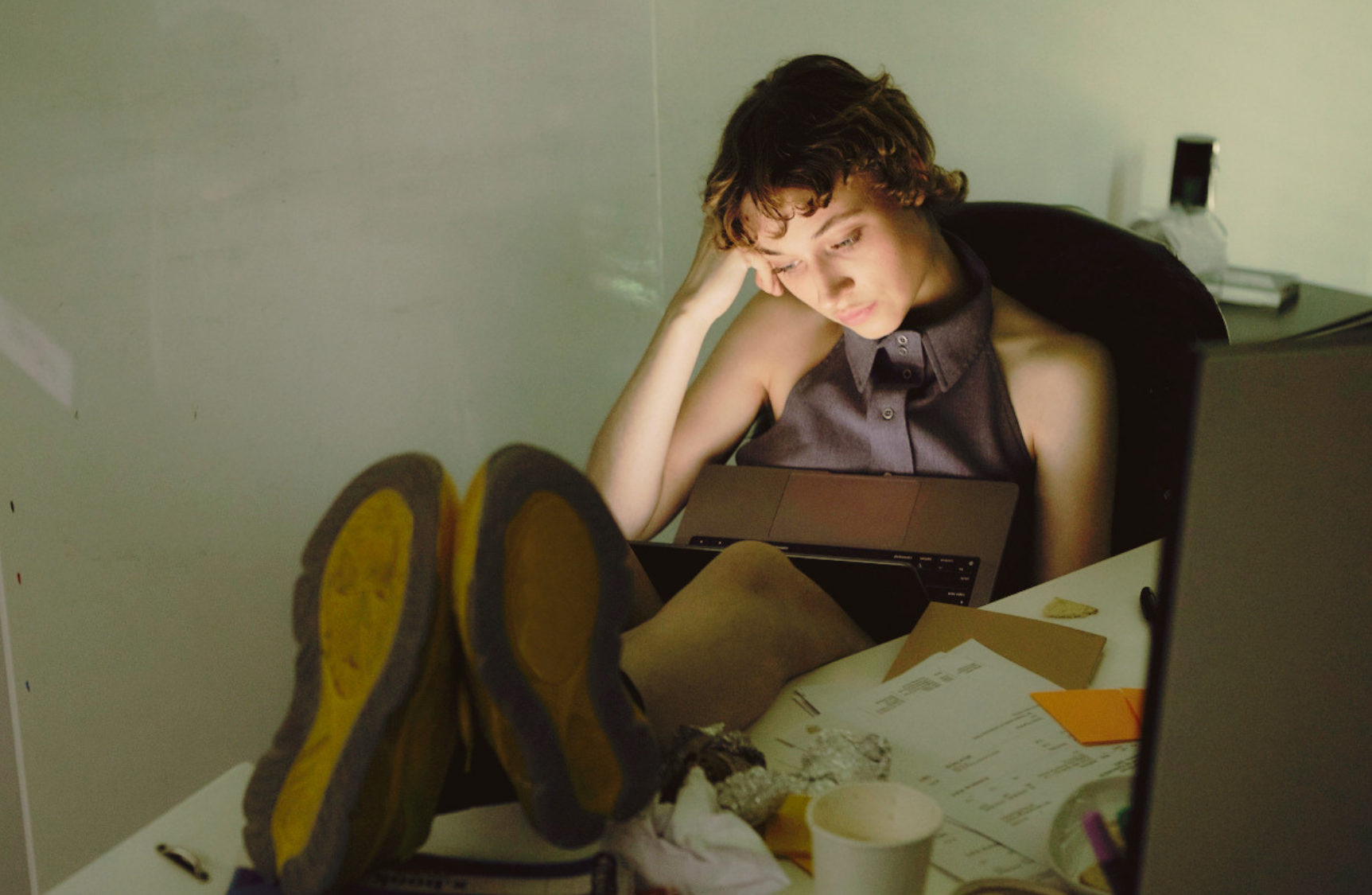


In my first creative writing class at university, I arrived a cliché in Doc Martens, a stickered MacBook tucked under one arm, my lofty dreams under the other, only to be told that I would probably never make it as a writer. Maybe two per cent of you lucky ducks will. The others are going to drop out, go into communications, advertising or—god forbid—become copywriters. If you want to make money, this isn’t the degree for you, folks. The lecturer gave us the opportunity to get up and leave right then and there, and a handful of students actually did. The rest of us stayed, buoyed by the faint memory of our high school As and our dog-eared paperbacks of Virginia Woolf. QUT: university of the real world. Indeed.
More than ten years later, amid a cost-of-living crisis, the ‘Australian Dream’ is crumbling—and if I’m honest, my creative one is starting to show some cracks too. Many writers, like most people right now, are spending half their pay on rent, fighting rising interest rates, price gouging, petrol hikes and an economy in which a pint costs more than a bánh mì which costs more than a T-shirt from Shein. Creative work is being devalued everywhere you look—funding is shrivelling, book prices aren’t rising with inflation, AI is displacing writing work and independent presses are being swallowed, with corporate publishing growing more rapacious about the bottom line than ever. To add insult to injury, we’re also getting paid less. According to the annual survey conducted by the Australian Society of Authors, 76 per cent of respondents reported earning under $15,000 in the previous financial year from their writing. As Jennifer Mills wrote in Overland: ‘Our rates of pay aren’t just unsustainable. They are unsurvivable.’
Subscribe to stay in the loop
Be the first to read new stories, discover publishing opportunities, and access resources. For people who love great writing.
I was complaining about this in an East London pub when a friend of a friend said, ‘Can’t you just use it?’ As in, shouldn’t these precarious conditions be fuel for my writing? It astounds me—then and now—that people still buy into the starving artist myth. That all this anxiety and deprivation are good preconditions for meaningful art. As Omar Sakr wrote: ‘If you think great art will come from starving, you’ve never starved before…’ On the flip side are the well-intentioned—my parents, mostly—who ask things like ‘Have you tried podcasting? Have you tried YouTube?’ These questions point to the myth’s contemporary opposite: the thriving entrepreneurial artist, wheeling and dealing on Substack and Patreon, performing hot takes on BookTok, wringing every creative impulse into content.
Many writers, like most people right now, are spending half their pay on rent.
Our increased online opportunities have opened doors, for sure—but they’ve also handed us a new set of expectations, trapping most of us somewhere between these two fictions. My dear friend Siobhan—aka Gogo Bumhole, a theatre and drag performer—for example, has multiple part-time gigs, including caring for a Sydney cavoodle who dines exclusively on fresh salmon and filtered water. A London designer I know spent eight hours playing a corpse on a film set—but hey, at least it wasn’t AI. The fallacy in all of this is that juggling freelance work buys you more time for creative pursuits. It often doesn’t—at least not in this economy, where the grind is less about taming your consumerist appetites and more about just getting by.
Still, I wish I could be this kind of fearless hustler. Instead I sit within another contemporary tradition: the content-marketing slog that Bosnian Australian writer Ennis Ćehić captured in his debut, the short fiction collection Sadvertising—a taxonomy of the soul-crushing adjacent-to-creative work that we do to survive. Strip back the absurdity and satire, he told me, and ‘the core tension is much more human. It’s the simple desire of creatives wanting to be artists: copywriters wanting to be poets, art directors wanting to be painters.’ Writing the book, he said, coincided with his departure from advertising. ‘I was, in a way, saying goodbye to that world and accepting a different kind of precarity,’ he told me. ‘I realised I’d rather be a writer than an adman, even if that meant less certainty.’
I, on the other hand, am still on this diabolic train as an operations manager, finding pockets of time before work, after work, on weekends, in my sleep—which is something Ćehić did before cutting his hours back. ‘The real challenge wasn’t just time, it was energy. By the time the week ended, writing became something I had to carve time for, push myself into, rather than something I could properly inhabit.’ So the options, as I currently understand them, are to burn out or to spoon-feed a dog named Coco. While the latter sounds like more fun, neither are viable long-term.
Given the circumstances, it’s a wonder we creatives produce anything at all—and yet, stubbornly, we do. And as it turns out the black-comedy acuity of modern working life as an artist, despite my prickling at the suggestion, has become a subject of contemporary concern in itself, steamrolling into a prevailing literary flavour. Perhaps the most influential books of the era have been Ottessa Moshfegh’s 2018 novel, My Year of Rest and Relaxation, which takes place just before the GFC and features a protagonist who opts out mentally via prescription meds, and pretty much all of Sally Rooney’s oeuvre, with her incisive and bingeable explorations of millennial desire under capitalism.
The options, as I currently understand them, are to burn out or to spoon-feed a dog named Coco.
Closer to home, Madeleine Gray’s Green Dot, in which a twenty-four-year-old with three arts degrees lives with her dad in Sydney and moderates comments for a soulless news site, evokes something grimly recognisable about Australia’s changing fortunes. As does Max Easton’s The Magpie Estate and Paradise Estate (with a third novel, Now Autonomy, coming this August) which see his characters sharing townhouses well into their thirties, shambolically living on top of each other, owning little and eating poorly all on the increasingly desperate, possibly quixotic quest for creatively meaningful lives.
This doesn’t sound like life as it was promised when we were told that racking up HECS debt was a fast track to a mortgage and an air fryer. I personally wasn’t expecting to be thirty, living above a pizza shop with sewage water periodically leaking from the kitchen sink, thoroughly in debt and cooking my jacket potatoes in the microwave like a chump. But here we are.
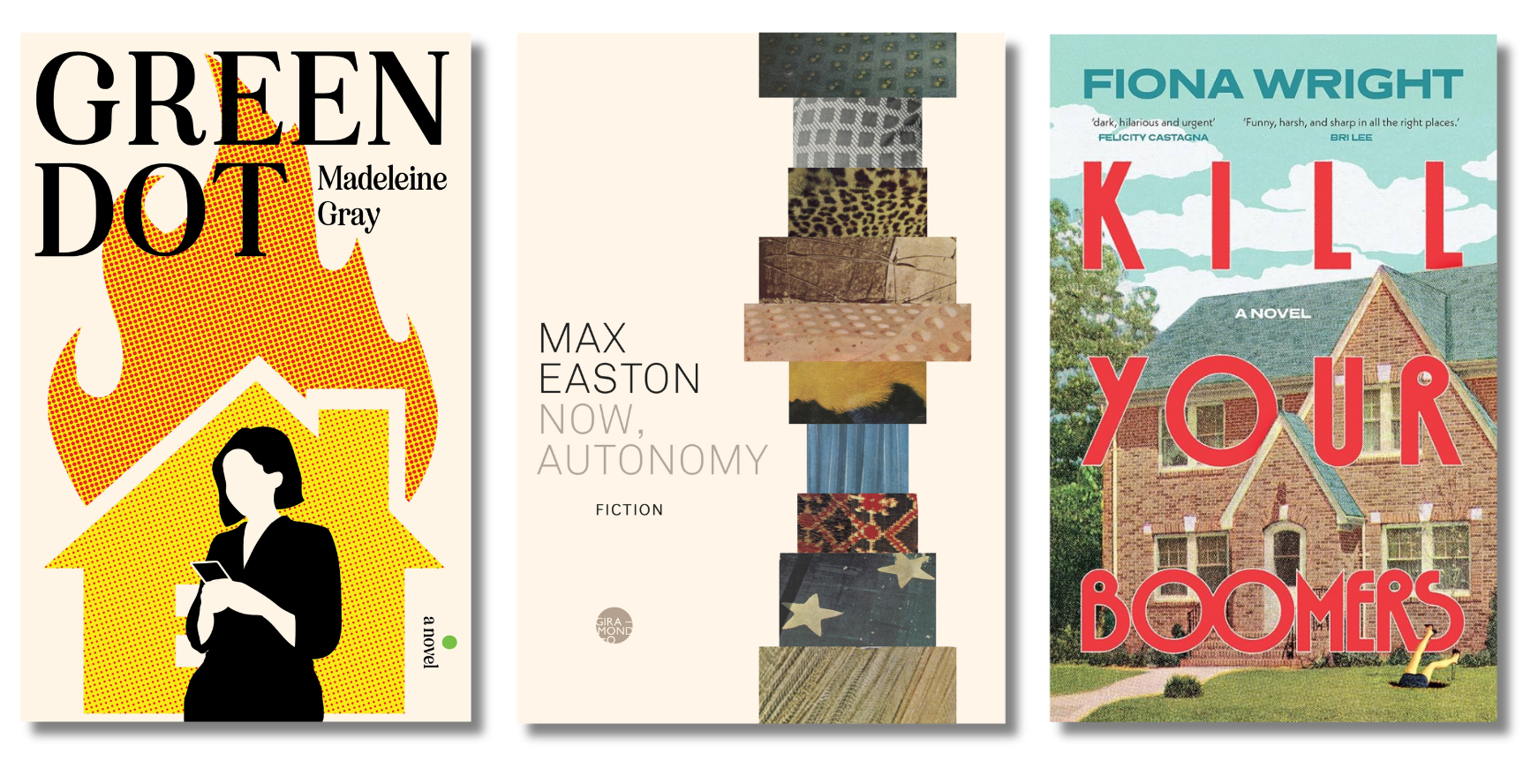
The absurdity of it all is becoming more exaggerated in newer works as the situation worsens. In Samantha Dooey-Miles’s 2026 thriller, Under the Hammer, a disillusioned woman living in Hamilton, Scotland begins murdering exploitative landlords. Fiona Wright’s debut novel, Kill Your Boomers, released in April, takes a twisted turn when Keira, a Sydney freelance writer and a babysitter for a rich family, realises that only her parents dying might give her some financial relief. Watching her best friend Dylan buy a house off an inheritance, she begins compulsively attending property inspections and hearing the voice of a mouldy, googly-eyed hole in her share-house kitchen—a cavity her landlord predictably refuses to fix, and which becomes the novel’s unlikely conscience. ‘They had so much to lean on…’ it tells Keira. ‘And then they took all the scaffolding away. They screwed you over, Keira—all of you.’ Jordan Prosser’s upcoming Blue Giant will take the contemporary creative’s predicament to a more speculative extreme—an escape from mediocrity comes through the form of an extraterrestrial journey. As Keiran Goddard observed in the Guardian, in many contemporary novels ‘it is commonplace for protagonists to live lives characterised by scarcity and insecurity, where the notion of the home has become definitively divorced from any associations it might have historically had with stability, security, comfort or permanence’.
And yet the viewpoint is often markedly white, urban and middle-class—novels written from the perspective of characters like Keira, who grew up expecting financial security and are now watching it recede—characters who are experiencing an acute downshift in status rather than those who never had such standing to begin with. To this Giada Scodellaro’s Ruins, Child offers a valuable counterpoint. The 2026 Novel Prize-winner introduces six African American women sharing a crumbling Bronx co-op in a near-future setting, approaching art-making through the lens of Black cultural memory and collective identity rather than the individualism and affect-class realism that dominates most of this fiction. It’s pensive where the others are derisive; elegiac as opposed to claustrophobic or resentful. It also raises an uncomfortable question that runs beneath a lot of this fiction: who actually gets to write about precarity? And from what position?
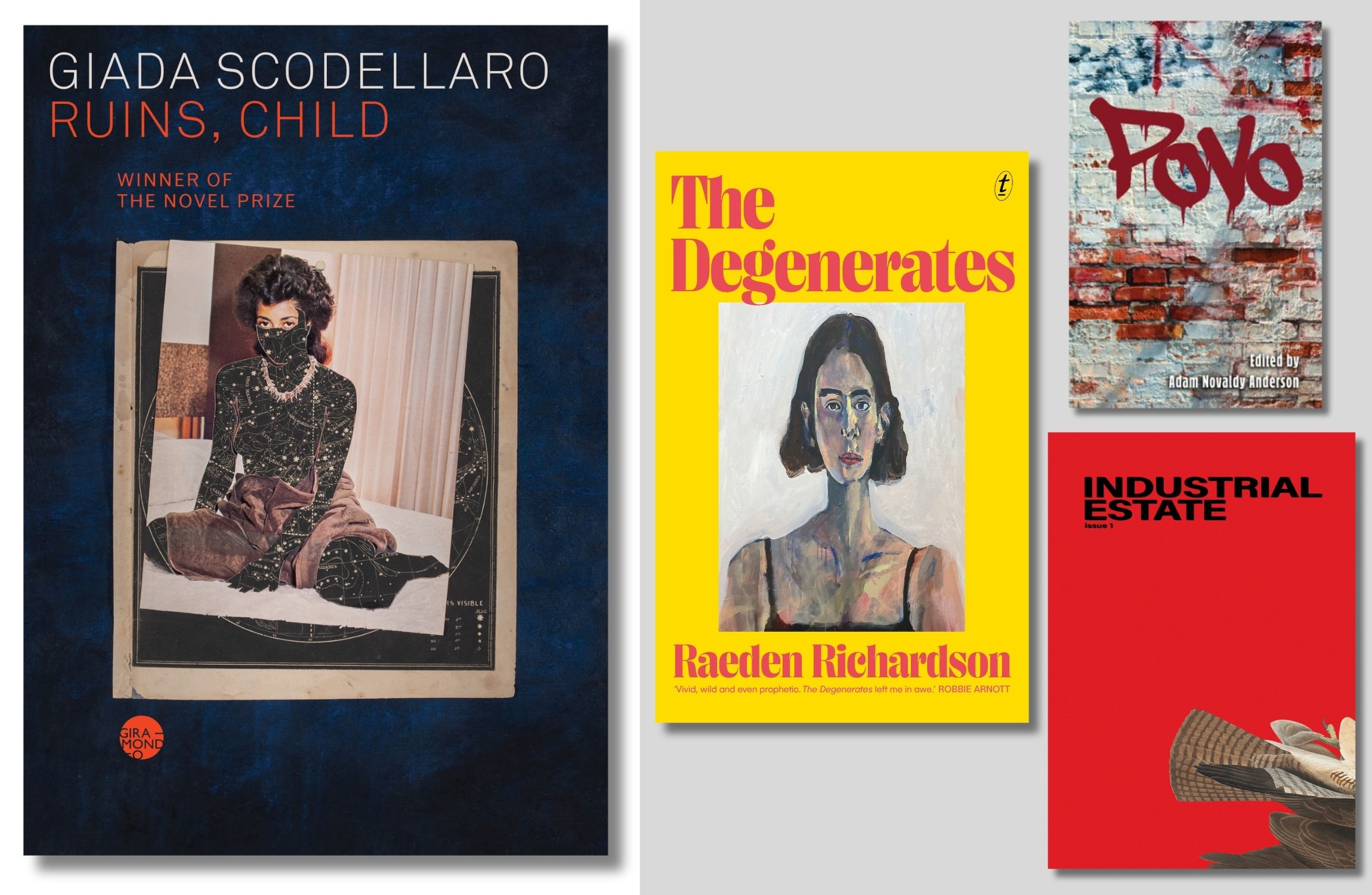
A 2024 study showed that in the UK fewer than one in ten artists had working-class roots. While these studies have not been replicated in Australia, entrenched elitism and increasing class inequalities don’t bode well for our stats either. Publications like Industrial Estate and Povo are trying to redress the imbalance, amplifying the experiences of writers from working-class backgrounds, while the Next Chapter fellowship directly supports writers who have faced structural and financial barriers. But the grants system favours those who are adept at navigating bureaucracies, and there is no scheme like Ireland’s Basic Income for Artists in sight.
These are problems that Melbourne-born author Raeden Richardson sits with. His 2025 Miles Franklin-longlisted novel The Degenerates aimed to express the subaltern voices of his home city and the India of his diasporic origins. Richardson himself was a public-school kid living in the outer-eastern suburbs of Melbourne when he got a full scholarship to study abroad. By his own account, he is still running on a carefully maintained delusion that the money will materialise if you know where to look. (‘I spent more of my own money writing my book than I got from the advance,’ he tells me.) Class mobility has given him a foot in the door—he is an alumnus of prestigious institutions like Yale–NUS in Singapore and the Iowa Writers’ Workshop—but even he can see the limits of the position he’s writing from. ‘I’m searching for a contemporary novel that looks, without pandering, at the modern lives that are truly ruinous: people who don’t read, who can’t see themselves in contemporary fiction,’ he says. ‘Meanwhile, we’re fixated on our MFAs and PhDs. There’s a problem here, and I am it.’
Who actually gets to write about precarity? And from what position?
I’m also part of that equation because the living conditions described in this essay, and in most literary fiction, are still a relatively cushioned version of it. It’s not squalor or destitution, but an aesthetic that’s shabby, a little sweaty, a kind of humming anxiety, born less from distance from affluence than from proximity to it. Again Fiona Wright captures this through Keira in Kill Your Boomers, a character who stands in for a generation—my poor generation (literally)—for whom things that were once givens have become aspirational, certainties that previous generations took for granted now sit behind gated communities and the gleaming foreshore of the Eastern suburbs. Similar to my own lament, her despairing words ‘this isn’t what I imagined for my adult life’ are less a personal failure than an abrupt class condition solidifying around her.
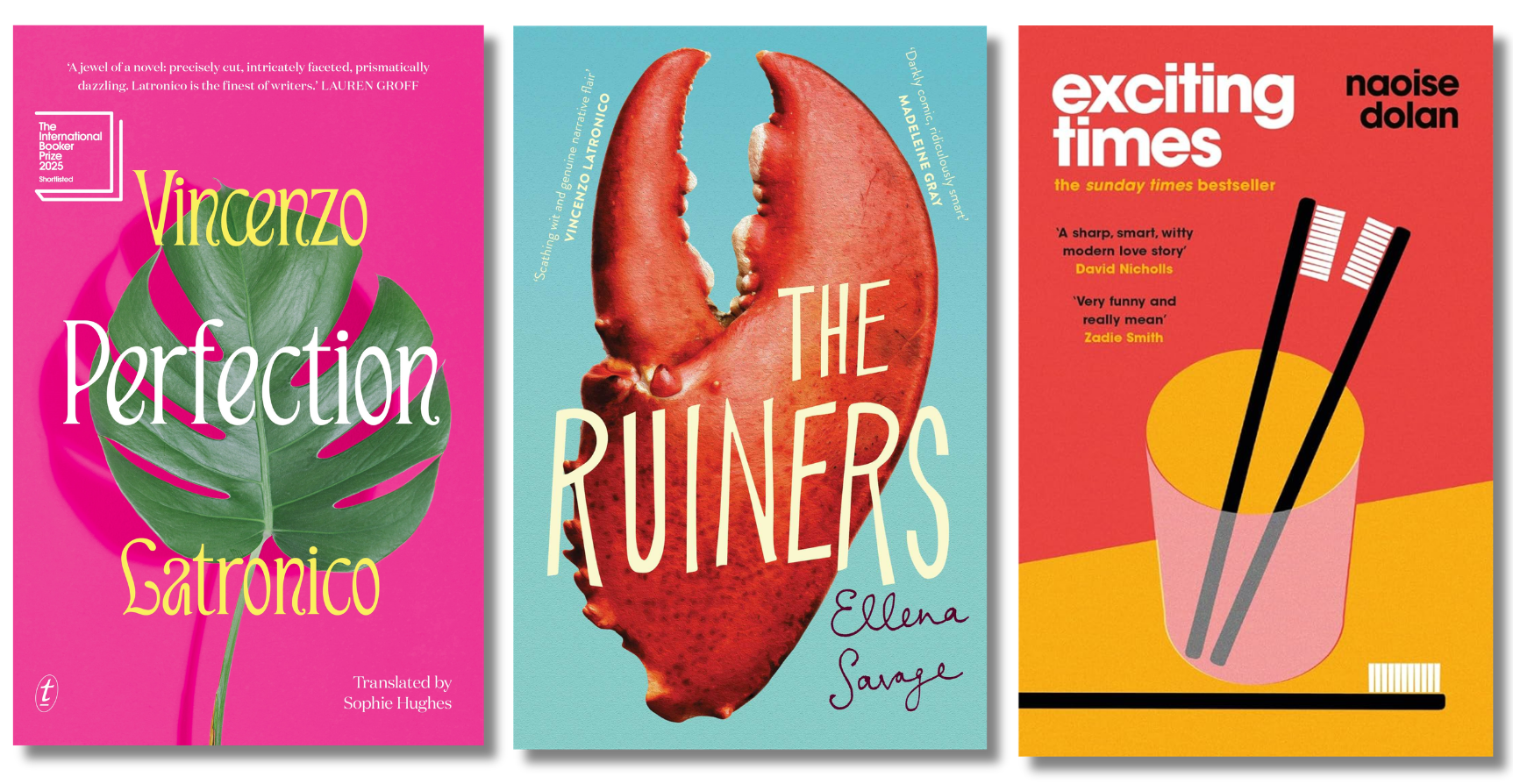
The characters in Ellena Savage’s new novel, The Ruiners, exist in exactly this state of in-between—pseudo-poverty, macabre inheritance and the desperate, writerly search for somewhere to create. Her debut sits alongside books like Vincenzo Latronico’s Perfection, Naoise Dolan’s Exciting Times and Ben Lerner’s Leaving Atocha Station, which excavate some of the delusions of expat life. Pip, the protagonist, who has just inherited money from her previously deadbeat and now actually dead father, is convinced by her new partner Sasha to buy a decaying house in remote Greece. He makes it sound seductive at first: no distractions, no penny-pinching landlords or passive-aggressive housemates—just ‘simplicity’ and the novelty of home ownership.
But the romantic dream disintegrates alongside the house, which sits, pointedly, down the road from a literal dumping ground. Savage had a poem in mind while writing the novel, ‘Essay’ by Bernadette Mayer, which opens with the line ‘I guess it’s too late to live on the farm.’ As she told me: ‘In a sense it is always too late to live on the farm, because a utopia is a fundamentally unreal place. I was thinking a lot about the impossibility and the vanity of the individual “solution” to the collective problem.’
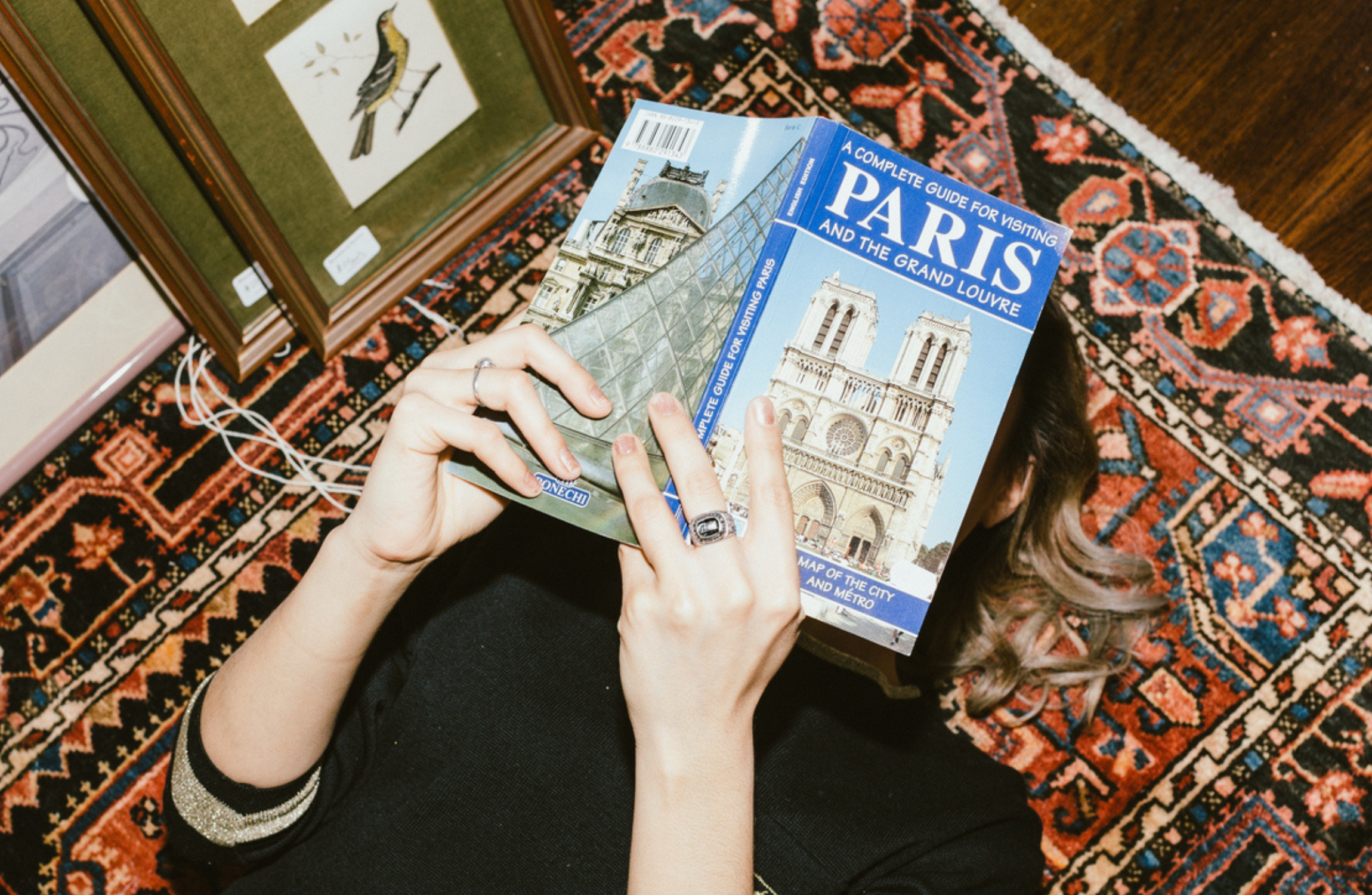
I still think that writers and artists are looking for a utopia—or some compromised version of it. Finding ways to adjust, sometimes by moving overseas, which is a process that requires, as I can attest, a lot of sacrifice and deprogramming. But mobility alone is not enough. The interdisciplinary artist and editor, Victoria Pham, is case in point. A second-generation immigrant whose parents managed to get university degrees—which, she notes, is what made her own creative journey possible at all—Pham moved from Sydney to Paris, where she works two flexible jobs to protect her writing time. The contrast, she tells me, is stark. In Paris, arts culture is subsidised by the government, studios are affordable and a robust social system means that artists aren’t perpetually one bad month away from crisis. There’s also, she says, ‘a generosity of spirit—people don’t find it strange when you say you’re working as an artist or ask what your real job is […] whereas in Australia, we’re too occupied by economic prosperity. Massive mortgages chew away at the creative energy you need for writing.’
Writers and artists are looking for a utopia—or some compromised version of it.
Like the writers I interviewed in this article, in stumbling along my own creative path I’ve come to think that what we’re actually chasing isn’t just cheaper rent. Ćehić, who came to Australia as a child seeking refuge from the Bosnian War and now lives full-time in Sarajevo, said: ‘Literature needs breadth and space, but you have to fight for it. Artists and writers have always moved in search of these conditions. In reality, I think they have more to do with freedom than economics—ultimately what we seek is creative liberation.’ Richardson frames it similarly: ‘I’ve learned to separate making money from making art. I’ll live in ways and places that allow me to write so that I can be artistically free.’
At a time of growing authoritarianism, that freedom—no longer just economic—feels more insecure than ever and more urgently worth fighting for. Recent acts of politically motivated censorship are a reminder that these are not abstract concerns. Nor is the gutting of the NDIS or One Nation winning seats—these are not separate phenomena but material symptoms of the same neoliberal turn that puts corporate interests before human ones and has always regarded artists with suspicion. To write about the housing crisis, the ways in which our living and working conditions are being whittled down—even contemptuously through fiction about revenge fantasies, dumping sites and holes in our kitchen walls—are all ways of challenging the status quo. Savage is unequivocal on where we stand: ‘We’re entering a dangerous and violent period. I’ve lost most of my hope for principled liberation in any political or social sphere. I don’t know how long we have left to publish books, so it seems like a good time to write the best ones we can and annoy whomever we will annoy in the process.’
Every so often my mind drifts to Jake Dean’s short story ‘Apocalypse, Then?’ about a writer who finally gets published in the New Yorker, only for the apocalypse to begin. In the aftermath, the protagonist starts handwriting a literary journal in blue biro on A4 paper and goes on a single-minded mission to track down his story and confirm it’s been published—literally knocking down anyone who gets in his way. It’s honestly the most accurate portrait of the artistic condition I’ve ever encountered: that inexplicable, almost biochemical compulsion to keep going, to see the thing through, even when every rational signal is suggesting you look up from your desk and notice that civilisation is collapsing. Which is why, despite the general ambient dread—and there is a lot of it, enough to cause the occasional wobble—I remain optimistic and committed to making art. As Savage told me: ‘Writing books is a hard job and it helps to have money, but the truth is the bloody-minded will usually find a way.’ So when the end of the world as we know it inevitably arrives, you’ll probably find me in the rubble, clutching my manuscript, searching for somewhere—anywhere!—to publish it.