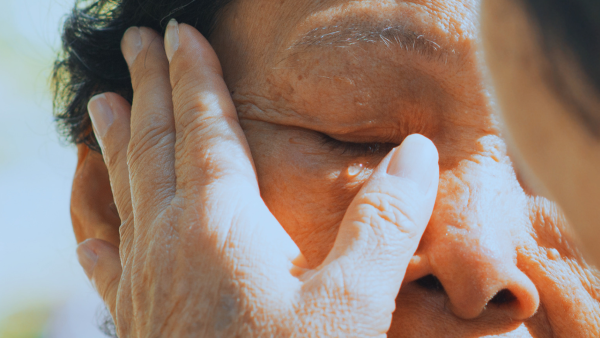
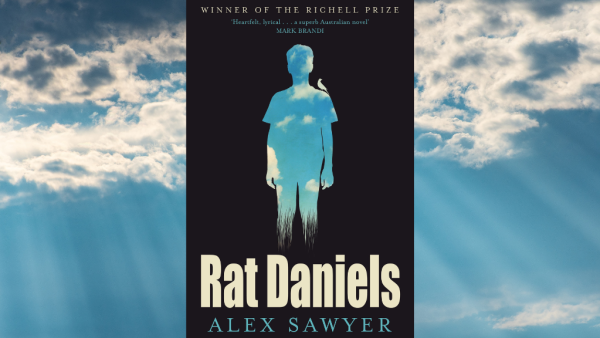
Grief is a four-winged creature in this exclusive new story by the highly acclaimed author of The Burrow.


Alice touched down in Melbourne on the last day of July. During her brief sojourn in Hong Kong, winter had arrived; she emerged through the glass doors of the airport to an apocalyptic sky. Rain pummelled the windows of the Uber as it sped along the freeway, making smudges of the streetlamps, the billboards, the crimson brake lights. It was as if the weather were shielding Alice from the tawdry, high-definition panorama that was Australian suburbia. Landmarks synonymous with travel to and from the airport—the buckling weatherboard house beside the off-ramp, the taxi-specialist panelbeater on Brunswick Road—flashed by in pointillistic scenes that were gentle on the eye. Alice had the sensation of being swaddled, of being protected from the sharpness of things, of being held. The driver was as silent as the engine of the electric vehicle he drove, which was a relief, and Alice resolved to award him an emphatic five stars when she got home.
The cause of the whirlwind trip had been the death of Alice’s yeh yeh, who had not succumbed to old age as everybody assumed but had instead been struck by a freak bolt of lightning during his regular morning walk along Bowen Road. In fact, Alice’s eighty-seven-year-old paternal grandfather had been in excellent health when he died. For decades, the only medications he consumed were vitamin D capsules for osteopenia and a sedating antihistamine at night for his blocked nose.
Alice had the sensation of being swaddled, of being protected from the sharpness of things.
When Alice had applied for bereavement leave from the clinic, the practice manager had asked if she and her grandfather were close, as if approval of the leave depended on the intimacy of their relationship. Alice had never considered the nature of their bond before—she assumed it to be similar to most other grown women’s connections to their Chinese grandfathers: red packets at birthdays and Chinese New Year, stilted conversation at dinner banquets, brief annoyance at questions about how much money she was earning, whether she had a boyfriend and when she would be in a position to buy a property of her own. But she couldn’t explain this to Jane, who was a micro-influencer on Instagram and whose own mother had gifted her a tattoo for her fortieth birthday, the words carpe diem on her inner thigh. And so, after a few seconds of awkward silence, Alice had muttered, ‘I suppose so’, which, from the doubtful look on Jane’s face, was not ideal. But it must have been adequate because the leave was approved. Three days: a day of travel, a day for the funeral and half a day buffer on either side. Even so, as Alice turned off her computer that evening, Jane muttered something about it being lucky that Shyamni, one of the other medical receptionists, had recently returned from maternity leave. As Jane fed a document into the shredder, she warned that if another one of Alice’s relatives were to die in the next twelve months, she would have to grieve them in her own time.
On return to her apartment, Alice was struck by how small it was—nearly but not quite as poky and claustrophobic as the three-and-a-half-star hotel she had booked in Hong Kong. The goldfish bowl, which together with the toaster occupied most of the kitchen bench, was laced with algae. Its lone, goggle-eyed inhabitant had come down with a severe case of swim bladder. The poor fish floated, slightly askew—an almost-carcass at the surface of a polluted globe.
Alice collapsed onto the sofa bed, releasing a puff of dust motes. She peeled off her socks, grey and smelly from the flight. She had forgotten to bring the medicated nail lacquer with her to Hong Kong, and the fungal infection on her left big toe had flourished. Now the periphery of the nail resembled the blue brie cheese Dr Bailey had brought back as a gift to the reception staff from his last trip to Bruny Island.
Decay was never far away. This seemed to be what the universe was telling her. Alice remembered the way the air conditioner, set to full blast in the funeral viewing room, had swept the small tuft of hair on her grandfather’s forehead up and away from his waxen face—a perpetual breeze to keep him preserved and looking good, like a pop star in a music video.
When Alice’s Australian friends spoke about their grandfathers, they described men who, in spite of being past their prime, were capable—and, curiously, keen—on building treehouses and camping with their grandchildren. With the exception of Yeh Yeh’s morning walks, the most outdoorsy thing Alice had seen her grandfather do was plant a hibiscus in the caged window box of his apartment building. When Alice had asked if she could help, he had grunted and waved her away. And yet Alice felt certain that Yeh Yeh was a kind person. She would never forget the way the old man had spoken to a visiting sparrow, which was small enough to fly between the bars of the window box with the hibiscus flower, so confident was he that the flying creature was the spirit of his daughter who had died young from cerebral malaria. Sometimes Alice would catch him looking at her—his plain but only granddaughter among a flock of peacockish grandsons—and she would behold a glimpse of what she hoped was a kind of love.
Decay was never far away. This seemed to be what the universe was telling her.
Alice had a sudden urge to clean, scrub, vacuum, wipe, dust, polish. She began with the fishbowl, using a paper towel to mop up the rust-coloured algae and replacing a third of the liquid with fresh tap water. She finished with a shower during which she scoured the mouldy grout and brushed her skin with a loofah until it was as shiny and pink as raw chicken meat. Finally, she put clean sheets on the bed and applied the lacquer to her toenail. She pulled the covers over her head and scrolled through Instagram until she was sufficiently numb to achieve sleep.
Nineteen hours had passed by the time Alice finally opened her suitcase, which made what she found there even more astounding. At first, she had mistaken the pale speck for an aberration in the pattern of her dress, but as she leaned in for a closer look, the splotch moved—nay flew—from the zippered mouth of her luggage. A moth. A small, off-white, otherwise unremarkable moth. A creature with wings so delicate it could not withstand the oil from a human fingerprint, but which had somehow managed to survive the seven-thousand-kilometre flight from Hong Kong to Melbourne, buried in her dirty clothes.
It was another twelve hours—approaching midnight of Alice’s second day home—before it occurred to Alice that the moth was, in fact, her grandfather. Sleepless, she watched it move from the lampshade to a dusty blade of the venetian blinds and back several times. She tried to talk to it, first in English and then in broken Cantonese, before abandoning attempts at conversation on account of it firstly, leading nowhere, and secondly, feeling ridiculous. When she showered the following morning, the winged creature flew to a corner of the mirror in the bathroom, making Alice self-conscious as she stepped onto the bathmat, naked.
Alice didn’t see the moth on the train, but it was waiting for her, lying flat against the glass screen at reception, when she arrived at the medical clinic. She couldn’t be sure it was the same insect that had watched her take a shower that morning, but she couldn’t recall ever seeing a moth at the clinic before.
Jane didn’t ask about the funeral, and when Shyamni looked at her with a pitying face, Alice blamed jet lag for the dark circles around her eyes. Somehow, she managed to get through the shift, with the help of three instant coffees and two Caramello Koalas. It was Friday, and Alice was grateful to have the weekend to catch up on sleep, but she was also wary about two whole days alone with the winged manifestation of her grandfather’s spirit. When James, the GP registrar, invited her for a drink after work, she said yes, perhaps a little too eagerly.
A light rain was falling as Alice stepped out onto the front porch of the clinic, which, like so many suburban medical centres, had once been a family home. Ivanhoe was a quiet suburb; in winter it was even quieter. The old trees loomed dark and leafless like giant totems along the road. James turned off the lights and activated the alarm. It beeped three times as he closed the door behind him. He didn’t notice the moth that fluttered, at the last second, through the gap between the door and the doorframe. Neither did Alice. For a minute, they stood side by side on the porch, staring into the rain, almost but not quite touching.
‘Where shall we go?’ James asked.
‘The wine bar?’ Alice suggested, as if for the first time, even though she and James had gone for after-work drinks together at least three times, and always at the wine bar because it was the only place where two single people could have a drink in Ivanhoe. But they complied with this ritual—the drinks, the invitation for a nightcap at his townhouse, the fifteen minutes of fucking, she on top and he with his hand firmly but not too firmly around her throat, followed by the mumbled, embarrassed goodbyes—and Alice was grateful for the predictability.
They stood side by side on the porch, staring into the rain, almost but not quite touching.
It was only once they had ordered their drinks—a shiraz for James and a pinot noir for Alice—that she spotted the moth, perched upon the waxy leaf of a monstera plant in a dark corner of the bar. She shifted in her seat. It was a risk to open up to James—their interactions until now had been shallow and transactional—but she had few confidants left in Melbourne since her two closest friends had moved interstate. Hong Kong had provided a brief reprieve from the otherwise unrelenting loneliness, but now that she was back home, it felt even more intense than before.
‘Do you believe in ghosts?’ Alice asked, and pretended not to see James’s shock at this departure from their usual conversation topics—Jane, annoying patients and the failings of the practice software.
He took a large gulp of his wine before replying. ‘I’m a scientific person.’
Alice remembered another night and another conversation when James, after a few drinks, had spoken about his lucky pair of underwear. Lucky, not for getting laid, but for having a quiet night shift at the hospital.
‘Well, I’m not,’ she laughed, louder than intended. ‘And I believe the moth behind you is the ghost of my grandfather.’
James turned to look at the insect. Rather than just moving his head, he rotated his entire upper body, which made Alice wonder if there was something wrong with his neck. When he looked back at her, his face was different, less open than before, and an ever-so-slight frown had appeared in the space between his eyebrows. In that moment Alice knew that she would not be invited to his townhouse tonight.
‘How long have you believed that this moth is your grandfather?’ James asked, and Alice noticed that his voice, too, had changed; it was now serious and a little forced. A doctor’s voice.
‘When I realised it had followed me all the way from Hong Kong to Melbourne, stowed away in my suitcase.’
James rubbed the back of his neck with his hand. ‘I don’t think it’s possible for a moth to survive that long in a suitcase.’
‘Exactly.’
Once Alice had recovered from her disappointment about not getting laid later, she was able to enjoy the conversation. She could see that James was wary of her, and this, in turn, endowed her with a kind of power.
‘Have you told anybody else about this moth theory?’
‘It’s not a theory, but no.’
‘What would your family say if you spoke to them about it?’
It was a good question, and it occurred to Alice that James was probably a decent GP.
‘I haven’t told them.’
‘Is that because you think they wouldn’t believe you? That they’d say you’re—’
‘Crazy?’
‘Not well. Sick. Grieving.’
‘Well, of course I’m grieving.’
James looked behind him again at the moth, which had not moved from its position on the monstera. When he turned back to face her, he said gravely, ‘I’m just wondering why, of all the people you could have chosen to tell this extraordinary story to, you chose to tell me?’
It was another good question, and one Alice didn’t have an answer to.
It was after nine-thirty when Alice finally arrived home. She was not used to taking the train at night. Tonight, however, when they finished their wine, Alice could tell James was desperate to escape. He offered to drive her to the station (he was not a monster), but she couldn’t bear another moment in his cold, clinical presence. As she walked, the rain started up again, and she opened her umbrella—an old thing with two broken ribs she’d found at the bottom of her handbag. Every so often, at the very periphery of her vision, Alice saw a flash of white, and she knew her grandfather was close. Instead of feeling disturbed by this, she felt comforted.
When they finished their wine, Alice could tell James was desperate to escape.
Once home, she checked on the fish, which was still alive but only just. A thread of faeces, three times the creature’s length, hung unbroken from the end of its tail. She cleaned the make-up from her face, brushed her teeth and applied another layer of lacquer to her nail. Before sleep, she called her mother, who was still in Hong Kong with Alice’s father, working through the enormous load of administrative duties that had arisen from Yeh Yeh’s death.
‘Hello?’
‘Ma, it’s me.’
‘Ah, what time is it there? Have you eaten yet?’
‘I’ve eaten. I just wanted to tell you something before bed.’
‘Okay.’
‘I think Yeh Yeh is here, with me, in Melbourne, in the form of a white moth.’
‘Aiyeeah…’ There was moment’s silence before her mother added, with a sigh, ‘But not surprising. I think he loved you most. When you were little, he always said you had the face of his daughter.’
Alice slept well that night, and the next two nights, and when she woke on Monday morning it was five minutes before her alarm, and she felt refreshed. On Saturday the fish had finally died, and on Sunday Alice had converted the fishbowl to a terrarium. Now the moth clung to the inside of the polished glass, flaunting its long, phallic abdomen. Even Alice’s toenail was looking better. When a pretty woman in a navy pantsuit smiled at her on the train, Alice had the sense that everything was going to be okay.
But everything was not okay. Shyamni and the other receptionist stopped chatting when Alice took her place beside them at the desk. Alice thought she heard Shyamni whisper ‘James!’ before they caught sight of her, and the name hovered, unacknowledged and unanswered, in the air. Alice knew Jane would never tolerate an office romance, and she and James had been relatively discreet, but now Alice wondered if somebody had seen them together at the wine bar the other night.
Days passed in this way. Alice answered the phones, scanned the letters, booked the appointments, checked the addresses and dates of birth of all the patients. But in between these tasks, she had only the most perfunctory of interactions with her colleagues. The GPs ignored her—James, willingly, and the others, habitually. The only thing that gave her strength was the sight of her yeh yeh—a powdery heart on the black lid of the photocopier.
It was a week to the day following her return from Hong Kong that Alice knew her time at the clinic was over. The morning began like any other: a flurry of phone calls, a couple of disgruntled patients, a tantrum from one of the doctors. But then around lunchtime, Alice heard Shyamni yell from the tearoom: ‘Has anyone seen the insect spray?’ Her heart skipped a beat. She found her colleague kneeling on the floor with her head buried in the cupboard beneath the sink.
‘Shyamni! Careful, your back!’ Alice knew that ever since her pregnancy, Shyamni had been prone to bouts of sciatica. She helped the woman to her feet.
‘Thank you.’ Shyamni brushed dust from the front of her skirt. ‘A moth has been hovering around reception. It’s driving me nuts!’
It was only then that Alice spotted James sitting at the table near the window, quietly eating a baguette.
‘I can look for it,’ Alice offered, annoyed at the quiver in her voice. ‘Are you happy to man the desk?’
Shyamni looked from her to James, who was now actively avoiding eye contact with both of them. A knowing smile played on her lips. ‘Sure! Take as much time as you want.’
After several minutes of feigning a search for the spray, Alice stood at the sink with her back to James. She heard the scrape of a chair and the rustle of a paper bag but didn’t feel him approach until he was within inches of her. He placed a black canister of Mortein on the bench before lightly touching the back of her hand.
‘It was above the fridge. I saw it as soon as I came in.’
For a few seconds they stood like that, facing the boiler, feeling each other’s heat. When he was gone, Alice slipped the can inside her shirt, starting at the coolness of the metal against her skin.
Alice gave her notice the following day. On her final morning, the practice manager presented her with one of those oversized cards in which people wrote meaningless messages. James had scribbled in doctor’s handwriting: Wishing you the very best. Above one of the letter I’s, instead of a dot, he had drawn a tiny black butterfly.
Before looking for a new job, Alice travelled to Noosa, and then over to Fremantle to visit her old university friends. Once again, the moth followed her. This time, however, Alice knew better than to mention the insect. Few people noticed, and it struck Alice that human beings were really very unobservant, especially nowadays, distracted, as they were, by their smartphones. Children were the exception. In Noosa, her friend’s three-year-old daughter spotted Yeh Yeh immediately—pointing and laughing and yelling, ‘Mummy look!’—until her mother glanced in the moth’s direction and waved it away.
Above one of the letter I’s, instead of a dot, he had drawn a tiny black butterfly.
After six months, even Alice stopped noticing the moth. It was as if he had become part of her. In her mind, she compared it to wearing contact lenses; at first, she had been aware of their presence—foreign bodies sliding around on her eyeballs—but over time, as if bored, her body had become inured to them. Alice assumed this habituation to be a kind of coping mechanism. It had certainly alleviated her self-consciousness about being stalked by her grandfather’s spirit.
But it also meant that when Yeh Yeh finally left for good, it took a while for Alice to register his departure. And so she didn’t know if it had occurred before or after her car accident on the Princes Freeway; before or after she’d met Javier in the waiting room of the fracture clinic; before or after she’d heard about James’s cancer (which had presented late as a metastasis in his neck); before or after she’d purchased the new goldfish from Petbarn—an energetic thing with scales the colour of polished copper.
She only knew that once she became aware of it, she felt the loss deeply, like a wound. The night of the realisation, Alice wept as she lay beside Javier in the windowless bedroom of his share house. She remembered something she’d overheard a middle-aged patient say to a pregnant Shyamni one unusually quiet morning: When you have children, your life becomes a contradiction. Some days, most days, you can’t wait to get away from them—their sticky hands and their mindless chatter and their moods—and then, once they’re gone, you ache for them.
Alice recalled that when the woman had said the word ‘ache’, she’d placed her palm flat against her breastbone, and for a second it seemed as if she might die from the memory of the pain.
This is the first story in our New Short Fiction series. We’re looking for short stories from the country’s best and brightest writers—find out more!