Deborah Levy’s latest novel journeys to Paris to explore the legacy of the queer avant-garde pioneer.


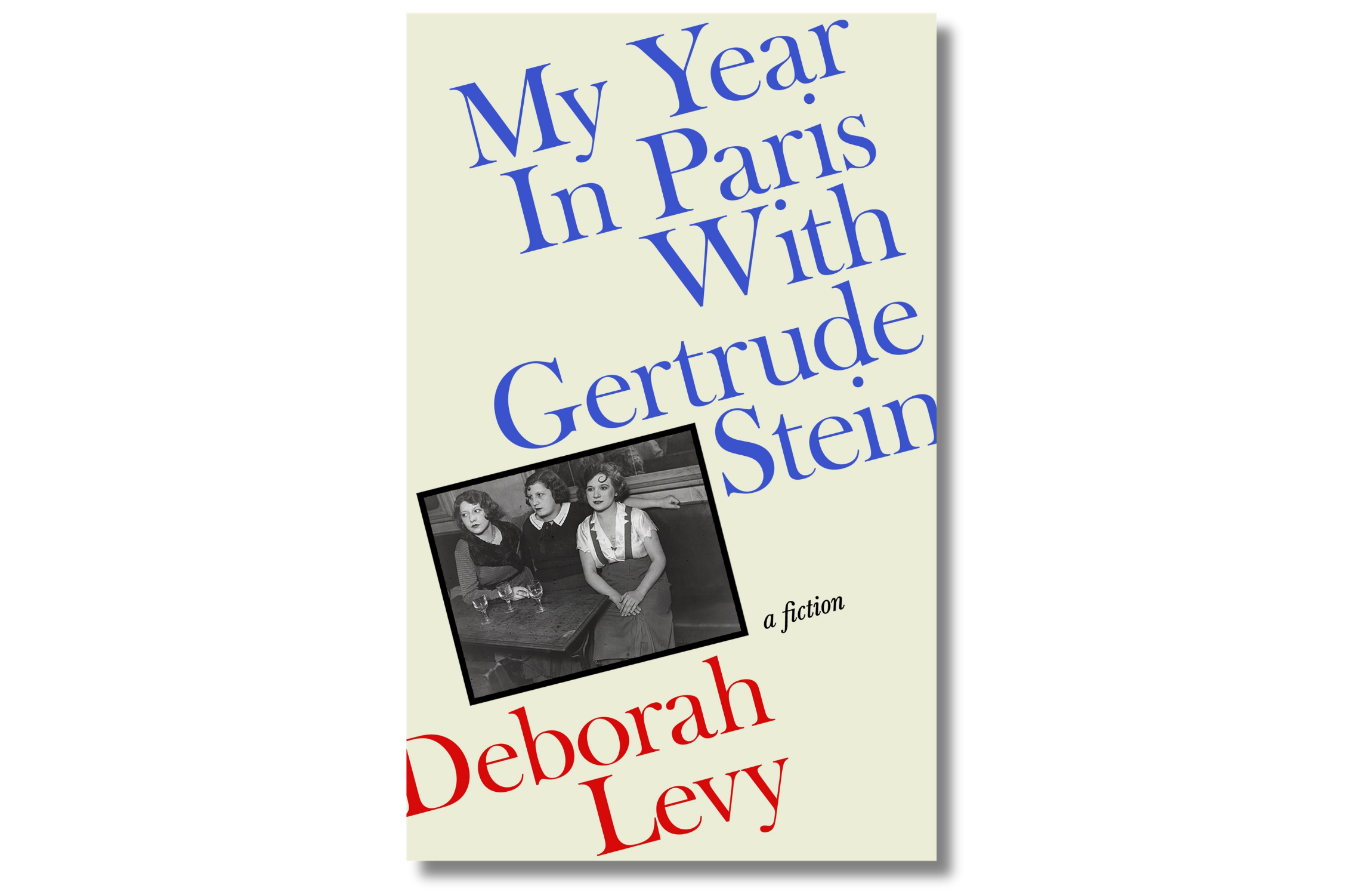
Gertrude Stein is having something of a popular renaissance. Francesca Wade’s 2025 biography, Gertrude Stein: An Afterlife, received positive reviews in major outlets around the world for its extensive research and contextualisation of Stein’s artistic contributions. In the same year, Dalkey Archive Press reissued Stein’s masterwork, The Making of Americans, as part of its Essentials series. And now Deborah Levy’s latest, My Year in Paris with Gertrude Stein, offers a work of fiction that seeks to examine the ongoing importance of her legacy.
Stein’s reputation among scholars and academics has long been secure. As William H Gass wrote in 1995, it is ‘no longer necessary to argue Gertrude Stein’s importance or insist upon her artistry’. I was assigned her work several times during my undergraduate degree in the 1990s, and I have in turn taught her at multiple Australian universities over the last twenty years.
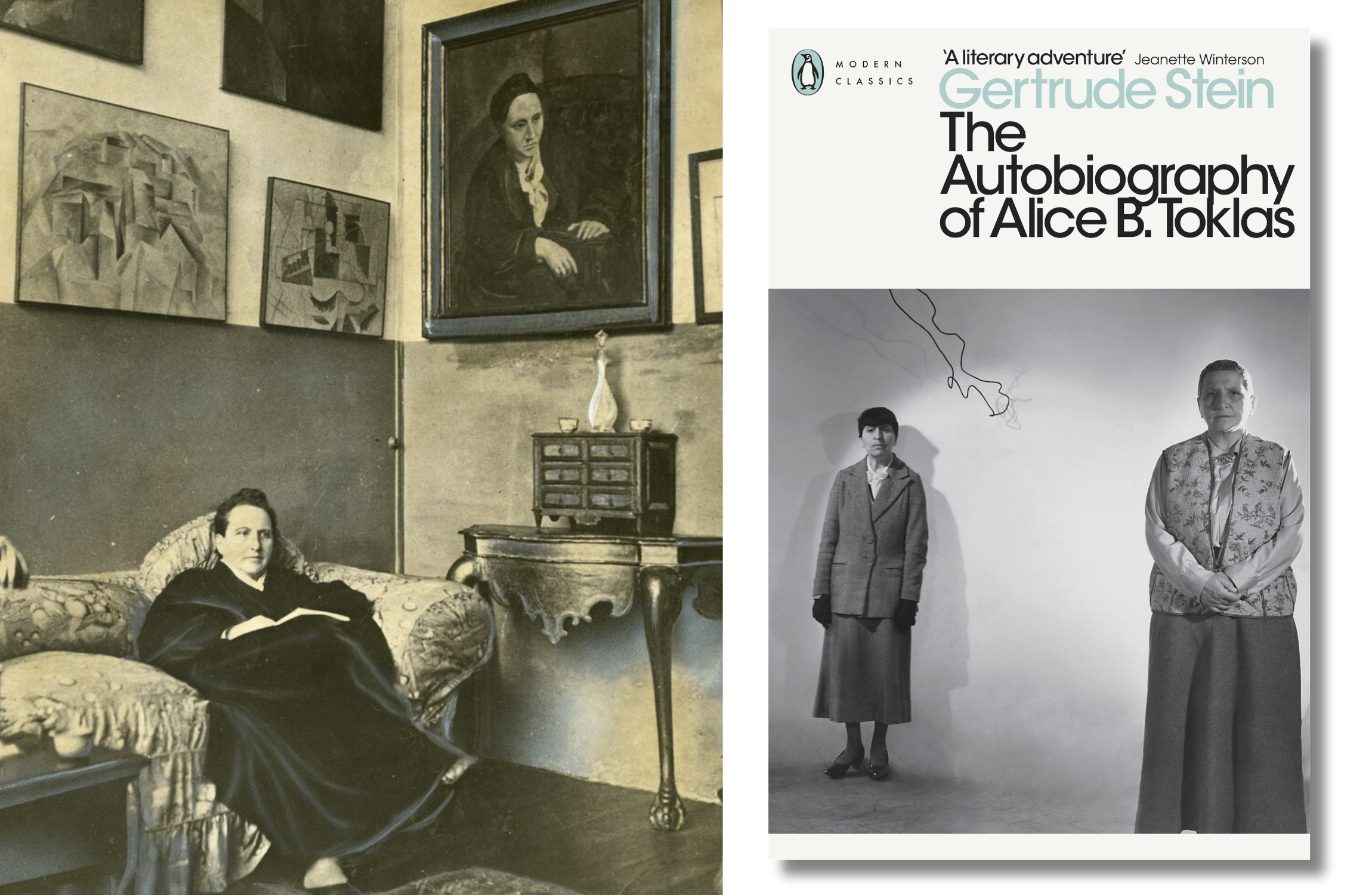
Born in the USA, Stein moved to Paris in 1903 at the age of twenty-seven. She initially lived with her brother Leo and their apartment hosted salons which became an essential destination for US writers and artists arriving from the continent, including Ernest Hemingway, F Scott Fitzgerald and Ezra Pound. In Paris, Stein met her lifelong partner Alice B Toklas, and much of Stein’s writing engages with her sexuality, often in indirect, ironic and punning ways. Her most famous work is her autobiography, written from the perspective of her partner, The Autobiography of Alice B. Toklas (1933), and its more direct style made it a bestseller.
The reception of Stein’s wider oeuvre—which includes short stories, poems, novels, librettos and plays—however, has been more mixed for the very reason of her experimental style, which comprises relatively simple diction complicated by involuted syntax, ironic humour and unrelenting repetition. In this way, her work exemplifies literary modernism, which often sought to challenge readers through an array of techniques including stream-of-consciousness, frequent switching of perspectives, heavy use of indirect references to other texts and ideas, telling narratives out of chronological order, the inclusion of unfamiliar technical terms or foreign words and the purposeful withholding of key contextual information. Next to Virginia Woolf, Stein has arguably become the most influential female modernist and increasingly important as part of the long-running initiative to recover and celebrate the work of their female contemporaries such as Djuna Barnes, HD, Marianne Moore, Jean Rhys and Mina Loy. Levy’s My Year in Paris with Gertrude Stein arrives in the context of this broader Steinaissance.
Subscribe to stay in the loop
Be the first to read new stories, discover publishing opportunities, and access resources. For people who love great writing.
The novel opens with what appears to be a simple declaration: ‘Eva called to say she had lost it.’ Rather than being about a failure of emotional regulation, however, Eva has actually lost her recently adopted cat named ‘It’. This novel, like many of Levy’s others, is about the ambiguity of language. The narrator keeps returning to this opening sentence in various forms. Early in the novel, for example, she connects the lost cat directly to Stein by saying that Stein ‘was lost to readers for decades. But I know she wanted to be found and Alice B. knew that as well.’ Throughout the text, various characters are referred to as ‘losing it’ (playing on the semantic ambiguity of the term) followed by a rhetorical question that the narrator addresses to herself. For example, after the narrator describes her attempt to recreate a recipe from The Alice B. Toklas Cook Book, an experimental memoir by Toklas made a notorious bestseller for its recommendation of cannabis as an ingredient, she then says the following:
Alice B. had lost it.
What was it?
Drudgery.
Housekeeping for her father, grandfather and brother.
This recurring device may recall Stein’s coining of the term the ‘Lost Generation’ and her own infamous fondness for repetition (as in the line ‘Rose is a rose is a rose is a rose’ from her poem ‘Sacred Emily’), but Levy’s repetition is of a very different kind: unlike the structural ambiguity of the opening sentence, these questions often receive substantive and deeply earnest answers:
What is it?
Colonialism. Fascism. Communism. Alienation. Disorientation. Fragmentation. Dislocation. Fauvism. Impressionism. Cubism. Futurism. Dadaism. Surrealism. Modernism.
The art that Stein collected was made with some of these isms and ions.
The narrator of My Year in Paris with Gertrude Stein is, perhaps unsurprisingly, a writer who, in a typical autofictional flourish, is writing an essay about Stein. She has travelled from the UK for this purpose on a working holiday from her normal life. She quickly makes two friends in Paris, Fanny and Eva.
Fanny, who tends to explicate bluntly what the others will not, jokingly refers to the group as a ‘throuple’ because of the intensity with which their otherwise platonic relationship develops. The overall uncertainty of their situation is haunted by global events: on page three, we learn that ‘on behalf of her clients, Fanny was keeping a close eye on the American elections’. In keeping with autofiction’s obsessive interest in the mobile phone, the mediating technology of our time, these characters, too, are on ‘screens all the time, scrolling, scrolling, scrolling through the various wars in the twenty-fourth year of the 21st century’. The novel intermingles stories about these friends’ experiences (often while looking in unlikely ways and places for Eva’s lost cat) with details about the life of Gertrude Stein and excerpts from her works, which the narrator has collected. The novel takes particular interest in Stein’s The Autobiography of Alice B. Toklas, and clearly sees in it a forerunner to Levy’s own autofictional—and, in some cases, simply autobiographical—work.
Levy can deploy this research on Stein to unexpected ends, finding resonances between Stein’s life and other literary figures. One interesting section compares the description of a shawl in Jane Austen’s Emma with Stein’s poem about a shawl in Tender Buttons, a collection of prose poems about household objects, leading the narrator to argue that Stein ‘killed’ the ‘nineteenth-century shawl’. Later sections consider the relationship between Stein and the philosopher and psychologist William James, who was her teacher. One particularly brilliant passage draws a series of unexpected connections between the lives of Stein and Sigmund Freud, a formative influence on modernism, which are simultaneously funny and full of significance:
Martha Freud’s favourite author was Thomas Mann, Alice B.’s favourite author was Gertrude Stein. Freud called his wife Princess when they were courting, Stein called her wife Pussy. Sigmund Freud believed that contraception caused neurosis, so after six children they refrained from sex. Perhaps Alice B. would have something to say on this matter.
However, the narrative sections of Levy’s novel mostly evolve laterally. There are well-drawn characters, and Fanny—who works in finance and has a series of polyamorous lovers—in particular comes across as a vivid presence. The schoolteacher, Jean-Luc, one of two male characters who briefly appear in the novel, feels like something of a cipher, but his predilection for US poetry and delicate approach to conversation make him rounded enough. Both are associated with specific objects: Jean-Luc with a walking stick that ‘found [him] and will not leave’ and Fanny with the cigarette she always keeps tucked in her belt. Eva and our narrator, however, remain oddly distant figures.
We know that Eva, born in Copenhagen, is the youngest of the trio of women. She is a graphic novelist who speaks five languages, is described as having lovely blue eyes (‘Everyone went Awww when they looked into Eva’s eyes’) and whose semi-estranged Scottish husband lives in the United States. We learn little else because Eva ‘made it clear she was not hospitable to prying and poking for information’. Our narrator reveals almost nothing about her personal life either, beyond her current stay in Paris to work on the Stein essay; indirectly, we discover that she has written books, is single after a long-ago failed marriage, and has close friends and family back in England. For all her novelistic intimacy, she remains aloof.
This novel, like many of Levy’s others, is about the ambiguity of language.
This is all intentional, and it is admirable that the novel chooses to prolong and even multiply the uncertainty about its characters and plot, which most authors would be desperate to resolve. Furthermore, the distance between the reader and Levy’s characters also seems linked to the narrator’s claim that Stein ‘put her immense writing energies into making sure she was not understood’. This is all coherent within the world of the novel, but as a reading of Stein it feels deeply unsatisfactory. That modernism sought to make the commonplace strange has itself become a commonplace, but the point remains. Stein’s abstract descriptions of domestic objects in Tender Buttons make them variously funny, sexualised and defamiliarised, but this does not make them mystifications.
The notion of attention was one of Stein’s fixations throughout her life. (Stein’s 1898 essay on automatism, ‘A Study of Character in Relation to Its Attention’, is even mentioned in Levy’s novel.) Stein’s writing is not a flight from being understood but rather motivated by a profound notion that we do not know what we think we know, that relying on familiar concepts and clichéd turns of phrase keeps us further from the truth. The degree to which people’s perceptions of the world are determined by their dispositions (described variously and with crude humour as their ‘bottom feelings’ or ‘bottom nature’) is one of the signal themes of Stein’s novel The Making of Americans.
My Year in Paris with Gertrude Stein both acknowledges its conflicted feelings about Stein and attempts to wrestle with them. The narrator admits that she has not read all of Stein’s work and later confides: ‘Sometimes I think Eva is more into Gertrude Stein than I am.’ While it would be a danger to conflate the narrator with the real-life Levy (who was living in Paris and trying to write a work about Stein and William James, which she ultimately turned into this novel), both share an ambivalence about Stein’s writing.
In an interview on the Great Women Artists Podcast from April of this year, Levy noted that she is not ‘a total fan of all [Stein’s] writing’. After describing Virginia Woolf as her ‘true literary love’, Levy notes, ‘I have no affiliation with Gertrude Stein’s writing, but I have a great admiration for her pioneering spirit, for her experiments.’ One result of this abstract admiration is that Stein becomes an important figure more for what she represents than for what she achieved as an artist, something that finds its way into Levy’s book through generalisations about her life and work: ‘She did not want to be told when to take a breath and when something was a question or who to love or how to dress. Get rid of clichés. Break through the conventions of genre.’ Levy repeatedly emphasises that this freedom was attained by overcoming the expectations of domineering men in her life: her father, her professors, her brother.
However, the result is a portrait of Stein that feels calculated to appeal to contemporary tastes. We are told early on that, while Stein was independently wealthy, she had only ‘a modest trust fund’. There is nothing modest about trust funds, even though Stein’s was, as a fact, not bottomless. We are told that Stein, politically, was ‘a republican and a libertarian’, which sets aside the more complicated question of Stein’s relationship to fascism—an issue that has shadowed much of the critical reception of her work over the last several decades. The narrator notes that Stein ‘was going to translate some’ speeches by Pétain, the fascist leader of Vichy France, but as the notable intellectual was a Jewish woman living in Nazi-occupied France ‘no one knows if she was trying to save her life in 1941 or if she believed in the values of Pétain. It’s as clear as mud.’
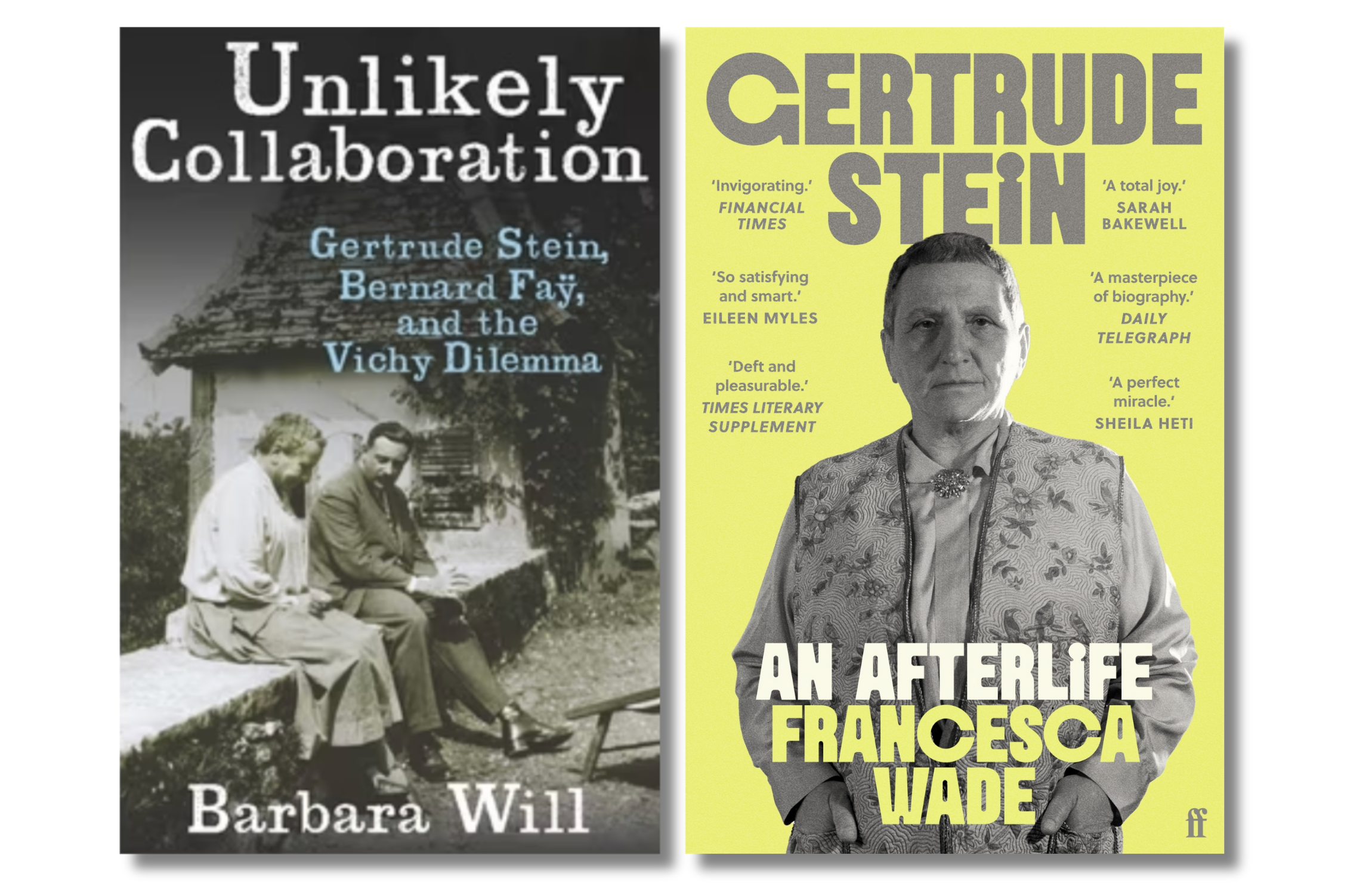
It is considerably clearer than that. Barbara Will, in Unlikely Collaboration: Gertrude Stein, Bernard Faÿ, and the Vichy Dilemma (2011), read through years of correspondence between Stein and Faÿ, who was a high-ranking official in the Vichy regime and one of Stein’s closest friends. Will argues that ‘Stein’s belief in Vichy and Pétain was both real and heartfelt’ and ‘she used her considerable reputation to try to publicize this belief.’ James Laughlin, the publisher at New Directions, also recounts an instance of Stein and Faÿ praising Hitler in his essay ‘About Gertrude Stein’:
An exchange I heard one night troubled me deeply, though. They got on the subject of Hitler, speaking of him as a great man, one perhaps to be compared with Napoleon. I was stunned. Hitler’s persecution of the Jews was well publicized in France by that time, and Miss Stein was a Jew. Faÿ, in his turn, had nearly gotten himself killed fighting the Germans in World War I.
While this is hearsay and recounts a conversation in private between two friends that does not specifically endorse Hitler, it is nonetheless characteristic of how others remembered Stein’s politics. James Lord recalls a conversation with Picasso, who said: ‘Gertrude was a real fascist. She always had a weakness for Franco. Imagine! For Pétain, too. You know she wrote speeches for Pétain. Can you imagine it?’ Even in her memoir, Wars I Have Seen (1945), where she expresses more ambivalent views about Pétain, she nonetheless says, ‘Pétain then did save France and saving France defeated Germany…’
The result is a portrait of Stein that feels calculated to appeal to contemporary tastes.
In her recent meticulously researched book on Stein, Francesca Wade strongly disputes claims for Stein’s alleged fascism, though Laughlin and Picasso’s claims above are not discussed. Nonetheless, she offers counterexamples in which Stein ironically criticised Hitler, Mussolini, Franco and other fascist leaders. Ultimately, she concludes that Stein ‘was not one of the war’s heroes—but nor was she an outright villain’. Barbara Will, however, is more ambivalent, noting that while Stein never attended any fascist rallies or served as an official functionary, her willingness to produce ‘propaganda in support of [the Vichy] regime […] shocks us to this day’.
Oftentimes, scholars counterpoise the modernists, depicted as right-wing individualists who wanted to produce monumental works of art, with the historical avant-garde movements, seen as utopian collectives that sought to call into question the idea of art itself. While this binary sounds nice in theory, in practice it is much harder to maintain; many of the major modernists were part of explicit avant-garde movements or had direct connections with them. All of these artists circulated within the same international networks and most were highly aware of one another’s work.
Stein was queer and an avant-gardist—she was close with Picasso and considered her own work a form of literary Cubism—but she also frequently expressed positions that we would rightly understand as conservative and which align with her class interests as an inheritor of significant wealth. The contradictions in all of this are interesting and merit exploration. The setting of Levy’s novel in November of 2024, and its repeated references to ‘the rise of fascism everywhere’ only make these omissions stranger, especially given passages like this:
No one could bring themselves to dig up the grimy old Fascism word from the twentieth century and paste it on to the twenty-first century, or to say things like ‘never again’ or to exclaim, in regard to officials and armies who participate in ethnic cleansing, ‘I just don’t understand how humans can obey those sorts of orders.’ No one wanted to dig it all up, to dig up the twentieth century and find Hannah Arendt, dust on the shoulders of her suit jacket, a pack of cigarettes in her pocket from 1947, speaking calmly to the devastated world on the banality of evil. All of this was part of the streams of consciousness flowing under the twenty-first century. Gertrude Stein had lived through it all.
Is the narrator’s omission of Stein’s more unsavoury commitments an example of this refusal to acknowledge the importance of fascism in the 20th century, or is Stein meant to be an opponent of fascism? It remains unclear, and the narrator seems to view Stein’s politics as far more unproblematic than either Wade or Will do.
Attempts to project contemporary understandings of fascism back onto writers and thinkers in the early 1930s often misunderstand crucial contexts of the period. Contemporary readers may struggle to conceptualise that, after the stock market crash of 1929, capitalism appeared to be failing at the very moment that communist Russia and fascist Germany and Italy were ascendant. Many at the time believed fascism and communism were the only viable political alternatives for the future of the world and formed their associations accordingly. Moreover, in the early 1930s, at least, the Third Reich had not reached its most genocidal phase, and some thinkers, such as Wyndham Lewis, erroneously convinced themselves that Hitler’s antisemitism was merely rhetorical. This does not excuse artists’ fascist associations, but it does emphasise that the meaning of those associations then was categorically different than the meaning of fascism after the horrors of the Holocaust became widely known during and especially after the Second World War.
Stein’s political affiliations need to be understood in this context but cannot be so easily disentangled from her creative work. Wade quotes Stein on the differences between her and Faÿ: ‘Bernard Faÿ was a conservative, and I a radical.’ The implication here is that Stein’s interest in fascism and other modes of political organisation was fundamentally tied to her interest in upending the traditional order of things. Her politics here are also implicitly linked to her radical poetics, in that both sought to transform the world. Levy’s novel misses the opportunity to consider this connection in all of its contradictions. The reticence of My Year in Paris with Gertrude Stein to interrogate Stein’s politics also seems amiss given that the novel foregrounds its objections to Stein’s poetics.
The novel depicts the aesthetic disjuncture between author and subject for creative ends, and even makes this plain through Jean-Luc, who states: ‘I am beginning to comprehend the composition of your essay. You will write about the avant-garde in the language of realism. The push and pull of both constituencies will be confronting.’ Perhaps, though the oscillation between the many excerpts of Stein’s singular and highly stylised prose alongside Levy’s comparatively restrained prose feels more like an attenuation of modernist aesthetics than a contrasting of balanced opposites.
The reticence of My Year in Paris with Gertrude Stein to interrogate Stein’s politics seems amiss.
Levy has an ear for dialogue and a capacity for incorporating complex ideas into the rhythms of life, but she also writes sentences like this one: ‘Stein was devastated that Sylvia [Beach, of Shakespeare & Co. bookshop] had not published The Making of Americans, which had been lying in a drawer like an unclaimed suicide since 1911.’ The wordy main clause gives way to a mixed metaphor that sits oddly in the sentence. Sure, manuscripts lie in drawers, but do unclaimed suicides? And the ending phrase ‘since 1911’ creates a momentarily confusing ambiguity as to whether it was the manuscript or the suicide that has been in the drawer for so many years. Stylistically, it is a flawed sentence, though not an irredeemable one. Conceptually and thematically, however, it is far more generative: the idea of suicide runs throughout the novel, and Stein’s comparatively happy existence and successful lifelong relationship are counterpoised with characters and real-life figures who suffered more complex fates. Moreover, the sentence explicitly echoes a statement by Sofia from Levy’s earlier novel, Hot Milk: ‘The unfinished thesis I wrote for my doctorate still lurks behind my shattered screensaver like an unclaimed suicide.’ Here, Stein quite literally becomes imbricated within the fabric of Levy’s writing. This also confirms for me the sense that the ‘Stein’ of the novel is ultimately one who has been reconfigured within the matrix of Levy’s own particular understanding of the world, rather than being rendered in all of her complexity.
Nearly twenty-five years ago, I read Julian Barnes’s Flaubert’s Parrot, which—while not autofiction exactly—is nonetheless a recursive and metafictional novel that also examines a narrator obsessed with a historically great author. I don’t remember much about Barnes’s novel, but I do remember with gratitude that it led me to read Flaubert’s The Sentimental Education, which remains one of my favourite novels. It is my hope that My Year in Paris with Gertrude Stein, written by a popular contemporary author, might lead thousands of lucky readers to Gertrude Stein’s writing. Despite the passing of the greater part of a century, they will find writing that remains refreshingly unconventional, challenging and new.