Introducing the Winners of the Creative Non-Fiction Prize 2025
For the first time, there are two winners of the KYD Creative Non-Fiction Prize!


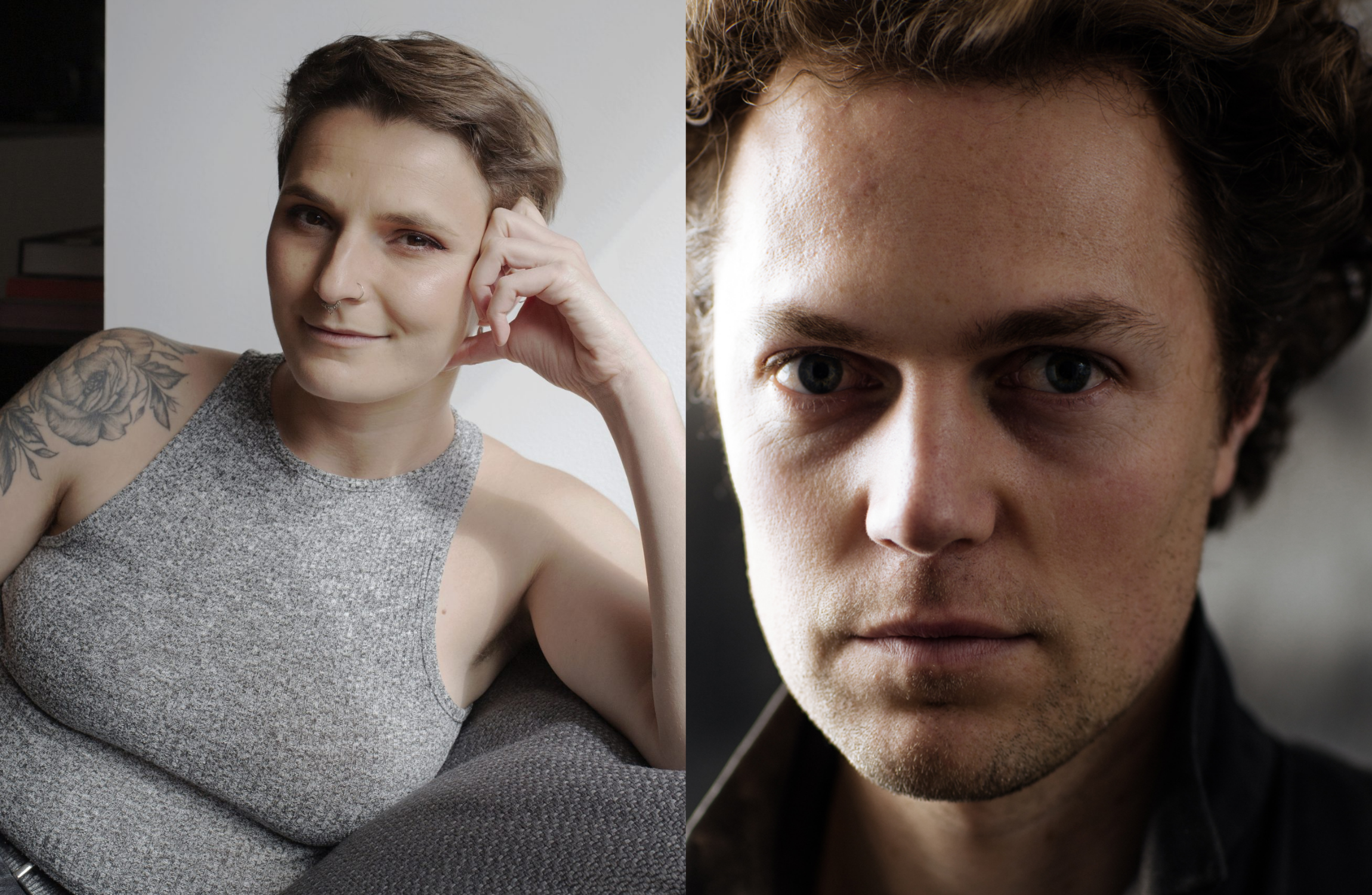
We are delighted to award the KYD Creative Non-Fiction Prize 2025 to Sarah Walker and George Haddad.
This year we were heartened by the response to the prize, back after a short hiatus. We received hundreds of submissions from all around the country, each as unique as each of the writers who had taken the care and time to craft them. We extend our thanks and appreciation to every person who has entered this year—your contributions demonstrate a commitment to creativity and the power of the written word, the evolution of Australian letters, and your participation helps us continue the award into the future.
Choosing a winner from our shortlist has been a challenging task, and in the end, we just couldn’t pick between two excellent, beautifully written essays.
Sarah’s essay ‘Piscine’ is a moving work of hybrid memoir that pulls together the watery currents of addiction, dementia, grief, Australian drinking culture and the human evolution from fish. Read it here.
George’s essay ‘وجبت wejbet’ is anchored in the Arab conceptualisation of hospitality and politeness, addressing how cultural obligation collides with the lived experience of touch, consent and desire. Read it here.
Both Sarah and George receive $1750 each for their co-winning entries, splitting the first-place prize money combined with the second-place winnings.
In runner-up place, we’re awarding the prize to Benedicte O’Leary-Rutherford for ‘Slug Theory’. A hybrid of comic illustration and text, this essay explores the stickiness of art and creative reciprocity. Benedicte receives $1000 for their runner-up entry. Read it here.
KYD publisher Rebecca Starford and KYD editor Suzy Garcia were the judges of this year’s award. Read the judge’s report by Suzy Garcia:
Judge’s Report: Winners
Two stunning winning essays—both raw, vulnerable and generous. They articulate with honesty what is painful, what is human, what is hard to capture, and yet these two writers have done so with remarkable skill and beauty.
George Haddad takes courage and candour to a new level in his writing with ‘وجبت wejbet’, talking about issues so often swept under the rug—the vulnerability of children, the double-edge of cultural expectations, the complex embodiment of masculinity and how trauma can shape our lives. This is a testament to many stories untold, to voices unheard, and it lingered long after reading.
Meanwhile, Sarah Walker’s ‘Piscine’ dives headfirst into complex inheritances. Painfully intimate, she unpacks a mother–daughter relationship, peeling back the layers on addiction, dementia, grief. Looking further out, she explores the evolution of human life, from our watery origins to the existential dilemma we face as microplastics infiltrate deep seas and deep into our bodies. Lyrical and powerful—this essay is very moving, pulling together the personal and the most pressing issue of our times to great effect.
Judge’s Report: Runner-Up
Benedicte O’Leary-Rutherford’s ‘Slug Theory’ draws on the scholar Sara Ahmed’s concept of sticky affect—how emotions become attached to objects, people or places—to understand their own creativity. Humorous, exploratory and accompanied by distinctive comic illustrations, by mixing the personal with the academic, this essay offers a unique approach to thinking about art, creative motivation and the body.
The KYD Creative Non-Fiction Prize will be returning in 2026! Stay up to date with news of all our awards and opportunities by signing up to our newsletter and following us on Instagram, Bluesky and LinkedIn.
Become a KYD Member
Unlock writing and publishing resources, discounts on writing courses and editorial services, plus exclusive workshops and events.
The KYD Creative
Non-fiction Prize 2025 Shortlist
‘Where My Body Hides Water’ by Madison Godfrey – an experimental creative essay about bodies of water and bodies in pain, and the urge to narrativise both.
‘Playing God’ by Tallulah Grace – a careful consideration of our environment that interrogates the existence of any natural hierarchy in which humanity is the pinnacle of evolutionary progress.
‘Groundhog Day in the Matrix’ by Benjo Kazue – a cultural autopsy of late-stage capitalism that interrogates nostalgia’s commercial chokehold on society in the early age of AI.
Highly commended: Beth Atkinson-Quinton (‘Raw flesh, weeping wound: on matrescence and diagnosis’), Stella Hamilton (‘Tide Me Over’) and Emmi van Harten (‘What we can learn from bats: Reflections of an ecologist’).