K-pop icons BTS are a global phenomenon with a devoted fanbase. Celebrity activism is nothing new, but BTS ARMY embraces the band’s message of empowerment with a focus on grassroots philanthropy.
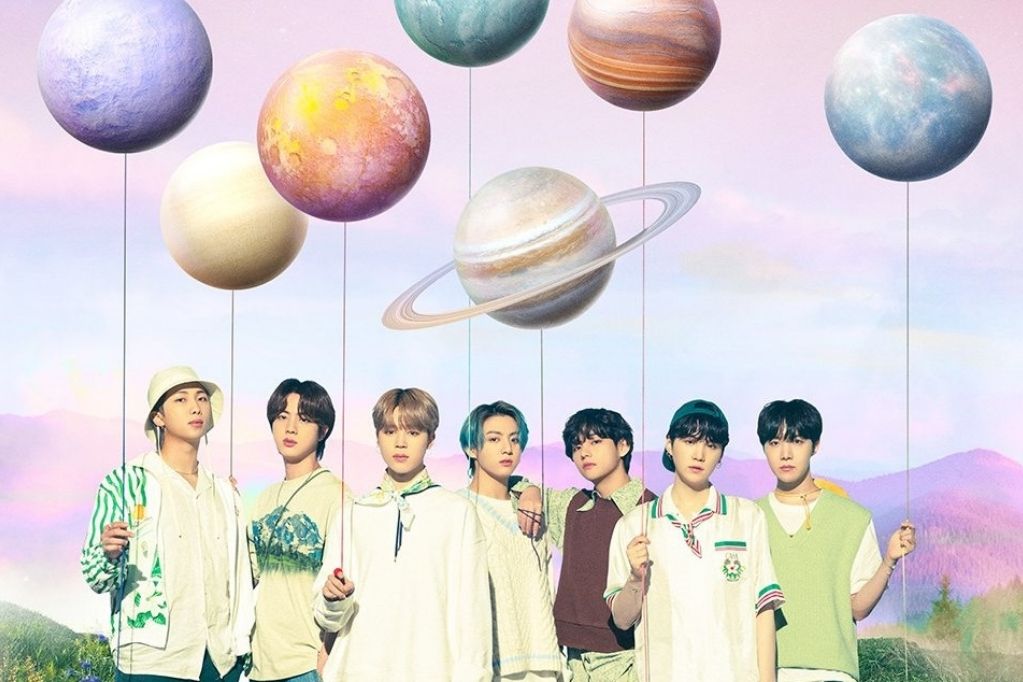


‘ARMY is as famous as BTS now.’
—J-Hope, weverse magazine (2021)
K-Pop group BTS (or Bangtan Sonyeondan, which translates to Bulletproof Boyscouts) is arguably the biggest band in the world. With legions of fans and widespread presence on social media, BTS is reported to bring around $3.6 billion dollars a year to the Korean economy. While the media has had a nasty (yet unsurprising) history of depicting female-dominated fanbases as merchandise-hoarding, hysterical, delusional and lonely, at every opportunity the members of BTS sing praises and gratitude for their fans, ARMY. It is this relationship that has granted both parties unprecedented power to trigger positive change in the world.
Before engaging with BTS, stories of ARMY that entered my purview were limited to sasaengs (obsessive fans who resort to stalking, invading the idols’ privacy and sometimes violent behaviour), organised efforts to ‘cancel’ public figures who defame BTS or social media tantrums upon losing in award polls. After devouring BTS’ discography, documentaries, pirated concerts (sorry HYBE!), BANGTANTV and VLIVE content during Melbourne’s hard lockdown, I entered a liminal space of being a BTS fan without wanting to be part of ARMY. To be honest, I was scared and intimidated.
K-Pop group BTS is arguably the biggest band in the world. With legions of fans, they’re reported to bring around 3.6 billion dollars a year to the Korean economy.
Yet when I posted a clip of BTS’ Love Yourself, Speak Yourself concert on my Insta Stories last September, my DM was flooded with almost twenty warm welcomes. There was a Gen-Z cousin I haven’t seen in over five years, an audience member from the public speaking gig I did in college, an old high school friend. Within a year, I’ve had ARMY invite me as an artist collaborator for an event, warn me off a job with a toxic boss, scream ‘borahae!’ joyously at the end of a festival workshop—and most, I’ve never met in real life. It was like being initiated into a little universe with faces old and new.
Other than a shared joy for the band, ARMY is recognisable by their wide-scale coordination and participation. Forbes, CNN, TIME and Variety agree that when it comes to shattering music records, dominating trending hashtags or organising multilingual content translations—BTS’ records are untouchable. Yet there’s a lack of coverage regarding ARMY’s philanthropic endeavours, mostly because it goes against the media’s narrative framing.
One of the most well-known and largest volunteer-run organisations is called One In An ARMY, initiated in 2018 by Ana Beatriz (18 years old). To date, the collective has provided medical care to Syrians, supported bra businesses run by survivors of sex trafficking in Mozambique, El Salvador and Costa Rica, and are currently aiming to curb gender-based violence in Kenya. Another example is ARMY Academy founded by Fernanda Pisconte (19): a free mentoring platform made up of over 400 lawyers, teachers, computer whizzes, artists and every other profession you can think of to assist students in need. (I’ve tried to apply twice but their mentor spaces fill up within hours.) Meanwhile, ARMY Help Center (AHC) spearheaded by Carla Postma-Slabbekoorn (37) mimics a helpline framework for those struggling with loneliness or community alienation—though they assert it’s not a replacement for therapy. Oh, and ARMY in Chensan district China built a hospital called Jung Ho Seok Hope Hospital for J-Hope’s 26th birthday. No biggie.
ARMY is recognisable by their wide-scale coordination and participation. Yet there’s a lack of coverage regarding fans’ philanthropic endeavours.
By Googling ‘BTS ARMY’ plus ‘charity’ plus ‘[quite literally any country]’, you’ll find over 600 active projects around the world. They’ve regrown rainforests, adopted endangered animals, donated food, money and supplies for areas hit by natural disasters, volunteered as aid first-responders and actively engaged with grassroots organisations pushing for radical policies.
*
Celebrity advocacy and fans rushing to contribute with open hearts and wallets isn’t a new phenomenon. Within the music industry, Bob Geldof’s song ‘Do They Know Its Christmas?’ led to the infamous Live Aid concert the following year, which marked one of the largest aid donations at the time (US$150 million). The event is not without criticism, however. Bob Geldof’s song has been scrutinised for being lyrically problematic due to its Christian-centric narrative and monolithic depiction of Africa:
And the Christmas bells that ring,
There are the clanging chimes of doom,
Well tonight thank God it’s them instead of you.
…And there won’t be snow in Africa this Christmas time.
More sinister was where the money eventually ended up. As reported by SPIN, ‘Ethiopia, then the third poorest country in the world, suddenly had the largest, best-equipped army on the African continent.’
Meanwhile, Bono’s (RED), which partners with global brands to create branded products to raise money, became the first to correlate consumerism with ethical ‘goodness’ when it launched in 2006. In a large-scale collaboration with American Express, Apple and Converse, consumers (and fans) were encouraged to purchase products from the PRODUCT(RED) line (care for a red iPhone?), and a percentage of the profits ‘contributed’ towards AIDS, Tuberculosis and Malaria response projects in Africa.
Charity merchandise sales and fundraising drives remain popular amongst celebrities today, but often are tied to a personal cause or commercial interests without long-lasting change. The amount of disaster images being flooded into screens daily make it difficult to sustain fans’ attention and commitment. Plus, with COVID-19 rampant most people are preoccupied with maintaining their lives, caring for loved ones and local crises (be it political, financial, environmental). The model of emotional resonance (‘I care about this, so if you care about me, you should care about this’) no longer generates the same impact. Especially if it’s done through an off-key song cover—hello Gal Gadot and her ‘Imagine’ pals!
Charity merchandise sales and fundraising drives remain popular amongst celebrities today, but often are tied to a personal cause or commercial interests without long-lasting change.
A disclaimer: BTS isn’t immune to cause spotlighting. They contributed $US 1 million for the Black Lives Matter movement and through the hashtag #MatchAMillion, ARMY doubled the donation in 24 hours. In 2018, they partnered with UNICEF for the campaign Love Yourself to raise awareness on child violence and contributed 3% of their album sales for the cause. Apart from these campaigns, however, their philanthropic efforts have been confined to individual members or remain anonymous. They also tend to avoid political speeches (likely because of their contract). Yet this shouldn’t be misinterpreted as passivity or neutrality.
Rather than a one-off holiday song, BTS’ discography is rich with tracks responsive to global social justice issues, such as economic inequalities (‘Silver Spoon’, 2016), racism and homophobia (‘UGH!’, 2019) and mental illness (‘Blue & Grey’, 2020). Their 2013 debut ‘No More Dream’ called out parental pressures that demands excellence, as well as the empty dream of being a ‘government worker’ with a ‘big car, big house, and big rings’. Seven years later, their latest album Life Goes On explores the tumultuous thoughts and feelings arising from COVID-19.
Outside of social justice, BTS’ message encourages self-empowerment, exploring individual tensions between resilience and hopelessness, inner critics and confidence, while spreading kindness and joy. As RM, leader of BTS, said at the UN’s 75th General Assembly in New York, 2018:
‘No matter who you are, where you’re from, your skin colour, gender identity: speak yourself.’
*
I arrived late for my Ethics class last semester and completely forgot that I was holding a Paldo x BTS coffee bottle. As soon as I set it on the table, I drew a few gasps and ‘Jungkook!’ happy cries from my classmates—to the point where my teacher paused to address the commotion. Of course there is secret ARMY in my International Development cohort. We are, in many ways, BTS’ perfect demographic: a diverse community that is annoyingly hopeful and driven to create a kinder, more equitable world.
That week, we learned about care ethics that centre care as both motive and goal when interacting with self and others. Six components that underpin it include (1) empathy of one’s experience, (2) compassion (joy when one accomplishes something, sadness when the other fails or struggles), (3) a desire to mutually help one another, (4) action driven by (5) altruistic motives, and (6) some semblance of success from said action—though the intention itself is still seen as valuable.
BTS’ approach relies on empowerment rather than direction—a pivotal difference in the celebrity activism landscape.
Beyond lyrics and speeches, it’s the members’ little, consistent gestures that embody care for me. Using correct pronouns for trans fans, no skin contact with hijab-wearing fans, delivering thank-you speeches in each country’s native tongue at every tour stop, using sign language in ‘Permission to Dance’ to include d/Deaf and hard of hearing fans, or recently, Jimin doing a 큰절 (‘big bow’) to thank fans when ‘Permission to Dance’ debuted at #1 record on the Billboard Hot 100, an act of deep respect and gratitude typically reserved to ask for a hand in marriage or to honour one’s ancestors during jesa.
BTS’ approach relies on empowerment rather than direction—a pivotal difference in the celebrity activism landscape. The invitation to ‘speak yourself’ requires reflecting on what each fan cares about and how they can effectively contribute through their unique creative capacity. By continually reinforcing that each of us matter, especially when banded together, BTS naturally encourage collaborative action. ARMY stands for Adorable Representative M.C for Youth, after all, and referring to an individual as an ‘army’ is a testament to the fandom’s power.
In 2016 the band sang:
Give me your hand.
Save me, save me.
I need your love before I fall.
—Save Me, The Most Beautiful Moment in Life: Young Forever (2016)
Years later, the message evolved in a remix:
I’ll let go of your hand now.
I know I’m all mine, mine, mine.
Even if I fall down again.
—I’m Fine, Love Yourself: 結 ‘Answer’ (2018)
I was right to be scared, as becoming ARMY not only demands lifting yourself up, but also the world around you.