The Australian literary industry continues to lack First Nations and multicultural representation behind the scenes—an imbalance that can lead to inappropriate and often damaging editorial decisions and experiences.
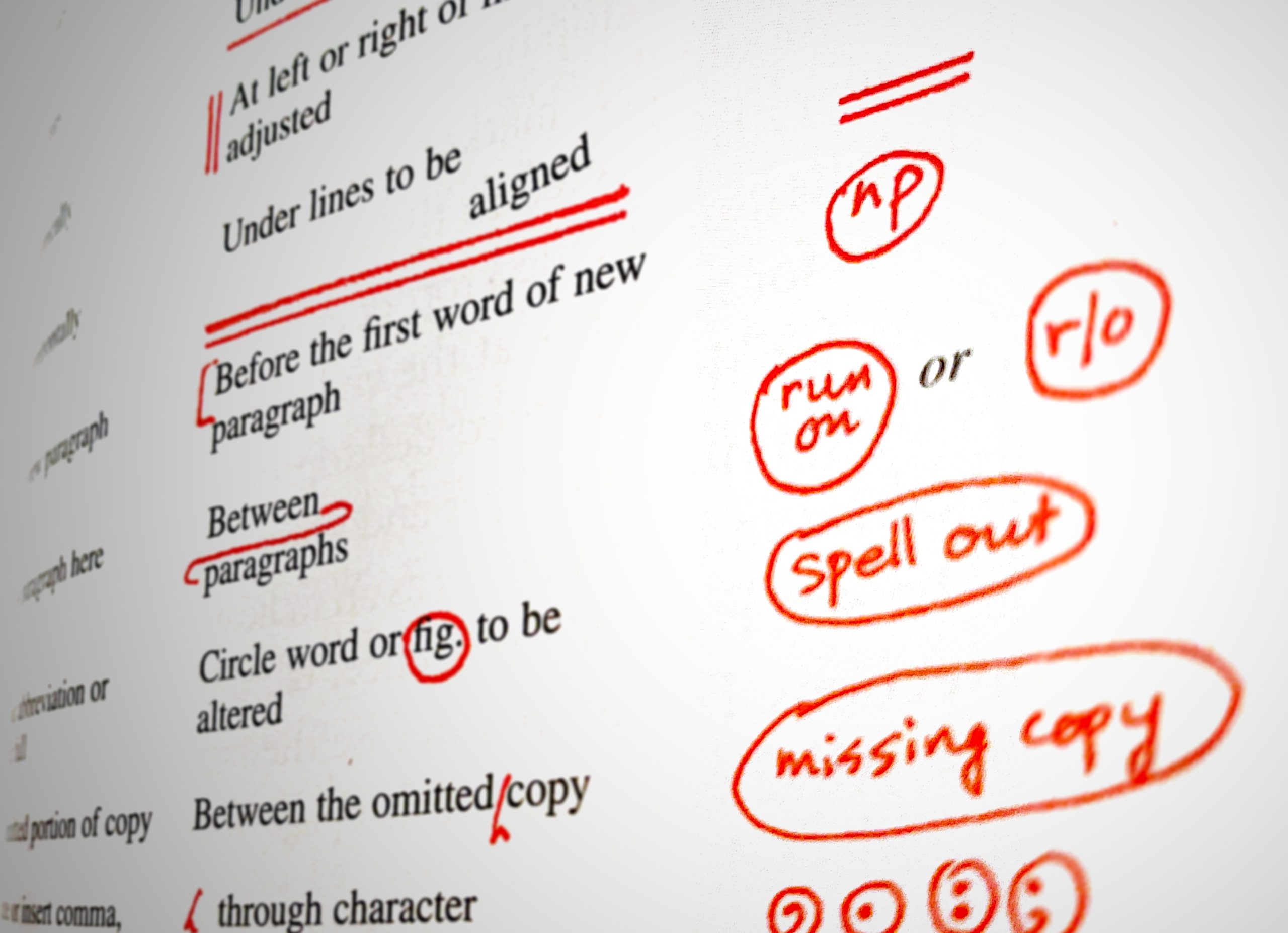


Diversity, particularly as it relates to First Nations people and people of colour, has gained a lot of traction as a topic of discussion within the literary industry over the last few years. We use the literary landscape as a mirror of society, allowing for generally unrepresented children to get a chance to see themselves reflected; diverse literature aids the development of a child’s social and emotional identity. With minorities specifically being consistently under or misrepresented in the broader media landscape, it is important that the integrity and authenticity of such stories are upheld. While the conversation surrounding diversity in publishing has evolved over time, what has become clear is that the responsibility of addressing these issues does not sit solely with writers; we must look at what that means within the broader literary ecosystem, and not just on what is depicted on our bookshelves and prize lists. While there are now a wide range of diverse writers, critics, poets and the like within contemporary Australian publishing, this does not necessarily reflect the wider publishing landscape.
We are now seeing an increased appetite for more diverse voices. However, the Australian publishing sector, specifically those in leading roles, remain ‘persistently monocultural’. The trend in publishing more diverse Australian writers and their stories has happened at a far greater rate and development than greater representation in other crucial roles within the publishing sector including editors, publishers and sensitivity readers. While publishing diverse stories is an important step towards a more diverse literary landscape, this can also come at a cost if manuscripts are rushed without adequate support, or writers subjected to inappropriate and often damaging editorial processes. Although it may be beneficial for diverse books to exist, it is necessary to critically analyse the way they are published also.
*
In 2018, a Books+Publishing survey of 349 people employed within literary industry found that only 6 per cent of respondents identified of a person of colour and only one single respondent (0.3 per cent) identified as being Indigenous. These numbers present issues across the board; a lack of culturally sensitive writer-editor relationships being one direct result of these figures.
The editorial process as a whole can affect the authenticity of a story or voice. In any editorial relationship there are issues of class, gender etc., but when that relationship is cross-cultural, there is an extreme risk for misunderstanding, appropriation and censorship. As Robin Freeman offers in ‘We Must Become Gatekeepers: Editing Indigenous Writing’: ‘The editor’s position of power is particularly evident if the cultural underpinnings of editor and writer are very different, as is the case with non-Indigenous editors editing Indigenous work.’ The role of a white editor working with Indigenous stories, and the ability to handle those stories in an authentic and safe way must be questioned. It is not just the technical skills that make someone a good editor. As Freeman notes, ‘non-Indigenous editors increasingly find themselves negotiating the uncomfortable territories of race, politics and power for which [they are] poorly prepared’.
Although it may be beneficial for diverse books to exist, it is necessary to critically analyse the way they are published also.
The easiest way to avoid this inappropriate and often unsafe situation is to have Indigenous editors working with Indigenous writers; enabling the development of Indigenous expression without the added complications that arise with a cross-cultural relationship. The benefits of having a culturally safe editor are pointed out by Alison Whittaker in an interview for Kill Your Darlings, where she had this to say about her editor, Grace Lucas-Pennington: ‘Grace’s edits were about getting the architecture of the collection together in a way that didn’t break meaning. She also enhanced and shaped what was already in the manuscript, including its layers of privy that are coded for Indigenous readers.’ Whittaker emphasises the cultural significance of the writer-editor relationship: ‘the fact Grace is Bundjalung was fundamental to this process, and also to building a creative relationship of trust and cultural reciprocity.’
This may be an ideal situation but the goals and aspirations of an Indigenous industry sector remains largely unfulfilled. A 2003 study by Anita Heiss, Dhuuluu-Yala to Talk Straight: Publishing Aboriginal Literature in Australia, identified that there were only four ‘industry trained’ Aboriginal editors in that year. As acknowledged by Hella Ibrahim in her essay ‘We Need Diverse Editors’, currently no database exists for First Nations editors and editors of colour in Australia, making it difficult to put a number that reflects the current industry.
In the absence of Indigenous editors, one question that gets asked by non-Indigenous industry professionals currently holding positions of power is: What can we do better? A considerable amount of literature has been published on how best to work with Indigenous writers. Protocols first developed in 2002 by Terri Janke for using First Nations cultural and intellectual property in the arts lists various case studies and guidelines, as well as a practical checklist for those engaging with Indigenous work. According to these protocols, Indigenous control is a principle which refers to the right of Indigenous people to control the use and expression of their cultural heritage. A project that adheres strongly to such a protocol in an authentic and culturally safe way will uphold the highest levels of integrity for the work that it produces.
The Australia Council and the Australian Institute of Aboriginal and Torres Strait Islander Studies have both also published comprehensive guides to publishing Indigenous work that includes principles and protocols as well as implementation strategies for work across a variety of writing styles. While these guides exist, there needs to be a clear implementation strategy set out throughout by publishers that promote individual accountability across the sector. Cordite Poetry, for example, has a ‘Guide for Indigenous Editing and Writing’ on their website that outlines a clear process for both authors and editors when working in this space. As of 2018, they have also committed to putting all commissioned critical work engaged with Indigenous cultural material and heritage through a consultative peer-review process.
In any editorial relationship there are issues of class, gender etc., but when that relationship is cross-cultural, there is an extreme risk for misunderstanding, appropriation and censorship.
In 2018, The Lifted Brow published Blak Brow, an edition of the literary magazine that was created entirely and independently by First Nations writers, editors, designers, artists and academics. The organisation receded control of all aspects of publishing the journal including commissioning and producing content, designing, planning, budgets etc. Academic Dr Paola Balla from Victoria University was approached to drive the project and agreed to be involved on the basis that the project be a collective one. Thus, an editorial collective was formed that also included Kim Kruger, Tony Birch, Karen Jackson, Pauline Whyman and myself.
The success of such a project can mostly be attributed to the fact it was a collective achievement. There was no hierarchy of involvement and decisions were never made on an individual basis. As we wrote in the edition’s editorial:
Too often as Blakfellas we are expected to work as lone rangers in white corporations and institutions…We drew on our networks and were entrusted by the women based on the integrity of our relationships. This isn’t just pulled out of the ether. It is built up from years of talking, thinking, working, collaboration, kinship ties, trust and reciprocity. We sought out women with interesting ideas. With stories to tell. With hard truths. With strength. And they honoured us by trusting us with their work.
It is important to note that not all projects will work in this way and that trust is not something that should be expected as a natural occurrence. Indigenous people will take different approaches to working with non-Indigenous collaborators. Clare Land discusses this in her book Decolonizing Solidarity: ‘There is a tension between the long track record of white untrustworthiness and the need for Indigenous people to be optimistic about the possibility of developing trusting relationships with allies.’
*
According to the Books+Publishing study from 2018, over 93 per cent of the 349 publishing workers who responded identified as having completed a tertiary qualification. The disparity between Indigenous and non-Indigenous rates of education are wide known; for secondary school students, for example, the attainment rate of year 12 or equivalent for Indigenous Australians was only around 65 per cent in 2016, according to the ABS. This also isn’t taking into consideration geographical variables; in 2018, the attendance rate was 22–23 percentage points lower for Indigenous students in very remote areas (63 per cent). Comparing that with inner regional areas (86 per cent) and major cities (85 per cent), there is a significant gap within the community alone.
While inequalities in education need to be addressed, they should not lay sole blame for the issue of lack of diversity within the literary industry. As Camha Pham has argued, the industry should not be reliant on formal education as a sole pathway into the industry, along with unpaid internships and low salary entry level roles, but look at alternative pathways that address the structural inequalities that place ‘marginalised groups, particularly those from lower socioeconomic backgrounds, at an immediate disadvantage’.
The reciprocal trust between publishers, editors and authors, both Indigenous and non-Indigenous, should be treated as something that is sacred and valued through constant nurturing and expanding.
Looking at the broader literary eco-system, we are now seeing an emergence of opportunities specifically targeted towards those ambitious to explore the role of editors or publishers and who are looking for appropriate ways to enter the industry. Queensland-based black&write! provides both writing fellowships and editing internships, aimed at offering young Aboriginal and Torres Strait Islanders valuable industry experience and career pathways that might otherwise be inaccessible through formal education and training. Further, Broome-based publisher Magabala Books last year announced an editorial cadetship; a paid opportunity that will provide on-the-job training, professional development, and mentoring for a First Nations person interested in a career in publishing.
Online publication Djed Press is another space working to bridge these gaps in diversifying the literary workforce; they are also the only journal of its kind within Australia that works exclusively with Blak and people of colour creatives. Their website states that this is to ‘address the insufficient representation of marginalised people within the Australian literary landscape today’. In 2021, Djed Press launched a new Editorial Mentorship Program; a 10-week comprehensive program with the intention of giving an aspiring or emerging editor an overview of editing and publishing within the industry.
The value in these pathways is that they are also paid opportunities, allowing the interns to gain experience without having to sacrifice a living wage. There are also no prerequisites in applying, another barrier or hurdle that can be avoided for those wanting to break into the industry. In addition to this, the recipient of such opportunities are not the sole benefactors, rather those working within publishing or who are already established, have the opportunity to engage in cross-cultural relationships and develop a two-way learning experience that can benefit all parties.
*
While the factual and numerical data is limited when it comes to diversity and inclusion within publishing, we can get a clear understanding of the landscape through analysing the trends, roles and initiatives that are available. The bottom line being that there is still a long way to go and a lot of work to be done to achieve a true diverse literary industry. It is also crucial that factual data be recorded in relation to diversity within workplaces and the wider literary landscape. There cannot be real progress without a measured and factual landscape.
It is clear that Indigenous and culturally diverse professionals must be positioned among various roles within publishing, as the only concrete way to ensure that Indigenous expression can exist without having to rely on the cross-cultural editorial relationship. Publishing Indigenous writing should not be a tricky path to navigate; nor should it be an area in which publishers and editors are hesitant to tread. With clear guidelines, it can be simple and quite straightforward. Publishers should be creating these guidelines specific to their organisations as a matter of safety for Indigenous authors. This starts with developing key relationships within the Indigenous community and ensuring that those relationships are tended to often. The reciprocal trust between publishers, editors and authors, both Indigenous and non-Indigenous, should be treated as something that is sacred and valued through constant nurturing and expanding. To quote Tony Birch, when working with First Nations people: ‘Leave your ego at the door and look around the room at the faces you will be working with. If you’re not prepared to work with total generosity, get up from the table and leave the room.’
Creating initiatives such as mentorships and internships targeted specifically to those from diverse backgrounds is a fundamental step forward. By equipping the next generation of industry professionals with skills, experience and networks, there will be creation of a solid foundation in which we would see the voices and ideas of emerging creatives within the industry be elevated. Until Indigenous editorial professionals are positioned to undertake various roles within the publishing landscape, it is up to those that currently hold those positions to advocate for tangible change so the responsibility for promoting and practising inclusion does not fall solely on the shoulders of those who are already doing the work.
This piece is an edited version of the 2021 Editing Micro-Festival keynote, ‘The Future of Editing’.