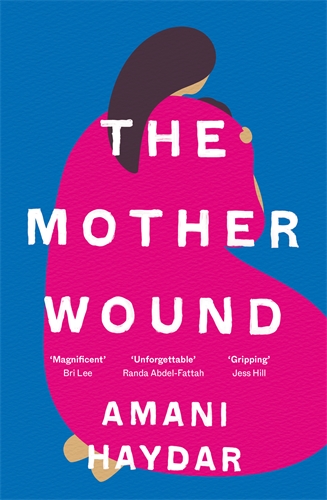
The Mother Wound
Amani Haydar (PanMacmillan, available now)
The Mother Wound is our First Book Club pick for July—stay tuned to the KYD website and Podcast for more throughout the month.
The Mother Wound begins in a hospital room, where Amani Haydar is giving birth to her first child. Following the birth, a nurse asks where Amani’s mother is. This seemingly innocent question has a tragic answer. Amani’s mother Salwa had been murdered by her husband—Amani’s father—four months prior. Amani says to the nurse: ‘I am so happy to have a daughter, I am from a family of strong women.’ This book is a blend of deeply personal memoir and a study into violence and trauma, but it is also a testament to women who raise families and support communities in terrifying circumstances.
Salwa had come to Australia as a shy teenage bride. Despite her husband’s constant belittling, she had grown to be a confident and passionate advocate for women in her community, and was training to be a counsellor before her life was so cruelly ended. As Amani writes, her mother had all of the skills to recognise the red flags of an abusive relationship but ‘there was nothing the law could do to challenge Mum’s belief that it was her job to continue holding the family together no matter the risk.’ As the case against Amani’s father moves through the courts, his side of the family turn on Amani and her sisters, accusing them of being bad daughters who cause trouble and do not support their father. They claim that Salwa must have done something to deserve her death. The blatant patriarchy and misogyny that created the circumstances of their mother’s murder drags on, compounding the trauma.
The Mother Wound encompasses so many difficult themes, and does so with power and grace.
Years before her mother’s murder, Amani’s family suffered another great tragedy. Her grandmother Layla was killed by an Israeli drone strike as she fled her war-torn village in a van flying a white flag. Layla’s death was labelled a suspected war crime, and Salwa worked hard to hold her mother’s state-sanctioned killers to account. As Amani researches her grandmother’s death for her book, she comes across a television interview given by Salwa, and reflects on the similarities: ‘Listening to the interview as an adult, I encounter Mum in a similar phase of her life as I am now, telling a similar story.’ The repetition here is chilling—the violent death of a mother, and the determined activism of a daughter. But the strength of these bereaved women is remarkable.
The Mother Wound encompasses so many difficult themes, and does so with power and grace. Amani writes that ‘between the screeches of Islamophobes and the booming voice of patriarchy within our own community, there is little room left for Muslim women to share their truths freely.’ This may be a difficult read for some, but it is vital that we read stories like Amani’s, Salwa’s and Layla’s.
— Ellen Cregan