

In 2024, the French memoirist Édouard Louis appeared at the Sydney Opera House. Mutual oomfs attended, posting selfies out the front of the famous shells before the show. It was a big-ticket literary event for queer Sydney readers. I recall thinking that Louis must have been much better known here than I had originally assumed. I had no idea he could pack out the two-thousand-plus seats of the Concert Hall. Well, not quite. Researching now, I discover he was stationed in the Utzon Room, an alcove in the east side, named after the building’s famous architect, with stunning views of the harbour but with a capacity of about two hundred.
Still, the fact that Louis had been flown to Australia to appear at this grand event was part of his story; how far he had come from the poverty he had fled in his teenage years. Louis’ debut, The End of Eddy (trans. Michael Lucey), had evocatively depicted that childhood in Hallencourt, a commune roughly two and a half hours north of Paris. Louis was just twenty-one at the time of its initial publication in France in 2014. Readers then were rocked by the accounts of homophobia, and the physical and verbal abuse its young author was subjected to by members of his village and at the hands of his immediate family.
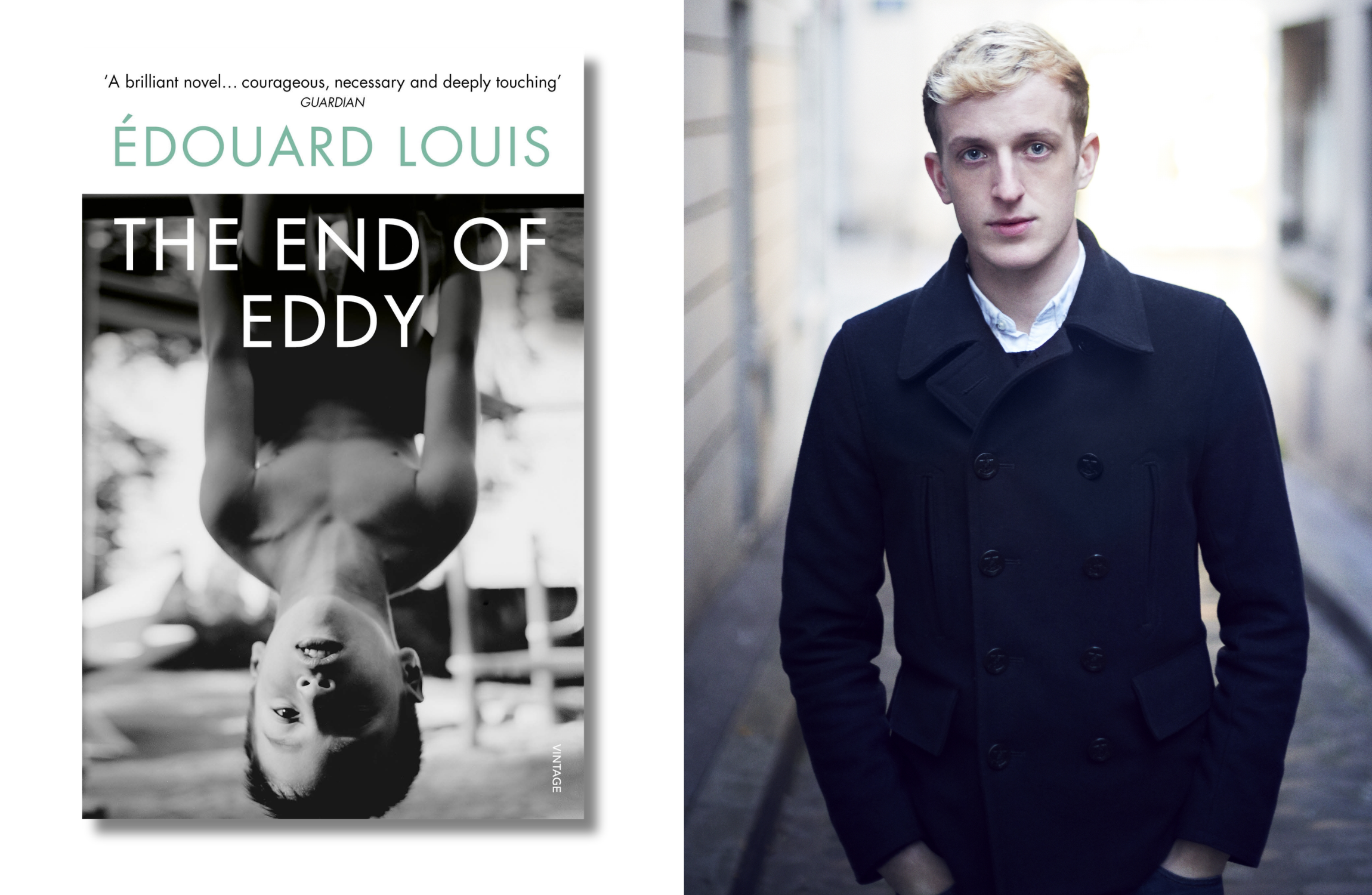
The book was categorised as autofiction by his publisher and by critics, but memoir seems the more apt descriptor. Louis wants his books to be regarded as novels, though he has insisted they are entirely true. Perhaps it is, in part, a cultural difference. In French, the word for history and story is the same: l’histoire. One thing is certain: Louis is writing in the genre of family history, though not with the usual Ancestry.com login, and not with a great deal of love for those he depicts. For one, the book chronicles his abandonment of his given name, Eddy Bellegueule, for his new (authorial) self.
Subscribe to stay in the loop
Be the first to read new stories, discover publishing opportunities, and access resources. For people who love great writing.
Reading it now, more than a decade after its initial release, The End of Eddy retains the edge that made it a major bestseller in France and a literary phenomenon around the world. Louis’ powers of observation are potent, and his writing is largely unflinching from depicting violence, slurs, underage sex (including incest). (But we will come to what does cause him to flinch.) It would be inadvisable to publish your life’s story at such an age in most circumstances, but for Louis he achieved many of the aims of the older, more experienced memoirist. His trajectory also changed dramatically as a result.
There have been six books since Eddy, roughly one every two years. It’s a breathtaking pace, but the books are brief. Two have appeared in English just this year, both translated by the award-winning Malaysian novelist Tash Aw. Their frequency and brevity risk encouraging a perception of a cottage industry to maintain; but for those who have known poverty, and have had to outrun it, there will be an understanding of his unrelenting work ethic. Monique Escapes, concerning his mother and her separation from a verbally abusive partner, was released this February. Louis’ latest is Collapse, out this month, and returns, as all his books have so far, to his family.
Louis was just twenty-one at the time of its initial publication in France in 2014. Readers were rocked.
Collapse focuses on Louis’ older brother, chronicling the years of his consistent alcohol abuse and subsequent death. He is a character that will be familiar to readers of Louis’ earlier novels, though he is never explicitly named. He appears briefly in Eddy as a shadowy, violent figure, held just outside the frame. His tragic end might not come as such a surprise to those who do remember him. The collapse—l’effondrement—is Louis’ brother’s fatal fall to the floor of his apartment, his liver and heart having finally given out after years of emergency room visits and hospital stays but no lasting treatment.
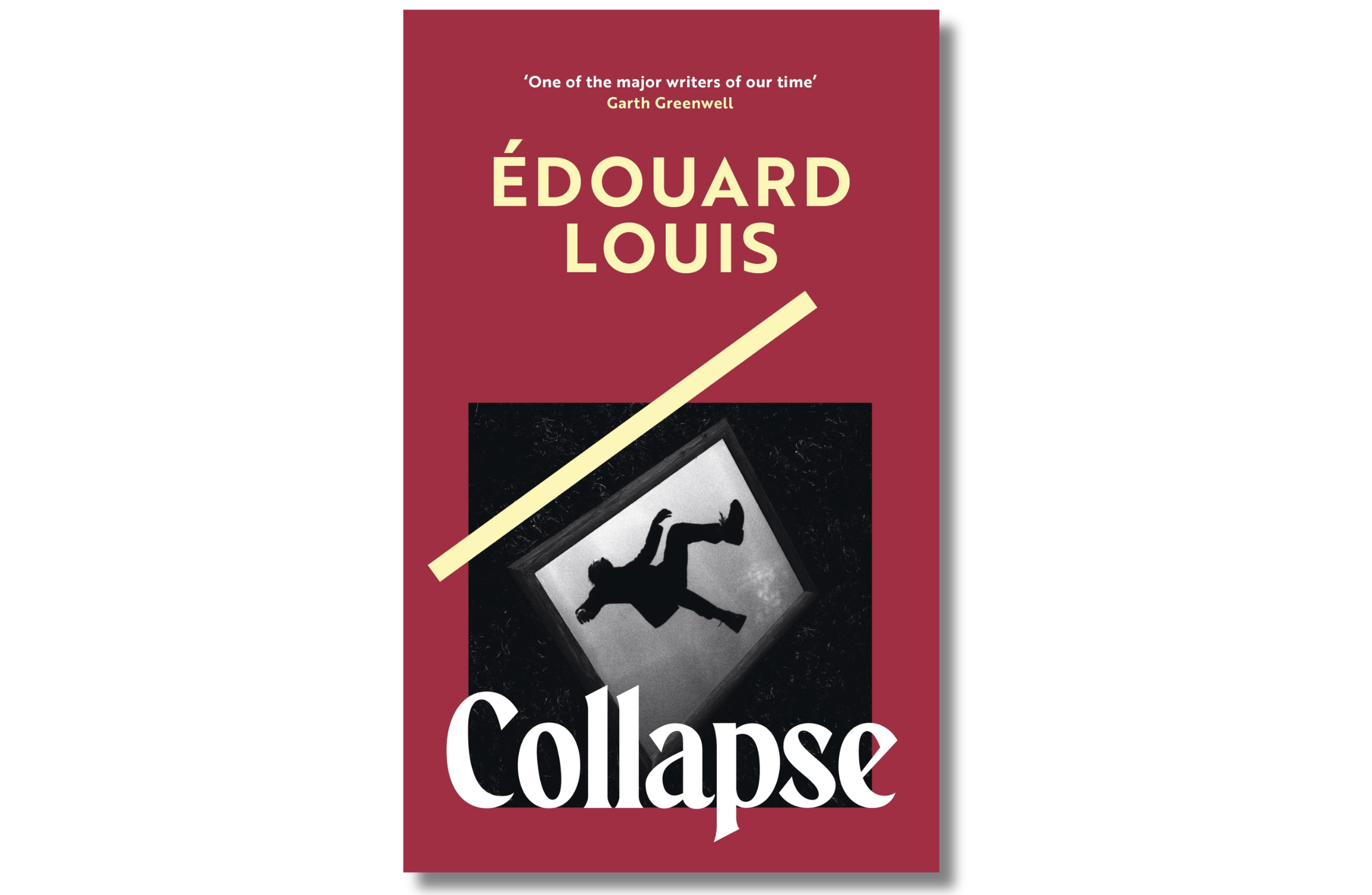
This man is, in fact, Louis’ half-brother. They share the same mother, Monique. And they had a common enemy in Louis’ father (a later book reveals that the brother almost killed his stepfather). Both men have long been the lynchpin of the author’s exploration of the homophobia and racism in France. Alcohol too—particularly the anise-flavoured aperitif pastis—flows freely. These are men who predate today’s so-called ‘manosphere’ (whether they would have succumbed to the online vices of that movement is uncertain given they could not afford a telephone line let alone an internet connection, not that you’ve ever needed a modem to become a misogynist). Louis’ accounts of his brother’s violence against women, both threatened and enacted, are incredibly distressing. Louis himself, though, is not such an innocent on this count. In a scene that is now rarely repeated from Eddy, Louis restages a schoolyard fight with his female friend in which she taunted him about his class origins, and he in turn punched her: ‘I grabbed her by the hair,’ he writes, ‘and slammed her head against the parked school bus, violently…’
On reading this line aloud to my wife, she quickly remarked: ‘God, the French love to leave details in their memoirs no one else would dare include.’ Indeed. Louis has long gone in for shock value—which has its own important history in French letters, just ask Jean Genet—and the early scenes in Eddy of his father’s cruelty to animals, killing kittens by beating them or drinking the blood of freshly butchered pigs, certainly grabbed readers’ attention.
Louis has long gone in for shock value—which has its own important history in French letters, just ask Jean Genet.
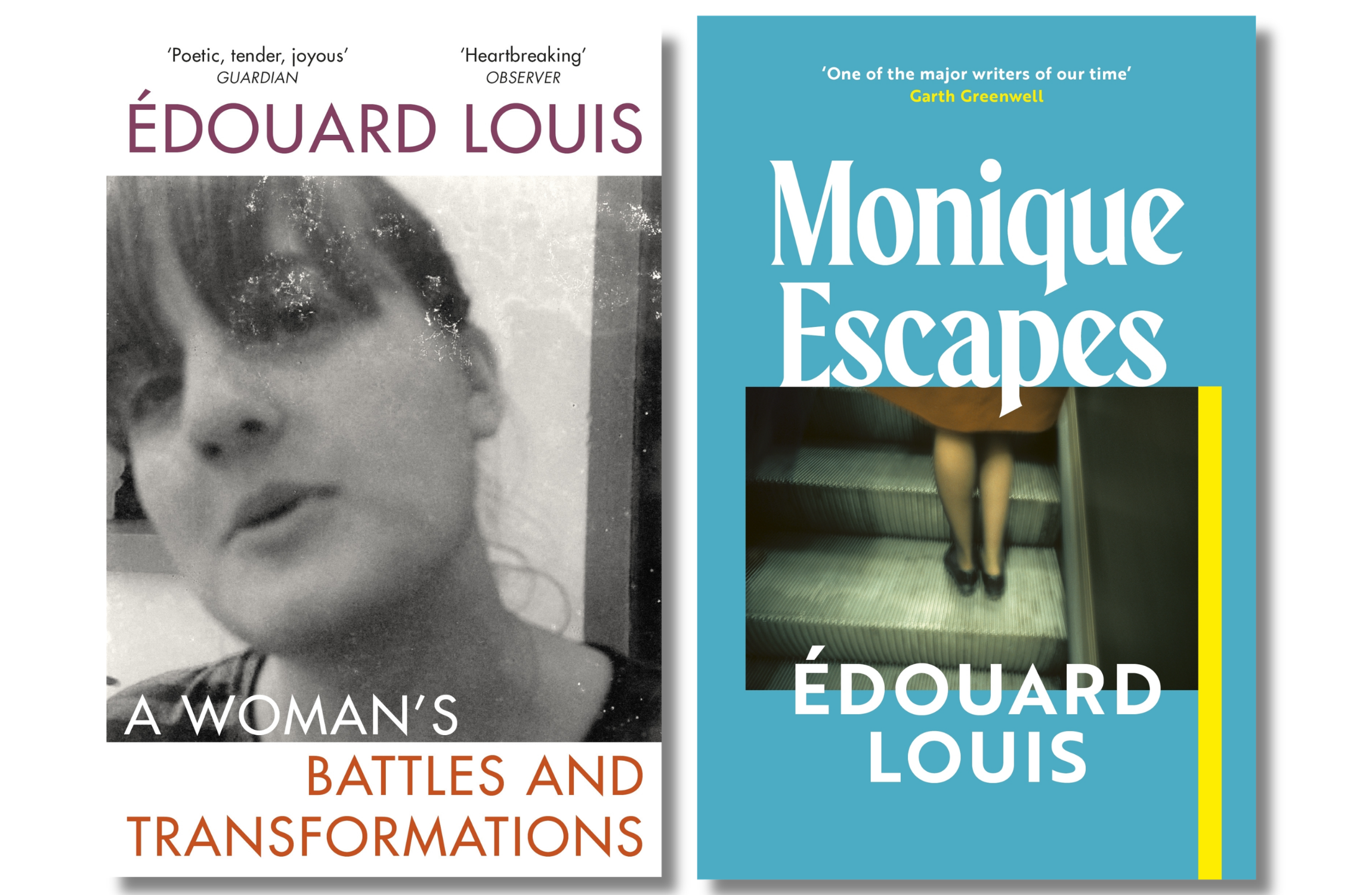
His addiction to the abject has mellowed somewhat with age. Collapse is a serious treatise on self-destructiveness and soberly surveys the disinheritances of alcoholism. Monique Escapes is the second book about his mother, after 2022’s A Woman’s Battles and Transformations (also translated by Tash Aw), in which he traces her escape from his father. Monique shows his full powers to merge portraiture, procedural and political commentary: depicting his mother’s growing agency in the years since she left his father, while considering the lack of welfare for women who flee their abusive partners. He charts Monique’s physical and emotional changes after her move to Paris, knowing something of them from his own experience.
Louis even draws out his brother’s ambitions and dreams in Collapse, and how they were consistently thwarted by a cruelly mocking stepfather. Despite all his monstrosities, the brother is still protective of Louis, promising him: ‘I’ll never let our parents do to you what they’ve done to me.’ Louis reflects on this line, solemnly writing: ‘My brother lived with the terror that my life might one day resemble his.’ This level of caring is a revelation to the reader of Louis’ oeuvre. There are instances of kindness, too, that seem foreign to readers of previous accounts. When Louis leaves home to attend a school outside of their stifling suburb, his brother gives him the keys to his own apartment. Louis is invited to use it as he pleases, free to come and go, an act of generosity the author openly hesitates to include in Collapse:
I have to admit, when I started to write my brother’s story, I felt embarrassed by this detail, I didn’t want to relate it because I felt that it shattered the image of a cold distance between him and me, a distance to which, for complex reasons, I was attached.
I would argue not quite so complex: Louis has a public image to uphold as a memoirist who put a great distance between himself and his family. He has presented himself as someone who had broken out of poverty without help from them. In a remarkable review of Louis’ third book, Who Killed My Father (trans. Lorin Stein), Jason Farago picks up on the fact that the father presented in The End of Eddy is missing some key empathetic acts that show up in the later texts. (Who killed him? He’s not even actually dead.) Farago was right: Louis makes no mention that his father goes out of his way to buy his son a collector’s edition of the James Cameron epic Titanic on VHS for Christmas when he can barely afford it, or that he sings Celine Dion at the top of his lungs in the car with his son until this later book. Later in life, it’s revealed that his father buys Louis’ books and gives them to the people he loves. (Annie Ernaux had it all the other way around, writing a moving elegy for her father, A Man’s Place, before revealing an incident in a later book, Shame, in which he had attempted to murder her mother.)
In his books, Louis largely skates around what his persistent public airings of private family affairs has done to his close relatives. In Monique Escapes, however, we learn that his sister did not speak to him for eight years after she sent him ‘insulting messages’ the day after Eddy was published (we don’t learn why it was insulting). A mortifying and cringe-inducing scene in the same book presents Monique, who had been referred to by the alias ‘Brigitte’ in Louis’ debut, showing up to a bookstore event in Paris and confronting her son during the question-and-answer part of the evening. Unaware that his mother had been there listening to him speak about her publicly, Louis runs from the room and hides in a storeroom. By this point, familial humiliation had become routine.
Collapse captures a scene that takes place after Louis has completed Eddy, but crucially before it is published, in which he organises a dinner with his brother and sister, effectively as a farewell, knowing it will likely be the last time he sees them before the rupture caused by his book occurs. In fact, it turns out to be the last time Louis sees his brother alive. The dinner table scene is important because it shows the tedious nature of his brother’s alcoholism as he steadily outdrinks his siblings, and Louis’ understandable determination to remove himself from that relationship. Louis swiftly evokes the boredom an alcoholic can instil in a room—draining the energy, and belligerently claiming the centre of attention—but the scene also has a cold and exhausting quality of its own. There is a fine line for the writer between the critical observation of others and self-aggrandisement, and Louis trips over it here, not least because we are witnessing the rehearsal of the reception of his debut book for the umpteenth time.
Louis has a public image to uphold as a memoirist who put a great distance between himself and his family.
It is not that Louis keeps writing the same book over and over again—a common charge—it’s that in nearly every book he keeps reaching the same end point: the writing and publication of The End of Eddy. Understandably, he has been transfixed by his own success; Louis being the most meteoric of meritocrats. Many readers delight in the immediacy of Louis’ creative responses to the unfoldings of his own life, but there were moments when, reading several of his books back-to-back, I longed more for a slower pace and less the feeling of an arrested development, which his future works may offer. While thinking of the French memoirist tradition he is writing into, it is worth noting that Annie Ernaux was thirty-four when she published her first book, Cleaning Out, the age Louis will turn this year. It wasn’t until Simone de Beauvoir was fifty that she released Memoirs of a Dutiful Daughter, the first volume in a series of autobiographical works that inspired Ernaux and a whole generation of feminist writers around the world. The sociology professor Didier Eribon was fifty-six when he published his memoir, Returning to Reims, very much indebted to Ernaux and Beauvoir alike.
Didier Eribon is a name that might not be familiar to many Australian readers, but he is an important figure in understanding Édouard Louis. Returning to Reims provides an exact model for Louis’ entire project, an intellectual memoir about a young gay man escaping his working-class origins, primarily through education, after growing up in deindustrialised Northern France.
What Eribon’s memoir captured so well is an experience surely familiar to some—not all, there is no monolith—queer people from working-class backgrounds who feel they need to betray their class origins in order to make an escape. The ability to return—and reconcile with family members—is particularly fraught if homophobia was part of the reason to break away. Eribon puts the sexuality and class split thus: ‘In one case I needed to become what I was, but in the other I needed to reject what I was supposed to have been.’ For Eribon, this became the driving factor in his life, what he calls ‘the project of remaking my self.’
Eribon’s transformative undertaking became Louis’ too. The book that brought Louis out to Australia, to Sydney (and before that Adelaide) was Change, a novel in which he nakedly revealed the process of remaking of himself and how important discovering Eribon’s memoir and their subsequent friendship was for him.

In one scene in Change, Louis describes a dinner hosted by the upper class, to which he is invited. During the meal, a waitress drops a spoon and the host tells her off. Louis is embarrassed, though not for her but for himself: ‘I wanted to stand up and tell this woman that I wasn’t like them, that I was not on their side, but I kept silent.’ Having made it up into the rarified class of Paris’s elite, he suddenly wanted to be shown as having come from elsewhere. The next day he lies to Eribon and says he did defend waitress in that moment. It would have been interesting to know what Didier Eribon thought about the lie; he provides Louis wise counsel elsewhere.
Louis shows Eribon as being instrumental in helping his mother flee her abusive partner. Eribon attends to her when she first leaves and assists in efforts to find Monique a new home, all while sharing the story of his own mother (Eribon’s own memoir of his mother’s life, The Life, Old Age and Death of a Working-Class Woman, came out last year in English and is cited by Louis in Monique Escapes). This reading leads Louis towards some of his best writing, and sharpest observations, particularly in the way his class mobility could be shared—through economic capital:
It’s because I’d suffered in my childhood that I wrote books that led to conflicts with my family which paradoxically enabled me to help my mother escape and reinvent herself.
It is here though that Louis, the editor of a book on Pierre Bourdieu, might have underlined that meritocracy is a myth. One exception let through inspires false hope in others and the oppressive systems simply stay in play. It is hard in these moments to grasp Louis’ overall political project. The books themselves stand like sociological case studies—the subtitle of Change is a ‘method’ after all—but a great deal of the proper work of unpacking their meaning seems to be conducted in public appearances and interviews rather than in text.
Édouard Louis has said he is done writing about kin following the publication of Collapse and Monique Escapes, framing the two books as the ‘conclusion of a family saga’. The next book will surely be the hardest to write. Louis has spent hundreds of thousands of words telling us how he has outrun his family, but what happens when he has to leave them behind as subject matter too?
With his lived experience of white working class poverty in France and his immense readership, Louis would be well placed to start writing into the genre of the ‘history from below’, giving a voice to the voiceless. There have been times I have felt the only name he is interested in elevating is his own, but Monique Escapes at least proves he can lift up another. The question now, perhaps, is whether he cares to do it for someone unrelated to him.