Enjoy discounts across our wide range of courses with award-winning writers.

Culture

Permafrost, Scary Monsters, Another Day in the Colony, How to End a Story

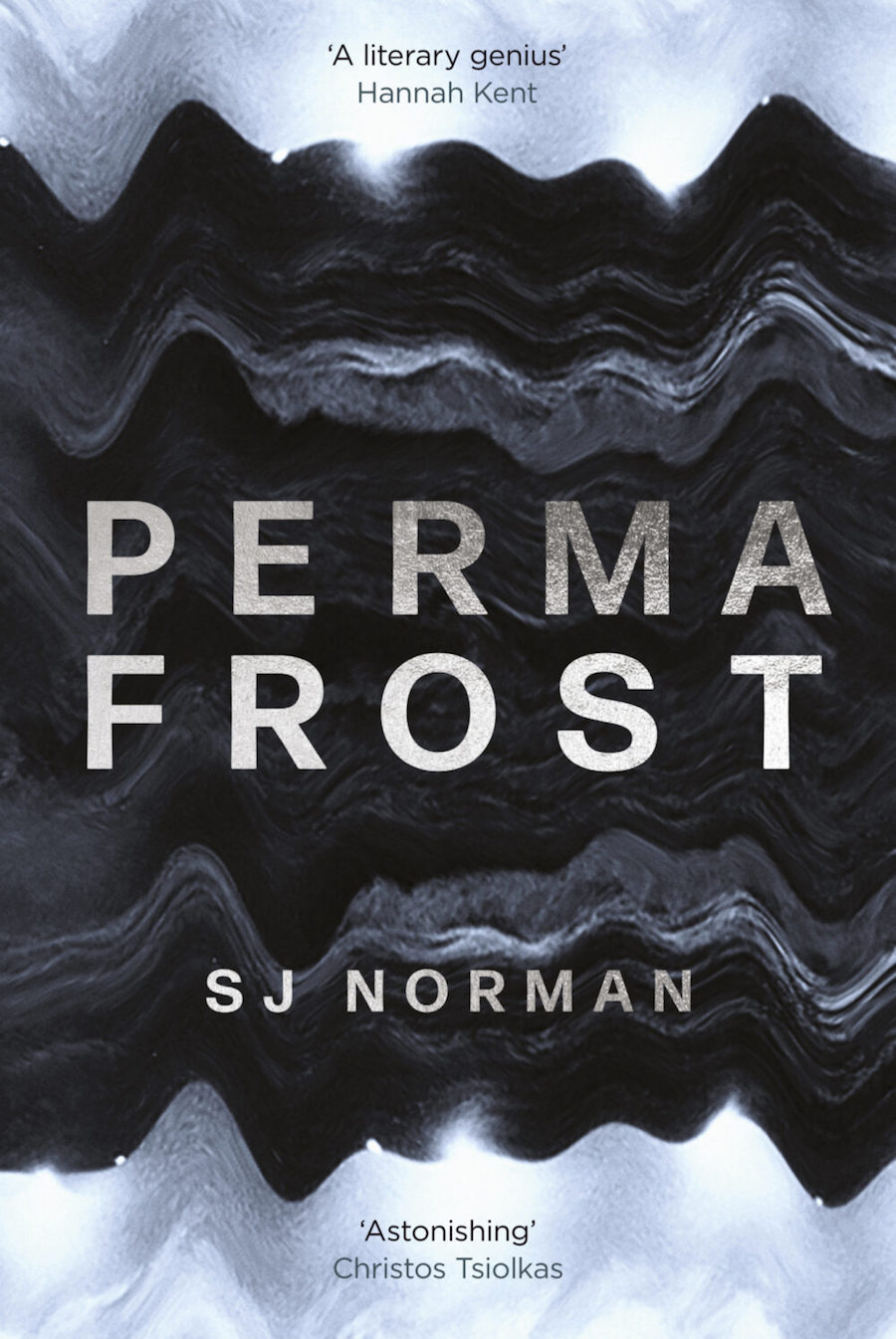
Permafrost
SJ Norman (UQP, available now)

Permafrost is our First Book Club pick for November—Stay tuned for features on our website and podcast throughout the month!

Permafrost, the debut short-story collection from multi-disciplinary artist SJ Norman, offers an immersive and transportive reading experience. These are stories of solitude, sex, magic and desire, all set against various breathtaking backdrops: a bookshop that attracts loneliness, a British town surrounded by ancient woods, Berlin in the deep of winter, a windswept squid-fishing town in northern Japan.

Rather than taking on the difficult task of building character development in such a short form, Norman focuses on moments, allowing each story to be more of a postcard than a letter. Every story in this collection uses first-person perspective, keeping the narrators fairly anonymous. With this approach, Norman invites their reader to view these moments through the eyes of the protagonist. And the author’s prose embodies the title of the book—their words and sentences are striking, crisp and often have an abject sharpness to them. A character wakes ‘sticking to the bed sheets like a moist ham hock in a sack’, blood from a scratch is ‘hot, red proof of the life in my body’, and as a bath drains ‘the plughole chokes of the last of the bathwater.’

Norman focuses on moments, allowing each story to be more of a postcard than a letter.

The brutality of dispossession and colonial doublethink frames many moments in this collection. In ‘Unspeakable’, our protagonist is shown around Auschwitz-Birkenau by a Polish tour guide. They recall a white Australian friend’s horror at anecdotes of people eating ice cream while visiting the former concentration camp. Our protagonist thinks to themself, ‘Do you know how many times I’ve declined invitations from white friends to camp or picnic on a massacre site? Do you understand the first thing about where you come from?’ Earlier in this story, the Polish guide recalls being trapped out at the site after dark, having to sleep in the backseat of his car. He tells the tourist, ‘All night I felt outside there were people. Watching through the windows. People trying to get in.’ Whether or not these spectres are real is irrelevant—the evils of the past have scarred that place.

Norman is a remarkable writer, and the worlds they craft in Permafrost feel everlasting.

— Ellen Cregan
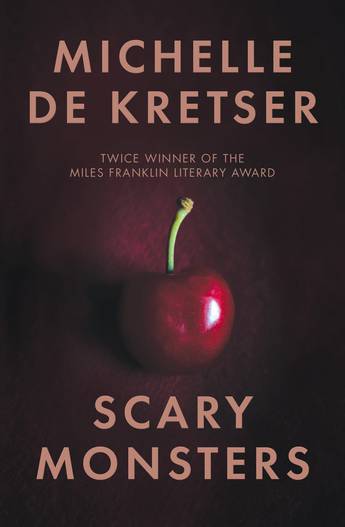
Scary Monsters
Michelle de Kretser (Allen & Unwin, available now)

Twice winner of the Miles Franklin, Michelle de Kretser continues her fictional examination of migration, travel and ideas of belonging in her seventh novel Scary Monsters. Titled after the David Bowie album, Scary Monsters is presented in a reversible format that follows two discrete narratives, either of which can be read first. Lili, whose family migrated to Australia from Asia, works in a high school in 1980s Montpellier; Lyle, the ‘good migrant’ incarnate, lives in dystopian Melbourne while working for the government’s omnipotent ‘Department’. The upside-down format is designed to reflect the ways that migration has upended the characters’ lives. However, given how unrelated the two narratives are—the ‘Lyle’ section is spec-fic satire, while the other is realist coming-of-age fiction—the format becomes scaffolding: an effort to yoke together two tangentially related novellas.

The novel’s overarching ambition is ultimately its flaw. At the expense of plot and character, Scary Monsters turns into a moralistic fable where social commentary does the heavy lifting.

Despite the marketing angle promoting the novel’s subversive take on migrant fiction, its central concern is how racism affects the psyche of people of colour, destabilising their personal identities when the need to belong becomes paramount—ideas bound to arise in any book centred on race and immigration. But Scary Monsters simply re-stages the themes that de Kretser has hashed out, and with a great deal more nuance, in her previous work. Migration becomes a means for social messaging: ‘Immigration breaks people’, says Lyle, ‘… but pieces of us have disappeared. Immigrants are people with missing pieces.’ Her characters become ciphers for moral, social and political comment rather than fully-formed individuals.

Although hyperbole can be an instrument of satire, the ‘Lyle’ section is so densely packed that it deflates all effort at political commentary: Islam is banned in Australia; a new pandemic leaves people of colour afflicted with a form of vitiligo—a metaphor for Australia’s whiteness; an ethically dubious bill is passed regarding consent and voluntary assisted dying; and the phenomena of ‘Instagram face’—a makeup trend that makes people appear like ‘post-racial delegate[s] from the future’ is embodied by Lyle’s hoverboard-riding, non-binary colleague Lyric. The ‘Lili’ section faces similar moral intrusions, most conspicuously when Jamal, a waiter from Morocco, briefly appears and becomes a vehicle for the author to discuss ideas of racialised sexual inferiority, the ‘white saviour’ complex and the exoticisation of racial otherness.

The novel’s overarching ambition is ultimately its flaw. At the expense of plot and character, Scary Monsters turns into a moralistic fable where social commentary does the heavy lifting, not de Kretser’s narrative muscle.

— Mindy Gill

Another Day in the Colony
Chelsea Watego (UQP, available now)

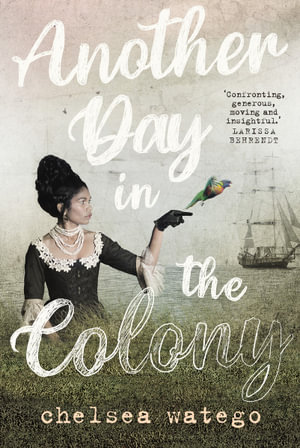
Named after the Twitter hashtag that reinterprets the phrase ‘just another day in the office’ into a real-time description of the colonial violence routinely experienced by Blackfullas in this country, Another Day in the Colony is the highly anticipated first book by Munanjahli and South Sea Islander scholar Dr Chelsea Watego. An invitation for Blackfullas to sit at Watego’s kitchen table, the intimate essays fill in the space between the headlines to give agency, dignity and power in response to the shared experience of racism.

With and without bruises, racism is revealed everywhere. There’s the primary school role-play where the children are asked to portray pastoralists encountering ‘trouble-making Aborigines.’ There is the haunted powerlessness she sees in her father’s eyes, the same look he has when he announces he has inoperable cancer. There’s police checks, warnings about the local RSL and a university defamation case where Watego is repeatedly called ‘Mizz’ instead of Dr.

An invitation for Blackfullas to sit at Watego’s kitchen table, the intimate essays fill in the space between the headlines to give agency, dignity and power.

When CCTV footage becomes evidence in a court case, we see Watego handcuffed while the white male perpetrator continues to swing his fists at her. With Watego in the police vehicle, the perpetrator shakes the hand of a security guard and walks away freely. At the police station, Watego is told that Murri Watch is not answering the phone but when the log is checked it shows no call was made. And the CCTV footage that would explain why her body was left covered in bruises? The footage has been erased. Just another day in the colony…

As well as personal testimony, Watego uses a blend of academic expertise and comic genius to forensically dissect the relationship between the violence, the compliance and the silence of colonial narrative. A particularly hilarious and, at the same time, markedly tragic example is her exposé of the 2016 novel Saltwater by Cathy McLennan. Exposing the book’s dense parade of dehumanising and often animalistic descriptions of Aboriginal characters, we are left in awe questioning how editors, a publisher, media outlets and numerous writer’s festivals embraced it.

This is the Australia that Blackfullas know. This place, as Watego describes, where ‘secrecy almost always serves the perpetrators interest rather than the victims, who often must watch on in silence as the unnamed perpetrators parade themselves to an unsuspecting public as caring and virtuous.’ What we also know though, perfectly articulated by Larissa Behrendt, is that ‘the way Aboriginal people are constructed and the roles they play, reveal more about the motives of the person writing the story than the Aboriginal people in it.’ In Another Day in the Colony, Chelsea Watego usurps the motives of the colony, showing you exactly who and what an Aboriginal is capable of. This book is Deadly!

— Monique Grbec

How to End a Story: Diaries: 1995–1998
Helen Garner (Text Publishing, available now)

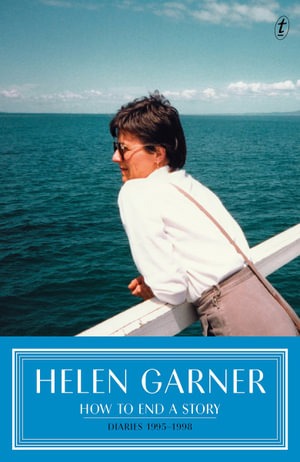
A pert maxim appears in the opening pages of Helen Garner’s Yellow Notebook: Diaries Volume I: ‘Despair and sadness and fear are easier to write about than hope, happiness, confidence.’ By volume three of the diaries, How to End A Story, this crystalline observation appears to have shattered.

Spanning from 1995 to 1998—a period of professional and personal upheaval that saw Garner weathering the fall-out from The First Stone and the appearance of a ‘third party’ in her marriage to V—despair and sadness and fear hang over the book like ‘a black cloud of silent struggle.’ Feelings so immense, so diffuse, so ‘incapacitating’ they seep through the pages like an amorphous, unnamed force.

Garner is often lauded for her unflinching gaze and unsparing prose. But in this latest volume of her diaries her command of concealment is a masterclass.

Perhaps anger is an easier feeling to write about? Garner’s anger is at once roving and self-reflexive. An anger that is so thrilling and invigorated with inquiry it feels productive and potent. An anger that Garner shoulders with absolute responsibility: ‘I’ll try not to turn X the painter into the mule to carry all this anger.’ In doing so, her rage becomes accessible to the reader. It is crisp, clear and fantastically declarative: ‘I fantasise hurling heavy objects through glass. Here, I sit, neatly writing it all down.’

Garner is often lauded for her unflinching gaze and unsparing prose. But in this latest volume of her diaries her command of concealment is a masterclass. In 1996, much to V’s chagrin, Garner begins to attend psychotherapy. She conveys the sessions with her therapist succinctly, powerfully and with supreme discretion: ‘She sat very still with her hands clasped, while I writhed and fidgeted and gabbled.’ Somehow, without actually divulging any details of these conversations, the reader feels as though they had been invited into the room to play silent witness.

The evidence of her marriage under strain mounts slowly, artfully. The white space between each diary entry is used with lethal effect. By the time Garner writes, ‘I lie here in the semi-dark fantasising escape, violence, revenge’ the reader has already actively filled in the gaps with their own wicked imaginings.

The trio of books, when grouped together, look almost elemental: bold, primary colours. They represent a kaleidoscope of experiences: cataclysmic grief and incendiary rage; maternal love and sisterly bonds; jolts of joy and a steady reverence for the ministrations of daily living. What a gift Garner has given us.

— Fiona Murphy

Latest

Shed a Tear for the Norman Mailers

Rebecca Starford

How to Love the World

Ilka Tampke

Writing in the Age of AI