An interview with Toby Fitch and Ďzenana Vucic about the craft of writing poems


Did you know we have a popular KYD members-only newsletter called So You Want to Write? This exclusive email series presents advice and resources from the best and brightest in the Australian writing and publishing community.
With submissions open to the inaugural KYD Poetry Prize, we’ve decided to open up the latest instalment for all readers on the website that gives insights into one of the world’s oldest storytelling forms.
But what even is poetry? Dictionary definitions about lines and stanzas don’t really capture what is such a dynamic creative art with a long history and many different traditions. Furthermore, with no fixed rules of how poetry should be in the modern age, how do you know if you’re any good at it? I asked two poets—one an established practitioner and teacher, the other who has just released a first collection—about inspiration, performance and developing their work.

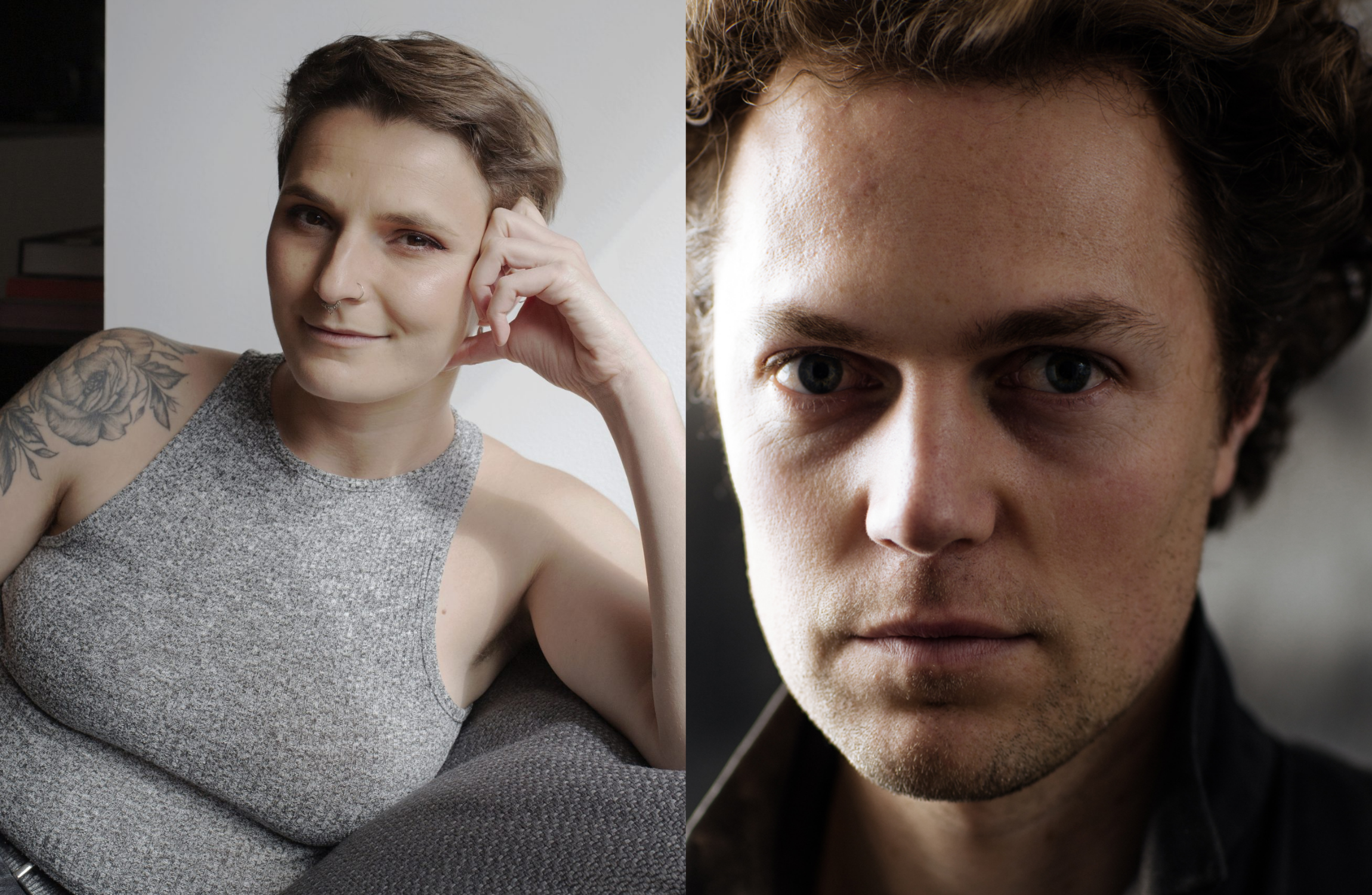
Dženana Vucic is a poet, editor and critic. Her poems have been shortlisted for numerous prizes and published in Australian Poetry Journal, Cordite Poetry Review, Meanjin, Overland and elsewhere. Dženana is a fiction editor at SAND and the reviews editor at Cordite Poetry Review. Her debut collection, after war, was released in April.
Toby Fitch is a poet, editor and essayist. He is a senior lecturer in creative writing at the University of Sydney and former poetry editor of Overland. He is the author of nine books of poetry, including his latest Or: An Autobiography. He co-edited Best of Australian Poetry 2021 with Ellen van Neerven, and edited the anthology Groundswell: The Overland Judith Wright Poetry Prize for New & Emerging Poets 2007–2020.
What does poetry mean to you?
Dženana: I think it’s maybe a way of reaching in but in order to reach out; or reaching through the self to something much beyond it. Poetry is a necessarily collective experience, more than any other genre, I think. It unfurls in the space between reader and writer, a space opened by the words on the page but not circumscribed by them. It’s both incredibly personal and undeniably collaborative, a means of shared meaning-making or a gesture towards some expansive and bewildering reality, or maybe an attempt to reach a truth about it together.
Toby: As Gig Ryan once put it, poetry is the art of language, and I agree. I also concur with Emily Dickinson’s ‘My business is circumference’, and Anne Carson’s ‘If prose is a house, poetry is a man on fire running quite fast through it’. Borges said, ‘Art is fire plus algebra’, while Rimbaud suggested that ‘the poet is actually a thief of fire’, so there’s something elemental in poetry’s potential. Rimbaud also wrote that ‘A poet makes [themselves] a seer through a long, boundless, and systematic disorganisation of the senses.’ Putting aside the visionary (to which I’m only partial if it means that a poet trusts their intuition, or rather that the resultant poetry is distilled intuition), I’m definitely an adherent to poetry burning the structural down, cleansing language of its dead wood, reinvigorating the senses, in every sense.

When did you start writing poetry?
Dženana: There’s nothing like a mental health crisis to turn a guy on to poetry. I had one in my early twenties to thank for it.
Toby: At school I wrote the occasional poem, including one I remember which subverted that old European folk warning used by parents to stop children making silly faces: ‘If the wind changes, your face will stay that way.’ But I had no designs on being a writer at the time, let alone a poet—how silly! I was writing a lot of song lyrics though, as I wanted to be a singer-songwriter, and I was one throughout my twenties. As an undergraduate, I suddenly knew I wanted to write poetry in a fiction workshop class when we were asked to write down our emails for the workshopping process. I made up an email address: freddyfitchisnotapoet@… (‘Freddy’ was the other name my parents considered giving me), and I had to go home and create that email address, which I adopted as my main email account for the next several years like the contrarian I am.
What do you think makes for good poetry?
Dženana: The poetry I like best is capacious but specific; it looks to the world and refracts it so that it can be seen more clearly; it takes personal experiences and observations and weaves them into a vessel that can hold much more than its speaker or its moment.
Toby: An attention to language, its many possible meanings, its musicality; the dovetailing of form and content (where the poem’s shape/arc/structure enhances the themes it’s pursuing); a tuning into or a representation of how thoughts move and make meaning of events; some actual attention to the real and what’s happening in the world, however abstract; a complicating of the real through multiplicity, since the poem is, at the end of the day, a construction of language (and a fabrication which should never be saying just one thing); and above all surprise—something strange in any of the above that makes me think and see things differently or anew.
How does your crafting of poems usually begin?
Dženana: It usually starts with an urge to write about or towards something specific; maybe it’s something I’ve seen in the news or an experience I’ve had, something I’ve learned about recently, that sort of thing. This part lasts a while and is unbelievably frustrating—like an itch that you can’t reach. I try to write, but I’m nowhere near the thing I’m trying to say. This can go on for months and there’s usually more than one itch going at a time. But then suddenly, an image or line will appear. Sometimes it’s a scene or even just a word and when it happens, it’s like the poem cracks open and starts running out of me.
I also keep a notebook of lines and words I like—things that appear without an immediate poetic object to attach to. If I feel stuck or get fed up with the itchy feeling, I try to write something incorporating those lines or words. For me, it can be a helpful way to narrow my focus: the poem becomes an attempt to reach towards the nebulous itch using words I like (Ruderal! Crepuscular! Polestar! Whelm!) which is a lot less daunting than trying to capture it without any kind of guideposts.
Toby: It could be anything—a sparky title, an odd image, a misheard phrase—but it usually involves some combination of a strong, if complicated, sensation (a weird or heightened feeling, a desire) combined with some strange nugget of language that I think could be fun to play with. These things are everywhere if you keep your antennas up.
What does your drafting process look like?
Dženana: My poetic practice is sloppy at best and my drafting even more so. I’ve never been good at drafts. I find it hard to stay on something once it’s on the page. I easily lose—not interest but perhaps the thread of my interest, and then it’s hard for me to pick up again. In the past I would pour something out and look it over a few days later and that was basically it. Maybe I’d read it again before submitting it but even that wasn’t guaranteed because, not infrequently, it was the looming deadline that inspired me to write in the first place, and I would be submitting at the last possible minute.
What I know about myself is that I almost always stop drafting too early and I honestly don’t know that I have very many poems that I feel are truly ‘finished’. That said, these days I’m trying to build a habit of coming back to a poem every week or two after I first draft it, of reading the poem out loud every time I do, of making changes and maybe even saving past versions (this last bit is, so far, entirely aspirational). I’ve also become much more interested in form and that’s necessarily slowed my drafting down—I can’t write a contrapuntal in a day. The last one I wrote was only forty-seven words long and it was five months from when I first had the idea until I had something I felt satisfied with.
Toby: I draft in Apple Pages. I might have already written some lines or sections of a poem in my Notes app or on a scrap of paper, which I’ll start writing up in a Pages doc when I know it’s got legs as a poem (and these days that can be as brief as a phrase). In the document, I’ll keep writing into and around the initial spore of language, kind of rhizomatically, not usually from beginning to end, because I’m trying to build the resonances laterally across the poem using my intuition, while also reading specific things, researching relevant ideas, at the same time. This is my favourite part of the process, when all the options are pinging about and the lightbulbs in the poem’s haunted house are coming on one at a time.
At some point, the poem’s language will suggest a poetic form to me—could be loose, could be strict, could be visual, could be stanzaic, depending on the associative logic at play. I tend to keep all versions of the poem in the one document, which could go on for dozens of pages with all kinds of different formal arrangements and word choices, with the master version at the top. It’s important to keep earlier versions of a poem in case you go too far and lose control of the poem in the rewriting. The editing process can overlap this compositional process too, especially when I think the poem is in its right form, and I’ll apply all edits to the master version, and keep copying and pasting that master version at the top to work solely on line-by-line edits—this stage can go on for months, finding just the right words and rhythms, and it often needs distance, time, and reading it out loud, to finally fall into place. That said, I could always and forever return to a final version of a poem and keep making changes. You learn over time when and where to stop, before butchering a poem.
Is performing poetry a part of your practice?
Dženana: I don’t consider myself much of a performer and honestly, I cringe to hear myself read. Every time I get up on stage I have to remind myself to slow down, which is another way of reminding myself to breathe. I don’t much like reading out loud, though I do really like being part of readings because I like listening to other poets read their work and I like being in such a direct form of conversation with them.
Toby: While some of my poems are visual, which might lead readers to think they’re not performable, or that I’m more interested in poetry on the page, I always write with the aural and oral in mind. I wouldn’t perform just any of my poems, though. Depends on the gig. A gala reading, where I might only have time for one or two poems, is very different to a feature reading, where I might have fifteen minutes to perform a variety of work. I tend to read new work wherever possible, to keep it surprising for the audience, but also to test it out—when you read new, unpublished poems out loud, you can suddenly hear all the weak spots in the writing because of the pressure of embodying the work, owning it to some degree in front of others, while also having to let it go to the whims of their interpretations.

How do you know when a poem is working?
Dženana: I think it maybe comes down to whether or not the itch has been scratched? I mean, there are of course other factors: Does it sound good when I read it? Does this poem have a different texture or valence to the topic, or is it similar to what I’ve read before? Is the poem doing something interesting with form or with language? Am I speaking towards something I care about? Am I being honest? Maybe really, what it comes down to is feeling like I’ve touched the thing I was reaching towards, even if I don’t necessarily feel like I’ve grasped it.
Toby: When I like the associations and images that are occurring, when the writing activates emotions in me I hadn’t expected, when I’m spurred on to resolve a formal question in the poem. And, also, when I’m having fun. The real test is when I return to it after some early drafts and can still feel those good things, or when I show it to one of my trusted readers who will actually be honest with me.
Sometimes I experience all of this, and the poem is still not working. It’s easier to drink your own Kool-Aid but harder to recognise, when you’ve seduced yourself, exactly what’s not working— whether it’s a lack of reading and research, which might unlock a new perspective or a new way in, or a lack of the technical skills required to turn the poem into what it wants to be.
Become a KYD Member
Unlock writing and publishing resources, discounts on writing courses and editorial services, plus exclusive workshops and events.
Has your approach to writing poetry changed throughout the years?
Dženana: Oh, definitely. I used to be an entirely intuitive poet in the sense that I wouldn’t think about any of my choices, I’d just do what felt right. I wrote most of my poems quickly, with minimal to no editing. It took an embarrassingly long time for me to realise I had to read my poems out loud to make sure that each line was as strong as it could be. You’re very forgiving if you’re reading in your head. By the twentieth time you’ve read a thing aloud, you have much less patience for lazy syntax or the friction of unnecessary prepositions.
Another thing that took me an amazingly long time to get to—and was only arrived at with the help of Felicity Plunkett, who edited after war—were my line breaks, which again, I left to intuition and which ended up being something of an afterthought. These days I think a lot more about enjambment, about expectation and surprise and subversion. I think I’m just much more aware of all the ways a poem can be doing its work beyond the words themselves.

Toby: Yes. To begin with, I would naively bank on ‘inspiration’ and my own wit, but soon hit a wall or what some call writer’s block. There have been times since when I’ve used a constraint-based and conceptual approach, employing rules or games, or using collage or erasure, to generate new work, but as the years go by—and with those years comes increasing confidence in my ability to write a new poem—I’m much freer and use a combinatory approach of all of the above, trusting that I’ll find ways to keep it fresh to write and fresh to read. More specifically, each book requires its own approach because each book presents a unique challenge. In my next book—working title, Of Endlings and Other Poems, a book exploring existence and extinction, colonial violence and raising children into an uncertain future—many of the poems have wanted to be long, single-sentence essay-poems, perhaps to represent the political urgency, a breathless attempt to string together all my thoughts and associations about this dying world going on as if it’s not dying. I’m still teasing that out, but I know that the essay-poem is working as a form for much of the subject matter.
You published a collection of poetry this year. What did you learn from the editorial process?
Dženana: I think I’ve mentioned a few things already, but my biggest takeaway is how incredibly powerful it is to be in writerly community. I don’t usually show people my work until it’s published and tend to be a bit shy as a writer—always in awe of the incredibly talented people around me and hesitant to bother anyone with my own writing. Working with Felicity was the first time I’d ever had an actual conversation about any of my poems pre-publication and it was such an affecting experience. Not only did I learn a lot about the craft of poetry, but I saw my work in a completely different light, through someone else’s gaze. It was a profound gift and every poem I’ve written since has been the better for it.
Toby: Or: An Autobiography took around eight years to write. I began in the year I turned thirty-six, the same amount of years I later realised that Orlando biologically ages across the over three hundred years they live in Orlando: A Biography by Virginia Woolf. It took a long time to settle on the final form of the book (essentially one long poem called ‘The Or Tree’, which is a speculative version of Orlando’s fictitious long poem called ‘The Oak Tree’, and mine is seventy, fluid, amorphously shaped sonnets with an autobiographical poetic essay, an ‘understorey’, running along the bottom of each page). This formal question was an editorial one, as I had to re-shape the long poem’s original draft of six-line stanzas into calligrammes that would sit discretely on each page, but which would still flow into and out of each other to a degree.

At that stage I hadn’t written the understorey. The structural editing of the work took a further turn when a publisher thought it needed something to ‘ground’ the abstractions of the floaty, flighty (rather expressionistic) sonnets. And so the idea of footnotes as autobiographical commentary occurred—but when I wrote footnotes beneath all the sonnets, this made the work even more non-linear, as they seemed ‘aimed like jets of urine at flowers’, as the eventual understorey puts it. I fleshed out the footnotes into an essay, keeping the footnotes almost exactly in the same locations below the sonnets above, and so the understorey is like an actual ground on the page. The entire time I had a couple of trusted readers that I could turn to as well. One was poet and editor Chris Edwards, who I learned a few tricks from in terms of associative logic and opening out meaning in the prose of the understorey. The other was my partner Frances—F in the book—who I was able to talk openly to about my genderfluidity and learn a lot about myself in the process, and about what should and maybe shouldn’t go in the poem.
What would you tell someone who is interested in writing poetry for the first time?
Dženana: Do it! Write poetry! My hot tip, though, is to also read a lot of poetry while you’re at it. I try to read at least one poem a day, and to re-read my favourite poems at least every once in a while. You can learn so much about writing poetry just by looking at how other people are doing it.
Toby: Read lots of poetry, and essays about poetry. Follow your instincts. Absorb it all. Write freely and often. Write strictly and often. Practise. Experiment. Play. Read. Refine. Play. Also, don’t forget about living.
Do you have any favourite poems or poets that you would recommend?
Dženana: Oh, so many! It’s impossible to pick one but likewise, it feels impossible to list all my favourites—there are different favourites for different situations. Maybe what I’ll do is offer the last poem that I loved so much I wrote it down: Ada Limón’s ‘While Everything Else Was Falling Apart’. I listened to it on a walk recently and the volta fell on me like a sun shower.
Toby: My favourite book-length poems are Autobiography of Red by Anne Carson, which was one of various influences on Or: An Autobiography, and Notebook of a Return to My Native Land by Aimé Césaire. I read anything Carson writes because it’s always playful and intellectual (and hybrid in both content and form), and Césaire is a master of marrying the surreal with the political. I also return to John Ashbery and Frank O’Hara whenever I need to loosen up my thinking about what a poem can be, do or say.
When I was a newbie to poesy, I read heaps of poetry in translation, and I’d still recommend the likes of Rimbaud, Maldoror, Apollinaire, Cendrars, Reverdy, Tranströmer, Tsvetaeva, Akhmatova, Mayakovsky, Cavafy, Ritsos, to name a bunch. More recent poets I’ve been reading and would recommend include Joyelle McSweeney, Jennifer Moxley, Victoria Chang, Kim Hyesoon, Don Mee Choi, Joshua Clover, Dean Young, Mary Ruefle, and always Sean Bonney. Closer to home, I can’t recommend enough the poetry of Pam Brown, joanne burns, John Forbes, Chris Edwards, Lionel Fogarty, Evelyn Araluen and, probably predictably, Ern Malley, among many others including my fellow interviewee, Dženana Vucic—whose writing on war and genocide is acute.

Thanks for reading So You Want to Write. Find out more about the KYD Poetry Prize here.