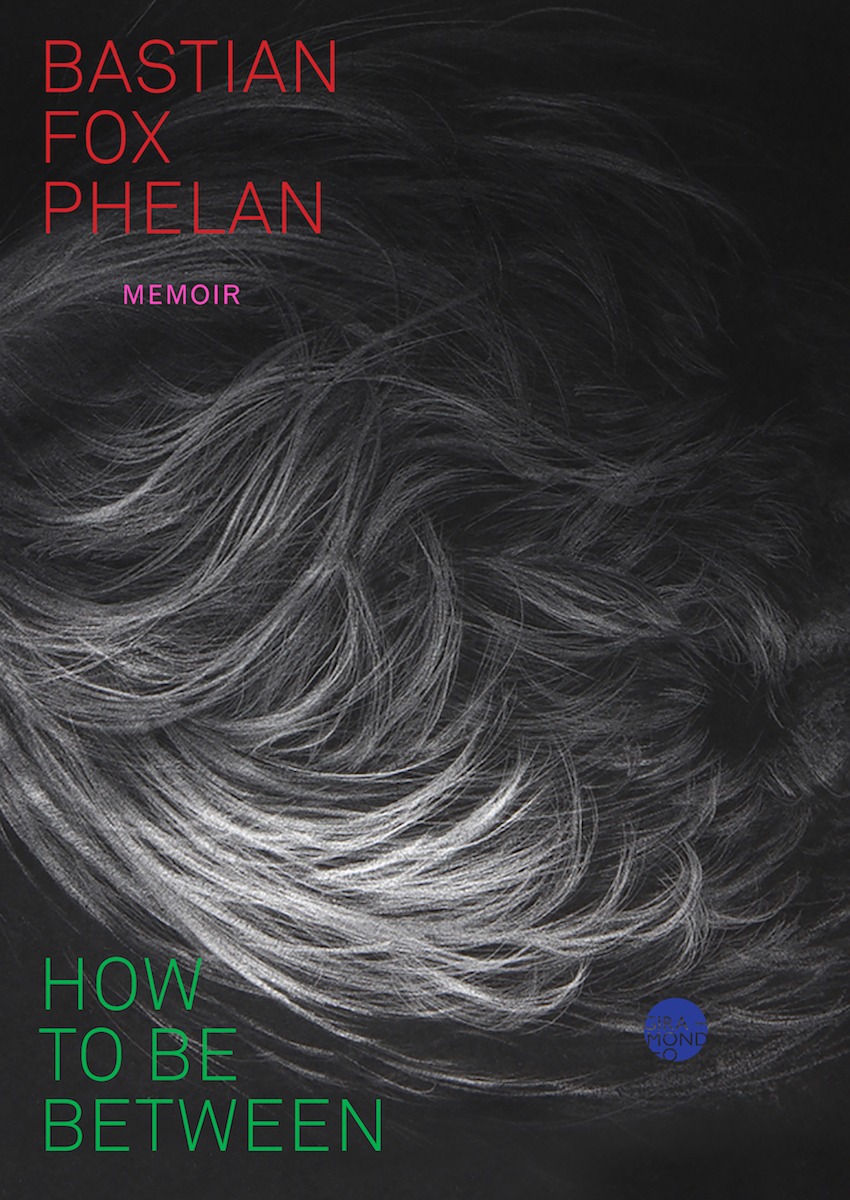
How to Be Between
Bastian Fox Phelan (Giramondo, available now)
How to Be Between is our First Book Club pick for May—Stay tuned for features on our website and podcast throughout the month!
After puberty, Bastian Fox Phelan started to grow thick hair all over their body, including a moustache and a beard. As a person who had been assigned female at birth, the hair was a surprise. Phelan and their mother attempted plucking, waxing and even laser hair removal, but none of these painful and costly attempts at removal proved to be permanent. They were eventually diagnosed with PCOS, a hormonal condition that can cause ‘excessive’ hair growth in AFAB people. As Phelan grew older and realised their queer identity, they became a a student of gender studies and grew out their facial hair. They also spent time considering what ‘excessive’ even meant. How to Be Between is a memoir of living beyond labels in this body that visibly defies gender binary.
Phelan’s comfort with their facial hair creeps up on them in their twenties: ‘Looking at my reflection, I knew it made no sense. My beard was ugly-beautiful. I wanted it, and I had no choice. My extraordinary form, enlarged in the mirror.’ After an adolescence and young adulthood spent considering their hair from an almost-academic viewpoint—making zines, studying gender, and partaking in many discussions about queerness and sex traits—they are able to embrace their appearance, albeit with the feeling that there is no other way. One of the greatest lessons from How to Be Between is that trans existence is not about a linear transition between two distinct states. Phelan’s identity shifts and changes throughout their life, and so much of this book is concerned with the experience of self-discovery through study.
One of the greatest lessons from How to Be Between is that trans existence is not about a linear transition between two distinct states.
Phelan also gives their reader a glimpse into the politics of left-wing queer spaces. They join a queer collective, which begins with a ‘label-free picnic’ and ends with hundreds of email-chain arguments over representation and appropriation that send Phelan into a period of acute anxiety. Phelan reflects that the ‘collective seemed like it was built on something solid, but at the slightest pressure it was falling apart.’ In the midst of this drama, Phelan attends Mardi Gras for the first time. They recall ‘… a rainbow flag was painted on the road. I’d learned to sneer at the flag—these days, it seemed more like an emblem of gay assimilation. But the sight of it taking up the road made my heart flutter. I was proud—I loved that flag. I would kneel down and kiss it.’ This is a grounding moment—both for Phelan and for the book—that elegantly captures their maturing view of queerness. They are not bitter or dismissive about the failures of the collective, but are simply allowing themself to celebrate that broader idea of queer resistance. While the in-fighting is a small part of Phelan’s story, their assessment of the conflict is gentle but incisive, and for this reason I would have liked to hear more of their perspective on this point.
As this is a book concerned with identity in an abstract sense, rather than specific events, it has a meandering pace. However, it’s fitting—Phelan is a passionate and charming writer and their prose is so enjoyable to read and savour. This is not the kind of memoir written by a marginalised person to gently educate others. Instead, How to Be Between is a beautiful account of finding joy through gender expression, art and building community.
— Ellen Cregan