Enjoy discounts across our wide range of courses with award-winning writers.

Culture

Everything Feels Like the End of the World, Every Version of You, Motherlands, Train Lord

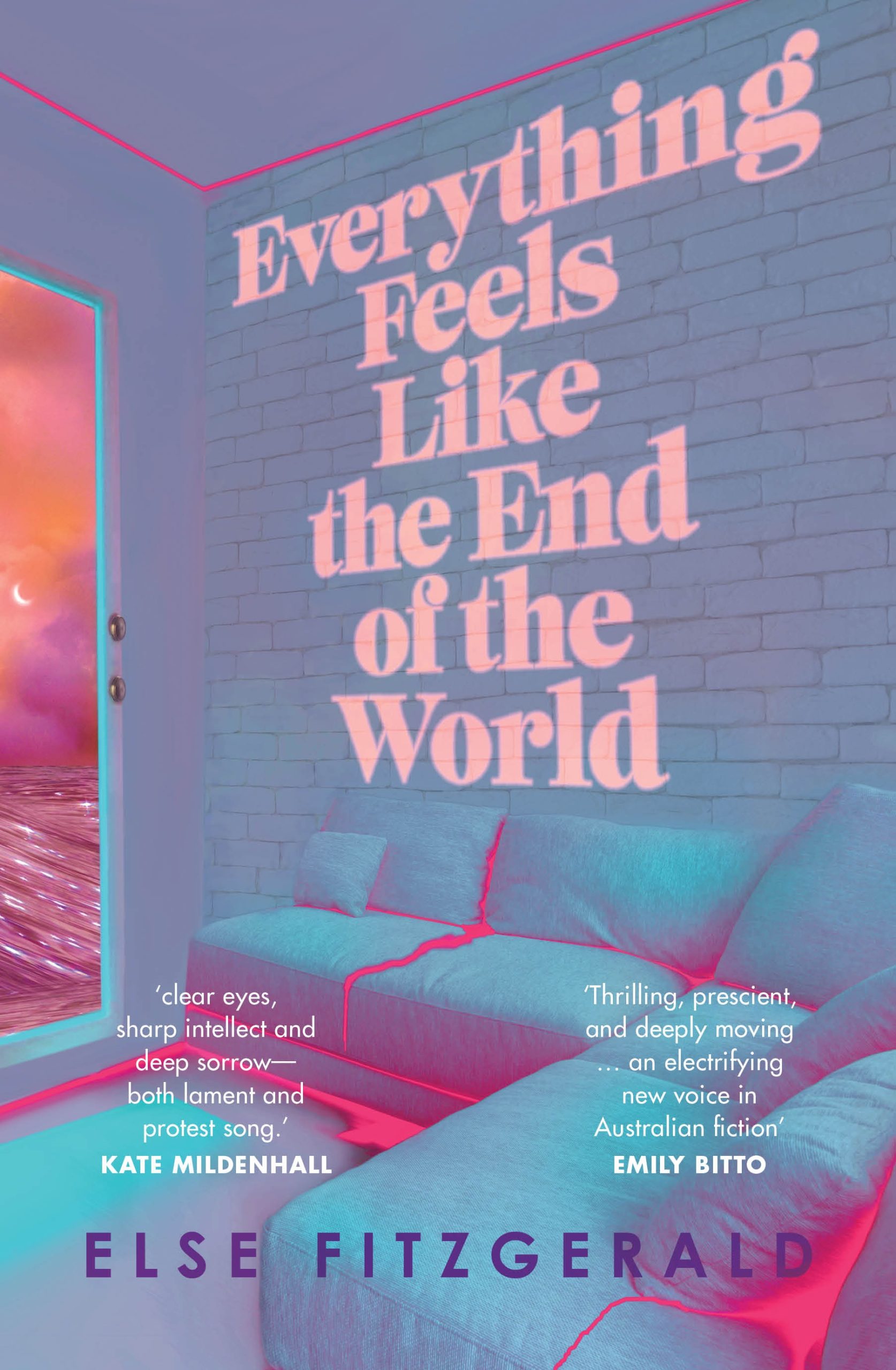
Everything Feels Like the End of the World
Else Fitzgerald (Allen & Unwin, available now)

Everything Feels Like the End of the World is our First Book Club pick for August—Join us on Instagram Live at 7pm AEST Tuesday 16 August for a live in-conversation event with the author and First Book Club host Ellen Cregan!

The settings of Else Fitzgerald’s debut short story collection, Everything Feels Like the End of the World, are scattered across urban and rural environments, and from the very near and far future. Each story is centred on a climate dystopia, though all events have really happened in history. Rivers dry up after attempts to divert their flow to agricultural irrigation, mega-fires engulf properties, city-dwellers look out to a horizon filled with smoke and ash and pandemics rage. 

A nuanced exploration of our worst fears, and a call to action.

Children are central to many of the stories in this collection. The question of parenthood, the choice or possibility, is one we’ve seen discussed in a number of books released in the past few years. As the climate emergency becomes more pressing, so will the discourse. Rather than dissecting the question, Fitzgerald broaches the subject in short space, sometimes in stories of single paragraphs, giving her readers a snapshot of each characters’ woes, fears and the depths of their parental love. What is abundantly clear is that it’s an individual choice. Characters decide they cannot continue with a pregnancy because of the state of the world, or deeply regret the children they do have, while others have children from a place of hope or are driven by the future they want for their children.

In these flash fictions, there is a sense of the world becoming ephemeral. Fitzgerald depicts impending or in-progress catastrophes with delicacy. Sinking islands are ‘…beautiful, terminal paradises’, cities are framed by ‘…skyscrapers reflecting the sunset, towers of flame on the skyline…’, crumbling seaside towns are destroyed by ‘salt gnawing away at everything.’ This is not a feel-good book, but it is not without these brief moments of beauty or joy. The emotional reprieve often comes in the form of humanity that defies the nightmarish status-quo and shows people supporting one another. In the story ‘Fracture’, a family dance around the illegal well they’ve just dug, as water shoots into the sky like freshly-struck oil. The neighbours have all moved away, food is scarce and death is all around them. But in that moment of flowing water, they are able to celebrate. 

It’s certainly difficult to world-build in a few short paragraphs. However, Fitzgerald’s focus is less on the imagined worlds of spaceships and hybrid-humans that readers may expect from sci-fi and future dystopian fiction. The focus of these stories is the emotional realities of the characters. The story ‘Final Broadcast’ is an impassioned plea from a future version of humanity—due to arrive on earth in the year 2028—warning their ancestors that efforts to evacuate had been a failure, and they must change their future before it’s too late. Even without naming characters, this story is able to convey a sense of humanity, of people caring for one another and the future for all. 

Everything Feels Like the End of the World is a nuanced exploration of our worst fears, and a call to action to see the beauty and value of humanity; to save our future while we still can.

– Ellen Cregan
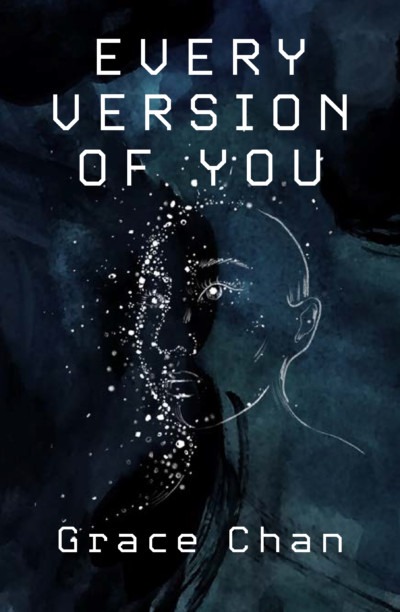
Every Version of You
Grace Chan (Affirm Press, available now)

Does the self exist in the mind or in the body? Is there a difference between IRL and URL life? In Every Version of You, these questions have largely become redundant. In 2087 Melbourne, the Yarra has dried up, venturing outdoors in the daytime requires full PPE, and the battle against climate change has been well and truly lost—humanity has taken refuge in Gaia, a fully immersive utopian metaverse that can replicate smell, touch and taste—or near enough. Tao-Yi Ling lives in Gaia as much as any other middle-class twentysomething—her friends are there, she works as an ‘authenticity consultant’ for other users’ avatars, and she passes the time in immersive sensory experiences (‘immies’). But she cannot fully commit—tethered to her Gaia-reluctant mother, yes, but also because of a niggling dissatisfaction with a digital utopia that ‘pixellates at the edges.’ Her partner Navin, crippled by kidney failure, has no such qualms—for him, the virtual world is a means of liberation, and when a technological breakthrough allows the human mind to be fully mapped and uploaded into Gaia, Navin—and almost everyone—jumps at the chance.

Every Version of You asks us to make peace with the ambiguities within ourselves.

With a background in psychology, Chan is deeply interested in unpicking the idea of the self, and interplay between the mind and the body in forming it. What would it mean to exist forever as a discrete identity without a physical form? How much of our consciousness is based on our innate personhood, and how much is muscle memory? How would we talk to another, what would we do all day? Untethered from their bodies, the Uploaded describe a sense of bliss, of freedom—but as their consciousnesses begin to transcend space and time itself, there is a creeping sense, from Tao-Yi’s standpoint, of something intangible—something human—being eroded along the way.

There are echoes too between Tao-Yi’s reluctance to give herself over to Gaia and her background as a Chinese–Malaysian migrant living in Australia; a sense of unmoored and unplaceable yearning, a kind of grief that comes with feeling attached to multiple places at once, and thus no place fully. The cruel irony, of course, is that there is little to be done with these feelings—there is no idealised past to return to. Tao-Yi is no ideologue, nor resistance leader; there’s no chance of redemption for the ‘real’ world, nor glib conclusions about ‘authenticity’ to be drawn. Indeed, many familiar speculative-fiction devices—a shadowy mega-corporation, gross inequality, irredeemable climate catastrophe—are delivered with a light touch, the internal logic of Chan’s richly-realised world unspooling naturally and convincingly. Where a lesser novel might set up an existential showdown between the devil we know and the one we don’t, Every Version of You asks us to make peace with the ambiguities within ourselves.

– Alan Vaarwerk

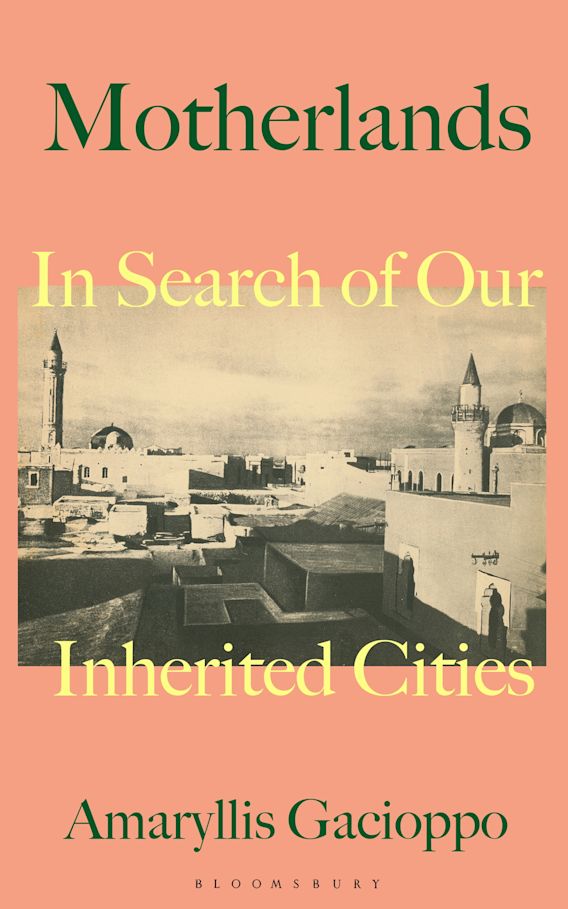
Motherlands
Amaryllis Gacioppo (Bloomsbury, available now)

Growing up on Bundjalung country, Amaryllis Gacioppo feels diasporic dislocation defined by a pained nostalgia: ‘Palermo existed in my mind as a spectral theatre…It was the city that I saw when I glanced back over my shoulder.’ This is the emotional landscape in which her debut Motherlands begins. Reminiscent of the archetypal ‘hero’s journey’, the memoir frames a return to ‘home.’

Memories of her family’s movements repeat as a refrain: her great-grandmother leaves Turin for Libya, her grandmother leaves Benghazi for Italy, and her mother leaves Palermo for Australia. Gacioppo retraces their steps, and it is Palermo that ends her ‘return.’ A waiter, instead of welcoming her (‘benvenuta’), welcomes her back (‘bentornata’). In another instance, a local tells her ‘your blood ties you to this earth, and you too feel the need to make something grow from it.’ This heightened desire for belonging underpins the book.

The book works best as an archive of family memories.

Compelling in its questioning of homelands and citizenship, the memoir traverses personal, cultural, architectural and political histories. Sharing frustrations over the slipperiness of memory, Gacioppo places her commendable research at the forefront of the memoir. Her sense of place is intertextual. She identifies significant historical and political events in each location, and recounts the experiences of Nietzsche, Cesare, Natalia Ginsburg and Goethe in Italy. Her personal journey sometimes disappears in these points, leaving the reader imbalanced for pages.

Motherlands is most evocative as memoir and family biography, especially in the descriptions of her grandmother’s life in Benghazi, Italy and Australia; it is here where Gacioppo overcomes the pains of migration, where nostalgia settles in the background of her life. The book works best as an archive of family memories. In travelogue, Gacioppo shows the need to not only to know a place, but also the questionable desire to ‘own’ it. Early on, she shares that her ‘desire to know Palermo was the desire to possess it.’ When Gacioppo’s status as an Italian is confirmed, she feels ‘the thrill of being welcomed into the fold.’ While elsewhere she questions inherited citizenship, a pull to return to her ‘rightful place’ trumps complexities. The author stops short of diving deeper into the limits or inequalities of ‘birthright’ as it relates to her, though she acknowledges it: ‘But, of course, I can never reach a full understanding of the experiences of…other Italians without citizenship.’

The murkiness of politics, borders and power is similarly encountered when the author wonders about her great-grandparent’s ‘exotic adventures’ in colonial Libya. Gacioppo notes these historical events but does not further interrogate what this means for her own identity; the reader is left unsettled and unsatisfied. Relentless Italian colonial violence becomes difficult and painful to read.

Readers navigating their own overwhelming nostalgia will find Gacioppo’s debut striking, and her vivid descriptions of Italy linger in the mind. However, it is ultimately the far-reaching scope of the book into complex terrains that subverts its aims of a personal homecoming; the politics of ‘home’ remain unresolved, and ‘returning’ a phantasm.

– Gurmeet Kaur

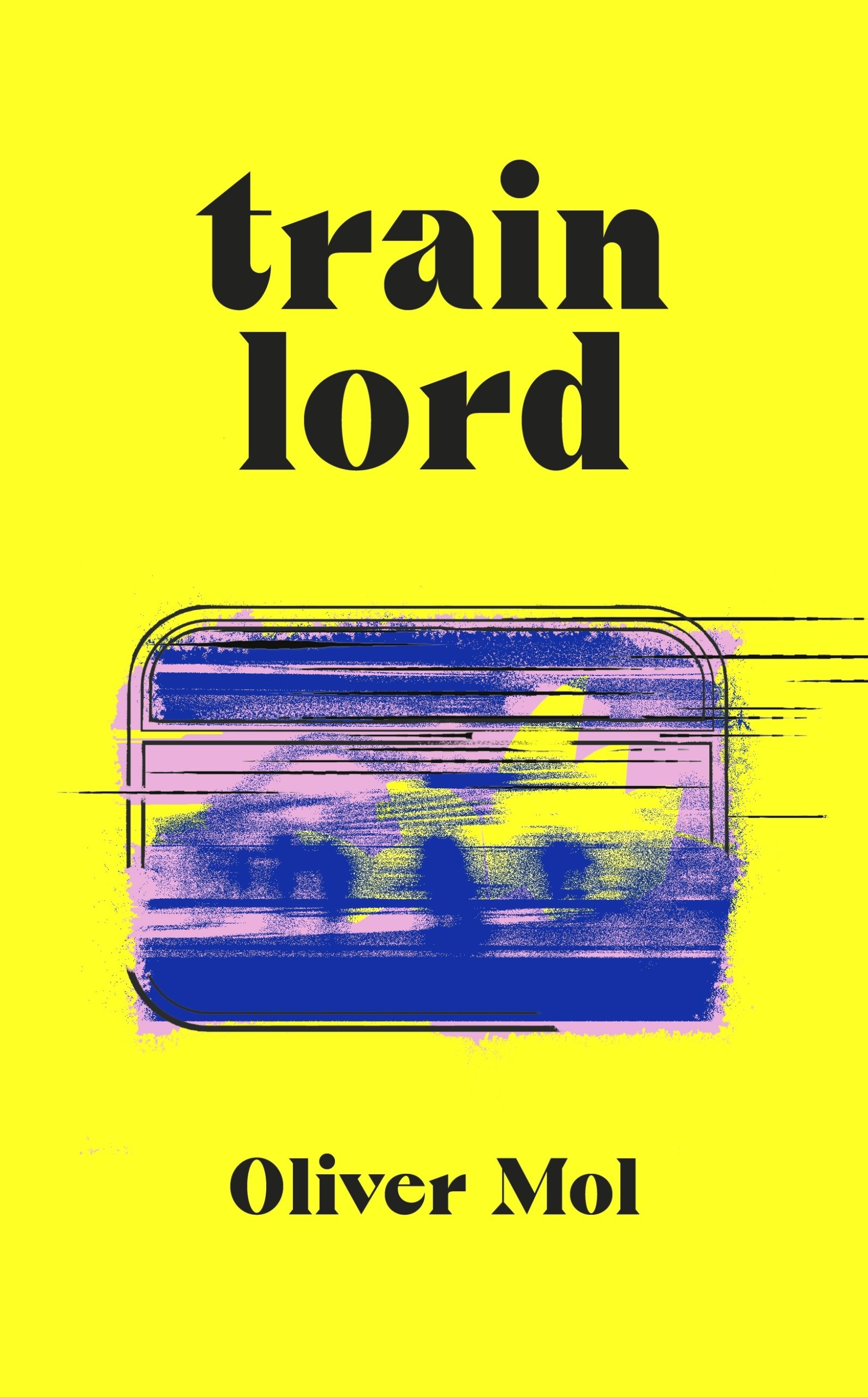
Train Lord
Oliver Mol (Penguin Random House, available now)

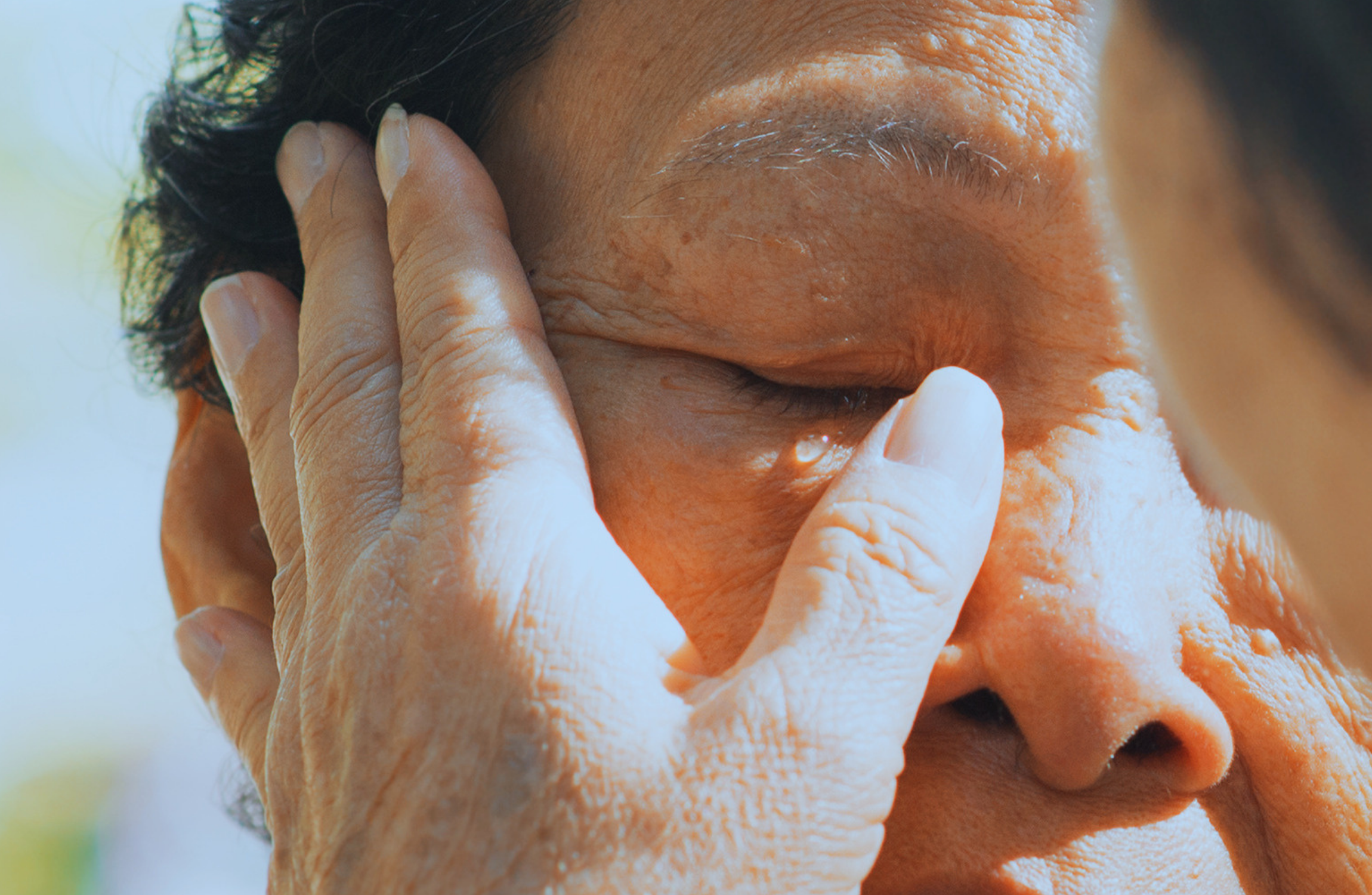
Shortly after the release of his first book, Oliver Mol suffers a migraine that simply won’t go away. It’s as if his skull has been ‘cut open, pierced or injected with lead.’ He can no longer read or write, or look at a screen. It quickly derails his literary career, his relationships and his sense of self.

The blurb of Train Lord sets up the book as the story of Mol reinventing himself, from promising young literary voice to Sydney train guard. But the book is a lot looser in structure than that. It begins tightly-wound: Mol witnesses the aftermath of one of the network’s frequent suicides, a body wrapped in a white sheet on a stretcher. ‘I had to see the way their legs poked one way and their arms poked another’, he tells us. From the viewpoint of the station, he sees the city’s veins as coursing with bad blood, from suicides to ‘medical emergencies or fights or needle scares or fatalities or masturbators or drunks.’ But from here, the railway is predominantly sidelined, and the narrative unravels considerably. It appears as a job that Mol invariably loves and hates, alongside a smattering of anecdotes shared by the railway’s old-timers. Mostly, Mol looks inward. He takes us to parties, sharehouses and to his family home, where we relive minor traumas, failed relationships and childhood loves.

Pain is ever-present; it’s always moments, or pages, away.

Pain is ever-present; it’s always moments, or pages, away. Mol dances around it, trying to give it a wide berth and filling the gaps with the stories he needs to tell himself to survive—stories centered on self-inflicted suffering, on healing. Memories are messy, and they come out of order. Mol is collapsing in tears, or he’s an anxious child, or he’s a twenty-something doing ketamine at a house party at 5am, or trying to mend a worn-out relationship. But many of these earnest anecdotes have a sanitary feeling, a cleanness that undermines their authenticity. Mol addresses this within the text. ‘Here’s the truth,’ he says, after a particularly tear-jerking story, ‘none of this happened, or some of it did, but not like that.’

Truth is subjective to the Train Lord, and if he wants to write a long, emotionally raw conversation with his loving father, to ‘transport the reader to another world where fathers and sons understand what the other is trying to say’, he will. But these fable-like false memories are told with a self-affirming sentimentality, which often comes dangerously close to undermining the text as a cohesive piece of work. These stories are a device, not for the reader but for the writer: ‘I’m learning how to trust my body again, to sit, to write,’ Mol says. As he weaves a path between chronic pain and maudlin introspection, it’s hard to escape that as readers, we are merely passengers.

– Will Cox

Latest

Have Gun Will Shoot

Vivienne Cleven

Shed a Tear for the Norman Mailers

Rebecca Starford

How to Love the World

Ilka Tampke