Enjoy discounts across our wide range of courses with award-winning writers.

Culture

Car Crash, As Beautiful as Any Other, Flock, Gunk Baby

May Books Roundup

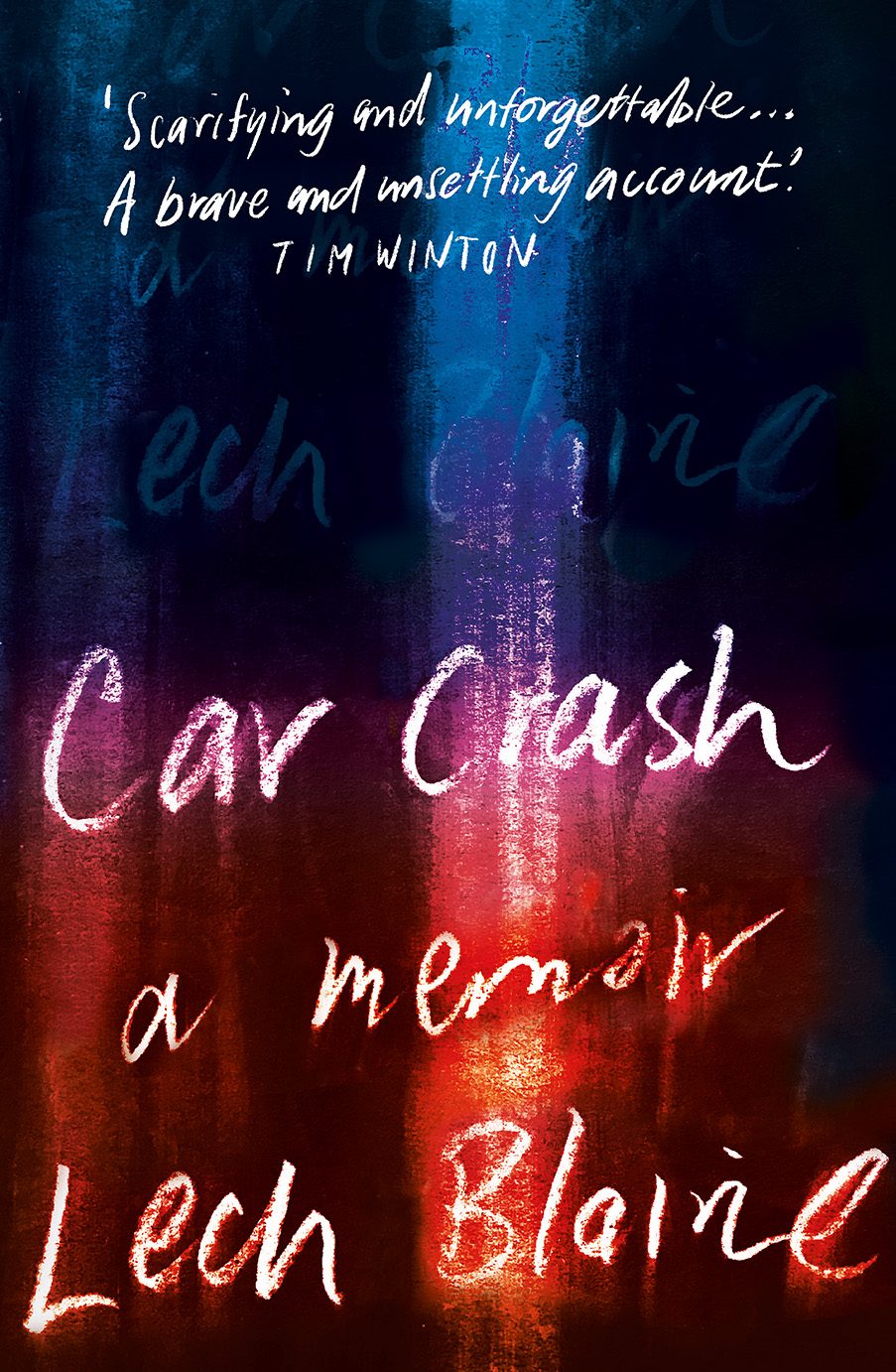
Car Crash
Lech Blaine (Black Inc, available now)

Car Crash is our First Book Club pick for May—stay tuned to the KYD website and Podcast for more throughout the month.

In his final year of school, Lech Blaine survived a car accident that took the lives of several of his friends. Unsurprisingly, this incident changed the course of his young adult life. Car Crash is an exploration of the accident and its ripple effects in the months and years that followed, asking ‘What does a survivor do after walking away from a fatal collision with barely a scratch?’

Autobiography by young writers is the literary pet peeve of many, but Lech Blaine has a lot to say and says it well.

Blaine begins with a confronting depiction of intense trauma and loss. But as the story moves chronologically forward, the nature of the book changes, eventually becoming a reflection on mental health and personal growth. In its early chapters, Blaine’s writing is sharp and focused. This is particularly true of the very first chapter, which describes the car crash; the imagery and Blaine’s descriptions of his state of mind are quite plain, observant and situate the reader in the scene. But as Blaine surveys his life following the accident, the focus widens substantially. While the difference between these two parts of the book is quite distinct, the change is understandable. Blaine questions his recollection of the scene of the crash: ‘Of that night, the least fatal details stick in my mind.’ The crash is something that Blaine has undoubtedly played over and over, but it has also been relayed to him by newspapers, lawyers, fellow grievers. How the crash changed him is something not defined or described by external sources, and would be difficult to write about in the same way.

Whether it happened in your family, your school or your friendship group, many of us have some kind of connection to a fatal teenage car accident. These kinds of tragedies happen in all sorts of communities all around Australia, and while each is unique, there is a universality to the deep shock of young people dying in such a violent manner. One of the greatest strengths of this book is that Blaine writes with enough nuance to represent the specific tragedy he lived through, but also spends time reflecting on the familiar markers of a fatal accident—the survivor’s guilt, the expectations of how to grieve, the unkind attention of the media, and more. At no point does this book feel voyeuristic or like it is aiming to magnify the horror of the incident—while there are several undeniably tear-jerking moments throughout the book, Car Crash avoids the trappings of trauma porn as a reflective coming-of-age memoir that explores the rocky path through grief. Autobiography by young writers is the literary pet peeve of many, but in his debut book Lech Blaine has a lot to say and says it well.

— Ellen Cregan
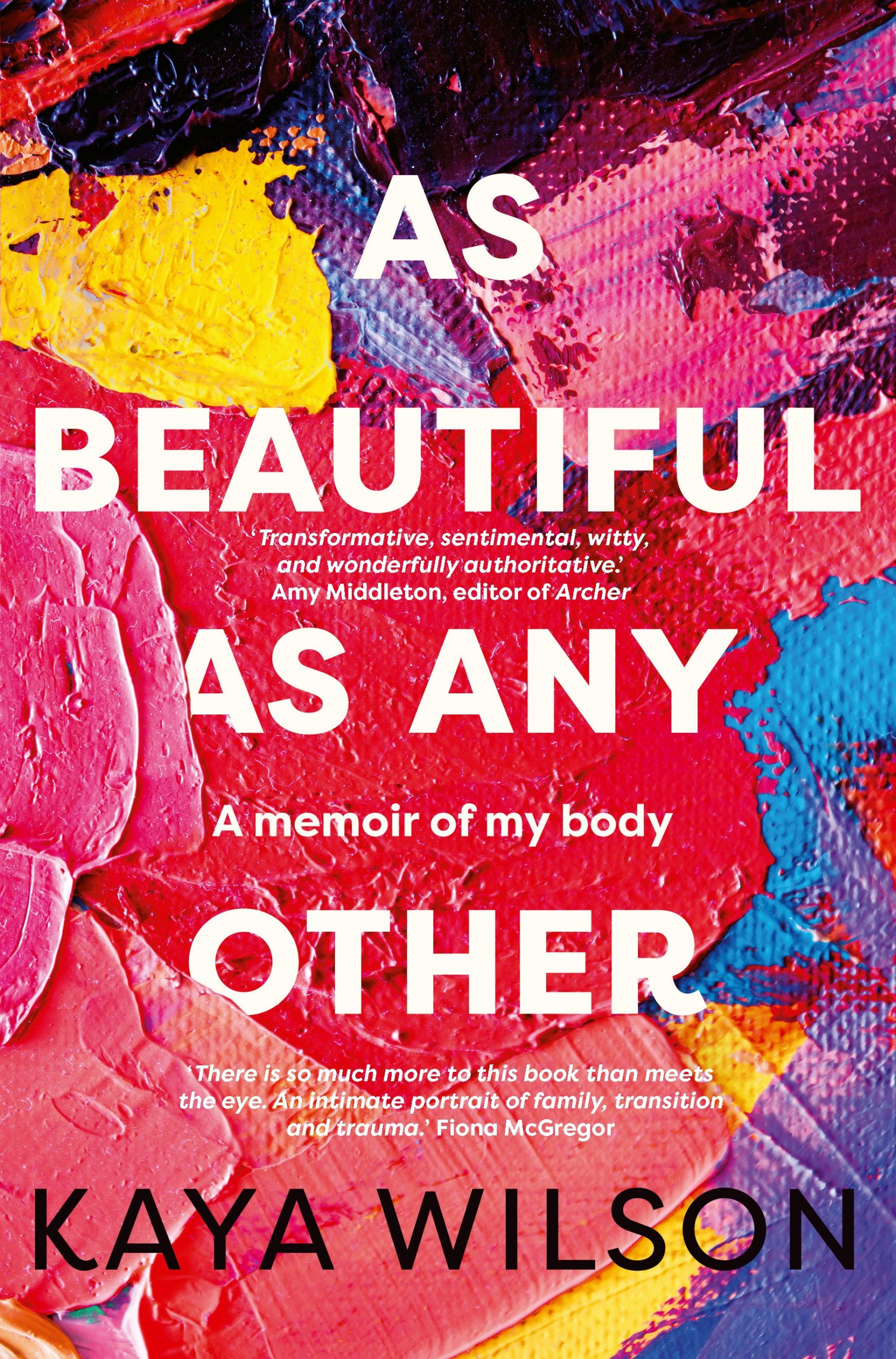
As Beautiful as Any Other: A Memoir of My Body
Kaya Wilson (Picador Australia, available now)

In his debut memoir, As Beautiful as Any Other, Kaya Wilson, a writer and tsunami scientist, explores his own body and his efforts to live his most authentic life in it.

Presented in a non-linear format under thematic chapter titles such as ‘Trauma’, ‘Inheritance’ and ‘Education’, Wilson’s story moves like the ocean itself, crashing into new topics, churning through difficult feelings and then habitually returning to earlier themes to reveal deeper truths.

The book opens as he undergoes emergency surgery after suffering a neck injury while surfing in Sydney. We then learn of his recent decision to affirm his male gender after being assigned female at birth, and his experiences accessing hormone therapy and chest surgery. His parent’s poor initial response to his decision to transition unfolds to Wilson discovering his family’s untold queer history as he supports his father through terminal illness.

Wilson’s story moves like the ocean itself, crashing into new topics, churning through difficult feelings.

Born in the UK, Wilson experienced a global upbringing thanks to his parents, who were highly mobile international teachers. The book covers his time growing up as a motivated student and competition swimmer across the Caribbean, Tanzania, Germany and Indonesia. Wilson recounts many historic moments through his childhood memories, such as the 1998 political crisis in Indonesia that led to the fall of the authoritarian Suharto regime.

Wilson has led a truly eventful life, punctuated by moments of intense sadness and trauma. While this book is clearly marketed as a transition memoir, I found Wilson’s depictions of his life as a global traveller to be the most arresting elements. His experiences growing up as a white, relatively privileged student across the world resulted in feelings of complex cultural dislocation, as well as a deep yearning for Tanzania after returning to the UK, an experience that I had not read about before.

Wilson’s personal history is also interwoven with observations about the environment. The standout chapter for me was ‘Education II’, where Wilson’s expertise in climate change and ocean science comes to the fore. After studying ocean science, he moved to Australia and worked in the offshore oil and gas exploration industry. Wilson deftly weaves his personal experiences as a climate researcher, and his professional work on commercial ships in mineral exploration, with blunt statistics of rising greenhouse gases to reveal the terrible truth of our warming planet. As Beautiful as any Other is thus both a significant contribution to the growing field of trans and gender diverse writing, as well as a fresh call to arms to take action on climate change.

— Sam Elkin

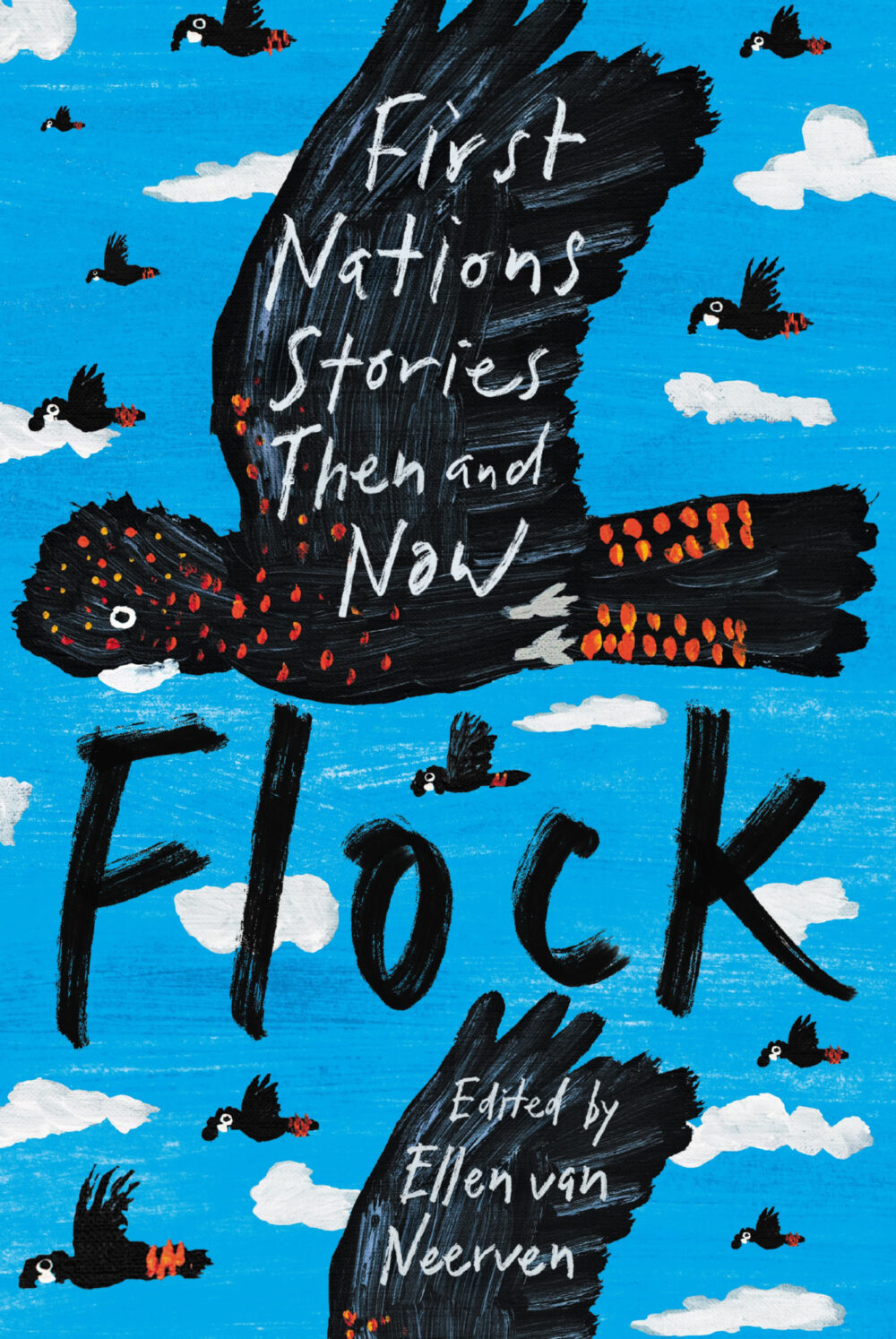
Flock: First Nations Stories Then and Now
ed. Ellen van Neerven (UQP, available now)

Flock begins with cover art by Luritja woman Kukula McDonald. The lush artwork depicts many birds in flight. Like the cover, the anthology showcases stories by Aboriginal and Torres Strait Islander writers that soar high alongside each other.

The short stories, all published previously over the last twenty-five years, have been curated by writer and poet Ellen van Neerven. Each one touches on the subject of history. In ‘Split’, Cassie Lynch peels back the layers of concrete and glass that make up Perth to reveal Noongar history and culture. The cruelty experienced by the Stolen Generation is evoked in ‘Wildflower Girl’ by Alf Taylor, when a young child playing in a field of flowers is ripped away from her mother by a police officer on horseback. In evocative and moving narratives, readers are forced to interrogate the histories and structures that make up so-called Australia.

To read this outstanding collection is a continual process of being built up, broken and then healed anew.

Flock dives into tough subjects. Tony Birch shows exactly how far Viola, the owner of a brothel, will go to secure the safety of her adopted child in ‘Frank Slim’. In ‘Honey’ by Adam Thompson, the reader witnesses Nathan, a First Nations man, quietly enduring constant racism from his white employer until an event upheaves the power imbalance. Stories like these are not easy to digest, forcing the reader to confront the horrors of abuse, trauma and racism.

Stories of death in the collection evoke a sense of loss, such as in ‘Born, Still’ where Jane Harrison puts the reader into the shoes of a second-time mum birthing a stillborn child. However, along with bereavement there is also love, community and connection. In ‘The Release’ by Samuel Wagan Watson, a man travels home with the ashes of his cousin, freeing his spirit on Country in a lyrical scene of pure joy. In the moving ‘River Story’ by Mykaela Saunders, Gracey cares for her mother Juna as she dies. The reader experiences Juna’s death from both Gracey and Juna’s point of view, showing the touching link between the generations. Loss appears in Flock in many forms, but grief often transforms into a healing balm that paves the way for new beginnings.

To read this outstanding collection is a continual process of being built up, broken and then healed anew. Flock is what the reader makes of it: a reflection of their own experiences, or a new understanding of people unlike themselves, but there is always a sense that, in the end, there is always hope.

— Alexander Te Pohe

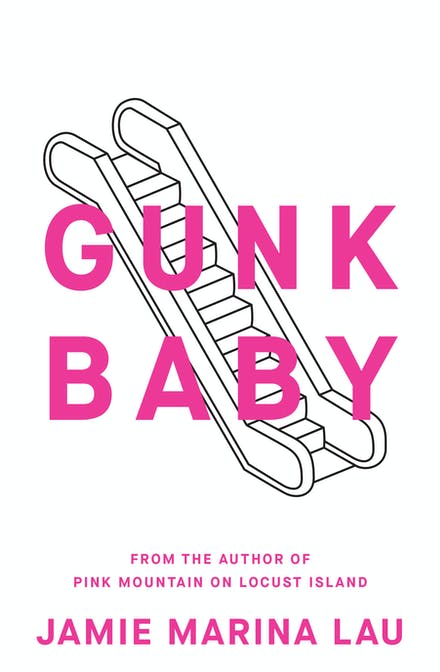
Gunk Baby
Jamie Marina Lau (Hachette Australia, available now)

From the cover to its last line, Gunk Baby charts a LED-lit world that is all too familiar. Jamie Marina Lau, whose innovative debut Pink Mountain on Locust Island was shortlisted for the 2019 Stella Prize, returns with a second novel set in the fictional suburbs of Par Mars. The story is seen through the eyes of Leen, a twenty-four-year-old woman who opens a healing studio in the Topic Heights shopping complex. To operate, Leen uses money borrowed from her father and offers Eastern remedies such as the ancient Chinese art of ear-cleaning, learnt from her mother. Clever and unnerving, Gunk Baby gently tugs us along as it meanders down the converging paths of capitalism, racism, consumerism, justice and violence.

Gunk Baby is an ambitious and urgent work that succeeds, not by attempting to provide answers, but by prying our eyes wide open.

Like a lot of migrant children, Leen has grown up ‘searching for sameness.’ The painfully relatable feeling of placelessness that comes with a childhood of moving between different countries has led her to seek solace in the local shopping centre. Leen’s attachment to Topic Heights—with its climate-controlled landscape of logos and indoor plants—reminds me of the McDonald’s Theory, first coined by American economist Thomas Friedman in 1996. The theory purports that world peace can be attained via global capitalism and that ‘no two countries that both have a McDonalds have ever fought a war against each other.’ While it turns out Friedman was wrong, Leen attempts to find peace and human connection among the logos.

As is pertinent in a post-pandemic, post-Trump 2021, Gunk Baby forces us to face the ‘justice’ systems in place in Par Mars. Lau shows how easily culture can become a product, reducing people to objects. We see that Leen is commodified through her Eastern-inspired holistic healing studio when she is sexually harassed by a male customer, who yells ‘What did I pay for?’ at her in the massage room. Even when she cannot fully own her otherness, she still suffers for it.

At the start of the novel, Lau describes the Chinese concept of ‘yeet hay’ in which our body’s equilibrium is disrupted by ‘hotness’—from the food we consume, or from the stress we endure. Whenever I eat tropical fruits like lychees, I hear my Aunt’s voice in my head: ‘Don’t eat too much, it’s yeet hay.’ It is a nebulous term with no English equivalent, but I think of it often as the story unfolds. Characters, fighting against the capitalist structures of the shopping centre, enact punitive violence against individuals who they deem deserving. Whether or not this leads to actual systemic change is left open-ended, and the residents of Par Mars remain, quietly boiling over, in perpetual yeet hay.

Gunk Baby is an ambitious and urgent work that succeeds, not by attempting to provide answers, but by prying our eyes wide open. Like its characters, I am restless after reading it. As we all should be.

— Ting Huang

Latest

Who Can Afford to Be a Writer in Australia These Days?

Nina Culley

Have Gun Will Shoot

Vivienne Cleven

Shed a Tear for the Norman Mailers

Rebecca Starford