In the follow-up to her internationally bestselling memoir, Jennette McCurdy takes the readers on a squeamish journey of teenage lust in an inegalitarian world.


As an undergraduate, I spent a lot of time trawling ‘teacher–student romance’ lists on Goodreads while attempting to write such a novel myself. Despite having never personally lusted after an educator, these relationships struck me as somehow venerable in their illicitness; a rite of passage for any knowledge-hungry girl on the brink of womanhood—if not to live through them, to make art about. The abundance of titles about attraction between female students and their teachers (to say nothing of professors, mentors and bosses) could have denoted well-trodden territory. To me, however, the length of these lists—and the smattering of recognisable names within them—seemed to prove that being wanted by an older man was the topic-of-all-topics for an aspiring authoress wishing to tackle power and mortality while maintaining a marketable proximity to girlhood.
This isn’t to imply that young women who choose to write about sex with older men are creating out of cynicism. Elizabeth Strout, Eleanor Catton, Emily Maguire and Colleen Hoover all debuted with novels featuring teacher–student affairs, which differ markedly in tone, themes and literary merit. The list of female-authored debuts wherein a young woman becomes involved with a man twice her age is basically endless. Though some may hope to cash in on a sanctioned ‘taboo’, I would hazard that most of these writers are legitimately interested in navigating the borders between abuse and heterosexual desire.
Even those fortunate enough to make it to adulthood without being cast as somebody’s Lolita will surely be aware of the trope. A friend’s dad making crude comments about sixteen-year-old Britney in the ‘…Baby One More Time’ video. Whispers about what that Year Ten skank got up to with the PE teacher on the ski trip. Reading Lolita at seventeen, feet pruning in a bug-infested hot tub as I lavished in Humbert Humbert’s desire to turn twelve-year-old Dolores Haze inside-out and kiss ‘the sea-grapes of her lungs’, I apprehended the absence of her voice but not its import.
Even those fortunate enough to make it to adulthood without being cast as somebody’s Lolita will surely be aware of the trope.
A common strategy among men who prey on schoolgirls is to characterise them as advanced beyond their years, cunning nymphets rather than children. This is the modus operandi of Mr Robertson, the teacher in Strout’s Amy and Isabelle, who gloats about fifteen-year-old Amy’s passionate nature to her distraught mother. Likewise of convicted sex offender Nicolaas Bester, who publicly described his student-victim Grace Tame as ‘fifteen going on twenty-five’. Such justifications may be further promulgated by a victim-blaming culture; during a 2017 interview with the twice-jailed Bester, commentator Bettina Arndt offered the opinion that female students ought to be taught to ‘behave sensibly and not exploit their sexual power to ruin the lives of men’.
Yet the same narrative may also appeal to girls and women wishing to distance themselves from their own vulnerability. Such is the case for the adult narrator of Kate Elizabeth Russell’s controversy-inciting My Dark Vanessa (2020), who denies her victimhood even as she recounts her grooming, abuse and ongoing trauma. Although a few of the novels I read during my immersion in the teacher–student genre centred on the identity-fracturing nature of these relationships—Heather McGowan’s Schooling (2001) and Eleanor Catton’s The Rehearsal (2008), for example—many downplayed their potential for harm. By having the teacher be unusually young, handsome and first encountered outside the classroom. By having the student be almost eighteen, edgy, experienced, a future Terrence Malick or woman-in-STEM—or maybe a bit of a sadist.
When American journalist Megyn Kelly made an insensitive distinction between Jeffrey Epstein’s lust for ‘barely legal’ teens and paedophilia, she was correct in the sense that an average fifteen-year-old will have developmental advantages over an average eight-year-old. Fifteen-year-olds are more likely to have sexual urges and be capable of intellectual conversations about art, literature and music. In theory, feminists want teenage girls to be more than prey; agents with the freedom to explore their ideas and sexuality. We’re also generally opposed to teachers having sex with them. It isn’t that complicated, except that desire sometimes is.
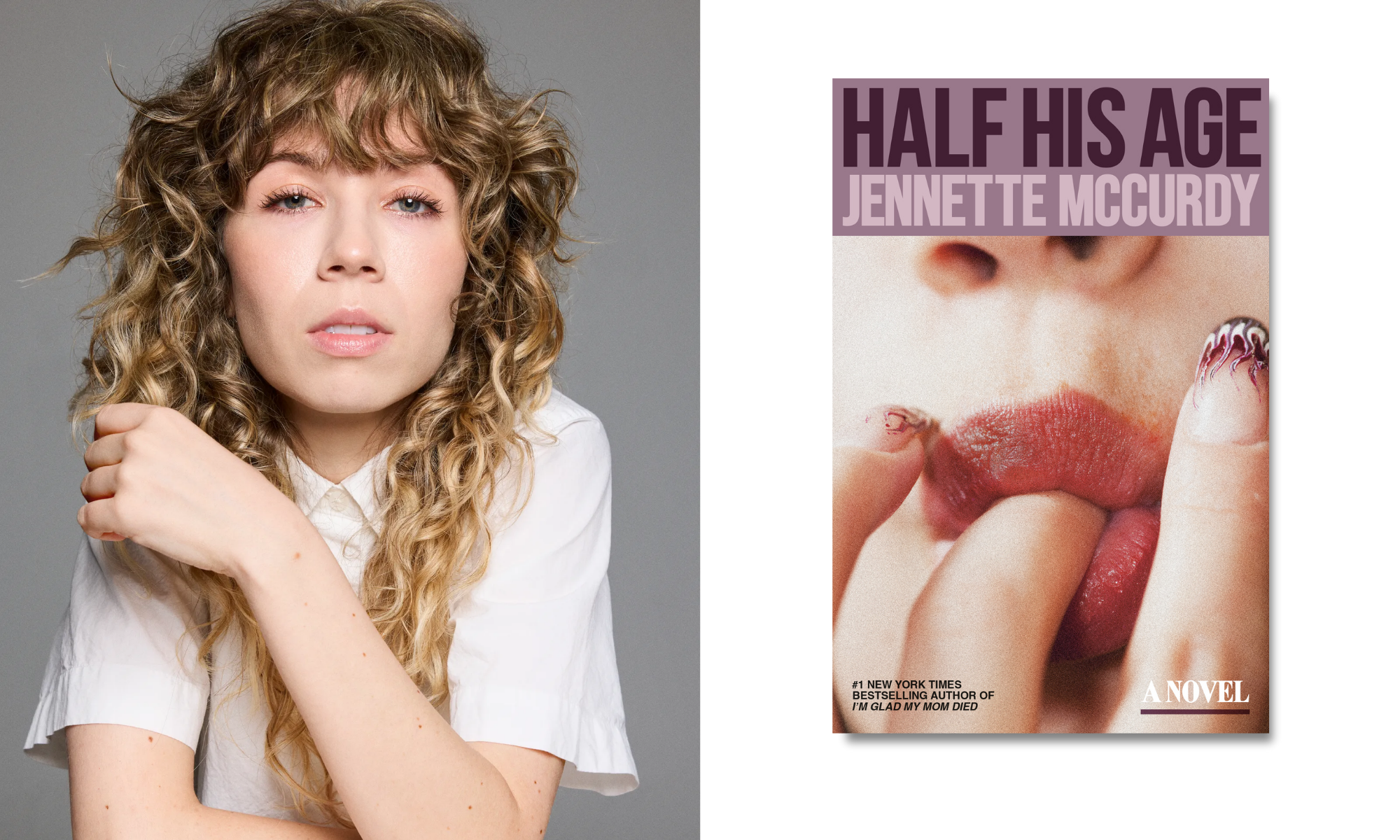
‘My vagina pulses,’ observes Waldo, the narrator of Jennette McCurdy’s new novel Half His Age, upon introduction to her new creative writing teacher. This spasm isn’t prompted by Mr Korgy’s looks, charisma or intellect. It’s his speech about being a ‘failure’: forty, unpublished and instructing thankless high school seniors in Anchorage, Alaska. For Waldo, far from signalling narcissistic self-pity or unprofessionalism, Korgy’s divulgence announces his virtues. ‘This is someone who has faced, head-on, the disappointing reality of where their life landed and is willing to be direct and vulnerable about it.’
Far from signalling narcissistic self-pity or unprofessionalism, Korgy’s divulgence announces his virtues.
Familiarity with McCurdy’s bestselling I’m Glad My Mom Died (2022), a memoir of tortured child-stardom and maternal abuse, isn’t a prerequisite for enjoying her debut novel. Just as Vladimir Nabokov’s authorial intentions might be clarified by the knowledge that he was a survivor of childhood sexual abuse and requested (in vain) ‘no girls’ on the cover of Lolita, acquaintance with McCurdy’s biography may provide some clues about how to interpret her first foray into fiction—finger-sucking nymphet cover art and all. Raised Mormon and working-class in California, the former Nickelodeon star was forced into acting by her mother, an emotionally and sexually abusive narcissist who encouraged her to develop anorexia in order to delay puberty. In her late teens, McCurdy lost her virginity to a man in his mid-thirties, a relationship that she has looked back on as ‘exhausting’ and ‘creepy’.
Despite being stranded among incompetent elders, Waldo is distinct from McCurdy. Adultified rather than infantilised, the seventeen-year-old pays bills, has big boobs and works at Victoria’s Secret. The most childish thing about her is her capacity to gorge on sour candy and family-sized bags of chips without feeling compelled to purge. Her self-absorbed mother is more negligent than suffocating: an immature man-chaser who communicates in sticky notes and hounds her daughter for lingerie discounts.
Subscribe to stay in the loop
Be the first to read new stories, discover publishing opportunities, and access resources. For people who love great writing.
Half His Age opens with Waldo stifling yawns as an age-appropriate boy goes down on her. A few pages on, they’re listlessly breaking up. Next scene: Waldo is stuffed with microwave lasagne and filling fast fashion online carts. It’s a heady introduction to her animating principles and the hopelessness of her all-convenience, no-care lifestyle.
As a prelude to Waldo’s pulsing vagina, these passages are serviceable at best. Though her attraction to Korgy is spelled out, it isn’t palpable. ‘He was clearly once a prizefighter,’ she reports vaguely during the coup de foudre, which comes a mere twelve pages into the novel. ‘But his looks have faded. Atrophied. Withered with the gross decay of middle-aged-ness. And now all that’s left are his deep eyes and charming smile […] His so-called unattractive features that I’m so attracted to.’
Generously, this desultory prose could be interpreted as a device to keep readers at a remove from Korgy’s supposed appeal and underscore Waldo’s misguidedness. It could also be interpreted as lazy writing. We know that Half His Age is a teacher–student sex novel, that getting to this sex may be more important for many readers than conscientious characterisation or well-crafted sentences.
To be fair, McCurdy understands the power of push-pull and ambiguous intentions. Korgy’s praise for Waldo’s writing, in which she namechecks her ‘faceless father’ and ‘white trash’ roots, might be innocent, or might be a form of grooming. During their first hook-up, Korgy is verbally resistant, physically passive and grieving. Their first sex, by contrast, comes after a Korgy-initiated ‘u up?’ text message. From the outset, though furnished with teasing fingers and quaking orgasms, their relations are sad, sordid and confusing.
McCurdy understands the power of push-pull and ambiguous intentions.
The trouble is, as the contrivances accrue, McCurdy’s portrayal of Korgy seems more scattershot than deliberately ambivalent. Defying the social media habits of teachers and heterosexual males the world over, Korgy has a public Instagram full of pictures with his wife. His recently deceased father, mentioned before Waldo starts grinding on him in an empty classroom, never reappears. Neither do the poker buddies with whom he drinks before sending his booty call. ‘He’s got a wife and a kid and a fully baked life,’ Waldo quips, sounding very much like a Julia Donaldson rhyme—except, unlike Tabby McTat, the reformed busker’s cat, everything about Korgy’s life is undercooked. The wife, Gwen, is a waifish, limp-haired, linen-clad foil to Waldo’s curly, busty brass. Their toddler, Gregory, is carseat crumbs and appointments that get in the way of sex. Even Korgy’s artistic proclivities seem random: he has an unfinished dystopian novel, listens to The Red Hot Chili Peppers, but can also talk endlessly about the films of Agnès Varda.
It is one thing for Waldo not to know who Korgy is, to not grasp the substance of his family and intellectual life. It is another thing for McCurdy not to. When Gwen insists on having her husband’s ‘promising’ student over for dinner, this makes sense as a plot device—less so as the invitation from a busy mother with a toddler. When Gwen uses the opportunity to vapidly rehash dating stories and quiz Waldo about boys, this doesn’t cohere with any conceivable motives—to either encourage a clever, disadvantaged young woman or scope out a sexual rival. Meanwhile, despite having eagerly agreed to the meeting, Korgy squirms and sulks through the meal.
It isn’t just the Korgys’ behaviour that baffles. Waldo’s best friend badgers her to report Korgy upon discovering his abuse of power, only to lapse into pitying silence. An emotionally intelligent classmate whom Waldo dates on rebound fails to notice the teacher–student affair reigniting, though it isn’t well concealed. During an upscale-restaurant date, a hostess taps Korgy on the shoulder to opine, ‘I just have to let you know, you seem like such a good dad’, in spite of the couple having earlier attracted attention with a lover’s tiff. In isolation, such moments are forgivable. Cumulatively, they give the impression of an author who isn’t quite sure how to synthesise the dramatic possibilities of her chosen genre with the subjectivities of secondary and minor characters.
In Sad Tiger, French author Neige Sinno’s account of incestuous abuse, she expresses the unfashionable opinion that the interiority of perpetrators is more ‘interesting’ than that of their victims. What kind of person does this? she wonders of the stepfather who disfigured her childhood, as one might wonder of the teacher who receives oral sex from his student in the same car that transports his toddler to day care. These men’s deeds may seem worlds apart if the student, like Waldo, is above the age of consent (sixteen in Alaska) and consenting. There is nonetheless a common theme of moral vacuity, duties of pedagogical or familial care abandoned in favour of sexual gratification.
Australian author Madison Griffiths’s non-fiction book Sweet Nothings extends the ethical problem of teacher–student sex to male tertiary educators and their female students. While Griffiths considers these relationships to be less corrosive than those between high schoolers and their teachers, she defines them as ‘a gendered phenomenon’, ‘never far from the jejune conspiracy of sex and power’ in which a woman’s most attractive features are her youth and malleability. Korgy does nothing to dispel this stereotype, feverishly messaging Waldo post-coitus: ‘Your mind is such a sponge. I want to expose you to art and films and music and books. I want to inspire you.’
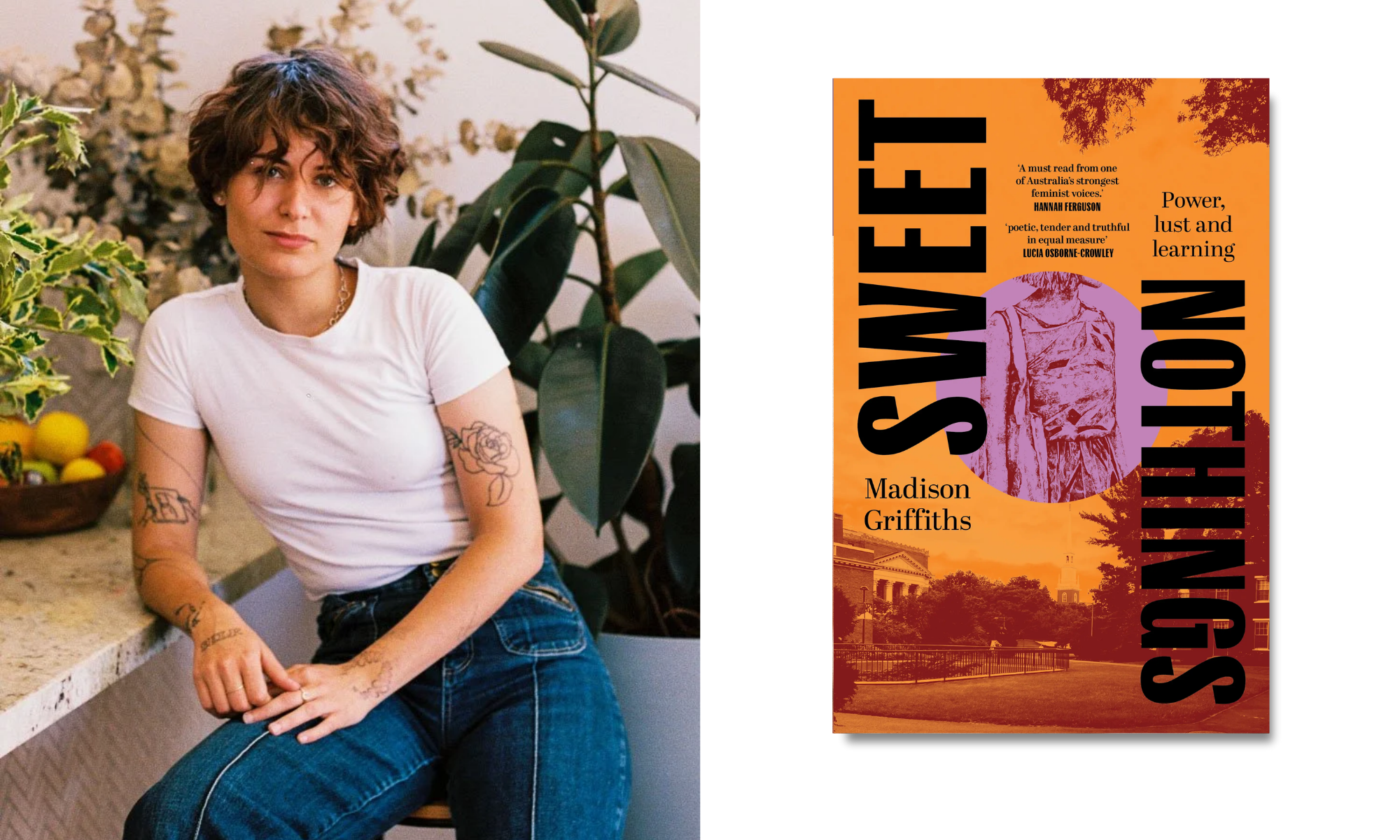
There may also be a class dimension to such relationships. Griffiths, the first in her family to attend university, suggests that this fact likely contributed to both her attraction to a tutor and the imbalance of power within their coupling. A working-class interview subject, Rose, wonders whether she is more ‘pitiful’ for having been intellectually awed by a tutor in his early twenties than if he’d been a middle-aged professor. Rose’s parents’ acceptance of the relationship can be understood as a tacit endorsement of hypergamy, pedagogical romance as a form of upward social mobility.
What is perhaps most distinctive about McCurdy’s take on these relationships is how unsusceptible her protagonist is to the Pygmalion effect. ‘I’m used to the person I’m dating […] telling me all the things I ought to know instead of getting to know me,’ Waldo reflects. ‘It’s how men, or boys, or both, communicate. They quote and they riff and they rant and they explain and they explain and they explain.’ Where My Dark Vanessa’s narrator clings to her teacher’s Lolita references, letting him contort her understanding of the text to such an extent that she later has difficulty sifting her own memories from the book’s events, Waldo admits, ‘Not really my thing,’ when Korgy introduces her to French New Wave cinema. Once the relationship is consummated, she boasts that she ‘couldn’t give two shits about writing’.
What is perhaps most distinctive about McCurdy’s take on these relationships is how unsusceptible her protagonist is to the Pygmalion effect.
McCurdy’s refusal to dress up the affair with artistic discovery, to present Waldo as a beneficiary of Korgy’s superior tastes and education, is compelling not so much for how it shifts the expected power balance. No matter how emasculating Waldo’s manipulations and scorn for her teacher’s passions may seem, at the end of the day she’s a neglected teenager with no social safety net and few prospects. In highlighting Waldo’s intellectual incuriosity, McCurdy takes the pedagogy out of pedagogical sex, reconfiguring these entanglements as a by-product of greater social limitations.
My Dark Vanessa can be considered the post-#MeToo apotheosis of teacher–student relationship novels; a sophisticated depiction of abuse’s delayed realisation and tender, faltering survival. Half His Age is post-post-#MeToo. Teacher–student sex is neither abuse nor ill-starred romance but a failure of imagination in which both teacher and student are implicated. Waldo’s desire for Korgy has an algorithmised quality, as detached from his personhood as her visions of herself transformed by Venetian Rose cream blush and handbag charms are from their landfill reality. Hers is an ambient, lazy desire born of Pornhub, drop shipping, microplastic-infused pizza rolls, TikTok and ChatGPT; an everything-on-demand, everything-is-enshittified insatiability.
Waldo knows that going to college won’t be worth the debt. She knows that her Shein crop top was made in slave labour conditions and likely has lead in it. She knows that exploitation, if it’s happening, isn’t interesting to anyone. She wants to break up Korgy’s marriage not because she can see a bright future with him but because it’s the next thing she’s supposed to want; she can’t imagine anything better. She cannot conceive of a universe in which growth is possible and gender equality is erotic.
That the medium of the novel—snackable, insubstantial, littered with tropes and linguistic clichés—mirrors this message is probably no more than a happy accident. I’m not convinced that McCurdy’s prose is intentionally uninspired. With Half His Age, however, she has delivered some unvarnished truths about what desire might look like for an average working-class American girl, amid what Mark Fisher called ‘the slow cancellation of the future’, expectations deflated to a point of universal indifference.
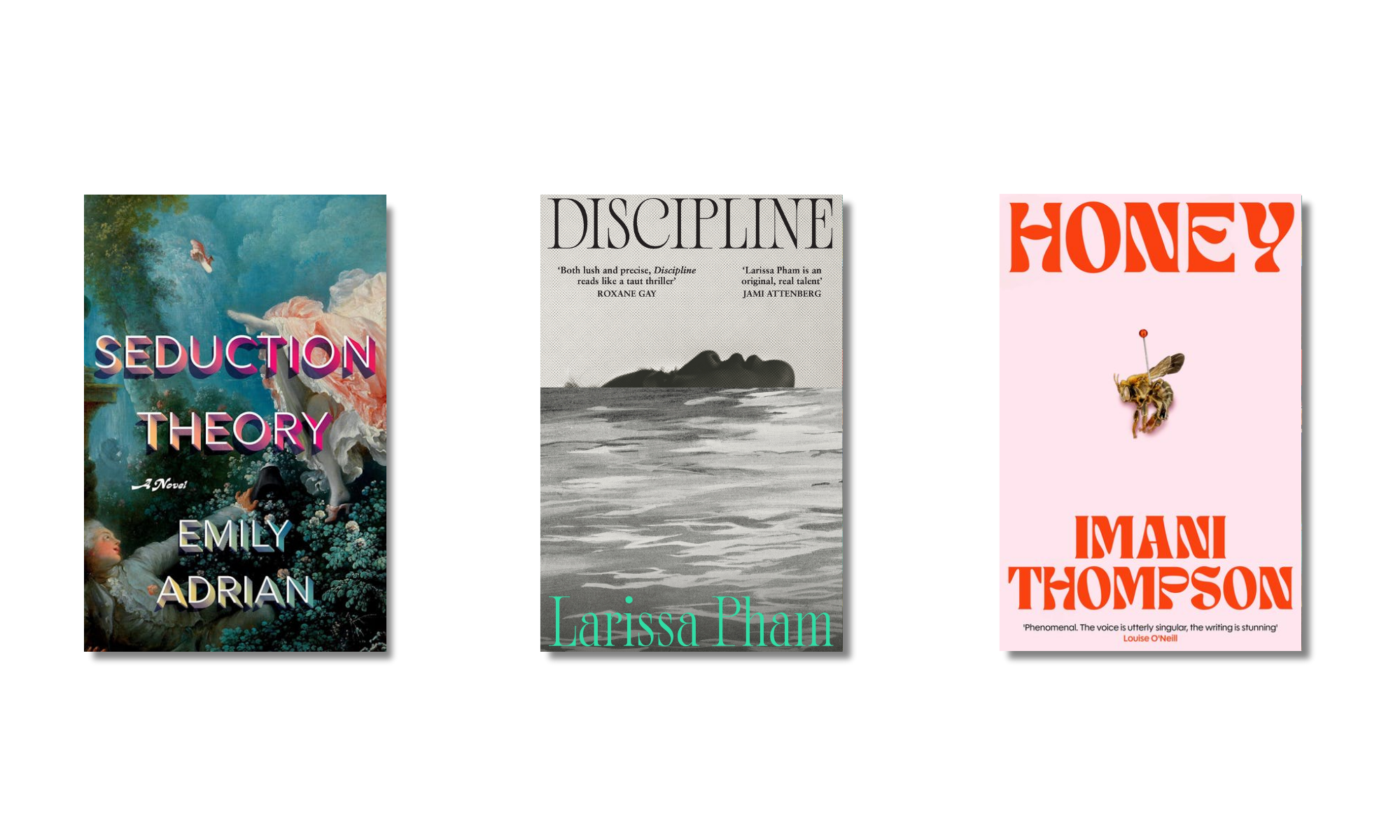
I buried my own Lolita. But I still have dreams in which I revive it, rewrite it into a more worthy contemporary response to Nabokov’s oft-misinterpreted original. I’m not done with trying to resolve the problem of lust in an inegalitarian world, the purported sexual power of female students versus their interiority versus their systemic entrapment. Nor is the culture. Emily Adrian’s Seduction Theory (2025) queers the trope by having an MFA student become enmeshed in, and later fictionalise, a female professor’s marriage. Larissa Pham’s debut novel, Discipline (2026), published on the same day as Half His Age, grapples with an art student’s struggle for narrative control in the aftermath of an affair with her mentor. Imani Thompson’s forthcoming debut, Honey, takes academia as a site of a racialised, feminist revenge fantasy. Goodreads ‘teacher–student romance’ lists continue to burgeon.
McCurdy’s debut novel is not the final word on the topic, nor is it the most sophisticated. Yet she does, for better or worse, capture the starkness of a moment in which an Epstein child sex-trafficking victim can write a posthumously successful memoir while alleged repeat passengers of the ‘Lolita Express’ run countries; in which it is more appealing for a teenage girl to be a self-aware nymphet than empowered, even in her own eyes. Moreover, she offers an unexpected glimmer of hope: that the boredom that got Waldo into this mess may, in the end, be her liberation.
Half His Age is out now via Harper Collins Australia.