Enjoy discounts across our wide range of courses with award-winning writers.

The Complicated Grief of a Writer in Exile

May Ngo

Culture

New Critic: Memory, language and identity intertwine in Bosnian writer Semezdin Mehmedinović’s My Heart, an autobiographical novel that asks how we carry the painful duty of remembering.

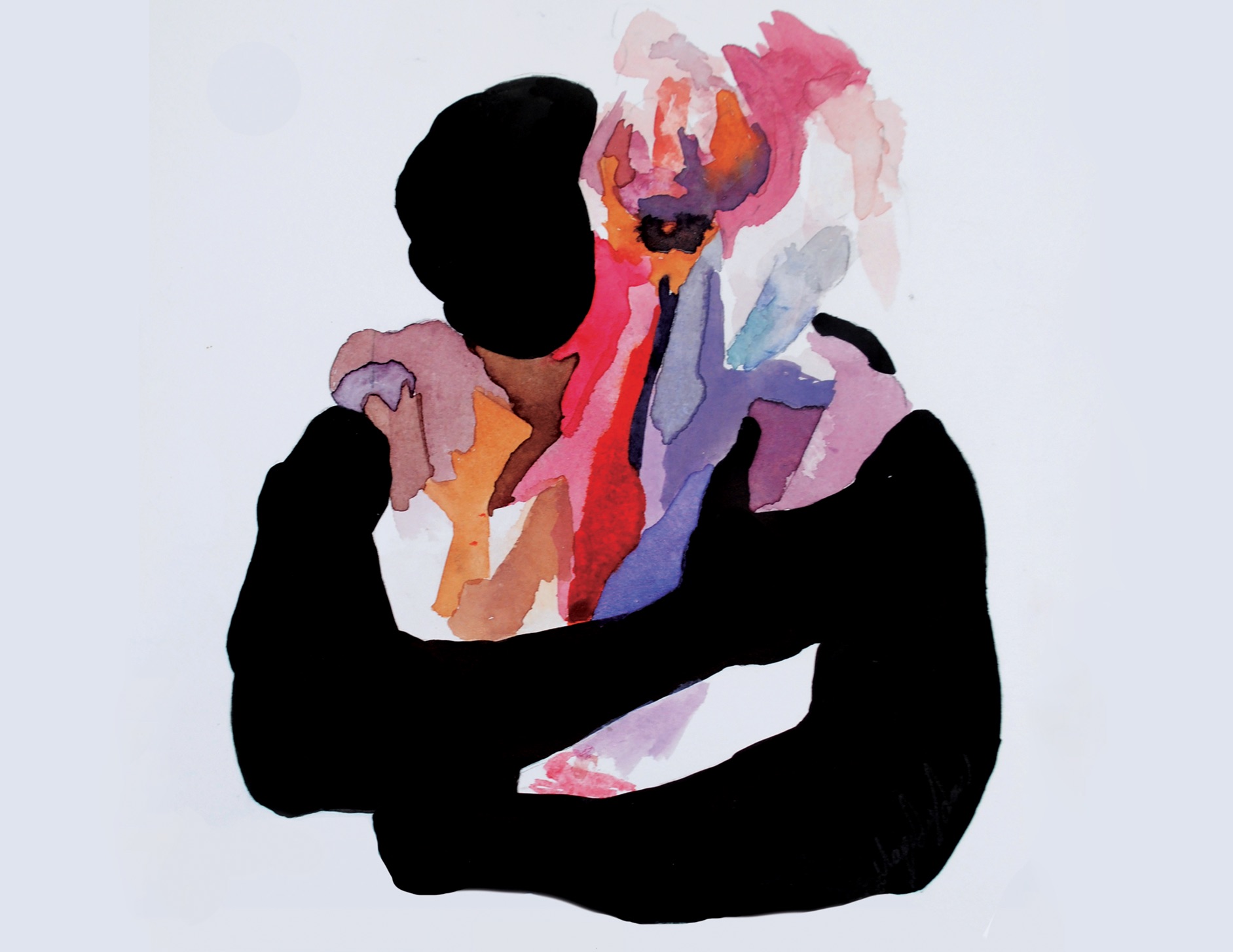
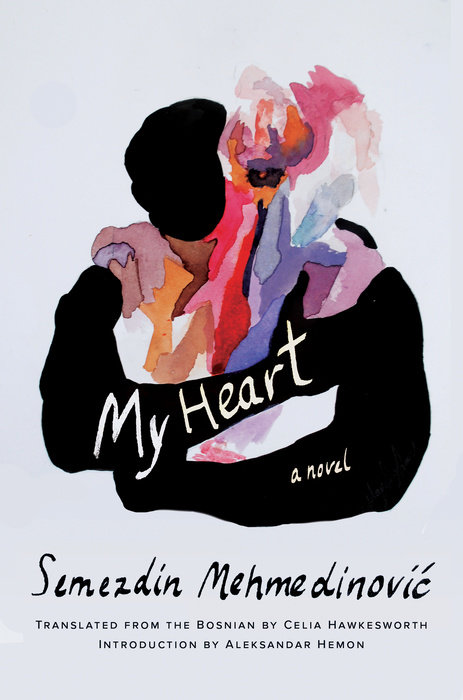
Artwork from the cover of 'My Heart' by Semezdin Mehmedinovic. The image is a watercolour painting of a vague human figure in black, in a hugging motion around a burst of colours vaguely in the shape of a child or human figure
Cover detail, My Heart. © Dana Li/Catapult

Bosnian writer Semezdin Mehmedinović’s My Heart begins with a heart attack—the author’s—and during his subsequent stay in hospital, an American heart surgeon tells him that he is unable to pronounce his name. ‘I’ll call you Me’med. Is that okay?’

This sense of dislocation reverberates in a book that is ultimately a reflection on memory and mortality through the lens of exile, illness and identity. As we live, we accumulate memories; but despite their power, memories are always under the threat of being lost, whether from illness or exile or simply over time. This is a book therefore that is a meditation on loss and grief, on the inevitability of death but also on the force that is life.

Prior to leaving Bosnia, Mehmedinović was a magazine editor, bookshop owner and poet. His previous book, Sarajevo Blues, was a collection of poems and prose fragments written during the siege of Sarajevo (1992–1996), which resulted in the deaths of more than ten thousand citizens in the capital of Bosnia and Herzogovina. Mehmedinović has continued to write since leaving Bosnia and in this book, written after twenty years of living in America, the siege and the war are like ghosts that haunt the present, mingling among the author’s other memories.

*

I say the book opens up with ‘the author’s’ heart attack, but My Heart (Catapult, translated from the Bosnian by Celia Hawkesworth) is referred to by its publisher as an ‘autobiographical novel’; a disclaimer at the back of the book explicitly declares this is a work of fiction. Instead of memoir, an increasing number of books go by labels such as autofiction, autobiographical novel and life writing, rejecting the notion of a clear line between what is real and what is imagined, between fact and fiction. Drusilla Modjeska terms the terrain between the two as ‘rolling grassland, a fertile borderland’ rather than a strict demarcating line.

This chimes with the approach Mehmedinović takes in My Heart. He states that he has no biography, and has turned almost everything important in his life into fiction, ‘so that it would be hard to construct a factual account of my life.’ This avoidance of any pretence of a ‘factual account’ is reflected in the structure of the book: instead of a linear recounting of his life, the book is divided into three parts, each part focusing on a particular event that becomes the launching point for thoughts, reflections and memories that roll out and undulate throughout the text, moving forward and backward in time. Perhaps these constructions are in line with Modjeska’s suggestion that autobiographical fiction is ‘not about fabricating “truths”; rather it is about finding new ways to voice the truth, or truths…’

Each event becomes a launching point for thoughts, reflections and memories that roll out and undulate throughout the text, moving forward and backward in time.

In the first part of the book, titled ‘Me’med’, the author details his heart attack and time in hospital, reckoning with the possibility of his own death. In the second part, ‘Red Bandana’, the story slips between the author’s letters and diary entries of a road trip taken in Arizona with his son Harun, a photographer and filmmaker. Accompanying this section are line drawings, presumably done by the author during the trip. The third and longest section of the book, ‘Snowflake’, begins with another rush to hospital—this time for his wife, Sanja, who has suffered a stroke that renders memory loss.

While in hospital for his heart attack, Mehmedinović reflects on ‘dying in a distant, foreign country that is not our own, a world where we are not at home,’ a specific kind of anxiety that affects a particular person—the foreigner. But proximity to death can also reveal identity: sharing the same hospital room is an elderly Slovak man, whose children and grandchildren no longer speak his language. Mehmedinović notices how, having been estranged from his language after seventy years of living in another country, the man lets a Slovak word slip out, almost as if ‘the old man was preparing to face death in his own language.’

For Mehmedinović, language and identity are interwoven. Despite having lived in the United States since 1996, he states that ‘my world is in my language, and I’ve never begun to write in the language of the country where I’m now living.’ He accepts this is a reflection of his refusal or inability to ‘tear myself away from the past.’ In choosing instead to write only in Bosnian, he acknowledges, ‘I have chosen to remain a foreigner.’ But this inevitably means being a foreigner to his own son Harun, who was thirteen when the war ended—in the author’s words, he has become a ‘local’ and has largely forgotten about the siege. ‘When I remind you of an event from the war, your memory becomes unreliable and vague. You suppress the war into oblivion.’

This gap in both language and memory is perhaps at the heart of this section between father and son, a gap that is not only about sharing a language or in the things remembered and forgotten, but in the very possibility of experiencing a common world. It is a chasm that perhaps exists to some extent between every successive generation of first and second generation migrants. As father and son embark on a road trip across Arizona so Harun can take snaps of the desert and sky, Mehmedinović writes movingly about this cleavage between them, in both diary entries and in letters directly addressing Harun: ‘Son, I came finally to free you of myself! There, you’re free, go off into your desert!’

Reading this part of the book, I could imagine it from Harun’s perspective. It is difficult to admit, but yes, as an immigrant daughter I sometimes wish I could free myself from my own parents—of the miscommunication, misunderstandings and misplaced expectations—but not only that, to also be free from the weight of our history, of war, of never belonging. How to explain the accumulation of all these, especially in a life? And they are all funnelled into very specific sacrifices, compromises and challenges in the migrant experience that can put a profound strain on families. Yet, although there maybe dilemmas and despair, there is also deep love. When remembering the birth of his son, Mehmedinović writes:

First I see your naked, vulnerable little body, and then I recognize my crooked nose on your face. That nose. My nose. Duplication. My solitude has just been dizzyingly diminished.

*

In a sense, this book is a testament to the power of memory. Mehmedinović demonstrates the power of recollections to render a non-linear experience of time, ‘There’s a year in my past I’ve never left as well. 1992’—the beginning of the siege. He shows us time as interrupted and fragmented by memories that weave in and out of the narrative, making time turn back on itself. Small, observed details litter the book, which become catalysts for recollections. Seeing a ping-pong ball roll down a road, the author remembers the Botanical Gardens at the Sarajevo National Museum in 1980, when he was woken up by museum staff playing table tennis. More significant memories arise, jumping from the present in 2015 to 1996, when they first arrive at the airport in America but their luggage fails to appear; one more loss to add to the life-changing displacement from home and country they had just experienced. Memories of the siege also surface, but mostly in small details, such as one day finding a drowned scorpion in a full bath at a friend’s house.

If the novel’s first two sections are mostly about remembering, the final section is largely about its inverse—forgetting.

If the novel’s first two sections are mostly about remembering, the final section is largely about its inverse—forgetting.

‘She has forgotten everything,’ Mehmedinović writes, after his wife Sanja suffers a stroke. Although that is not exactly true—it’s more that large pockets of time have disappeared. Time is no longer linear for Sanja, instead it jumps around, much like the way the author experiences his memories. Once, after having woken up, Sanja believes she is still a student and starts getting ready for school. ‘I didn’t have the heart to tell her that our student youth is far behind us,’ the author laments, ‘in a past that would be best forgotten for our own good, in a state that no longer officially exists, in a world that is no more.’

His wife’s forgetting, coupled with the wider loss of being exiled from a country traumatised by war, highlights to Mehmedinović the loneliness of being the one left behind to carry the memories, the only one to register the loss. Time is also transformed by illness, not only for the patient but also for those who love them; for Mehmedinović it is ‘measured by the short intervals between her medications’, and is irrevocably altered by diagnosis: ‘Life is slowly turning into Kafka’s syntax, in which there is no future tense.’

Read the second and third parts of the book you realise the heart referred to in the title is not just referring to the author’s own heart, or his heart attack, but also to the people who mean the most to him, his wife and son.

*

If autobiographical fiction can find new ways to voice truths, especially those not easily told, what are some of the truths this book is trying to voice? There is an ambivalence to remembering, an impossibility of returning to the past. On the road trip with his son, the author visits the very first apartment his family lived in when they moved to America. The landscape has changed and so have the inhabitants of their former apartment complex, whom they disturb by being there. ‘And I don’t feel good, it’s as though I’ve been driven out of my own past.’ It is not the homecoming he expected.

With this impossibility of returning, though, comes the impossibility of forgetting. When Mehmedinović is given medication to prevent a heart attack, his doctor tells him that one of the side effects can be memory loss—not ideal, the doctor concedes, but at least ‘forgetting doesn’t kill you.’ But Mehmedinović knows that forgetting can kill you. If you no longer remember your loved ones, no longer have your memories, what kind of a life would that be? Who would you be? Isn’t who we are linked to what we can remember; memory intimately linked to identity?

It is hard not to think about what might have inevitably fallen into the empty spaces between the languages as it moved back and forth between translation and re-translation.

Intertwined, too, with memory and identity is language, and what is lost to language through migration. The language Mehmedinović refuses to write in—English—is also the language in which Sanja’s stroke occurs. Therefore, he has to ‘translate’ what happened to Sanja into Bosnian as he takes down notes; into ‘an isolated, fairly remote language’ where ‘some details are not translatable.’ He speaks of the isolation in the empty space between two languages, a space that for him ‘is the same as forgetting.’ I wonder then, what it means to be reading the version translated ‘back’ into English by translator Celia Hawkesworth. Is there a doubling of that empty space, a doubling of what is lost and forgotten? The English translation itself reads smoothly, the language direct and unfussy, rendering clear the small observations and details that permeate the book. But it is hard not to think about what might have inevitably fallen into the empty spaces between the languages as it moved back and forth between translation and re-translation.

Through the accumulation of details and memories in this book, we see how the impact of exile and its attending losses mirrors the threat of forgetfulness and loss in illness. In My Heart, exile is a form of illness to be suffered and endured, it is a double loss—in the actual one suffered, and again in the threat of forgetfulness over time. ‘It’s a shame there isn’t a machine that discovers forgotten events and returns them to the memory.’ For the migrant then, the danger of forgetting can be similar to a death.

*

Just before the pandemic hit last year, my mother was diagnosed with terminal lung cancer. A few short months later she died before the first lockdown in Sydney. Reading about Mehmedinović’s hospital visits to his wife Sanja, and how traumatising she found the never-ending series of injections and tests, the transformation of her body into a medical object to be endlessly pricked and prodded at, I recognised my own family’s experience around my mother’s illness. I also resonated with his descriptions of Sanja’s forgetting. At one point during her illness, my mother began not knowing how to do basic things, like how to use a spoon or turn on the tap for water. I’m also not sure if she really knew who we were. We found out that her brain had become so swollen that it was pushing against her skull, causing neural damage. With her mind gone, it felt like we had lost her. But with a few injections of steroids her brain shrunk back to normal size and she came back to us; we were overjoyed. But we only had her back briefly. Very soon afterwards she was gone again, passing away from the cancer.

Throughout the pandemic, more of us have had to face our own mortality and that of those we love. Being hyper-aware of loss, experiencing a warped sense of time, an heightened anxiety—individually and as a society, more of us are questioning what we are doing with our lives and where we are going. All of these are processes similar to that which often occurs when grieving the illness or loss of a loved one. Even in countries and regions that have so far avoided the worst, we are still experiencing a unique form of communal grief.

In My Heart, exile is a form of illness to be suffered and endured, it is a double loss—in the actual one suffered, and again in the threat of forgetfulness over time.

What My Heart reminds us is that while the grief of illness and death will eventually strike us all—perhaps even more so now in these unprecedented times—some of us have already experienced the grief of the immigrant, the extraordinary grief of war and trauma, and the ways in which these accumulate and interweave over time with the more common and universal experiences of loss inherent in being alive. In reading this book, I am reminded of the layers of grief that accompanied my mother’s passing, that have accompanied my family as immigrants who have come from war, and how this complicates our experience of time, memory and loss.

My Heart is in fact a book about mortality, and the many different forms of lesser deaths before the ultimate one we all must face. But it is also about the very specific losses that the foreigner in exile, especially one who has experienced the trauma of war, must undergo. And yet in the book, as in life, there are moments of remembering—fragile and temporary, perhaps—but precious nonetheless.

Shortly after her stroke, to test her memory a doctor asks Sanja if she knows who Mehmedinović is, and he is alarmed to see her looking initially blank:

She’s forgotten me. But then her face experienced a total transformation, she looked at me as though she had saved me from nonexistence, or as though she had just given birth to me, and with an expression of the purest love she said: ‘Semezdin, my Semezdin.’ And that was the moment when my name filled with meaning. I was her Semezdin. That is my love story, and my whole life.

My Heart is available in print and digitally through Booktopia, or at your local independent bookseller.


Latest

Who Can Afford to Be a Writer in Australia These Days?

Nina Culley

Have Gun Will Shoot

Vivienne Cleven

Shed a Tear for the Norman Mailers

Rebecca Starford