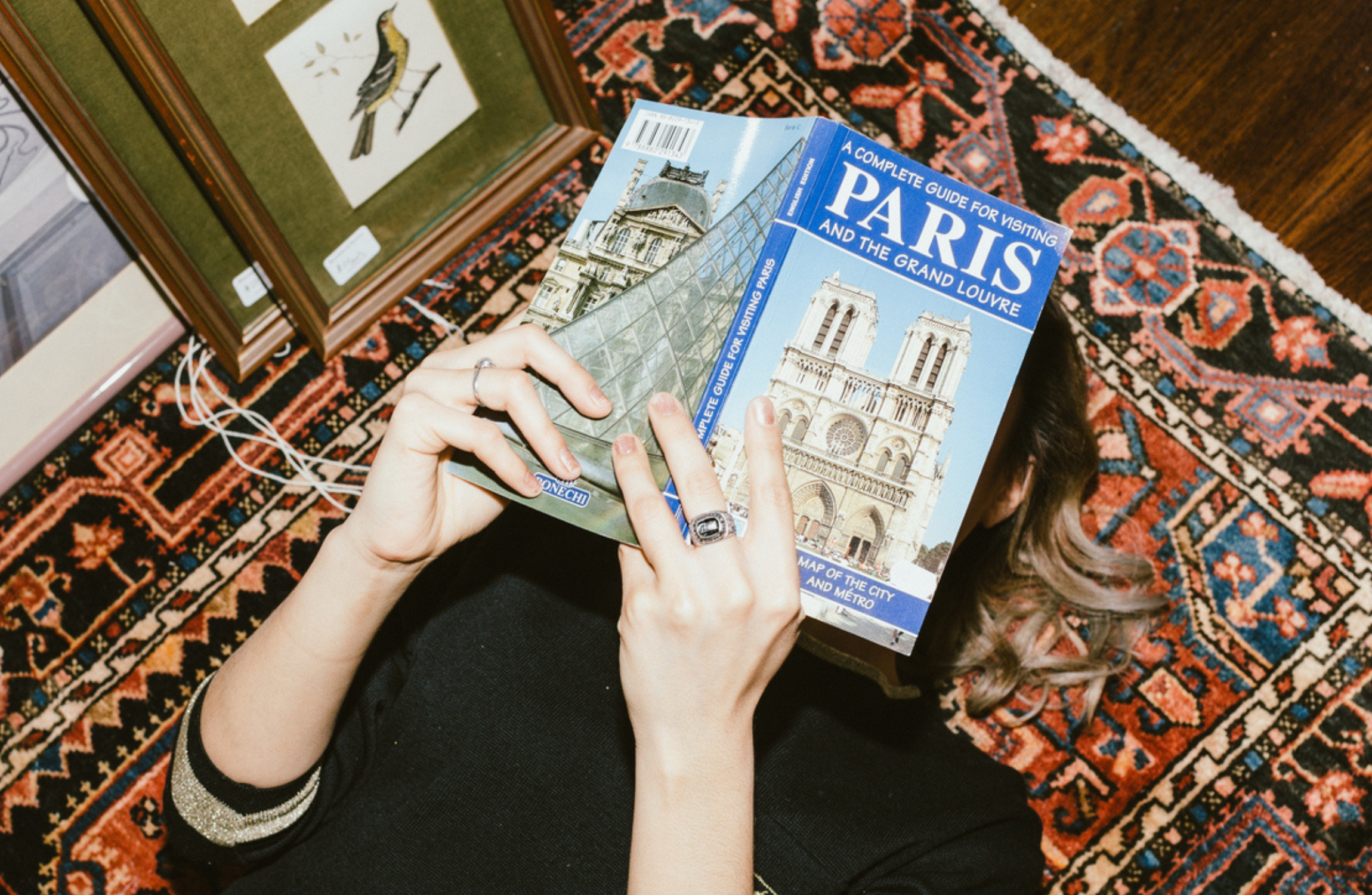
Somewhere in here is her mythology, tied to everyone she has ever known, cared for, loved – despite herself, instead of herself.
*
A woman is bound by land and language, by heritage and beliefs, by tradition and spirituality, and for the longest time, by her keepers. When the identity of a woman intersects with a man, she becomes someone’s other – a daughter, a wife, a mother. My great-great-grandmother is someone who exists in the periphery of the imagination, who may or may not have existed, whose voice is overshadowed by that of her keeper. The woman is the furthest we can go. The rest of them, her father, her mother, her sisters, her husband, are gone. And so, what happens to the woman, when everyone who defines her has disappeared? Who do we belong to, when we have lost the spaces we exist in? Does a woman’s mythology disappear with those around her? Or has she been reborn, now free to choose her own mythology – examining them, reassembling them, redefining them as she wishes? Did she, and so many women like her, find a way to transform her tragedy into power?
The responsibility of the historian or archivist – in this instance, my grandmother and her siblings – is to find the old world, and the thread that connects it to the present. They reconstruct the woman from their own memories: of a grandmother who was loving but firm, wealthy but generous, who watched them climb the mango trees in the garden like their parents did, and who was quickly becoming a mirage in their own minds. They looked through the photographs, pasted together in photo albums, buried underneath birth and death certificates, waiting in the darkness of storerooms.
We created a path from memories, photographs, documents, which spoke of the woman – but there were gaps that could not be explained. How did she take care of five children while maintaining her business? What did her former sister wives do that made her escape to Jakarta? And the biggest question of all: what happened in her six-month odyssey to Mecca? In these spaces, we unconsciously created a longing for how a woman should be: defiant of her times, firm in her beliefs, solitary in her movement. But this is not truth, it’s our imagination of a woman, who again, exists in relation to our own desires. And she is not here to correct us.
*
In April 1934, Kemala returned to Jakarta – now Hajjah, now free of men. What happened during these six long months? Which ship did she travel on? What was she thinking about as she gazed across the Red Sea? What shade was the sky when she arrived? Was she full of fear, hope, courage, longing? How did the desert, that had been waiting for her for centuries, welcome her?
And then, what comes next, after all this? Here is a mythology – flawed, subtle, complex – of the woman who reached the heart of the desert that she has dreamed of – not by power or conflict, but by the miracle of the self.