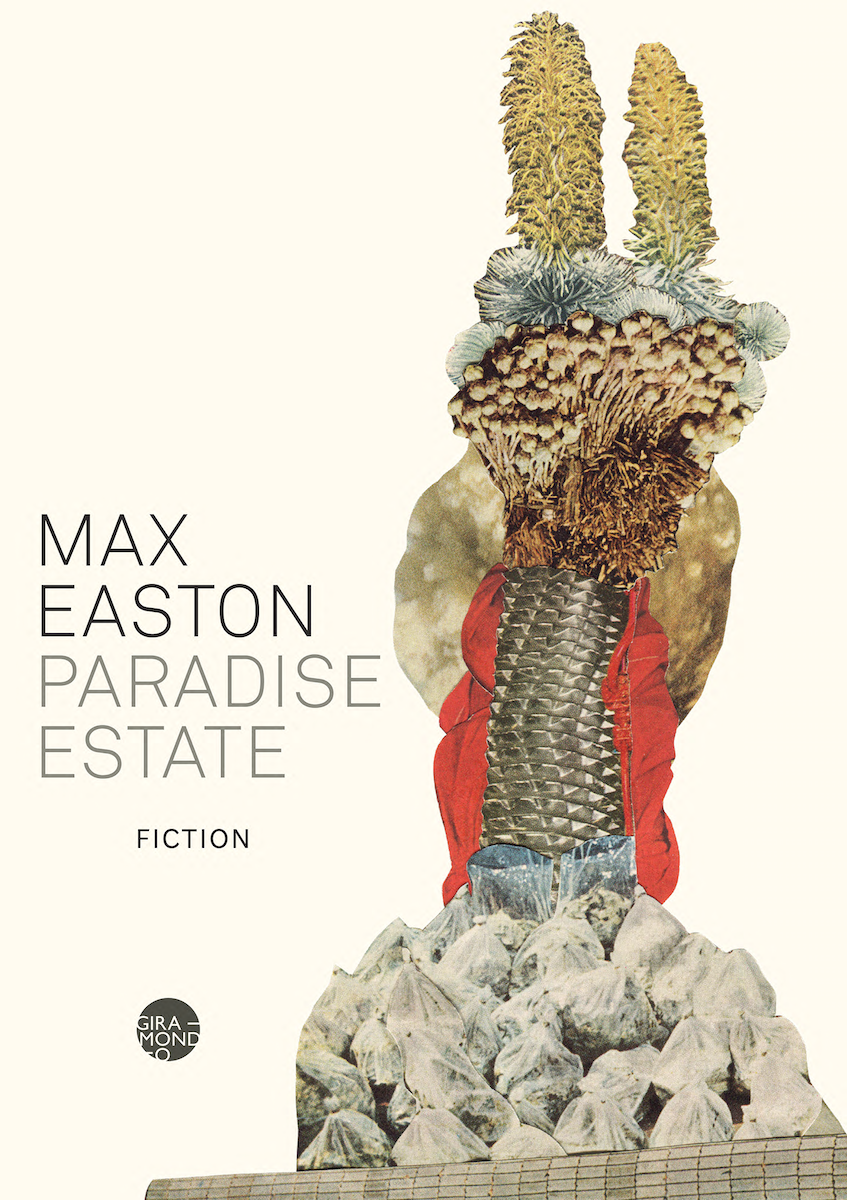
Show Your Working is a regular column exploring how some of our favourite writers get things done. In this instalment, we take a peek into the writing routine of author Max Easton. His latest novel, Paradise Estate, is out this month.
Images: Supplied.
What does your workspace look like?
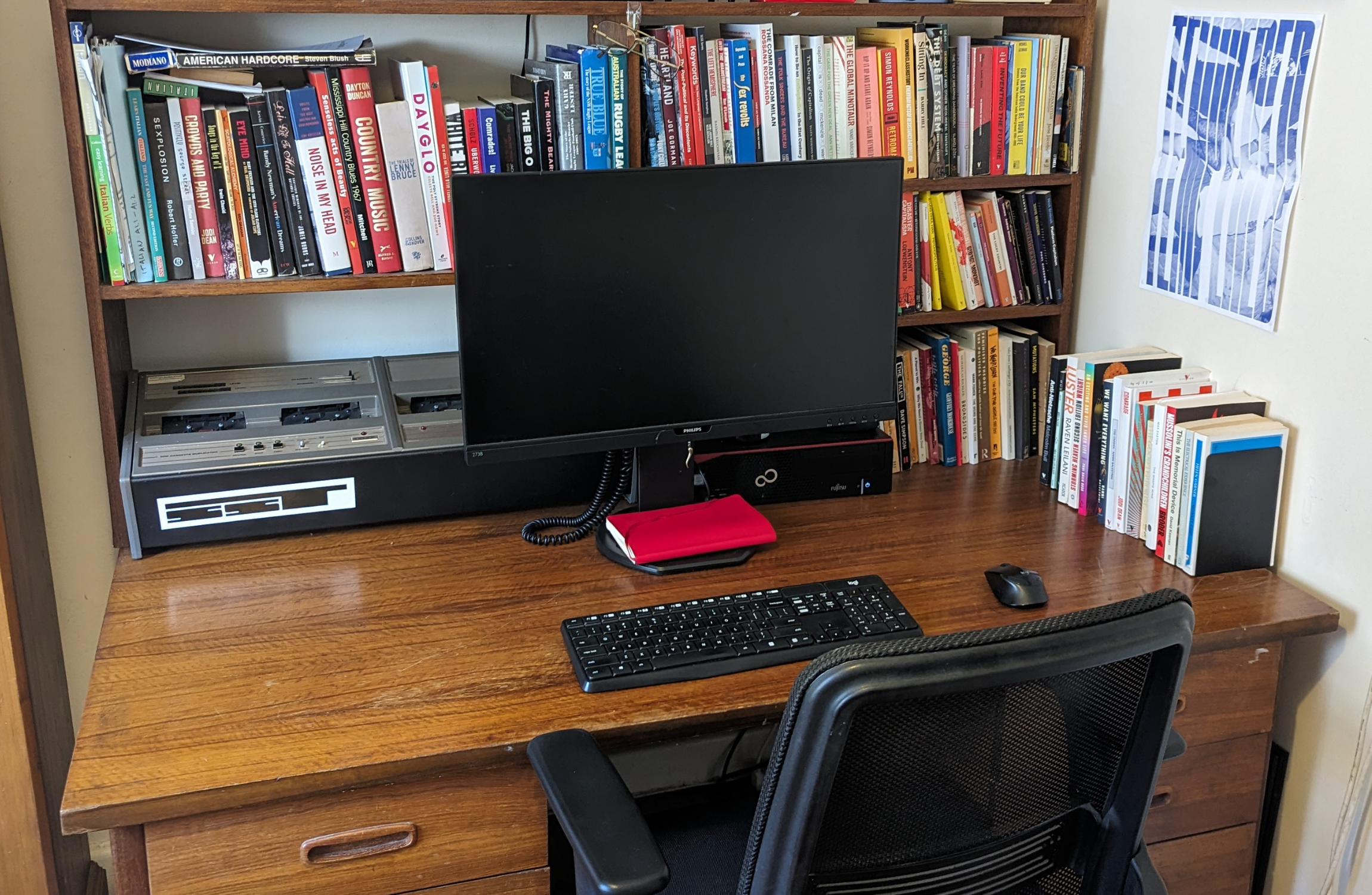
At home, it’s a big wooden desk squeezed into the corner of an office that I share with my partner. I like having the room to pile up notes and references, so this desk with its shelves and drawers is great considering how little space we otherwise have to work with. It gets cluttered, but that’s okay: it’s cluttered inside my head!
I try to move around since my writing can take on the feel of the room. Being time-poor, I need to fit the writing in wherever I can, which means bursts on the way to and from things, on lunch breaks or on the walk home from work. I get to make a workspace out of a pub or park bench with a notepad or a laptop a lot of the time, which I really enjoy.
Are you an analog or digital writer?
I feel at my most lucid with pen to paper (can’t alt+tab away from a booklet), so most of my work starts there. I’ll try to keep it away from a computer in the early drafts, which is good for my bad neck and seems to benefit the flow of ideas too. Then I’ll come back to those notepads to find spiralling rants that have to be deciphered. In translating myself, all these ideas come up that I need to cram into the margins or open a separate notebook to elaborate upon. So I much prefer to draft by hand. It also helps me switch out of work-email monotony and back into a more human voice (arguably).
Being time-poor, I need to fit the writing in wherever I can.
At some point, I get worried about losing all my notebooks in a fire or something, so I’ll move to a digital finish: typing things up while editing and finding the right place for everything as I go.
The organisation of the book depends on where I’m living or working. For The Magpie Wing, I was in a place with a shed out back where I could set up big sheets of cardboard for plotting. Now I’ve streamlined things in this smaller place and use different programs to keep things together. I make spreadsheets to track progress and to help find where a chapter is too thin or too bloated by word-count stats. For Paradise Estate, I tracked continuity by plotting rainfall data and average petrol prices as indicators of the strain on characters—anything that can open the work up.
What sort of software and hardware do you use to get your work done?
I used Scrivener for the first time when writing Paradise Estate. It was really useful since the first draft was spread across five notebooks. Scrivener is well suited to rearranging and collating scraps of ideas into a logical flow. The program also feels more bare bones to me than Office: fewer prompts, badges, pop-ups or reminders, and a good focus mode that removes page breaks to get a feel for the flow of the writing.
Editing a complete manuscript and formatting to style is a lot easier in Word though, so I move everything over at the end to edit in web layout, which gets rid of the interruption of the artificial page. I’ll try to do an edit in portrait mode, another edit in landscape, an edit on a black background (and so on and so on), all with the goal of minimising the influence of the software or hardware on the writing.
Image: Supplied.
Describe your writing practice?
It’s different for every project, but I feel strongly about allowing things to happen and to be almost superstitious about things that appear in the writing. Things like linking accidental threads together, going back to the notes and finding a word that was smudged into an eerie ink pattern, and letting that smudge change the feel of the scene.
At the start of Paradise Estate, I only knew that the character of Helen would be there. Then I found that there was another voice written in this patchwork way that was always in the past tense, which made me realise they weren’t with us anymore. Sometimes the writing was so dry and annoying and poisoned by a ‘current thing-ism’ that I brought it all together in the form of a character who had that exact problem. I decided that with my fiction, everything on paper would become a part of the project’s continuity. If I had to tone something down or remove a scene, then I’ll treat the first draft as a character’s fantasy. If I have to switch perspective, I’ll treat the first draft as a story told second-hand that got blurred down the grapevine.
I make spreadsheets to track progress and to help find where a chapter is too thin or too bloated.
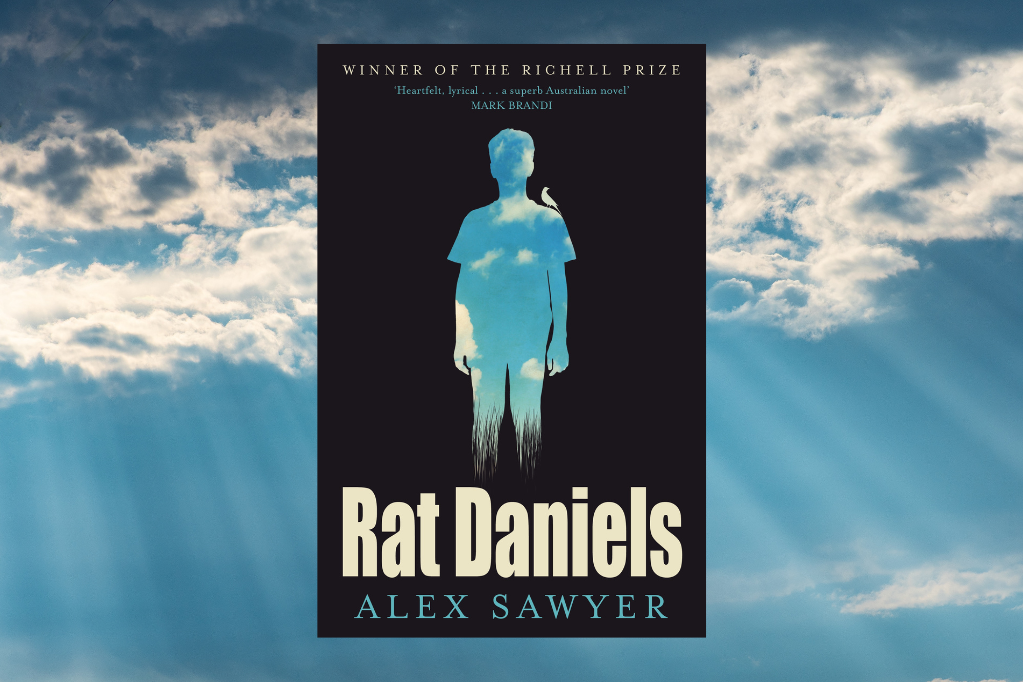
I suppose the only intervention I try to make is to keep an eye on when I love or hate a character too much and try to think of other perspectives about them: I learned from The Magpie Wing that one person’s hero is another person’s dickhead, so I wanted to really build on that with Paradise Estate.
For plotting and structure, I have a good idea of where I want things to go, but I like the ideas and characters to determine the outcome. Whether something feels right or not at the start changes a lot too: big dramatic events turn into fizzers, pipe dreams become reality, big propositions become things that went unsaid. Then, at some point, I look back and the draft’s ready to be read. Does that count as a writing practice?
How do you navigate your different kinds of work?
Having to work all week takes most of the choice out of how to navigate writing. Rather than fight it, I try to let that be a part of the process. So much of Paradise Estate is about being short on time to do things right, which I think resonates with this era of precarity and insecurity. In that sense, I don’t know if I could have written this book with free days available to me: it makes sense that I’d do a full day’s work and then cram my writing into evenings and weekends.
Navigating that balance between work and writing is more like taking any port in a storm for me. I’m an hour early to something? Duck into a pub and try to hammer something out. Someone’s running an hour late? Scribble maniacally into a notepad until they arrive. Taking notes in bed morning and night, working on a narrative thread in the bath or on a bus… A big part of my fiction writing has been about trying to break down the barriers between all the different parts of myself rather than letting that overcome me. But for the next book, I’ll try not to let that be at the cost of my body and mind!
Has your writing practice changed over the years? If so, how?
It’s adapted to the conditions, I suppose. I only wrote about a short story a year from 2013–2018 when I worked as a research scientist. Back then I used to write in text files housed on a USB stick while running experiments (it would look like research data if you came into the room). But technology changed and I became a Google Docs guy because I liked the mobility it offered and couldn’t afford an Office subscription. Then I found out the hard way at the end of the first draft of The Magpie Wing that Google Docs can’t handle a complete first draft, so I was forced to compartmentalise it all, which ended up being something I really liked structurally.
I’m an hour early to something? Duck into a pub and try to hammer something out.
With Paradise Estate, I became a Scrivener person, and the writing has kind of evolved to wherever I’m at. The main thing for me is to work right at the edge of my skill level, to try to find what I can and can’t do well. I always want to challenge myself and learn on the job. I think it’s important to constantly make mistakes and work on finding a home for the failed experiments in the finished product.
How do you encourage inspiration to strike?
I only write about things I’m passionate about which keeps the inspiration flowing, but there are days when I feel burnt out or down about writing. In those moments, I try to get as far away as I can before I poison the thing. I hang out with my partner, cook something process-intensive, walk or get to the gym, read about something I’m interested in. It’s always in the time away that I figure out something important, realise something about a character that’s missing or remember a setting that could fix a bad passage of writing.
I think it’s important to understand where a bout of writer’s block comes from. It’s not a mystical force and sometimes there’s a good reason for the brain to block you from writing something. So, I try not to force inspiration, though reading widely helps a lot in finding what I love and what I don’t. Understanding why I don’t like something in order to write against it is helpful because I want to write the things I wish I could read.
What’s next for you?
Soon I’ll be starting on a third novel to close out this run of books, to (hopefully) nail home a more positive view on the ideas of independence and autonomy that these novels have been looking at.
I’m always working on writing underground music histories via a zine, mixtape and podcast project called Barely Human. There’s another substantially different novel I want to write eventually and some other projects I’d like to explore…but I feel like the next few years are pretty full already if all goes to plan.