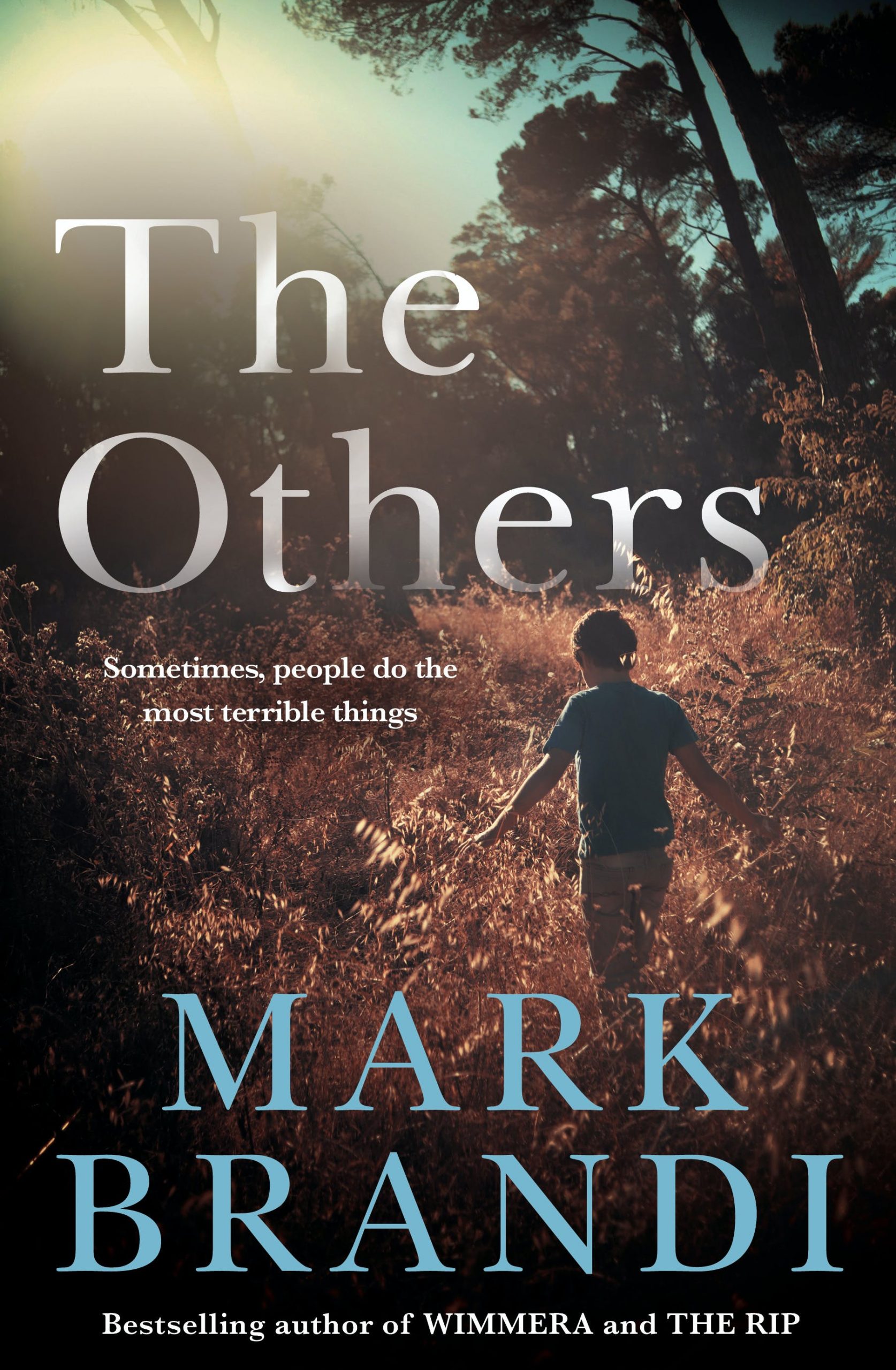
Show Your Working is a regular column exploring how some of our favourite writers get things done. This month, we take a peek into the writing routine of author Mark Brandi, whose new book The Others is out now from Hachette Australia.
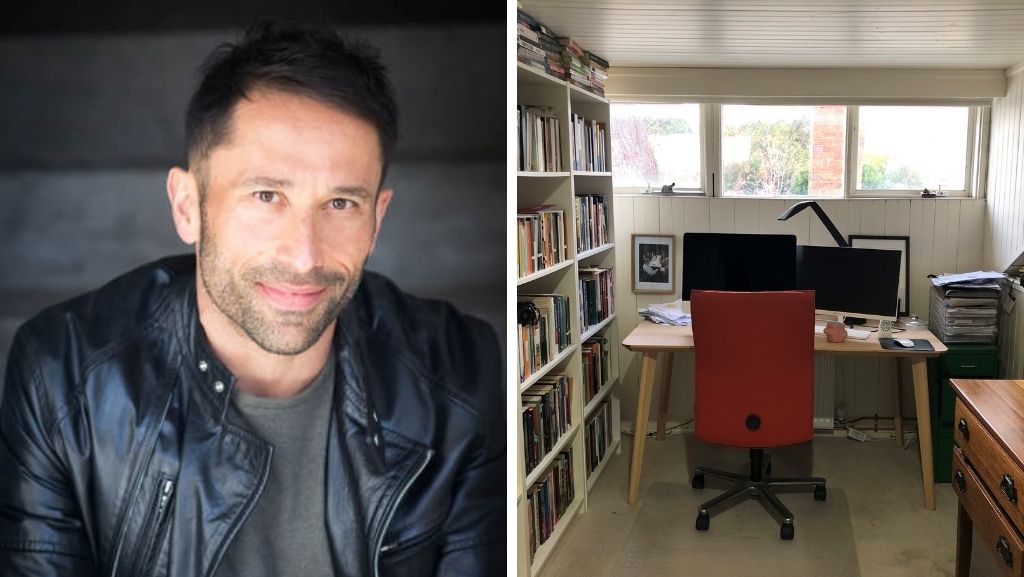
Mark Brandi’s Study: Image Supplied.
What does your workspace look like?
My main workspace is a terrible cliché. It’s a tiny loft at the top of a steep flight of narrow stairs, with a window overlooking the rooftops of my neighbours.
While I like having natural light, such nice views are wasted on me—sensory deprivation is more my thing. When I was doing a residency at Varuna, I was out in Eleanor Dark’s studio and had to turn the desk away from the window. The fewer distractions, the better.
Embarrassingly, I also wear heavy-duty ear muffs while working. They’re the type you’d normally see on someone wielding a jackhammer, not a keyboard. They’re a hangover from our previous place, where nearby house renovations really bugged me. I now find it hard to write without them, which is more superstition than anything else.
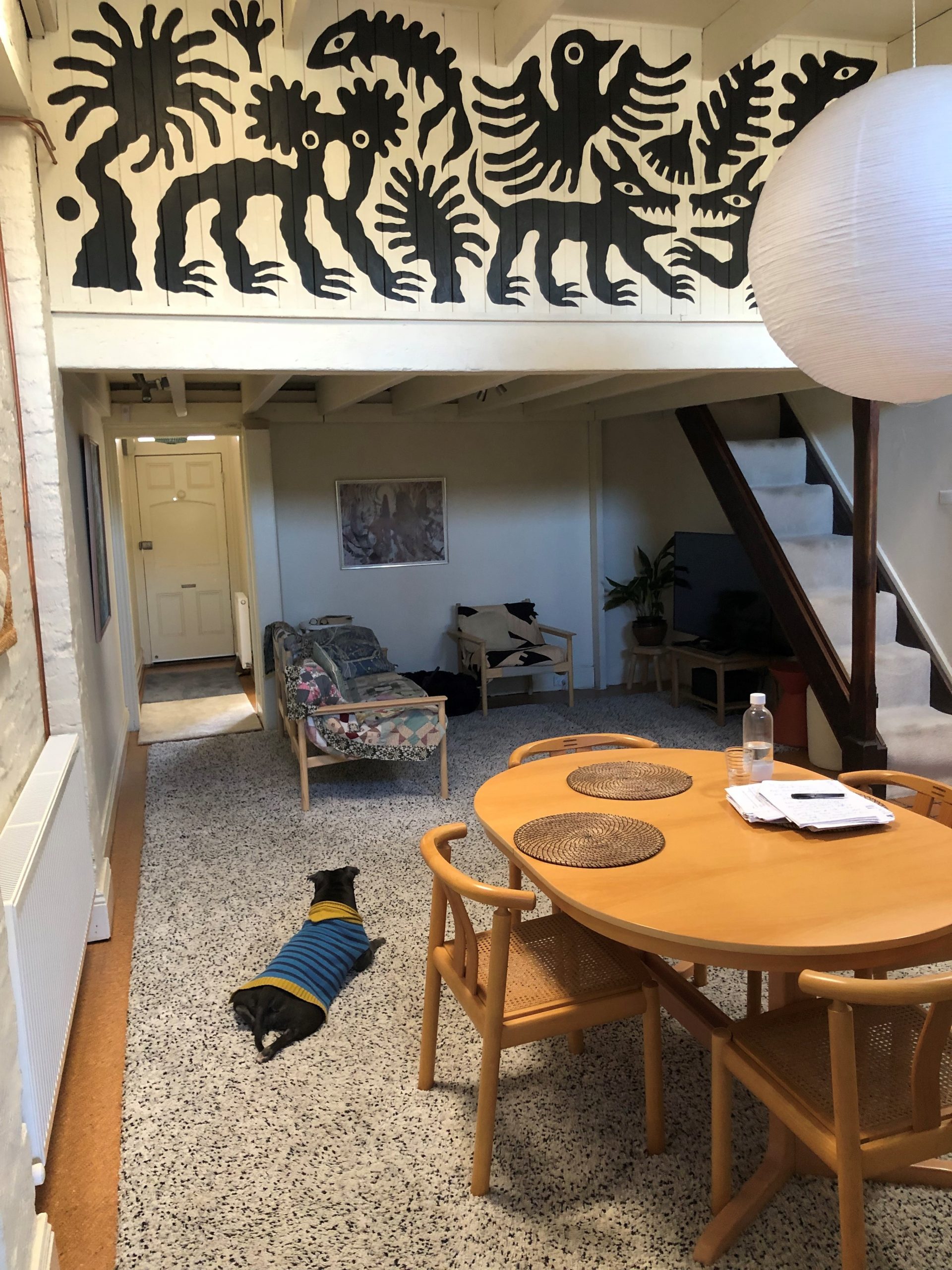
I use the downstairs dining table when I’m reading or editing. This change of scene (and the extra space) is helpful, with less risk of internet ‘research’.
Embarrassingly, I wear heavy-duty ear muffs while working. They’re the type you’d normally see on someone wielding a jackhammer, not a keyboard.
Are you an analog or digital writer?
When I’m at the ideas stage, I’ll make handwritten notes to type up later. I also email myself if I’m out and about and an idea springs to mind. I’m sure there’s much smarter ways of doing things, but old habits etc.
When drafting, I’ll usually be working on the manuscript every day. If I have a break, I find it hard to gather the threads of where I was at. That said, I’ll usually have at least a month between drafts, which I think gives me enough distance to edit. I’ll also read the manuscript out loud in later versions, as I find it helps to resolve any issues of pace and rhythm.
Overall, I’m mostly at the computer, but when editing I’ll print out the manuscript and mark-up by hand. I have many dozens of drafts stacked in storage boxes, which I haven’t been able to part with. It’s a fire risk.
What sort of software and hardware do you use to get your work done?
I use Word and a little bit of Apple Notes. Word gives me headaches and nervous-breakdowns with unexpected crashes, but I’m just used to the layout.
I have a double monitor set-up on my desk, as I find this useful when redrafting. I’ll usually have a ‘drafting notes’ document (which I use as a guide, and progressively update) open on the right hand screen, and the main document in front of me.
This set-up works for me, and I really wouldn’t wish for too much else. But since my partner is now working from home, I’ve been selfishly dreaming of a door at the top of the stairs.
Describe your writing practice?
I’m an insomniac, so my actual writing day doesn’t start until about midday.
I’m a big believer in getting the first draft out with as little self-censorship as possible. In that respect, I owe a debt to a former teacher, the late poet Ania Walwicz. In her classes, she gave us freedom to write without second-guessing ourselves.
When I’m in the midst of a draft, I’ll probably write until about 6.00pm. I find it’s helpful to leave the manuscript at a point where I’m still feeling good about it—that means I’m more enthusiastic about going back to it the next day. If I leave it at a problem, it’s less appealing to get back into the chair.
While I usually have a general idea of where I see the story going, it’s really the character development that leads the plot. That’s a real writer-wank thing to say, but it’s how it happens for me. As the characters take form, I have a better sense of what they will or won’t do in a given situation. None of my three books have truly followed my original ideas.
I’m a big believer in getting the first draft out with as little self-censorship as possible.
Has your writing practice changed over the years? If so, how?
I rely more on my publisher nowadays, as well as my agent. When I was in the earlier days of my writing, I shared work more widely. Now I depend on just a few readers who understand what I’m trying to achieve, sometimes better than what I do.
I’ve also gotten slower. I’d like to think it’s because I’m taking more care, but I suspect it’s my brain starting to fail me.
I guess the goalposts have moved too. When writing Wimmera, I was just determined to get the thing finished, then (hopefully) published. Anything else was a bonus. With The Rip, it was more about doing justice to those characters—Dani and Anton—as they felt so real to me. With The Others, I had to be deeply immersed in that world to make it work. Sometimes, it was a hard place to be, so I think that’s partly why it took me a bit longer to write.
How do you encourage inspiration to strike?
I drink too much coffee, but I don’t think my books would get written without it.
I also rely on self-delusion. I think you need to be able to kid yourself that what you’re working on is okay, or going to be okay soon. Persistence is no guarantee of success, but it means you’ve got a chance of finishing the thing.
In the end, there’s so much luck involved when it comes to publishing. Despite best laid plans, no one ever knows how a book will go once it’s in bookstores. All you can do is honour your work by making it the best it can be, and something you’re proud to have written. Anything beyond that is out of your control.