Show Your Working: Gina Rushton

Gina Rushton

Interview

Show Your Working is a regular column exploring how some of our favourite writers get things done. This month, we take a peek into the writing routine of journalist and author Gina Rushton, whose new book The Most Important Job in the World (Macmillan Australia) is a powerful, compelling and forensic analysis of the role of motherhood in society today, and the competing forces that draw us towards and away from it.

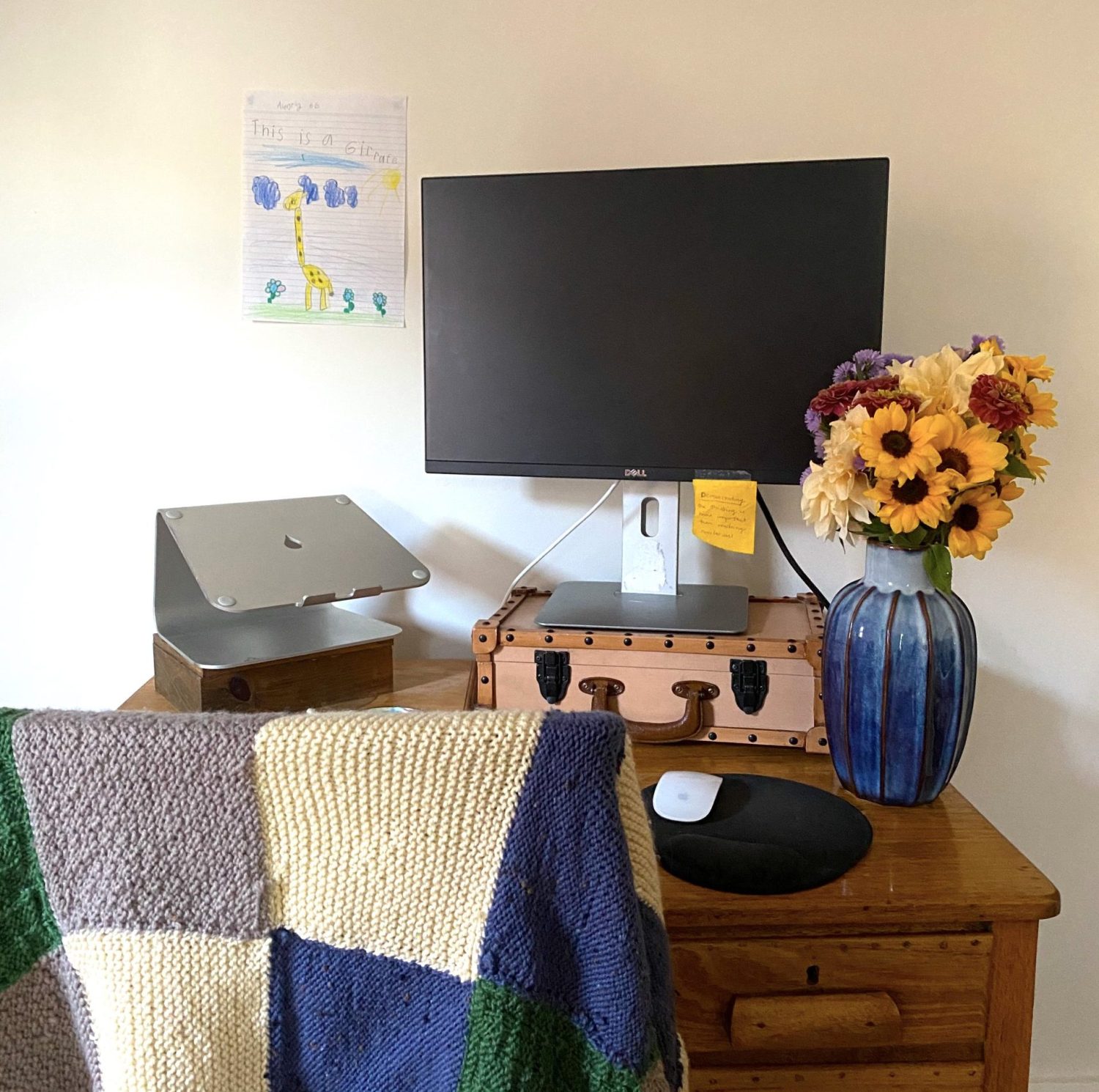
A small timber desk against a light-coloured wall. On the desk a silver laptop stand sits on a small wooden box and a large Dell external monitor with an orange sticky note attached to the bottom sits on a light brown suitcase-style box. Also on the desk are a mouse on a black mouse pad and a blue ribbed vase full of bright-coloured flowers. Over the desk chair is drape a knitted blue, green, off-white and grey blanket.
Gina’s workspace. Image: Supplied

What does your workspace look like?

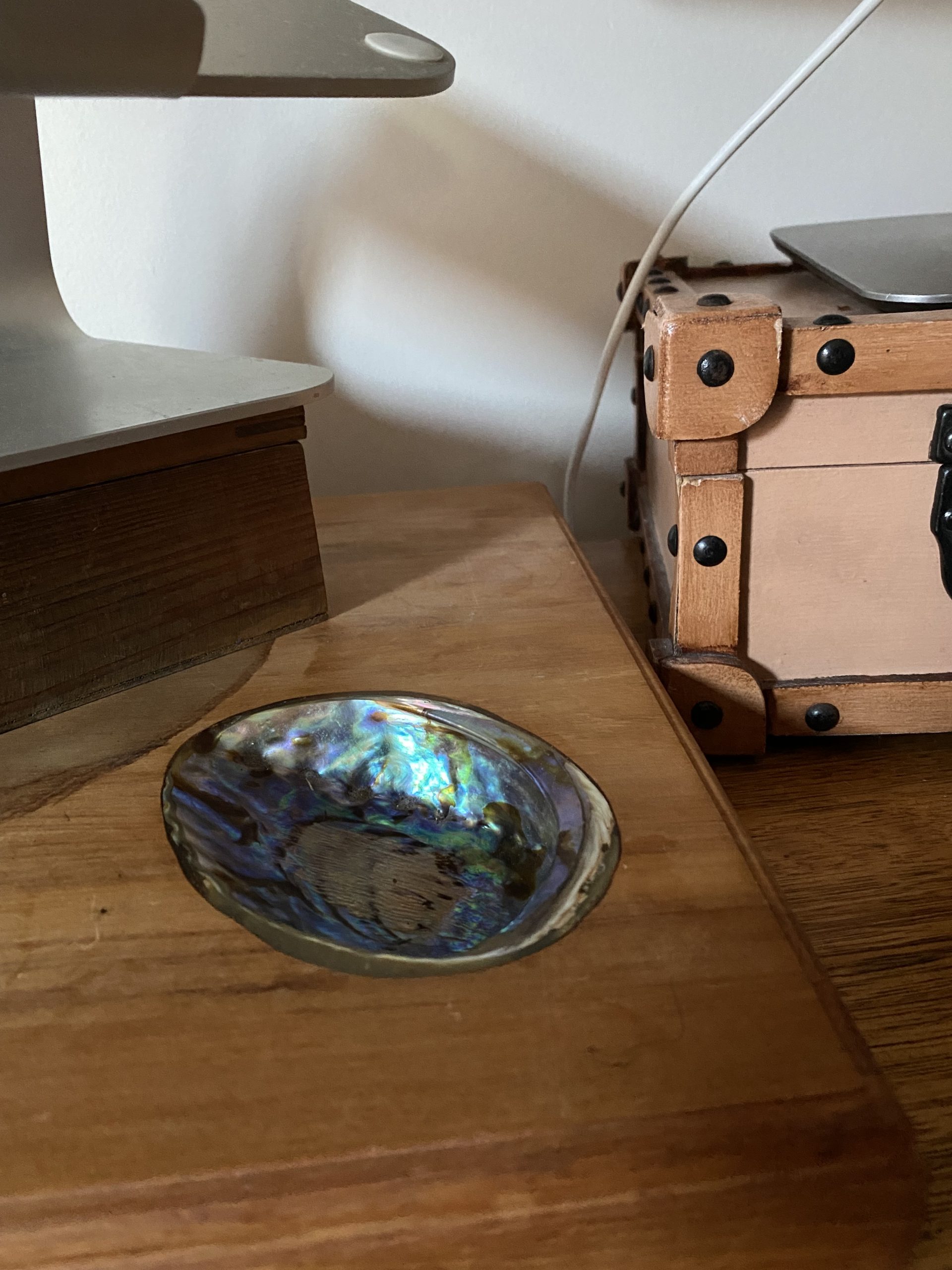
My laptop is propped up by this funny bit of wood embellished with Mother of Pearl I found on the side of the road. I set it up like that when I was writing a bit of the book that examines nacre, and I thought it was very symbolic—but the truth is, I find it very hard to do work that isn’t journalism at my desk. I moved out of a sharehouse of four people and into a flat by myself because I thought I would finish the book here with all this space, but the silence was miserable and I found myself at the same cafes and libraries right up until I submitted it. I write best when surrounded by ambient noise in a cafe, and I edit best at libraries once the sun has set. I also wrote a decent chunk of my book in bed. I’m not sure if it was because I wrote it in a compressed amount of time but it felt like the book wouldn’t leave me alone at night so I would wake up in the early hours to email myself an idea and then often I would wake up and use the email as a writing prompt. My workspace isn’t messy with pens or papers or anything but I do need snacks constantly so I collect the fruit peel, cans and chocolate bar wrappers before closing my laptop for the day. 

Are you an analog or digital writer?

I’m a digital writer. I send myself emails and write in the Notes app on my phone while I’m out and about. As a journalist I work well on a tight deadline and the nine months I wrote the book in felt like an eternity so I made fake deadlines for myself all the time. These were written and crossed out in a paper diary.

I write best when surrounded by ambient noise in a cafe, and I edit best at libraries once the sun has set.

"My laptop is propped up by this funny bit of wood embellished with Mother of Pearl I found on the side of the road." Image: Supplied


What sort of software and hardware do you use to get your work done?

I started writing my book with Scrivener which was great at first because it encourages you to think in a very zoomed out way about structure, but then I found myself in Microsoft Word. I lose a lot of things—this morning I locked myself out of my house but immediately found another key I had lost months ago—and it was stressing other people out that I was using Word, so I changed to Google Docs so they wouldn’t worry about me losing my laptop containing the manuscript. It is funny to think about ‘special features’ because the only one I discovered was because I am a massive bimbo…I had no idea that you created an indent by pressing the tab key. I’m not joking—I just didn’t use them, or I did multiple space bars. I shared this information with friends, and some of the replies included: ‘I don’t know what to tell you’, ‘I’ve known this since I was twelve’, ‘don’t tell anyone that’, ‘how many years have you been using a computer?’

Describe your writing practice?

When it comes to journalism I can write at any hour, but for anything that requires an ounce of creativity I need to get to it first thing in the morning. I don’t know if I so much edit as I go as I just don’t edit myself very much. I want to be edited by people who are smarter than I am, so I seek out my friends’ opinions a lot. Non-fiction writing requires a lot of material that has nothing to do with you, and I find the personal reflection the last and least important ingredient, so that element is particularly unrefined.

Has your writing practice changed over the years? If so, how? 

My writing practice has changed in that before I wrote the occasional essay beyond my reporting and then, suddenly, I wrote a book. I think I’m probably more realistic now about the role idle time plays in writing. It sounds indulgent, but you need enough time—even if it is half a weekend away from work and writing—to see your friends, to have a hangover, to swim in the ocean etc. It took me a while to realise that sometimes what the writing needed was for me to relax.

I think I’m probably more realistic now about the role idle time plays in writing…It took me a while to realise that sometimes what the writing needed was for me to relax.
How do you encourage inspiration to strike?

I deal with writers’ block by eating, immediately picking up a book or going on a long walk. I remember talking to Sarah Krasnostein about how I couldn’t write the book at my desk and I only felt like writing at inconvenient times in uncomfortable places. She said something, in an eloquent way I won’t do justice, about all of the stuff around writing being part of the writing. It really helped. I probably took it too seriously when I was trying to bludge, but when you think about the moments a book comes together, it really is in those strange in between times when you’re only half thinking about it—standing at the kitchen sink staring out the window is the writing, peeling a mandarin is the writing, shaving your legs is the writing.

*

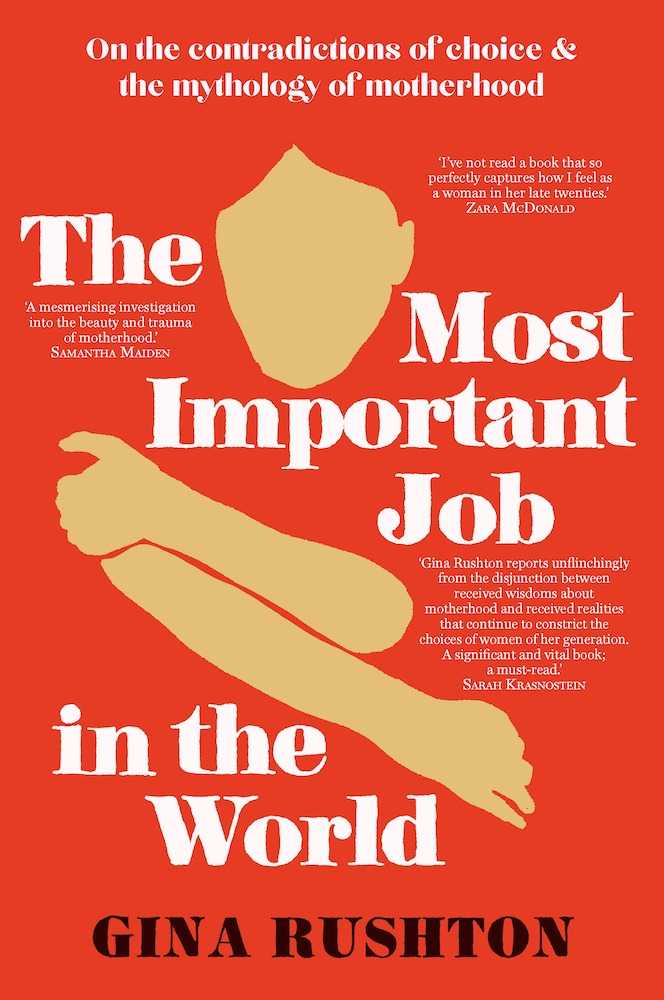
The Most Important Job in the World is available now from your local independent bookseller. Gina will be appearing at events at the State Library of NSW on 21 April, at the Wheeler Centre on 28 April, and at the Sydney Writer’s Festival in May.

Latest

Can You Rewrite Your Self?

Sam Twyford-Moore

My God, It’s Full of Stars

Jennifer Down

Goodbye to the Body

Jack Vening