

Shelf Reflection is a monthly series where we explore the bookshelves and reading habits of our featured First Book Club authors.
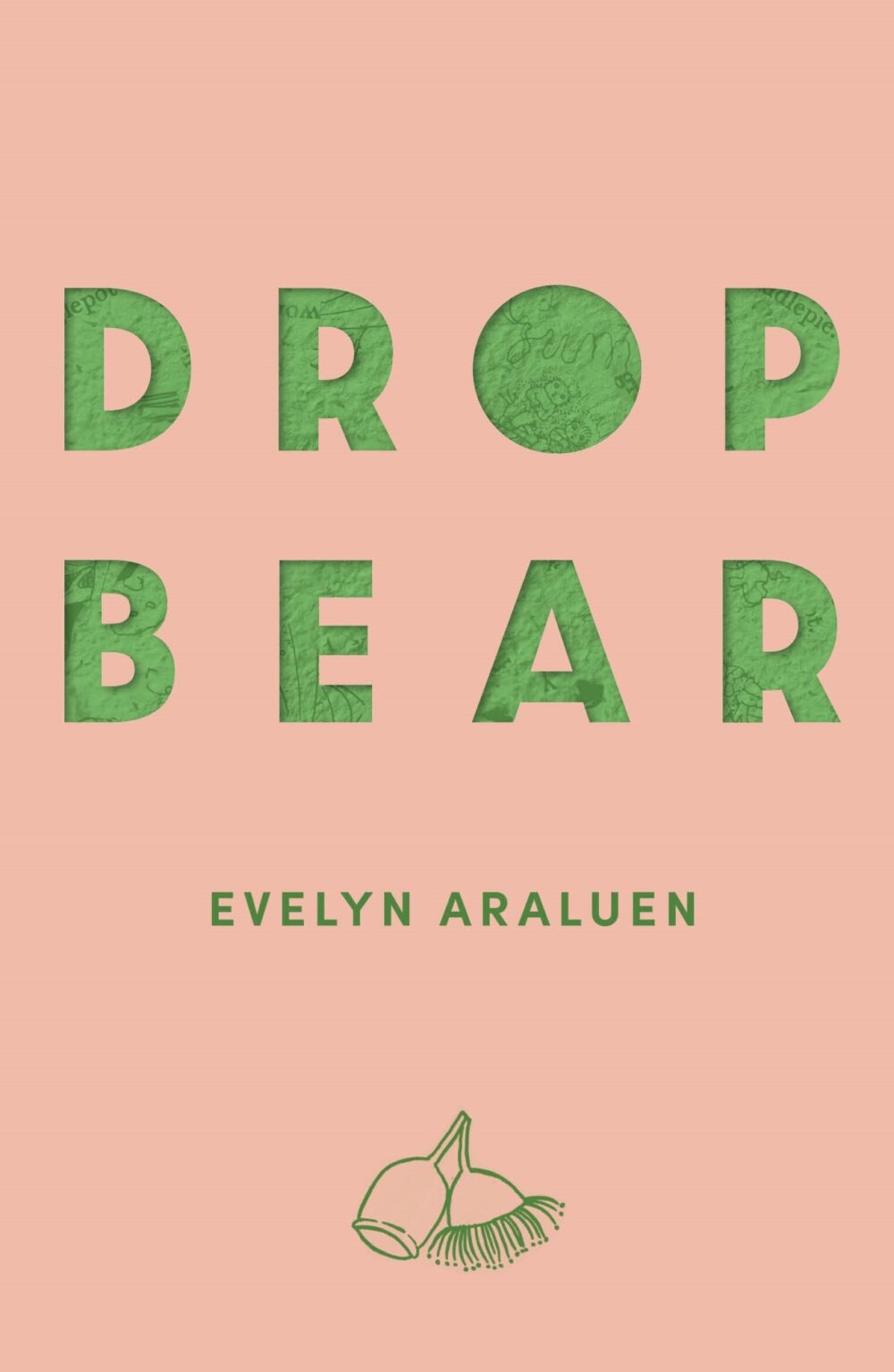
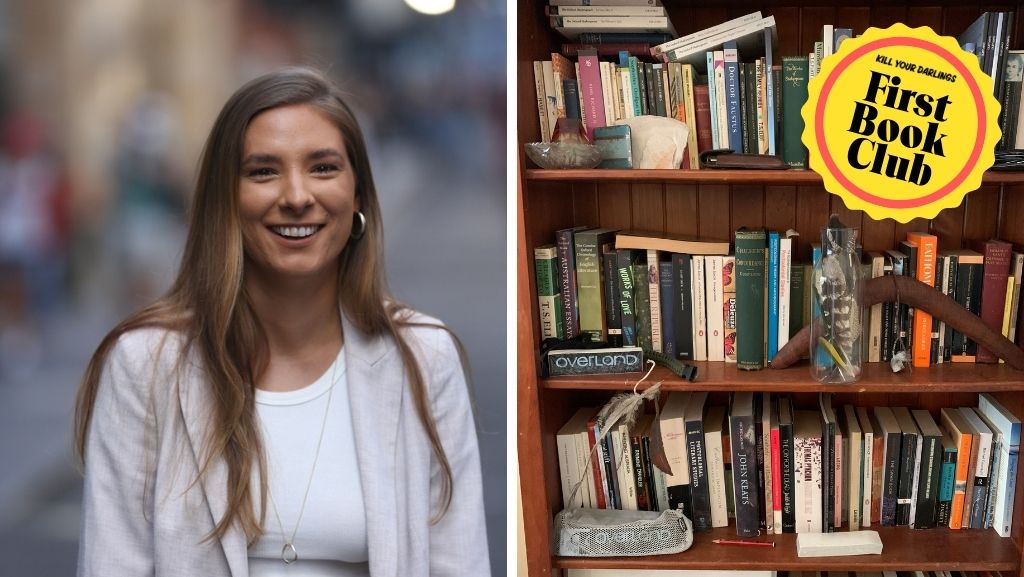
This month’s reflection is from Evelyn Araluen, whose debut poetry and prose collection Dropbear (UQP) confronts the tropes and iconography of an unreconciled nation with biting satire and lyrical fury. Join us tonight, 24 March, for a free online event in partnership with Yarra Libraries!
What are you currently reading?
I’m really enjoying sitting down with pakana writer Adam Thompson’s debut short story collection Born Into This. Adam and I were co-Wheeler Centre Next Chapter fellows and I really enjoyed reading his stories and seeing his process develop, so it’s so gorgeous to finally hold his book in my hands. For a writer I know to be so strongly in dialogue with different styles and interpretations of the form, his short stories have a really distinct voice. It’s beautiful to read such intimate and familiar representations of lutruwita—a place too often rendered as haunting and gothic in the history of Australian literature. There stories cover themes of family, activism, intimacy and identity. I know it’s going to be one of those books that is read really widely for years to come. Can’t wait to see what Adam gets up to next.
What kind of reader are you?
In a lot of ways I’m still in recovery from what my PhD did to my reading practice, so I’m learning how to give myself the involved space of literary enjoyment without feeling like I need to prepare an analysis or have something to say about a text. I’ve always been an inconsistent reader though. I have a habit of picking something up, managing the first fifty pages and then leaving a book in the wrong city or in the back of my car for the next three months. For longer novels and non-fiction I’m trying to force myself to get through the first hundred pages in one day, because that way I know I’ll be too involved to stop. For poetry, I tend to devour things whole—especially after the experience of putting my own book together I’m really interested in how collections operate as a whole.
I’m learning how to give myself the involved space of literary enjoyment without feeling like I need to prepare an analysis.
I’ve basically been in a process of constant nesting over the last few years, going from my childhood home to the four different places I’ve lived by myself or with my partner over the last three years. Even though I don’t think I’ve ever really completely unpacked, in every home I try to find a nice place to read and to write, and I like to keep those separate. What I’ve realised though is that the aestheticised idea of a charming little reading nook with crochet cushions and cups of tea is an inefficient use of space. The nice chair fills up with washing that needs to be folded and put away, the dog steals the pillow, it’s easy to forget where you put down your cuppa. I remember when I received Ellen Van Neerven’s extraordinary second poetry collection Throat last year, which I read in a frantic daze sitting at my dinner table.
What does your book collection look like?
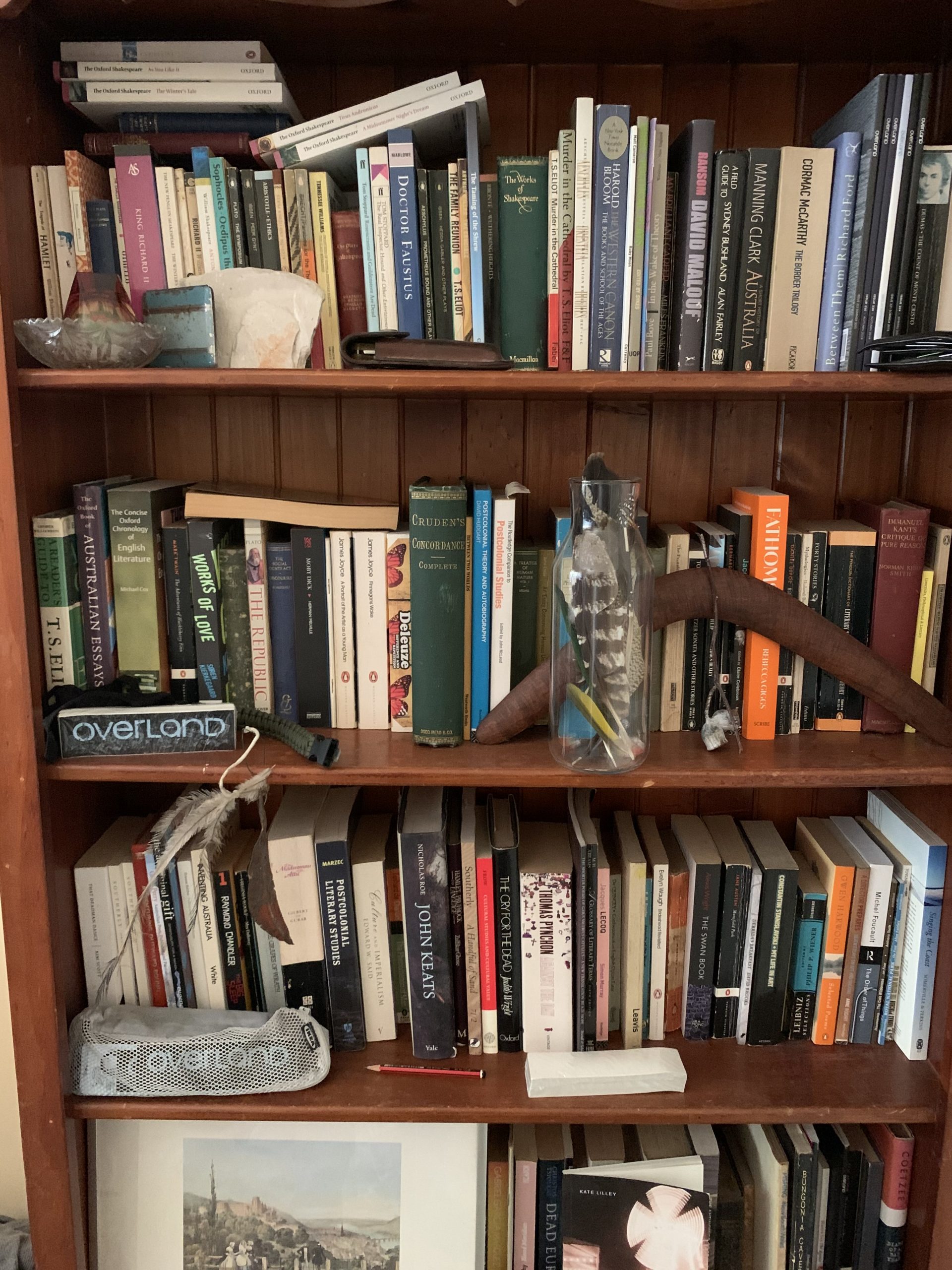
Again, I really don’t think I’ve unpacked yet, and I’m not sure how long it’ll be before I have. At our last place we ran out of shelves so we stacked an old wooden wardrobe with books, and it was just a random surprise when you stuck your hand in to pull out something to read. The house we just moved into has a lot more space, so most of the books can be put out on shelves in the study as if we’re normal people. They do tend to feel a bit more academic in that space—like these are the books we should be writing things about, as opposed to enjoying. I’m hoping to find some weird furniture to display a few pretty books and things that I know I’m likely just to read for enjoyment in the living room now that I’m an adult who lives somewhere with more than just one room. My treasured books are still at home with mum and dad—the stuff I read as a kid, the tattered copy of my favourite novel I got signed at a writers festival, all of that stuff. I don’t trust myself to be responsible for them now.
Australian national identity is such a peculiar and often camp thing, and to read a guidebook written from a period of naive hope was a very unsettling but productive thing.