As a senior book editor and a reformed lit snob, I’ve watched the rise of the romantasy with interest. Beyond sex and dragons, the revitalisation of genre fiction has hidden potential.


Recently I went to dinner with a bunch of editor friends. This is a group with impeccable literary credentials, each with a résumé including multinational trade publishers or Australian small-press heavy-hitters. My attention peeled away from a lively industry gossip session when I overheard one esteemed editor at the edge of our group ask another what they thought of Onyx Storm, the latest Rebecca Yarros novel. Both of them had read—and enjoyed—the entire juggernaut trilogy.
They spoke with neither irony nor surprise, and although their delight wasn’t entirely uncritical (they are editors, after all), it was genuine—and unabashed. Only a moment ago, one of these same friends had triggered my imposter syndrome by asking our waiter for a chardonnay that was, specifically, ‘buttery and oaky’. Now they were comparing notes about the satisfying spice levels of the most ubiquitous mass-market series of recent years, one that combines two of the traditionally most disdained genres in literature: fantasy and romance.
I have to confess at this point: I am a reformed literary snob. In the past, this dinnertime conversation would have meant nothing to me; my levels of personal sophistication notwithstanding, my bookshelf from my late teens onwards was unimpeachable from a literary standpoint. I spent my twenties ploughing through the canon. I’m a very slow reader (which surprises a lot of people since I’m an editor, though in fact it’s not uncommon), and I couldn’t countenance spending my precious reading time on anything that wasn’t worthy.
One esteemed editor at the edge of our group ask another what she thought of Onyx Storm.
Still, whenever anyone asked what my favourite book was, I could never think of anything to top the beloved Narnia Chronicles of my childhood. When I allowed myself to read Dune and Lord of the Rings—counting them as ‘classics’—I devoured them with the gratitude of someone breaking a long fast. And I never quite forgot envying my older brothers as they read David Eddings and Terry Brooks, wishing I could have extra hours in the day for such indulgent ‘extra-curricular’ reading. Maybe those things should’ve tipped me off that science fiction and fantasy (SFF) were my true loves, buried beneath the pretension. But unlike my dinner companions, I continued to carry for a regrettably long time the belief that there was something lesser about genre fiction; that it was not something I should stoop to.
It’s partly age that has allowed me to finally reach my spiritual reading home—the older you get, the less self-conscious you feel about what you love. But it’s also true that the stigma associated with SFF has changed significantly over the years, perhaps largely due to popular film and TV adaptations. It’s no longer gatekept in the way it was fifteen or twenty years ago—in much the same way Dungeons & Dragons is no longer the exclusive domain of pimply teenage nerd-boys. Speaking with various people in the book industry, it’s clear that demand these days comes from a broad range of readers. ‘You can say that you like fantasy and it doesn’t necessarily come with a list of other stereotypes that immediately pop into someone’s mind,’ bestselling Australian fantasy author CS Pacat tells me.
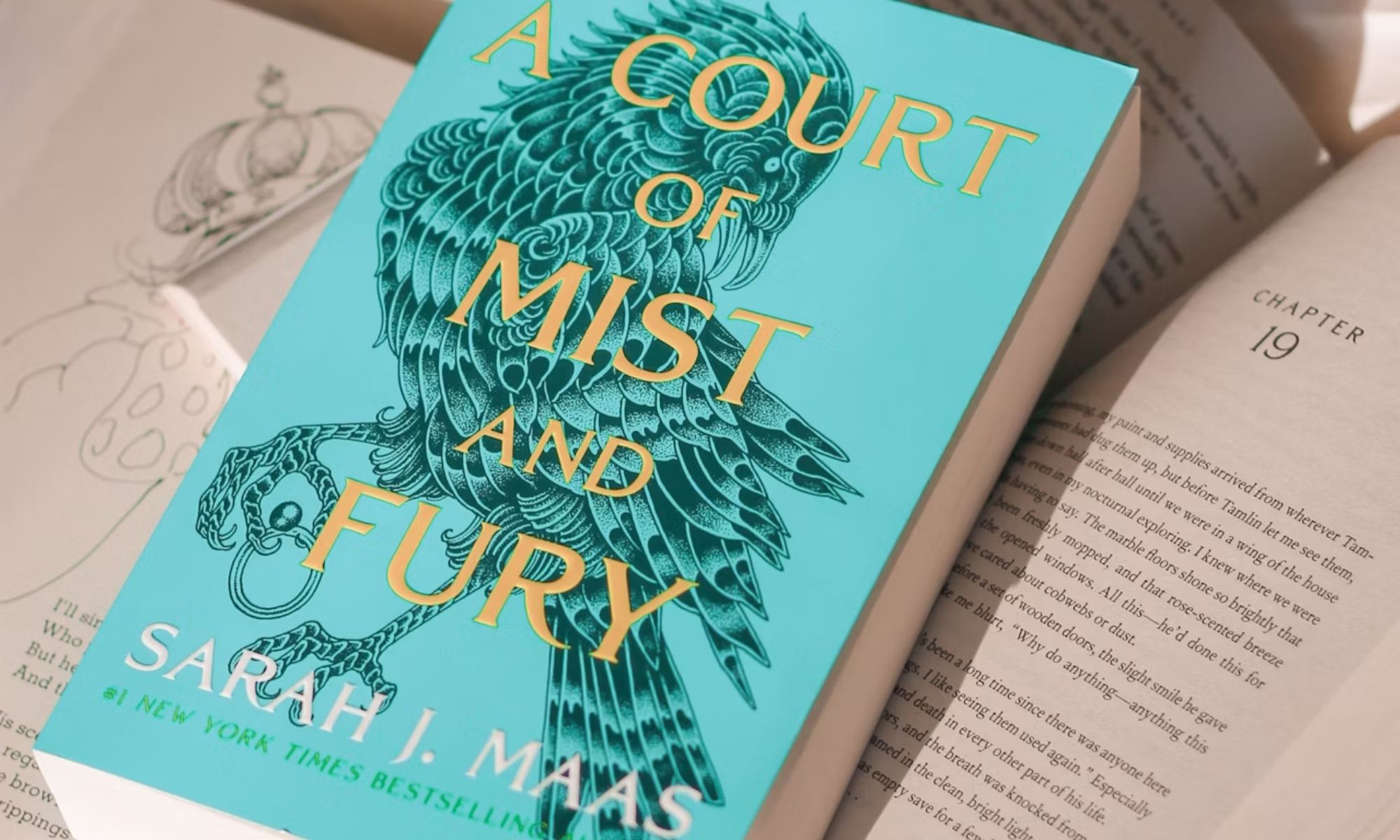
Anyone with a passing interest in books knows that one subgenre of fantasy—commonly known as romantasy—is booming. It’s a wave that has been climaxing, so to speak, since the term was popularised on TikTok in 2023. Icons include Sarah J Maas, who has built an almost religious following with her bestselling series (the most well-known being A Court of Thorns and Roses) and the aforementioned Rebecca Yarros. It was arguably Yarros’s Fourth Wing that broke romantasy into the mainstream; along with its sequels, it remains one of the most read books on Goodreads in the last twelve months. Literary agent Alex Adsett believes the hybrid is bringing many non-readers in from the cold. ‘The readers I’m seeing are young women in their teens, twenties and thirties,’ she says. ‘They weren’t necessarily readers of fantasy already, or romance readers making a shift. This is their entry to reading at all. Their starting point.’
In a time when sixty-nine per cent of Australians say they avoid the news, it might not be surprising that many are compelled by other realities entirely. Escapism is a key part of the romantasy phenomenon, says Australian author Olivia O’Flynn, whose debut novel Ever Blessed was released in June. ‘There’s an element of wish fulfilment. Who doesn’t want a happy ending? And if you can save the world and kill the bad guys at the same time? Have your cake and eat it too.’ But she takes care to note that this element shouldn’t be used to dismiss it. ‘Things that women like a lot can be really easy to brush off as being frivolous rather than worthy of critical merit. I’d like to think as a society, we’ve moved past that.’ She notes that women online are also now more upfront about their taste for ‘spice’, and there’s a refreshing lack of judgement of those seeking stories where sex is explicit, adventurous and plentiful. ‘We are seeing a loosening of moral policing on women’s pleasure. Women are now feeling confident to speak on that because they have a community who aren’t shaming them for what they like reading.’

Anna Valdinger, publisher at HarperCollins Australia, argues romance and fantasy tend to be genres where authors push the boundaries of what’s socially progressive. ‘I’m sure some people are saying, “I’m sorry, shagging fairies is not art,”’ she says. ‘But I completely disagree.’ She notes that the books are becoming more representative. ‘You’ve got more characters of colour, more queer characters, more trans and non-binary characters as a common and accepted part of the world. You’ve got a lot of sex positivity and modelling of consent, in a way it never used to be. I think that’s a world a lot of people would like to see reflected in our real world.’
Anyone with a passing interest in books knows that one sub-genre of fantasy—commonly known as romantasy—is booming.
It was the urge to reject the stale cultural status quo that was ultimately my gateway into SFF—fortunately coinciding with a time when the genre began to open its doors to a broader demographic spread of authors. At the same time as I decided to give in and read what I truly wanted to, I had also resolved to stop reading straight white cis-male authors for a year. What followed was an extraordinary period of literary discovery. In one year I discovered the work of Octavia Butler, Becky Chambers, Ted Chiang, Nalo Hopkinson, NK Jemisin, Ann Leckie, Nnedi Okorofor and more. The shift in perspectives awakened my brain, as these authors showed me so many imaginative possibilities beyond the medieval European sword-and-sorcery epics and space operas I had come to expect (much as, let’s be honest, I love them too).
Some of the major international SFF imprints, such as Tor and Orbit, were actively looking for diverse voices before it became a more widespread publishing trend, says fantasy novelist Shelley Parker-Chan, the first Australian writer to win a Hugo, one of the most prestigious SFF awards in the world, for Best New Writer in 2022. ‘Fantasy likes good world-building,’ they say. ‘So exploring worlds based on non-European cultures sort of adds to the diversity that they can offer to readers; it’s something new.’ But Parker-Chan notes that the industry is still catching up. ‘At the same time, that doesn’t mean that they were ready to publish the diverse voices that they’d taken on as well as possible. There’s been a lot of institutional learning.’

As a reader, I’m grateful to have reaped the benefit of the vanguard of authors who established themselves in genres that have always been overwhelmingly white and male. In doing so, I’ve embraced a literary scene that is not only richly imaginative but also undergoing revitalisation and expansion. More than mere ‘escapism’, many of these books offer visionary and timely insights into the world and its possibilities. Starry-eyed and born again, I’ve become evangelical about SFF. And I’ve watched the rise of romantasy with a nervous hope that its bounty will overflow into the wider genre.
There’s no doubt that the growth hormone in the vein of romantasy has been TikTok—more specifically, BookTok, where readers go to share their hot takes on books. The ‘science fiction and fantasy’ book category grew by eighty-five per cent in Australia in 2024. One may assume that the combined might of Rebecca Yarros and Sarah J Maas accounts for much of that rise. But what may be hidden is growth in non-romantic fantasy. Certainly, books such as Samantha Shannon’s The Priory of the Orange Tree and James Islington’s The Will of the Many and most recently RF Kuang’s Katabasis—which debuted as the fourth bestselling book in the country—have enjoyed very strong sales. ‘I’ve seen people become more comfortable with things like understanding a new magic system, new languages and worlds, and all these things that maybe once felt intimidating,’ says Brisbane BookTokker Ainsley Deeble. ‘I know I did. You start to get curious about where else we can go.’
And I’ve watched the rise of romantasy with a nervous hope that its bounty will overflow into the wider genre.
But while BookTok has been arguably a net good for the book industry as a whole (at least in terms of cash flow), when it comes to local authors, the picture is much less rosy, says Alex Adsett. ‘For Australian books, everything that isn’t on the platform is in a huge slump. We’re actually in quite a lot of trouble and that’s been hidden by those numbers.’
All-powerful social media algorithms and their tendency to only promote international books that are already hits is a broader problem for local publishing, but for fantasy and sci-fi authors in particular, it exacerbates a challenge that has existed for them in Australia for some time. Despite our phenomenal talent pool, including international stars, the Australian industry doesn’t quite know what to do with them. Compared to the US and UK, there’s little expertise in SFF publishing here, possibly stemming from a historical lack of interest (see above re: disdain).
‘I feel like Australia strangles its genre fiction, and I see it happening from the ground up,’ Pacat says. She has written both YA fantasy and romantasy—though her enemies-to-lovers Captive Prince trilogy was well ahead of the curve in 2015, long before the portmanteau existed. Creative writing courses, she says, are training camps for literary fiction: ‘The people I’ve witnessed in writing courses are often coming in writing a fantasy novel or a romance novel or a mystery—they’re writing genre. Then they’re trained to write stories that they themselves would never read.’
At this point, I sheepishly raise my hand. I studied creative writing and came out producing literary short stories. Though I would rather have died than write realism—my work was ‘speculative’, which seems to be what we call genre when we want it to be accepted by the literary establishment.
This preference extends to funding and awards. ‘If you’re writing literary, you can go for a prize. You can go for a grant. If you’re writing genre, you’re totally unsupported by the system,’ Pacat continues. ‘And then it’s extremely hard to get the book published here.’ She notes that the market is hungry for these books and says that writers who are ‘lucky or strong-willed enough not to have their love of genre beaten out of them’ will seek publication overseas first.

Parker-Chan’s publishing career has mirrored this. ‘It didn’t really seem like there were a lot of publishers here who wanted to make a fantasy book into a big book,’ they say. ‘I just didn’t see that the infrastructure was here. All the books I was wanting to model my career after were coming out of America. Whereas in Australia, you see books with all the genre trappings that are packaged as literary because that’s more palatable to local publishers and awards committees.’ O’Flynn has observed the same disregard for romantasy here. ‘If you write genre fiction—other than crime—in Australia, it’s a bit like, “That’s cute. Look at you with your hobby.” I don’t think it’s given the critical attention that literary fiction is offered, and that’s through awards. That’s through grants. That’s through what gets reviewed in newspapers.’
While the literary establishment may be lagging, Valdinger says things are already changing in most publishing houses, including her own. ‘There are some fairly serious literary publishers playing in that space now,’ she says. ‘The snobbery has to get out of the way of commercial imperatives. The margins aren’t big enough for anyone to stand on a snobbish soapbox anymore.’ Publishers have inevitably scrambled to make hay while the romantasy sun shines, but Adsett cautions writers against attempting to do the same. ‘If you’re going into it thinking you’re going to jump on that bandwagon, but you’re not a reader of it, you’re not coming with the authenticity, and it almost always shows,’ she says. ‘I’d much rather have something that is fresh and not tailored to a certain way of seeing the industry.’
Like most arts sectors in this country, Australian publishing is a small industry with a small market and even smaller margins. But no one benefits from small-mindedness. There is no reason why this shouldn’t be a place where all kinds of writers can thrive, especially when it is the readership of genre fiction that is growing, and in the face of Australia Reads statistics showing that as a nation we are reading less than ever before. Particularly with the recent establishment of Writing Australia, we are seeing an opportunity to redefine what is culturally important beyond the traditional confines of literary fiction. A long-term vision is needed to make space in this industry for local writers of all kinds, whether through grants, award categories, reviews or dedicated imprints. All of Australia’s talented writers, regardless of genre, should be nurtured and celebrated.
Keen to know more? Read ‘What I Wish I’d Known About Romantasy’, featuring interviews with Lynette Noni, Melina Marchetta, Vanessa Len and more.