Ballet studios are traditionally the realm of thinness, youth and perfection—not places where people like me have typically felt comfortable. But in my 30s, I found a class that prizes the joy of movement over punishment and body shaming.


When I tell people I’m a ballet dancer there’s a sharp intake of breath and, more often than not, I see them fight the urge to run their eyes over my round, fat body. Ballet studios are the realm of thinness, youth and perfection. They are not typically places where fat, Blak 30-something women feel comfortable.
As a child of the late eighties, I took jazz ballet. Mum says she chose jazz because I wanted to dance and I had a friend who was already in the class. We started with the chicken dance in prep and moved on to bopping along to Jason Donovan, Kylie Minogue and the Village People. Though I sometimes wished I could swap my jazz shoes for tap shoes or ballet slippers, I loved the classes for the pop music, the makeup and the chance to be on stage.
The Eisteddfod photos from back then make me cringe: I’m a beaming, chubby pre-teen squeezed into costumes that drew stares from the mums of the other girls. It was the first time I realised I didn’t look like my classmates, and the first time I felt like there was something wrong with my body. My teacher decided I was difficult; I had trouble discerning my left from right and when I came back to class after weeks off with the flu, she forced me into torturous private lessons to catch up for a performance. This time, the costume was a short, flippy cheerleader skirt. I’d worn undies with a print on them—probably Punky Brewster ones—and was mortified when the teacher wouldn’t let me wear black dance pants to cover them. I went on stage that day, but stopped dancing soon after. I wasn’t sad because my parents could only afford to send us to one extra-curricular activity and I swapped dancing for piano. Later, piano lessons gave way to singing and dreams of becoming a musical theatre performer.
When I tell people I’m a ballet dancer there’s a sharp intake of breath…I see them fight the urge to run their eyes over my round, fat body.
After high school I held onto my dream and because of my lack of dance training, I struggled through auditions. I was cast in a few shows but almost always found myself relegated to the background of dance numbers because choreographers assumed that I couldn’t dance, or because they didn’t have costumes that went above a size ten. Once, in an upscale pro-am production of Oliver! I was made to change my staging during tech week because the costume department couldn’t find a period appropriate ‘rich woman’ dress to fit me. They moved a thinner girl with a more accurate costume to my position. Every night of that show, one of my castmates would have to pin me into the biggest dress they’d been able to find: a vaguely Victorian dress in a revolting shade of purple made of cheap, scratchy material. By the time the season ended, the dress zipped up without the pins and the costume department praised me for losing weight while I burned with shame. When you’re told over and over that your body is too fat, too slow and not good enough, eventually you start to believe it. After years of struggling, I gave up on my dreams and moved on.
This isn’t an uncommon story for Malakeh, my ute-driving, green-haired, potty-mouthed dance teacher. Despite having taken tap dance from a young age, Malakeh was all but forced out of learning ballet. ‘The reality was I was never going to be good enough,’ she says. ‘I have scoliosis and I was too small, too thin, too delicate and they decided I’d never be strong enough.’
As a teen, Malakeh kept taking intermediate classes but was locked out of taking the exams she needed to turn pro. When she aged out of her dance school, she was forced into adult classes.
Ballet studios are the realm of thinness, youth and perfection…not typically places where fat, Blak 30-something women feel comfortable.
‘They were cliquey and awful,’ she says. ‘And that’s why I decided to start my own dance school: I wanted to create the space that hadn’t been there for me.’
*
At the community centre, people trickle in. They set their bags down and take to the floor, swapping street shoes for ballet slippers and settling in to stretch. We chat about our weeks, some sip coffee and shake off hangovers, others walk around opening the louvres on the studio windows to let the breeze in. At the front of the room, Malakeh switches the track to ‘Summertime Sadness’ and drops the volume on the sound system.
She starts the class with Acknowledgement of Country and if there are new people present, we whip around the circle and introduce ourselves: name, pronouns and anything else we want to share. There’s some chat about costumes for an upcoming performance and everyone weighs in with their preferences. I ask for a leotard that has straps thick enough to hide my bra; someone else asks if we can wear tights.
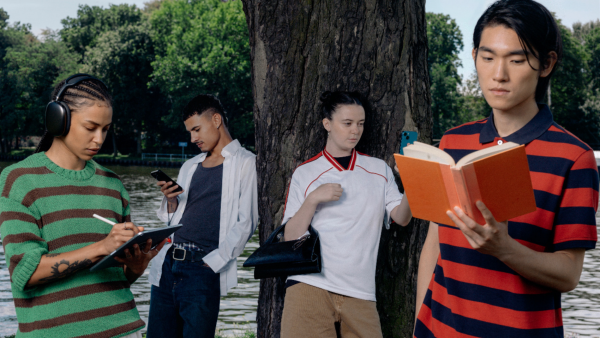
The group spans many intersections of race, gender, sexuality, disability, age, body type and economic circumstances. Just a bunch of people who love to dance but most of whom would feel out of place in a traditional ballet class. We joke and call ourselves the misfits. ‘We all come from diverse backgrounds that group us apart,’ Malakeh says. ‘It makes sense that we’ve come together.’
The teacher and the teaching style has to be credited for the creation of a space that’s genuinely safe—especially in a time when so many are trying to create diversity and inclusion in a way that feels forced and unnatural. Malakeh is the sort of person who knows how to meet every student where they’re at. If you need to wear a bra to be physically comfortable to dance on stage, she will make sure the costume is right. If you want to perform, you get a chance to perform. If you want to dance in class but not on stage, that’s also fine.
The group spans many intersections of race, gender, sexuality, disability, age, body type and economic circumstances…. We joke and call ourselves the misfits.
And then there’s the music. Malakeh teaches traditional exercises to very non-traditional music. There’s port de bras to Billie Eilish and Khalid’s ‘Lovely’, battement frappe to Kiss’s ‘I was made for loving you’, and battement tendu to Lizzo’s ‘Truth Hurts’. When we move to the centre, there’s a foot stretch to Nirvana’s ‘Heart Shaped Box’ and pirouette practice to 4 Non Blonde’s ‘What’s Up?’.
‘The music is important,’ says Malakeh. ‘People have a lot of pre-existing trauma from their experiences as children. Using more untraditional music helps to get away from it. It’s not the music people recognise from bad memories.’
I actually went back to dancing because of bad memories. I’d been taking beginner classes with Malakeh on-and-off for a while, but at the start of 2020 I went back after a two-year break. Instead of heading home with my beginner classmates after an hour of dancing ‘on flat,’ I began staying for the day’s second class—the pointe class. While my advanced friends balanced on their pointe shoes, I tottered around behind on a weak demi pointe in my flat leather slippers.
I told Malakeh I wanted to work towards getting en pointe myself, but secretly I didn’t believe it could ever happen. What I really wanted was to spend an extra hour a week punishing the body that I felt had betrayed me by having a miscarriage six months earlier.
While I was dancing, I got out of my head for a few hours. After class, it felt right that I went home with aching muscles, and I liked the way I could lay on the couch afterwards and let myself fall asleep. Those naps were the best sleep I’d had since I lost my baby.
But just a few weeks into my double-class journey, Malakeh called my bluff and lent me a pair of pointe shoes to try. The fit wasn’t quite right, but it was enough, she said, to help me wrap my head around the way they felt: to begin to understand how the technique I was learning on flat would help when I moved to pointe. Something inside shifted and suddenly I wanted this. I was 37 years old and my teacher was saying ‘you can do this’.
*
We danced without interruption through all the lockdowns, with Malakeh switching to online classes and working to accommodate people’s needs. It would have been easy for me to retreat into myself: I was depressed, alone and locked down. But not only did I get out of bed, switch on my laptop and dance in front of a screen every week, but Malakeh and I started taking online classes from teachers around the world on other days. She also filmed YouTube tutorials that had me stretching and dancing on my lunch breaks and days off.
I stopped avoiding my reflection in the studio mirrors and questioning whether I could do things. I started just having a go.
I hadn’t magically become a pro by the time we were back in the studio, but when Malakeh started teaching pointe choreography to Jessie J, Ariana Grande and Cardi B’s ‘Bang Bang’ I threw myself into the routine. There was something about the fun pop music and the excitement of being back in the class with my friends that captured the things I’d liked about dancing when I was a kid, but it also helped me move past all those awful things that had made me quit. I stopped avoiding my reflection in the studio mirrors and questioning whether I could do things. I started just having a go.
Somewhere along the way dancing became less about punishing my body and more about the wonder of what it can do when the conditions in the class are right: when there’s no judgement, where I set the pace of my learning and when my insecurities are not given space to grow. I wish I could say that I can do every move perfectly now, that I don’t stress about costumes anymore and that I’m 100% comfortable in my own skin all the time. Class is hard: I fall over a lot, I skip parts of choreography because I’m not quite strong enough or flexible enough to do some things, but I leave every single class feeling challenged and happy.
‘There’s something special about ballet in that there’s no end to the achievement—no real pinnacle you can reach,’ Malakeh says. ‘It’s about self-improvement. And working on yourself.’
‘And we have fun,’ I say.
‘Oh yes,’ she says. ‘Fun counts for a lot.’