There are TV shows about families like mine—uncomfortable footage of cluttered rooms and filthy floors. As I am pulled between love and frustration at their over-attachment to objects, I’ve begun to fear what I might inherit.


When my mother eventually leaves my father, she counts seventeen mowers nosed in under the house. A cistern languishes in the backyard, prone as a wounded animal, and the dog kennels are full of spare parts.For years, there’s been no room to walk in the workshop round the back—the granny-flat-turned-garage Dad once lived in before he buried his first wife and married my mum. A double-bed mattress flops over the grey Cortina he drove when I was a kid, old furniture and cans of paint stacked precariously in every corner. Any available surface disappears beneath a jumble of rinsed-out peanut butter jars, filled to the brim with oxidising nuts, bolts and washers, the clean edges now blunted and powdery with decay.
Our neighbours, my mother worries, must silently curse the rusting car bodies strewn at odd angles all over the five-acre property. They are visible from the road, their stout shapes now sagging, glossy edges reduced to a fine brown lace. She keeps the door closed downstairs, where Dad sleeps on an unmade bed between stacks of mouldering books and old camping equipment. There is a double bass, cracking from damp, some folded tarpaulins, a circular saw.
She used to call me sometimes, fretting that one of the cats had gone missing.
‘Check in the workshop,’ I’d say.
‘I can’t bear to look,’ she’d reply.
Later, the errant cat would jump through a window in the laundry, tell-tale cobwebs clinging to her whiskers, tortoiseshell coat fuzzed with dust.
*
There are TV shows about families like ours.
In the opening credits, spouses and children argue tearfully as the camera zooms in on piles of junk, soundbites spliced with footage of cluttered rooms and filthy floors, eerie backing music underneath—so redolent of a true-crime documentary that I find it uncomfortable to watch.
‘Compulsive Hoarding is a mental disorder marked by an obsessive need to acquire and keep things,’ the introduction offers in a dramatic serif font, ‘even if the items are worthless, hazardous, or unsanitary.’
In one episode, a cancer patient is forced to clean up her home so she’ll survive another round of chemo, her living environment so cramped and grimy it’s deemed a serious health hazard.
In another, a middle-aged divorcée has no choice but to empty and clean the family home, which is being sold as part of the settlement.
There are TV shows about families like ours, so redolent of a true-crime documentary that I find it uncomfortable to watch.
There’s no rhyme or reason to the things she brings home, her ex-husband observes, his voice sunken with defeat. She spends hundreds at a time on thrift-store finds, wanders the supermarket aisles for weekly specials, describes an electrical ‘charge’ when she nabs a good deal. She’s filling herself up, she explains.
When the cleaners arrive, she tells the camera she’s ready.
‘All of this can go,’ her adult son declares, sweeping a hand towards a stainless steel stepladder, a magenta bicycle missing its back wheel and handlebars, a rubbish bin bristling with tennis racquets and golf clubs, arranged in a tarnished bouquet. But after five hours, they haven’t cleared a single room.
In all of their stories, a pattern emerges. It’s biological, generational, the experts suggest. It’s born of a scarcity mindset, some form of prolonged or serious deprivation. Sometimes there’s a catalysing event, such as a death, loss or breakdown of an important relationship. Sometimes other traits and behaviours are correlated: hoarders are often indecisive and prone to procrastination, perfectionism and avoidance.
‘Obviously, living like this—’ the lady on TV falters. ‘You don’t want anyone seeing you live like this. I mean, even just the word is like…’
She hisses, exaggerating the sibilance of the hhh sound before it opens into oooar. You can watch the way her mouth draws itself into an O shape—Münch’s silent scream—before the image fades to nothing.
Every childhood has its prehistory, a time and space uncontaminated by the names we later learn for things. But even in my earliest memories, long before I recognise its contours in the language that passes between us, I hear that hissing sound, the bloated vowels, the hard d.
It’s in the sleepovers I never have, the boyfriends I refuse to bring home. It’s in the closed doors, the locked doors, the slammed doors. It’s in the surfaces I compulsively clear, the ripple of dread I experience when I step into a messy room.
I worry, sometimes, that it’ll end up inside me too.
*
The fathers of my school friends toss a football on Friday afternoons, tell jokes at the dinner table, tickle armpits until they’re implored to stop.
I have to trick mine into talking, into filling the silences.
‘What’s the German word for tired?’ I ask. He’s rubbing a carburettor clean with a grease-stained cloth, the stench of sump oil thick in my nostrils as I wait for his reply.
‘Müde,’ he says with a sigh. ‘Ich bin alt und müde.’
I am old and tired
Is it a joke? A lie?
I think of my grandmother, in the crooked pink Queenslander on Castle Road, somehow always sitting down. I think of my biological grandfather, whom I’ve met only a handful of times, his hair as fine as fairy floss, blue eyes watery, lungs so weakened from emphysema that he pauses on each step as he mounts the stairs.
It’s in the sleepovers I never have, the boyfriends I refuse to bring home. It’s in the surfaces I compulsively clear, the ripple of dread I experience when I step into a messy room.
They are old—have always been old. But my father is constantly moving, can’t sit still. He smells of Imperial Leather soap and the metallic vapour of soldering flux. He bakes biscuits from an Australian Women’s Weekly cookbook for our lunchboxes and falls asleep in front of the TV watching reruns of The Bill. He reads the dictionary when he’s run out of paperbacks, collects Bibles in foreign languages, has memorised Shakespeare’s ‘Sonnet 116’ word for word. He’s always fixing something, refusing to condemn it as broken or unusable. He steals gladioli off the side of the road when he thinks nobody is looking, unable to leave the coloured petals and waxy stems behind.
He was an angry young man, someone told me once. He drove recklessly—didn’t seem to care whether he lived or died.
Alt und müde, alt und müde.
I try the words on for size, committing them to memory so I can repeat them later, the syllables our shared secret, a running joke, an invisible string between two distant, empty vessels.
*
My grandmother’s house is some kind of wonderland, our favourite place to be. There’s the sealed-in veranda that droops like a yawn, grocery bags bulging with balls of synthetic yarn that reach right up to the rafters. Dust motes zig-zag listlessly as afternoon sun pours through the slanted louvres, warming the pages of junk-mail catalogues heaped high on the padded window seats. We crouch barefoot on the ground outside to fondle the dog’s belly, tease the cockatoo in his rusty cage who mimics the sound of a broken-down car trying to start.
‘Get out of it!’ shouts my grandma from the kitchen when the squawking grows too loud or too insistent. But we know she doesn’t mean it. As the cockatoo flaps in his cage, she smiles faintly to herself, listening for his inevitable ‘Hello, Cocky. You’re a bad, bad bird.’ She cooks roast dinners on the old wooden stove, gravy gleaming with grease. Her trifles are the stuff of legend: canned peaches at the bottom, custard and jelly in the middle, whipped cream and crushed peanuts on top.
In summer, we’d sit under the pergola in her backyard, its roof a tangled mass of wisteria branches heavy with purple flowers, watching the dip of her crochet hook, the wool pulled taut between her fingers, almost mechanical in their learned movements. On Sundays, she’d roll coins collected from church offering bags into special waxed paper sheets from the bank, calculating the total on a piece of scrap paper, drawing a short line through the diagonal slant of the 7s, just like Dad does.
Her first husband, my father’s father, left when the eldest of them was only twelve. Money was so scarce that my grandma sewed bloomers out of flour bags, rationed meals between five kids, bathed them only once a week because there was no tub inside.
Her second husband, the man we called Poppy, brought stuff home from the tip. He opened the council gates at dawn and closed them at dusk, foraging for furniture, a pedestal fan or kerosene lamp that could be repaired.
One day, he rescues a little tabby kitten, abandoned in a plastic bag and left to die. Tippy, I call her, a child’s homage to the junkyard in which she materialises as well as her mottled coat, which brings a piece of old carpet to mind.
There comes a day, however, when Poppy has gone, left us all for dead, and with him half of everything my grandmother has ever owned. Her bank account, in which she dutifully saves her pension, is emptied, and the bank can’t do anything about it. Soon, a letter arrives in the mail. It will be her second divorce.
My aunties host a garage sale to purge whatever’s left over, the asking price for each item marked on tiny coloured dots. Candlesticks, knitting needles, mismatched mugs, sewing patterns, prints of famous artworks in frames painted gold, patchwork blankets, crocheted doilies, a pair of stiff secateurs, some bedside tables, a handful of ceramic egg cups, a wonky stepladder, a collection of china figurines, a dented cowbell, wrought-iron doorstops, chipped vases, the cockatoo—everything must go.
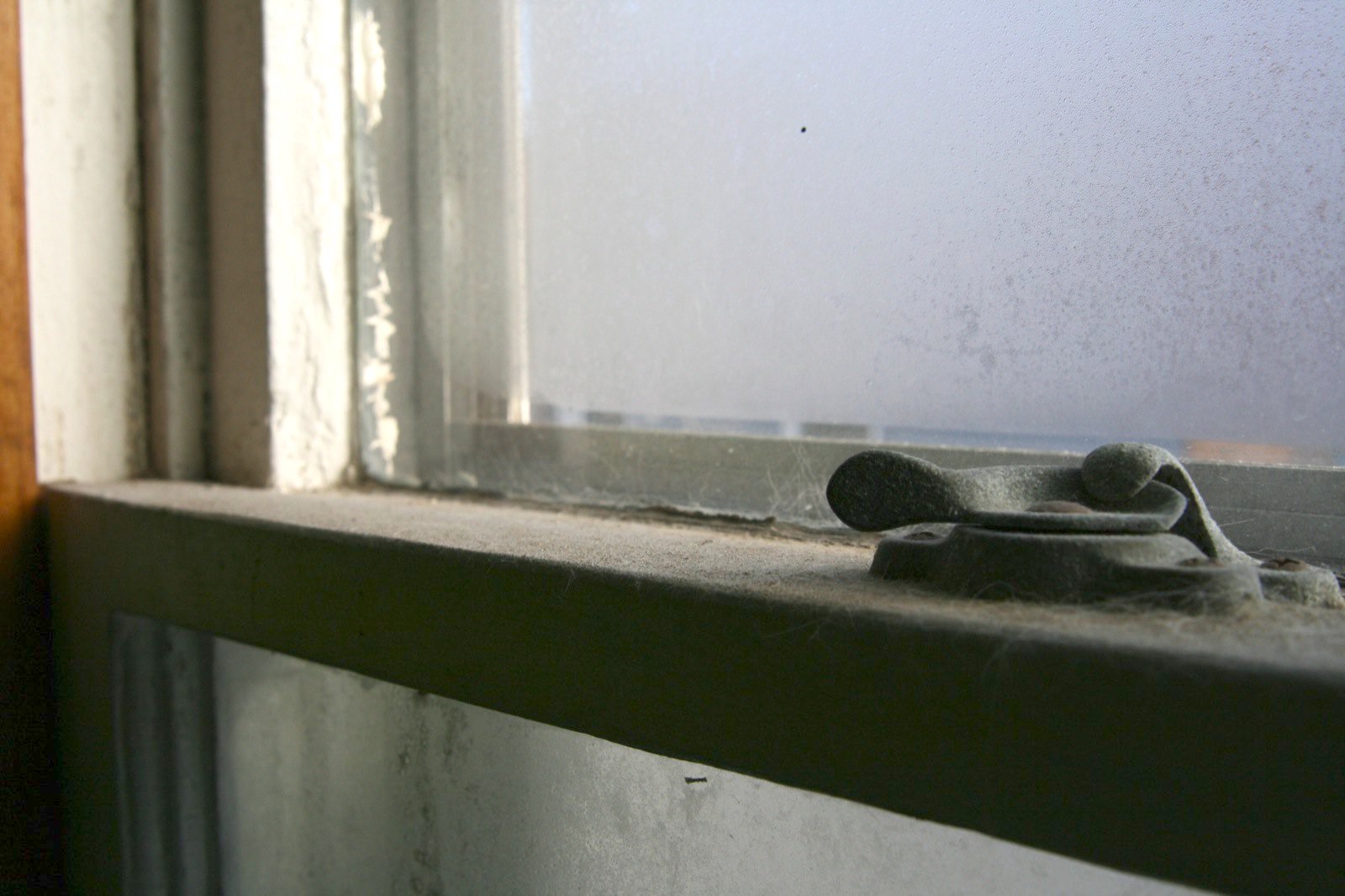
Dust motes zig-zag listlessly as afternoon sun pours through the slanted louvres, warming the pages of junk-mail catalogues heaped high on the padded window seats.
My grandmother is distraught about the bird. ‘Don’t worry,’ I promise her. ‘I’ll take him.’
She sobs quietly inside, a fist balled to her mouth, as I wrestle the cage onto the back seat of my faded red Daihatsu, careful not to scatter seed across the upholstery.
Strangers pull up around me. They saunter past the trestle tables, holding objects up to the weak, filtered light, twisting them this way and that, negotiating a bargain as they pluck a fiver from their wallets. I see the way their gazes wander, the way their eyes narrow against the paint flaking off the window awnings, wrinkling their noses at a smell more assumed than detected.
‘You’re a bad bird,’ the cockatoo intones, as I turn the key in my ignition. ‘Get out of it!’
One man’s trash is another’s treasure, the saying goes.
Sometimes it’s a life.
*
My father won’t let me come to the house anymore.
I’ve tried everything: I want to visit the dogs, I say. I need to drop something off. I’d love to see you, Dad.
I imagine the two of us hunched over a newspaper at the kitchen table, competing to finish the crossword first. I imagine him crouched in front of the fireplace, feeding split logs into the flames as we argue about politics, or I promise to lend him the novel I’ve just finished reading. I imagine him snipping a cluster of blood-red geraniums from the bush for me to strike. The carport is so cluttered that nobody can park there now, but he tends the border of potted flowers with care, wetting the soil with water from a garden hose looping snake-like around a disused water tank.
I imagine other things as well. Making an anonymous call to the local council, complaining about the detritus I’ve observed from Google Earth. Trucks loaded with car bodies and tractor parts, clearing the hill of twisted metal. The Cortina fully restored, parked proudly in a pristine driveway, the bougainvillea in full bloom, one of the dogs sleeping soundly in their kennel or a patch of morning sun. Filling a glass with water straight from the kitchen tap, smoothing the quilt on a freshly made bed, glancing at a finished bathroom, clean and spare but for a bar of Imperial Leather soap sitting snugly in the dish.
But even as I dream of waking in my father’s house, a grandchild, perhaps, perched on his knee where we ourselves grinned in childhood pictures, I wonder if this is love or if it is a type of shame.
Why? I want to ask him. Do you love this more than me?
Can I love you more than this?
Instead, I say nothing. Dad meets me at his favourite cafe, joins me for tea and cake at my grandmother’s house in town, where I try to ignore the half-painted walls, a mug with a snapped-off handle that never finds its way into the wheelie bin. Home is off-limits now, I realise over and over again, each time as if it’s the first, and I yearn for the peppery scent of lantana, the windmill in the northern paddock that creaks as it shuffles a westerly breeze.
*
He doesn’t want the box of old photographs Mum pulls from the back of his silky-oak dresser. She takes very little when she goes, her new house sparsely and tastefully decorated.
‘You can have them,’ Dad replies when I ask, barely looking up from the light switch he’s prodding with a screwdriver.
Why? I want to ask him. Do you love this more than me? Can I love you more than this?
I sift through the Perspex box often, mesmerised by the sepia tones of the prints, the way they capture something of a long-gone inner world as much as they reproduce those unfamiliar landscapes—the bitumen roads disappearing into remote horizons, wildflowers splayed against a bone-white sky, candid smiles freezing in the wind.
Dad says he can’t remember who took them. It could have been him; it could have been his first wife, Julie. Perhaps it was both of them. They were in New Zealand, 1976 or 1977, I think. The middle of winter.
Sometimes I split and arrange the prints like a deck of tarot cards. There’s no wheel of fortune, of course, no chariot, no hierophant. But still I search for some kind of sign, some token or portent of what will soon be taken away.
At least once a week, I call Dad’s mobile, though the line often rings out.
If he picks up, I speak to him in German.
‘Wie geht’s?’ I ask. How are you?
I know how he’ll reply, even before the words leave his mouth.
Life makes us old and tired, I understand these days. We keep what we can, fill ourselves of what’s been emptied, build whichever fortresses we’re able.
It may not seem much, living like this, but it’s ours.