An iPhone detox didn’t make me more productive, but I did feel free. I don’t want to wake up one day and realise that my most devoted relationship has been with a screen.
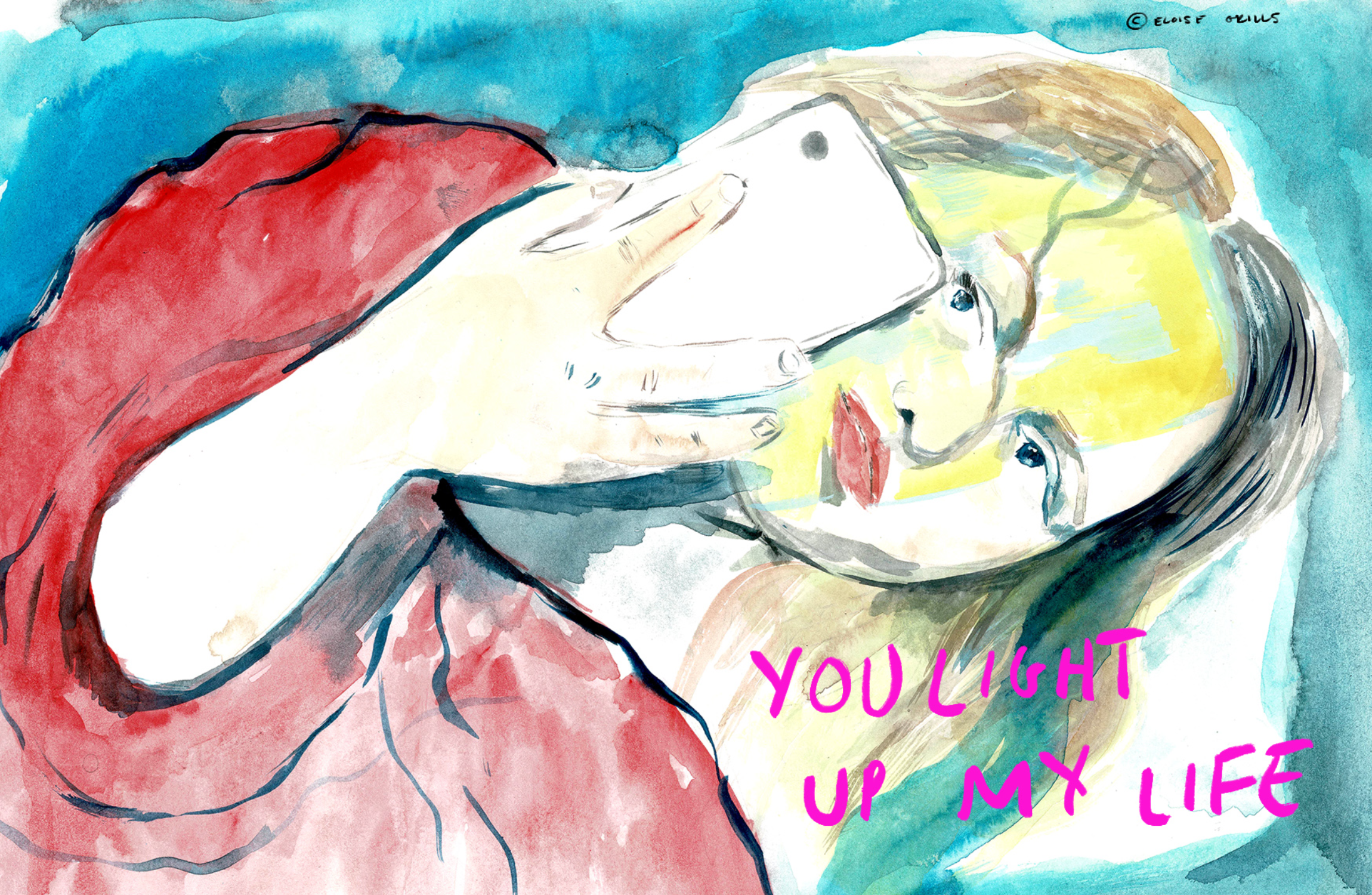


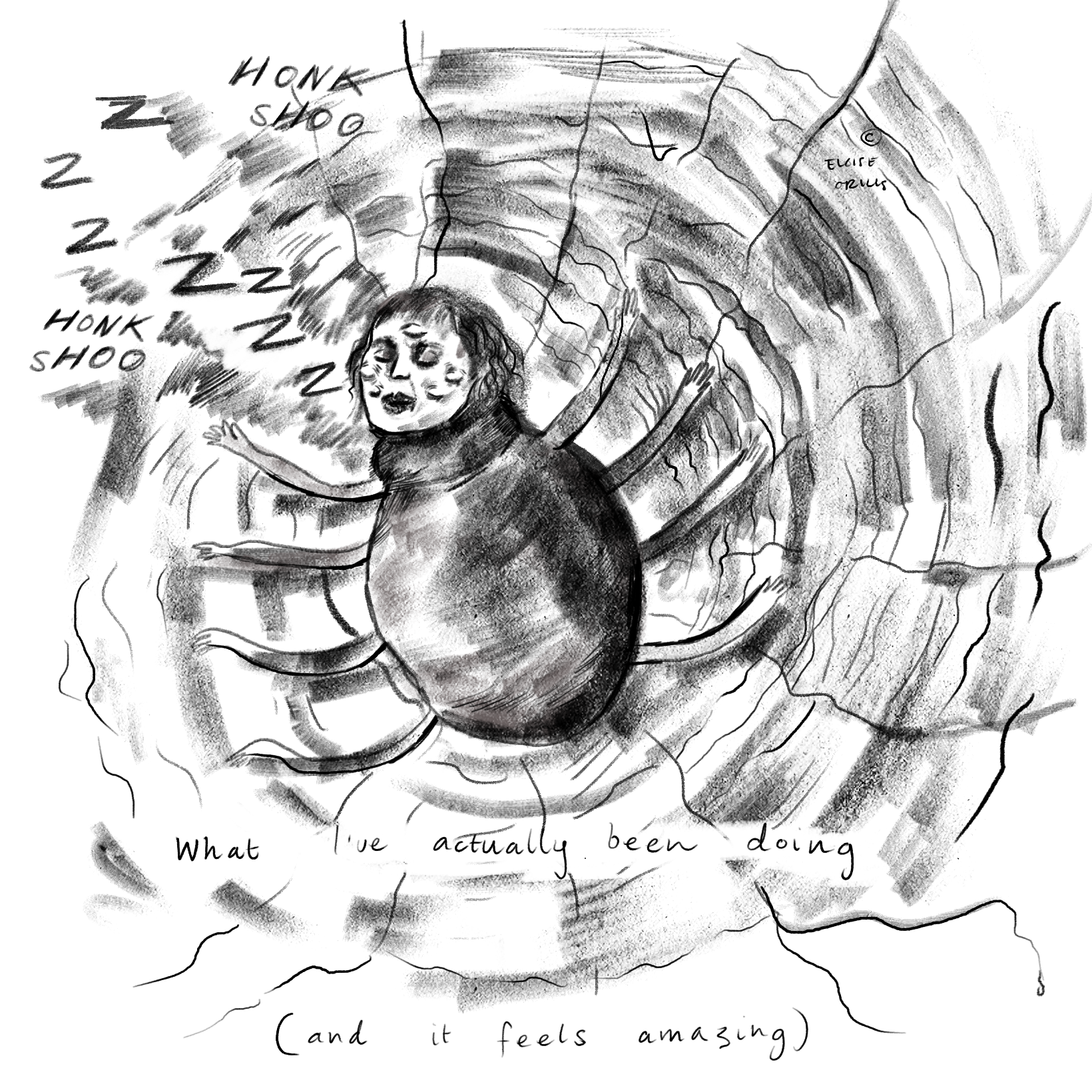
I still remember the first time I saw an iPhone. I was out at a nightclub. (Me? At a club? I guess I was twenty-one once.) My sister’s friend held it in her hand, proudly, but with a hint of terror, like she was clutching a gold relic in an Indiana Jones movie. Like it might suddenly grow spindly legs, jump out from the palm of her hand and scuttle away like a spider. ‘What can it do?’ I asked, naively.
As she listed its attributes, my mind still couldn’t quite grasp its purpose. Was it a camera or a phone? A computer or a phone? A spy device or a phone?
Subscribe to stay in the loop
Be the first to read new stories, discover publishing opportunities, and access resources. For people who love great writing.
This was some kind of mutant, Swiss Army Knife of a mobile—a chimera, not with arachnid limbs but massive squid tentacles, stretching out perilously from some Lovecraftian deep. It was a communication device with an identity crisis. My phone at the time was, I think, a shitty Samsung with a shitty browser that took ten minutes to load a website, inherited from my Dad. I couldn’t anticipate ever needing anything more than that. (Throughout this period, I had gone through phases of not having a phone at all, using reverse charge calls on payphones to announce my comings and goings, and so I was always being saddled with some hand-me-down or another at my parents’ behest.)
I also remember a time when it was entirely unnecessary to tell people to log off. I was fourteen and life was filled with touching grass. I rolled in it. I drank cask wine and cheap bourbon bartered from weird old men outside grog shops on it. I was drunk with my friends in the park, my jeans covered in stains. My piss touched the grass, as I squatted, almost teetering over. I was one with the world.
Not that I wasn’t online. I remember many late nights where my friends and I would gather around the computer to chat with random creeps from all corners of the globe. But still, there was a distinct separation between my online life and my real life. I couldn’t check MySpace on the school computers. I couldn’t spend too long on the internet at home for fear of my parents’ wrath for blocking all outgoing and incoming phone calls from the landline.
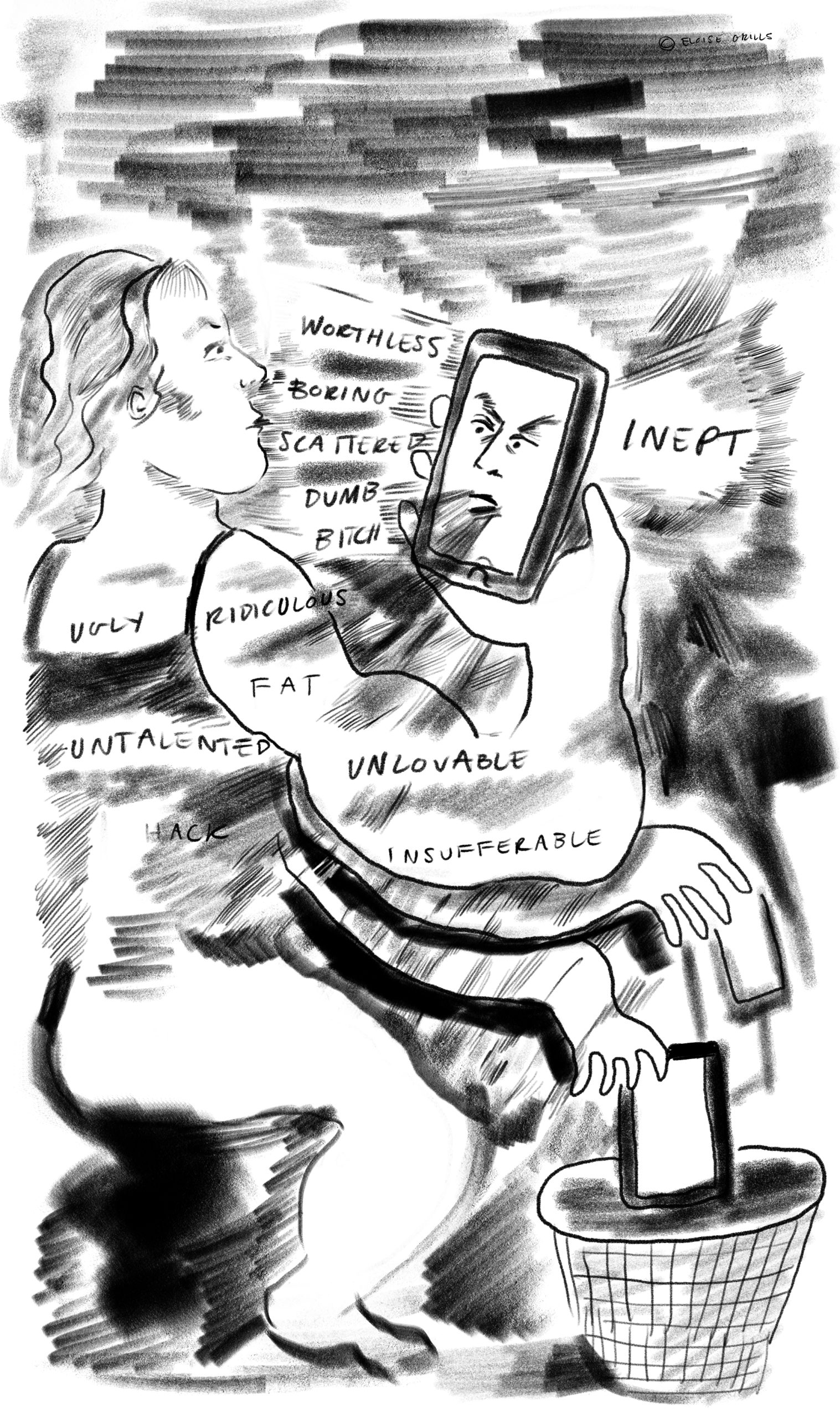
I write this not to sound off as an old and irrelevant curmudgeon, of the type I almost certainly am. I’m not raging against the inevitable birth of the new world, the sun crunching its golden plough over my feeble and powdery bones. I write this because I can scarcely believe it myself that there was a time when my first instinct upon waking wasn’t to blast myself with blue light. To erode my attention span down to a nub, to be jealous and riled up and depressed and anxious and pliant and a good little consumer of things that apps told me I wanted to buy.
The smartphone promised to be everything: a way to connect with others, to feel a part of the world. Every fleck of information at my fingertips, news and updates and advancements all coming thick and fast like the ocean through a broken porthole on a cruise liner. But the more time I invested, scrolling and looking, the more passive I became and the less I felt able to access the supposed benefits my smartphone provided. I was on a cruise ship, sipping mojitos and wearing a Hawaiian shirt, but I wasn’t having any fun. I felt like I was sinking.
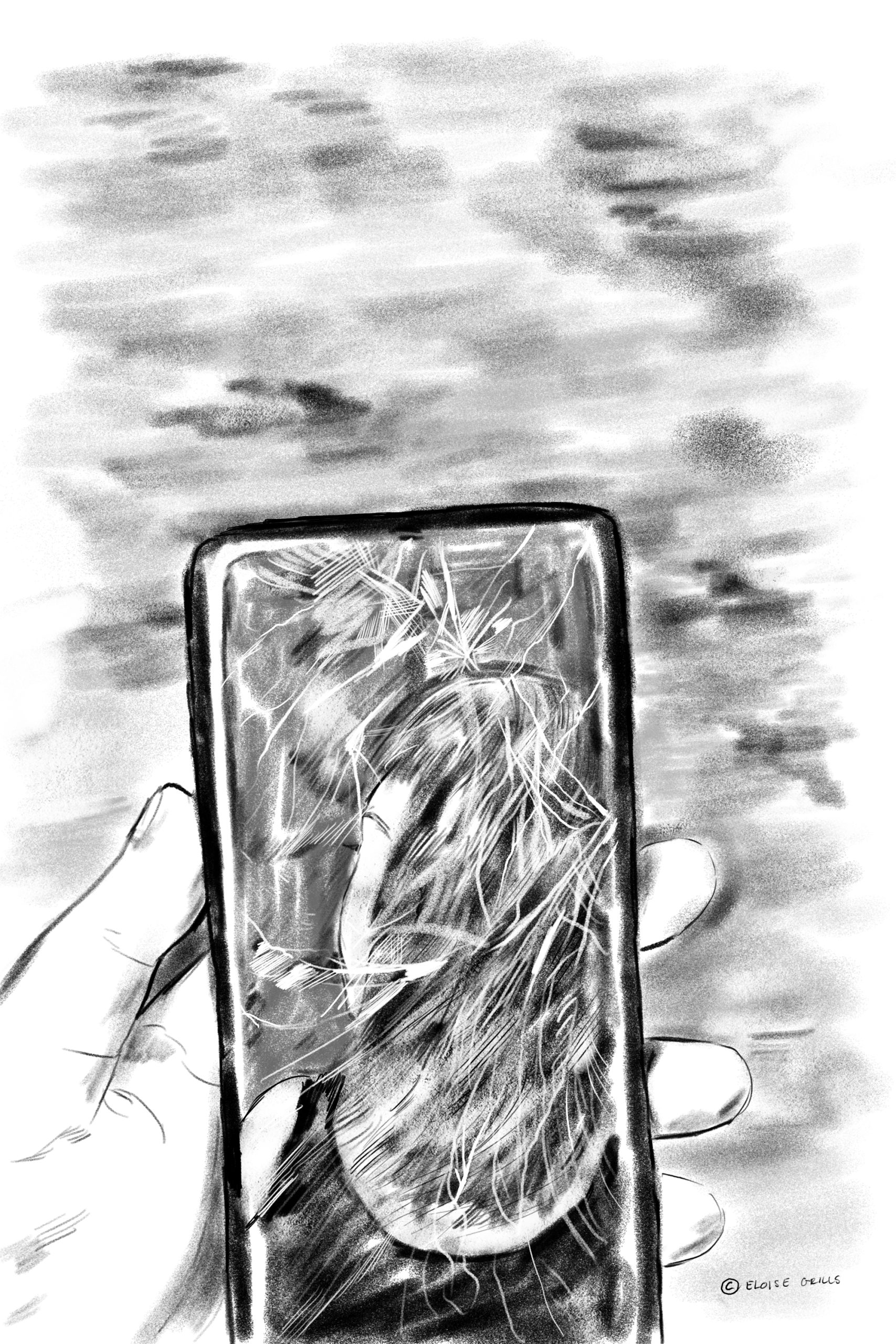
If things were already bad, Covid made it worse. Throughout the pandemic lockdowns and after, I noticed my screen time rising—to five, six, seven hours—and I felt powerless to stop it.
I was no longer using my phone for its on-label purpose: communicating. I was an observer, trawling for scrap in the depths of Twitter, reacting, liking, without sharing any thoughts of my own. I spent hours scrolling through repetitive memes on Instagram and ignoring urgent emails, calls and messages from friends. I wasn’t reading or absorbing any news. Instead, I was trying and failing to retain information from videos so brief that watching something more than five minutes started to feel like trying to read War and Peace. I was alive, but I was barely there at all.
At first, I tried simple measures. Screen time controls on my phone, with a timer to limit the amount of time spent on apps. But then, when I would run out, I would just go on my computer, access them that way. Then I installed apps that were supposed to block distracting apps on my phone. But if I didn’t pay for the full versions (which I wouldn’t, I’m a dyed-in-the-wool tightarse), it would limit the number of apps I could block, and thus I would spend astronomical amounts of screen time on the other apps, or on the websites for those apps. I would delete the blocking app altogether. There was always a way to get around the barriers I had constructed for myself. Even when I had somehow managed to abstain, I found myself looking at the limited apps I could access over and over: refreshing my email and my banking app, over and over. I was a rat in a lab, tapping the button for pellets.
Enter the screen detox. I could usually manage to use self-control to abstain for a weekend, a teeth-grinding, pacing weekend, and then my usage would surge, stronger and more powerful than before. After all, smartphones are designed to be addictive, to give us the kind of dopamine hit we would have to really work hard to get otherwise. A telling trend: Senior leaders at the biggest tech companies in the world are sending their children to elite, tech-free schools.
What we think of as a lack of willpower, the inability to moderate our own behaviours, is in fact an inbuilt function of the technologies. We are encouraged to rely on our phones, and tech companies and app designers want us to spend as much time on them as possible so they can sell our information, our habits, our inner lives and worlds and subconscious desires to advertisers. Most social media apps cost nothing (or very little for what is on offer), but we must all remember that nothing in this world is free: if something costs us nothing but our time, then we are the product, our attention being packaged and sold.
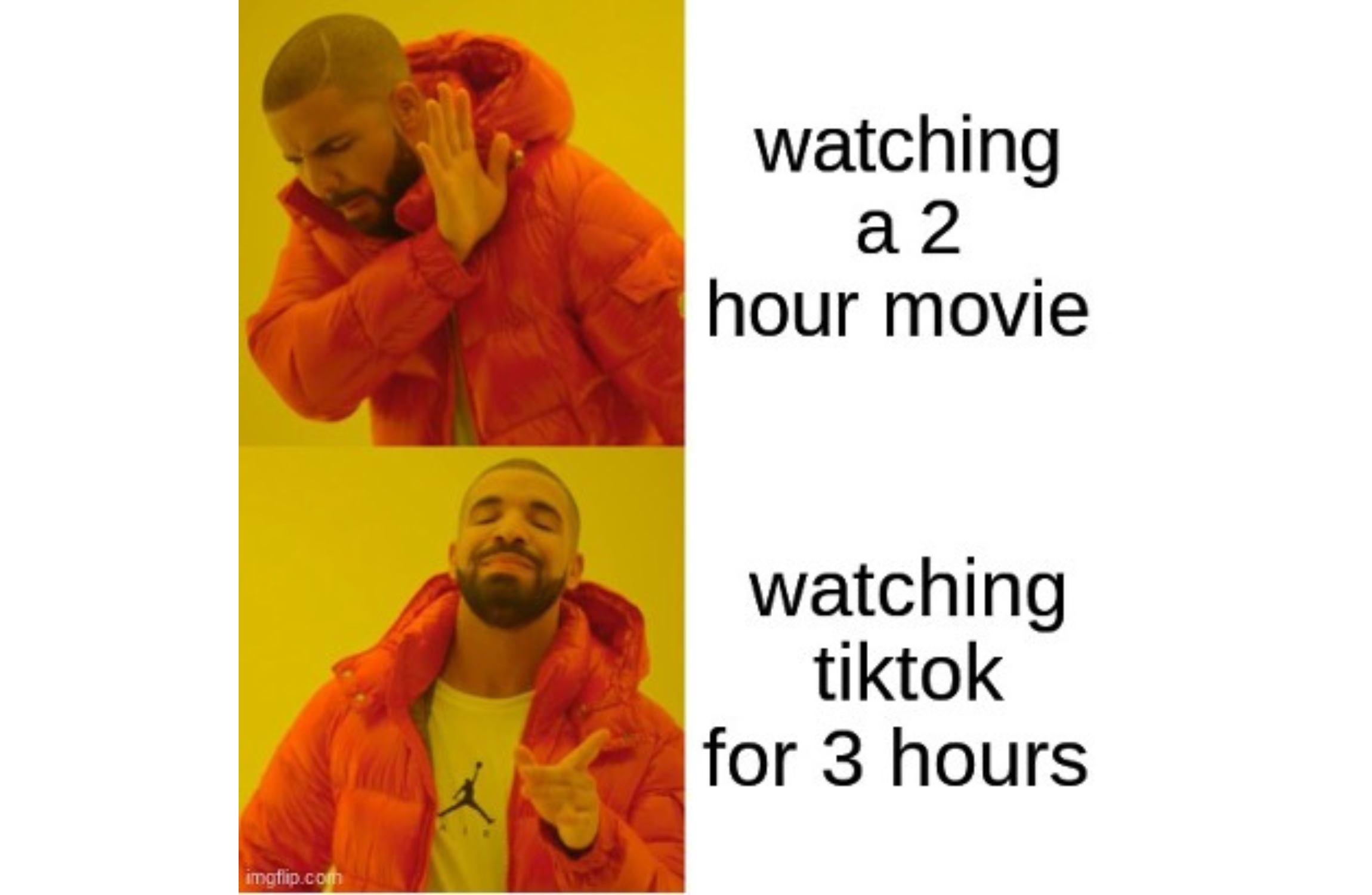
A kind of resignation is being normalised: people admit freely that they will watch seven episodes of television in a row but baulk at watching a whole movie. Phone screens are replacing hobbies. I have spent years of my life scrolling instead of reading or crocheting or doing any kind of joyful activity to relieve stress, even just say, staring at a wall or out a window, thinking—and also wondering why I feel like a complete piece of garbage.
I downloaded a pamphlet by anti-tech activist August Lamm, who argues that we didn’t need smartphones. That the excuses and rationalisations for keeping them echoed the endless justifications of the addict. I expected the zine to hold more workarounds: to explain, in detail, for instance, how to get a device that had maps or how to put music on another device. But Lamm’s is a staunch resistance to a one-to-one replacement of the device’s functions. She advocates for stripping down our reliance, piece by piece. She dares the reader to get rid of the smartphone without immediately finding ways to mitigate its absence. To walk out the door with just a notebook and pen—or nothing—and realise that the most ubiquitous technology of our age’s supposed freedoms might actually be a trap.
Reading the zine, I realised I didn’t want to get to be an elderly woman, on my deathbed, that old cliché, and find that my most consistent and constant relationship, the thing I’d touched most and which had touched me in turn, had been a phone screen.
So I bought a flip phone. My brick of choice, an Opel TouchFlip, is able to play downloaded music and has a very slow and glitchy maps function. I also bought an SD card to store my blurry 3MP phone photos and a USB for my car stereo. I was not ready to rid myself of everything, to sit in the complete silence of my mind, so I had to create some alternatives. I now have to type with a numeric keypad, so my husband has told me that my messages have taken on the brusqueness of a surly tradie. The phone’s WhatsApp feature has since stopped working.
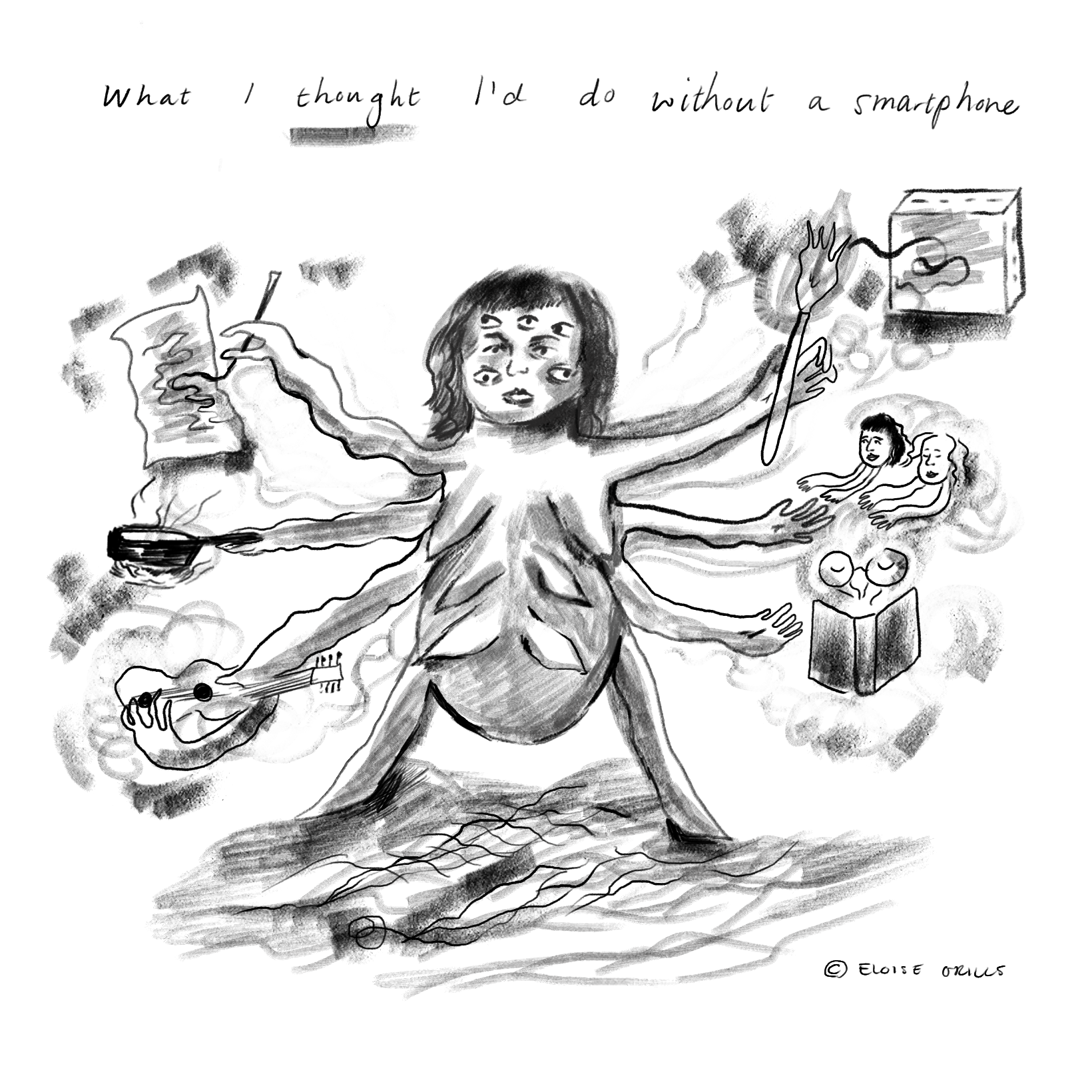
I thought I would have way more time to do things, to busy myself with other tasks, but what I mostly found was that it allowed me to be quiet. To nap. To sit and stare and not immediately grasp for some other kind of stimulation.
In a 2019 article for Buzzfeed, Emmeline Cline commented on the state of contemporary writing. ‘I’ve noticed a lot of brilliant women giving up on shouting and complaining, and instead taking on a darkly comic, deadpan tone when writing about their feminism,’ she explained. ‘This approach presents overtly horrifying facts about uniquely feminine struggles and delivers them flatly, dripping with sarcasm.’
She terms this kind of disaffected, detached approach ‘dissociative feminism’.
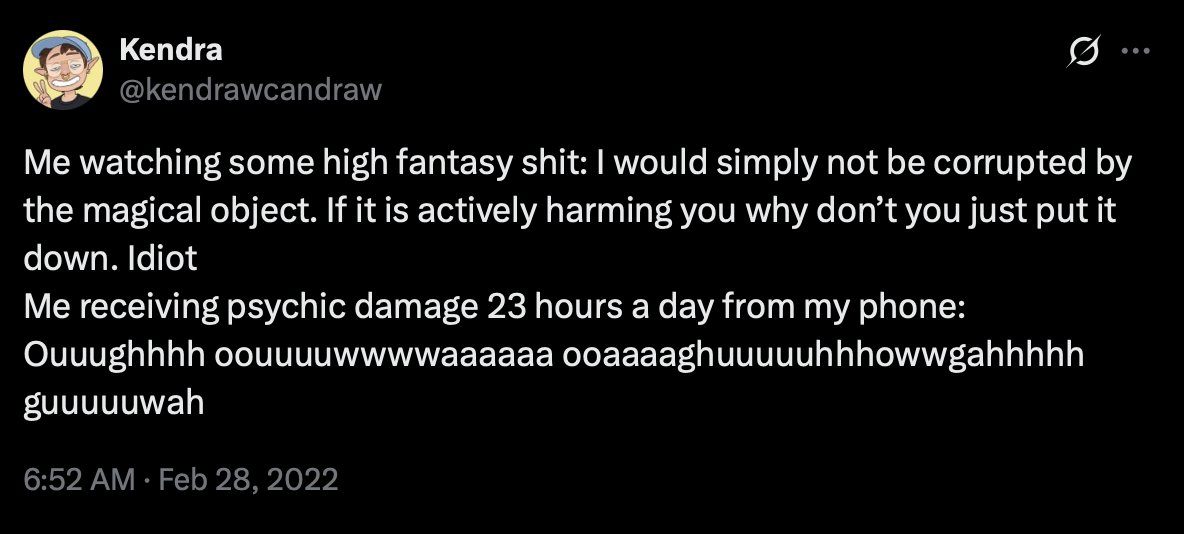
Bright young women make proud TikToks declaring that they are living their ‘old woman era’, sipping tea and staring at their phones on a Saturday night instead of going out.
I have also noticed a kind of resignation in phone-addled humour, the worldview of the chronically online. In Melissa Broder’s book of essays, So Sad Today, framed as an internet-addiction quiz, she demonstrates the ways she is completely (and hilariously) in the thrall of her phone, spending hours on the toilet, escaping reality. In Too Much, Lena Dunham’s recent Netflix show, the protagonist Jessica obsessively watches her ex-boyfriend’s new girlfriend’s online videos, replying to them with a private account. She makes a hobby of making herself feel even worse, pouring salt on her wounds.
There’s a sense in these instances of a self-aware kind of having already given up—of letting go and allowing the phone to be the boss. Lie back, think of England.
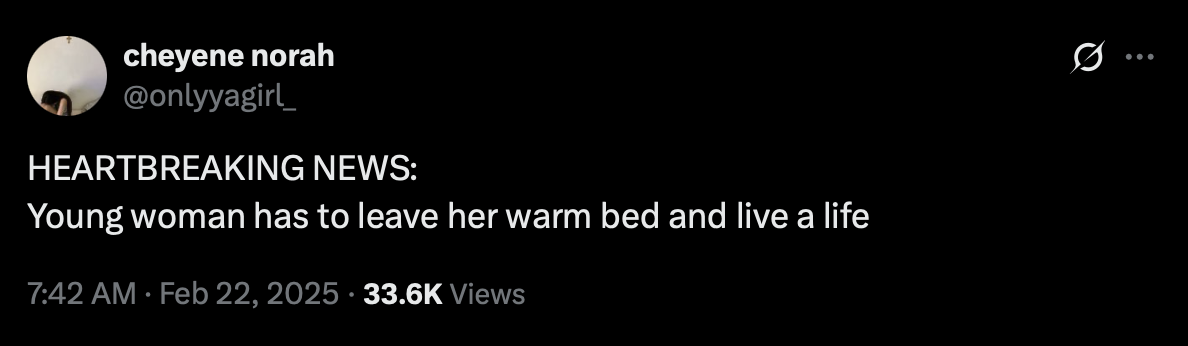
And I do understand: there is a certain nihilistic comfort in allowing ourselves to revel in our own crapulence. To give in to the siren’s call to log in and check out. But I don’t want to be a dissociative tech user. I want to be angry with the way that my brain has been slowly reduced in capacity by people trying to sell me shit. But I admit, sometimes I don’t have the energy for anger. Did this detachment begin to take hold of me before or after I got a smartphone? I really can’t be sure.
A joke:
How do you know someone has a dumbphone?
They’ll tell you.
I know, the only thing more insufferable than being a person obsessed with their smartphone is becoming one obsessed by their—for want of a better, less ableist word—dumbphone. It could really just be called a phone, because it has the function of a phone, and a smartphone could be called a surveillance phone. A distraction phone. A constructed-by-billionaires-to-make-me-feel-like-a-piece-of-shit phone.
This Tweet (or Xeet—but no, I refuse to call it X) from the brilliant Gen-Z thinker Rayne Fisher-Quann recently rankled me, which must mean it hit some kind of nerve:
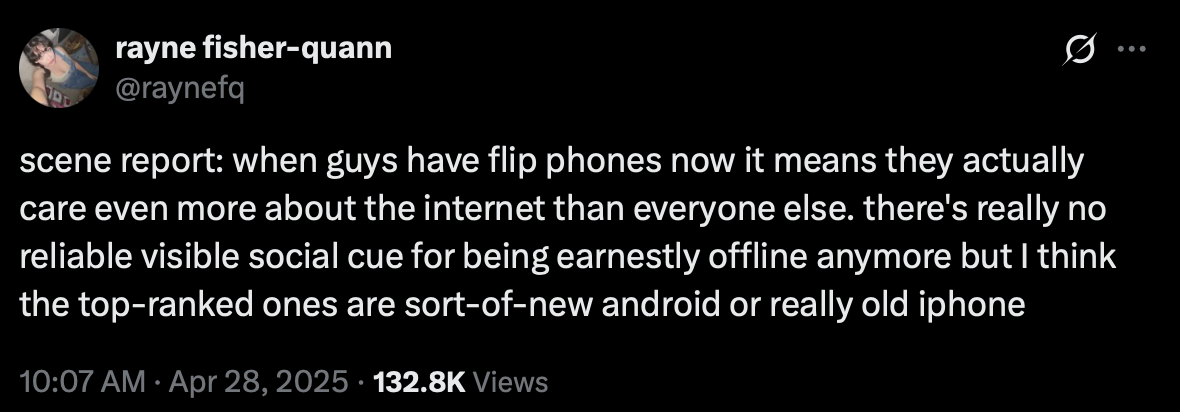
Not being a guy or part of any scene Fisher-Quann describes, I still felt personally attacked. Because I do care, inordinately, about the internet. I still log in to Instagram, Twitter and Reddit on my tablet and my laptop—to be a passive observer, mostly, but also to share my work as an artist and writer. I still worry that if I don’t post, in this attention economy, I will cease to exist.
August Lamm has recently moved from being anti-phone to anti-tech in general. She is living without a computer, using a typewriter, logging in at the library once a week to update her followers. All very well and good, but I think in order to function in modern society, if you are not a famous activist, a certain amount of online-ness is required. Or is this just another excuse?
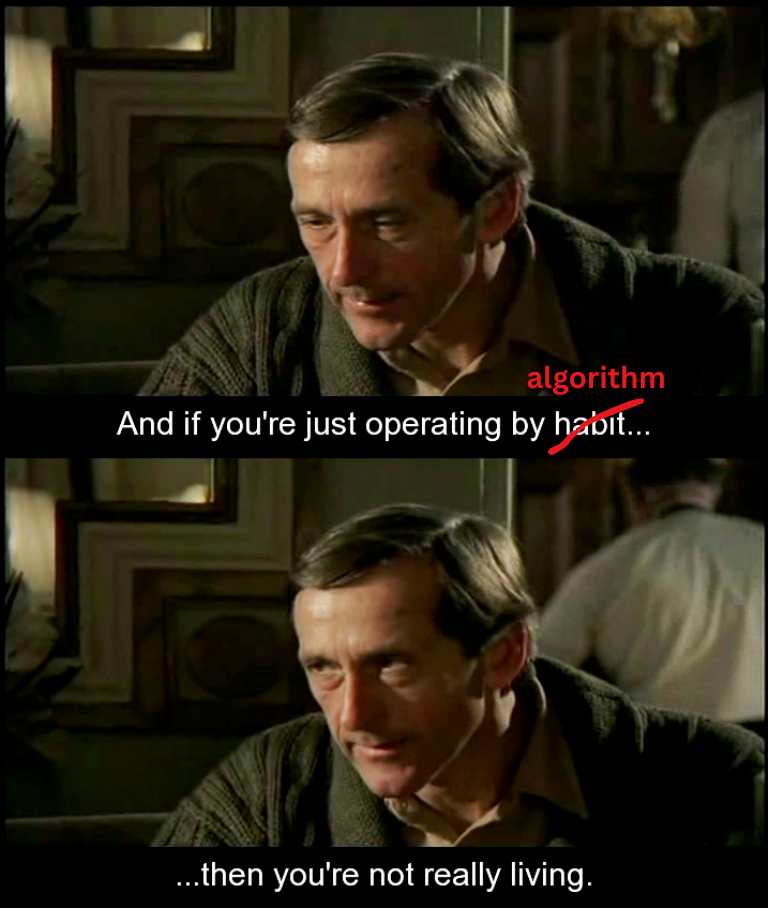
I recently watched the meandering and thoughtful classic, My Dinner with Andre. The film, from 1981, takes the form of a long and nuanced conversation between two old friends who critique the ways society has been corrupted by comfort and the mediated experiences of technology. Andre, the enigmatic man that Wally reluctantly goes to dinner with (he’s heard he has gone a bit strange in the head), asks:
‘What does it do to us, Wally, living in an environment where something as massive as the seasons or winter or cold, don’t in any way affect us? I mean, we’re animals after all. I mean… what does that mean? I think that means that instead of living under the sun and the moon and the sky and the stars, we’re living in a fantasy world of our own making.’
He suggests that comfort is dangerous, as it ‘can lull you into a dangerous tranquillity […] I wouldn’t put an electric blanket on for anything’.
People in almost every era have felt a sense of doom as we become more and more reliant on technology, though perhaps now more than ever (see: climate change, the rise of AI, the shitshow of global politics). Last year, when I read Aldous Huxley’s Brave New World for the first time, I was horrified by its prophetic depiction of a world akin to ours: a dystopia mediated by screens, by pills, by people’s inability to cope with boredom or any negative affect at all. A society defined by a constant and gnawing emptiness that must be filled with stimulation, unable to resist totalitarianism and imperialism.
While I know there has always been some fear of technology in society, I do believe that we are in a unique period, one that we will look back on with regret, as we allow tech oligarchs unfettered access to our deepest unconscious wishes and desires, our fragile and private inner lives, while they pressure us to live in a fantasy world of their making. Dull and repetitive and inhuman. To live in the real world is painful, it is boring, it is uncomfortable. But as John, the so-called ‘savage’ who decides to opt out of the pervasive, technocratic world of Brave New World, says: ‘I want God, I want poetry, I want real danger, I want freedom, I want goodness, I want sin.’ I, too, want to be hideously, disgustingly, beautifully, viscerally, consciously alive. As much and as often as I can bear it.