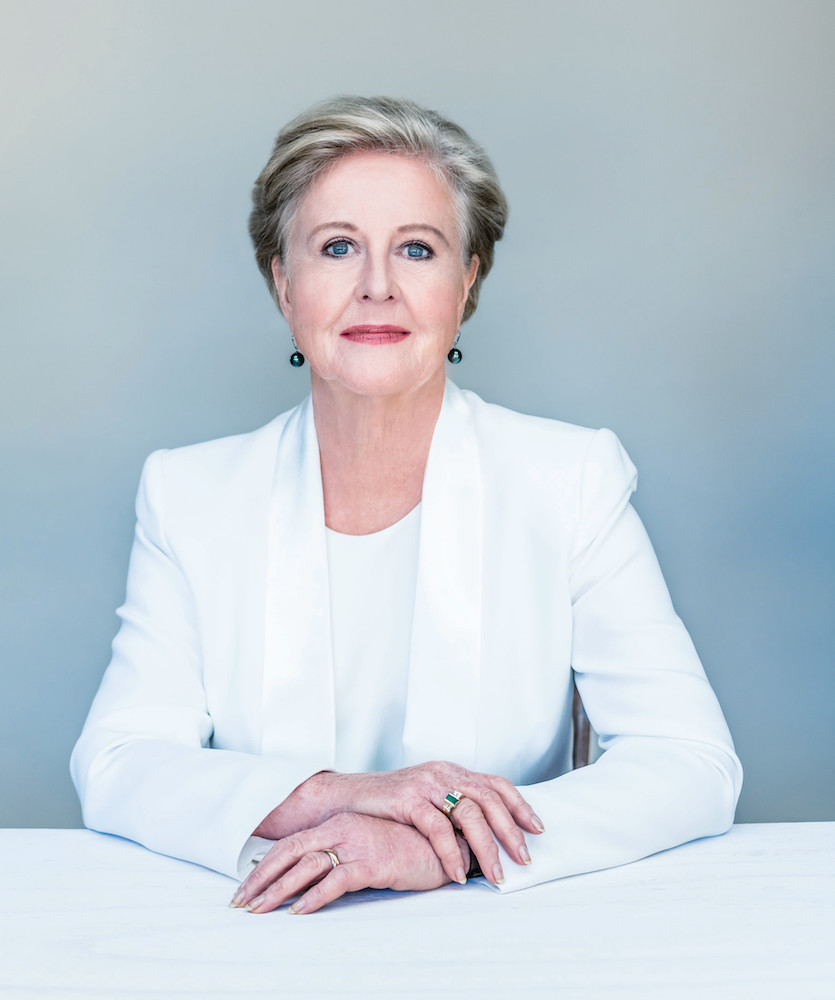


In my former role as president and now, I have had the opportunity to speak to many audiences about the protection of human rights in Australia. After sticking to my carefully crafted script, there is typically a Q&A to follow. That is when I am most vulnerable to going ‘off piste’ with some throwaway lines, almost always to be regretted at my leisure, or worse, forming a headline the next day. In 2017, at the Hobart Town Hall, invited by the Bob Brown Foundation, I gave a speech on proposals to amend section 18C of the Racial Discrimination Act. When pointing out that the prohibition on race hate speech applies only in public, I added, ‘Sadly, you can say what you like around the kitchen table.’ News Corp interpreted this to mean that I wanted to ban all private conversations. The lesson? Do not ad lib. The misreporting of the purposes of that speech by the Daily Telegraph was found in March 2018 by the Australian Press Council to have breached four of its principles of fair and reasonable reporting.
The discomfort of media attention is also bound to affect family and friends. I was amused when my son James rang me one day from Paris, where he works, to ask: ‘What have you done this time?’
‘Nothing out of the ordinary,’ I said.
‘You’re out-trending Taylor Swift on Twitter.’
I have forgotten what provoked that particular Twitterstorm, but with respect to Ms Swift, my song is a simple one. We must work harder to protect the rights and freedoms of all Australians. It is time to legislate for a charter of rights to give parliament, civil society and the judiciary the legal tools to meet our human rights obligations.
Australia is the only democratic nation in the world, and the only common law country, that does not have a bill or charter of rights to ensure the freedoms of its citizens and residents. Australia is also the only Commonwealth country not to have a treaty with its Indigenous peoples despite its acceptance of the right to self-determination under the UN Declaration on the Rights of Indigenous Peoples.
During my commission presidency, I saw human rights in Australia regress on almost every issue of contemporary importance.
During my commission presidency, I saw human rights in Australia regress on almost every issue of contemporary importance, reflecting a decline in respect for the rule of law and contempt for many fundamental freedoms. Now, in this book, I offer a personal perspective on the critical human rights challenges for Australia, including women’s economic empowerment and domestic violence; constitutional recognition for Indigenous Australians; cultural and racial diversity in employment and political life; and regional cooperation in providing protection to refugees.
Through the eyes of the commission, I have had the privilege of seeing up close how Australia has failed to respond to the discriminatory incarceration of Indigenous people, asylum seekers asking for sanctuary, rising racism, Islamophobia and antisemitism, youth suicides, and the declining economic position of women. I aim to encourage others to speak up for vulnerable Australians whose freedoms and rights are not respected.
Over the past five years, I have often wished I were somewhere else. But humour usually took the sting out of government criticism and media hyperbole. I now have dozens of newspaper cartoons to explain to my grandchildren. They range from a portrait of me as a Nazi, apparently provoked by my defence of sections 18C and D of the Commonwealth Racial Discrimination Act, to my favourite, a James Bond–inspired cartoon. The latter depicts me dangling by a hook above a shark-infested pool, as prime minister Tony Abbott circles in the form of a submarine and attorney-general George Brandis watches while stroking a cat. It is clear I hope to escape up a rope to the sky above. The caption runs ‘Triggs, Gillian Triggs’. I do wish life were more like the movies.
Over the past five years, I have often wished I were somewhere else. But humour usually took the sting out of government criticism and media hyperbole.
Some cartoons have been inspired by singularly inappropriate comments by me. In one media interview, I needlessly mentioned that I am frequently approached by people in the supermarket, on trains and in the street who say they support the work of the commission. People, I said, often came up to me as I ate my noodles for lunch in Pitt Street. The resulting cartoon shows me festooned with noodles and chopsticks. Most such satire is clever and amusing, albeit drawing some blood. Some cartoons, by contrast, endorse stereotypes that are harmful in promoting racial and sexual discrimination, ‘permitting’ others to abuse and denigrate. A challenge for democracy is to find the right line between freedom of speech and an abuse of that right.
As a 72-year-old, I am delighted, if bemused, to be a patron of Grandmothers against Detention of Refugee Children. I qualify as a member as I am a grandmother of two: Sia and Leonard. Oscar Wilde once said that a woman who will tell you her age will tell you anything. I will not tell all, but I will tell what is useful, as truthfully as I can. I hope my book stimulates those concerned to maintain democratic liberties, to join me in speaking up.