In my experience, a writer of novels has to at various points and to varying degrees sustain a split consciousness. On the one hand, we must admit that novels are a form of entertainment, existing somewhere between movies and poems. They are narrative objects made of language with, usually, a beginning, a middle and an end. They are a form that was born in the age of mechanical reproduction, and they are sold as commodities, an activity that today has rather a lot more to do with branding and marketing than it used to—a fact that is particularly confusing and troubling to exactly the type of person who might end up spending their time reading and writing novels. And on the other hand, there is a relationship between novels and what for want of a better phrase you might call our spiritual lives. Some of us read them for comfort, or to escape; some to learn about the world; some because it’s a rare chance for concentrated solitude, to be neither working nor passively consuming the content of a screen but thinking deeply about experiences other than our own, using some of the tools of our dream life, and listening carefully to the voices of others, in ways that ask for our imaginative participation and that might also shed light upon our own experiences of being alive on this planet. Novels reflect the perpetuation of a human impulse to use and experience narrative form as a way of making sense of the world. This may seem obvious. As a person who tries to spend most of her time reading and writing novels, I sometimes find that these two realities coexist without issue. But often I find myself distracted by and even anxious about the mystery of what these texts really do in the world, beyond providing mere escapism or misguided attempts at moral instruction, which I don’t believe in either as a proper use of the form. Said tells us that ‘texts are worldly, to some degree they are events, and, even when they appear to deny it, they are nevertheless a part of the social world, human life, and of course the historical moments in which they are located and interpreted’. This may be true, but it doesn’t really help me, a writer, in thinking about what it is that I am doing when I sit down at my desk. Frank Kermode said that ‘fictions are for finding things out, and they change as the needs of sense-making change’—which I find a helpful formulation for thinking about how the novel, shape-shifting, strives for novelty, and how this relates to our need to find and create meaning. But most helpfully of all, for me, is what Sylvia Wynter said about the novel being a revolutionary form because it ‘is in essence a question mark’. Perhaps a writer doesn’t need to have a clear sense of what her text will do in the world. Perhaps a writer can relax a bit. Perhaps it’s enough to ask a question, and hope, perhaps, to glimpse the meaning of that question in retrospect.
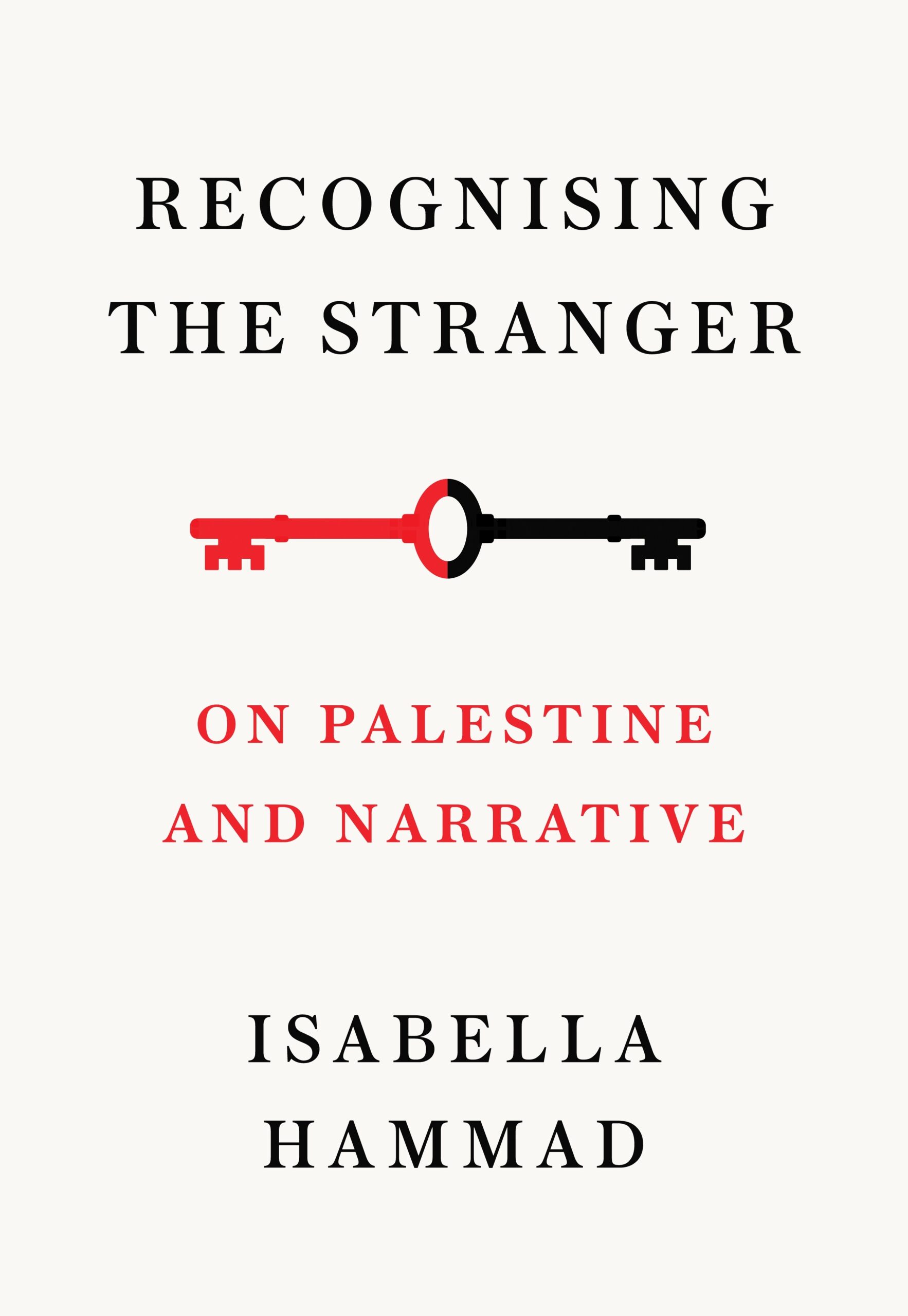
This is an extract from Recognising the Stranger by Isabella Hammad, (Penguin Books Australia), available now at your local independent bookseller.