Don’t miss out—Our EOFY sale is ending soon! Browse discounts on all writing courses. 

Culture

The Covered Wife, One Hundred Days, Good Indian Daughter, Who Gets to Be Smart

Books Roundup June Book Covers

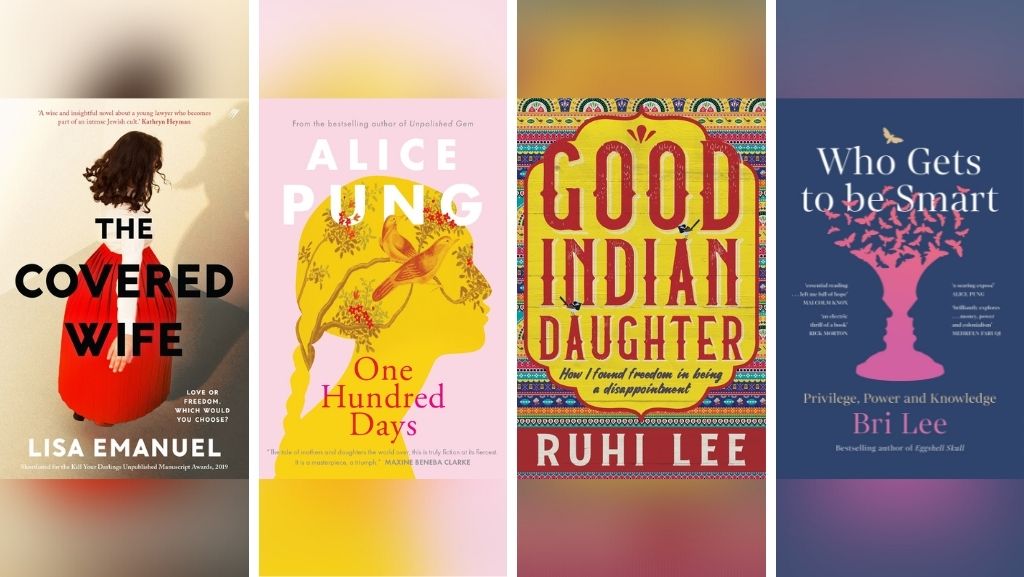
The Covered Wife
Lisa Emanuel (Pantera Press, available now)

The Covered Wife is our First Book Club pick for June—stay tuned to the KYD website and Podcast for more throughout the month.

Sarah is a young woman who leads a privileged but unfulfilled life, working as a lawyer in inner-city Sydney. When she falls in love with Daniel—a fellow lawyer, with the supportive and bustling Jewish family Sarah has always wanted—they begin to attend the religious meetings of orthodox couple Menachem and Chani. Initially, this religious instruction is about finding a deeper connection to the Torah and building a community of like-minded Jewish people. But after the group moves out of Sydney and into a small town in the Blue Mountains, the rules and regulations of the group are changed to favour the couple at the helm rather than scripture.

A gripping novel that articulates the disharmonies of modern life.

The most fascinating aspect of this novel is its exploration of why a person like Sarah might make such a monumental change to their lifestyle. Sarah places a lot of blame on her mother for choosing to raise her without family—she feels like her mother ‘had chosen to be alone rather than deal with the complications.’ As Daniel deepens his religious practice, and asks Sarah that they stop having sex outside of marriage, the relationship faces difficulties. In this moment, Sarah adopts an arguably toxic mindset around the conflict, and reflects that she ‘loved him too much to give him up so easily.’ Sarah is committed to weathering these ‘complications’, not to repeat the mistakes of her mother’s life and Sarah’s own upbringing, even if she is uncomfortable with the direction her relationship is taking.

The Covered Wife is a gripping novel that articulates the disharmonies of modern life—motherhood, marriage, work-life balance, and the metaphorical greener grass. Emanuel writes about Judaism with love and respect, but isn’t afraid to explore the darkness of what might happen when a religious group is twisted by its leaders into a full-blown cult. The pressures of contemporary womanhood are written about with the same non-judgemental stance—for the women in this book, the value they put on motherhood or their careers is treated as personal and complex. With its nuanced exploration of all these themes, and the chilling final pages, this is a book that will linger in your mind.

— Ellen Cregan
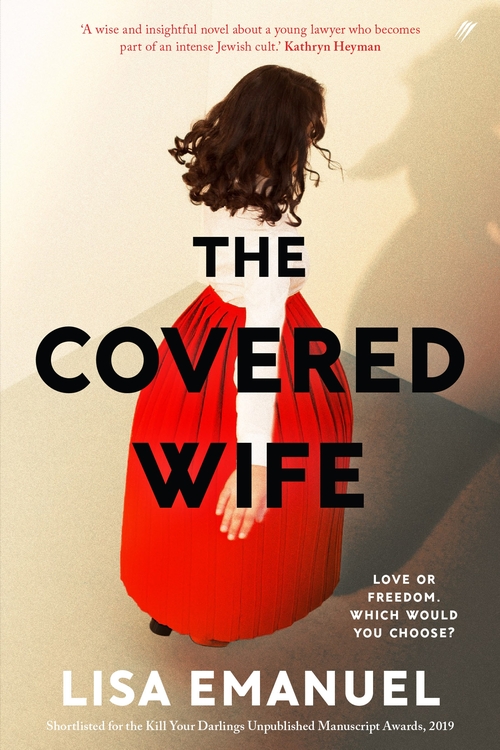
One Hundred Days
Alice Pung (Black Inc, available now)

In the first six months of life, babies identify so completely with their primary caregiver that they do not distinguish themselves as separate individuals. In Alice Pung’s One Hundred Days, sixteen-year-old Karuna Kelly falls pregnant while she is still in the process of separating herself from her mother, abruptly transforming what begins as a joyful coming-of-age into a story of confinement and control.

In One Hundred Days, Pung writes from the liminal space inhabited by first-generation Australians with an acuity that makes me feel seen, resuming an exploration of the first-gen experience that began with her early memoirs Unpolished Gem and Her Father’s Daughter, and continued in her award-winning YA novel Laurinda. Like Laurinda’s Lucy Lam, Karuna is troubled by the pull of different classes, cultures and generations at a formative stage in her life. However, unlike Lucy, who ultimately draws strength from the stronghold of her family and her difference, Karuna is alienated from her Chinese Filipino heritage by the racist commentary of her white Australian father, and when he leaves the family, Karuna must also leave the privileged world of private schooling behind.

Pung writes from the liminal space inhabited by first-generation Australians with an acuity that makes me feel seen.

Following the divorce, Karuna’s mother simultaneously clings to her daughter and blames her for everything. Karuna writes to her unborn child from the fourteenth-storey housing commission flat where her mother keeps her confined:

Your Grand Mar always said that if I had been a son, then [your Grand par] would’ve stayed. ‘Boys belong to their fathers, girls belong to their mothers,’ she’d tell me, which would really piss me off because I didn’t belong to anyone.

Through the relationship between Karuna and her mother, Pung explores the ways in which parental love, ‘flawed, anxious, inadequate love’ can slip and stumble—how easily the desire to protect our children might become the need to control them, how quickly we might lose sight of them between childhood and adolescence. But the most uncomfortable aspect of their relationship is the language of ownership that pervades both mother and daughter’s conceptualisation of parenthood. ‘If I had the choice’ Karuna reflects, ‘I’d keep the baby. At least then I’d have something of my own.’

The way in which Karuna unthinkingly adopts her mother’s use of the possessive initially struck me as a nod to the impossibility of escaping the cycle of abuse. Yet One Hundred Days is, at heart, a deeply hopeful novel. Rather than waiting to be rescued, Karuna acts with a thoughtful determination, challenging constructions of adolescence that understate the power and agency of children and teenagers. Her use of second-person also clears a space for her child that prefigures a different kind of parent-child relationship—one of tenderness and mutual regard.

As well as writing against the invisibility bestowed by race, age and class, Pung writes against the deficit discourse that so often characterises representations of teen pregnancy. More than a teenager/daughter/mother, Karuna is an agent capable of expanding and transforming her world.

— Megan Cheong

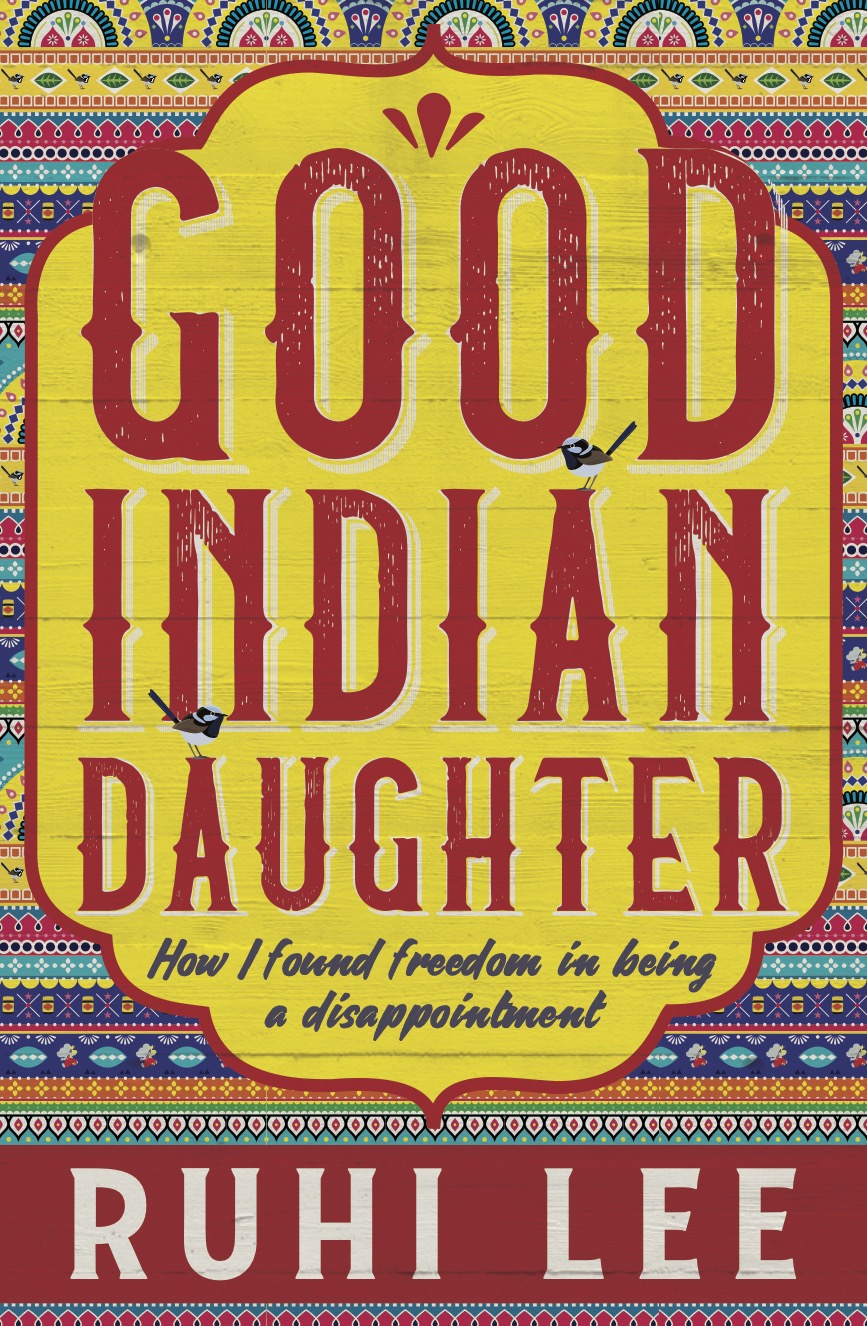
Good Indian Daughter
Ruhi Lee (Affirm Press, available now)

Good Indian Daughter is a title that carries a lot of weight, but debut author Ruhi Lee lightens the tone through the clever use of humour, dialogue and story right from the opening line: ‘Early in the millennium, I set myself a new goal: to one day be able to tell my parents things they wouldn’t like hearing, without shitting myself.’ Her memoir explores the many complicated facets of being an Indian daughter growing up in Australia: struggling with the unique nature of Indian parenting, navigating identity across two different cultures and dealing with trauma. I deeply resonated with all these ideas as a first generation not-so-good Indian daughter myself.

While the overall tone of the book is fairly light-hearted, Lee seriously questions female autonomy within society.

We meet Lee just as she has discovered she is pregnant with a baby girl. Instead of feeling joyed by this revelation, Lee is terrified. What if she isn’t a good enough mother for her daughter? What kind of mother does she want to be? And so begins the journey of her pregnancy alongside her efforts of trying to unpack the baggage of coming of age as a first generation Indian Australian in a predominately Anglo-Saxon society.

While the overall tone of the book is fairly light-hearted, Lee seriously questions female autonomy within society. To some, it may appear that she is simply averse to Indian culture, like when she decides to not have a Kubsa—a traditional South Indian baby shower—but really, she is questioning what a lot of young Indian women, especially first-generation girls, are thinking. Namely, why is there so much pressure for daughters to uphold their families honour and partake in rituals for the sake of it? She summarises this idea brilliantly when she says:

Traditionally, Good Indian Daughters have borne the onus of preserving our family’s honour. We carry it on our shoulders and in our genitals. As uterus-owners, we are the vessels of procreation; as vagina owners, we are the duty-bound gatekeepers of sexual propriety. However you look at it, we are the biologically ordained fulcrums of morality.

There is no doubt that Indian Australian women have many stories to share and it is exciting to see these women pick up the pen and write their truths, however uncomfortable and daunting it may be. Living in a community so plagued by the idea of ‘log kya kahenge?’ (‘what will people think?’) I admire Lee’s bravery in choosing to cement her story on the page, providing a valuable contribution to the written history of Indian women in Australia.

— Hardeep Dhanoa

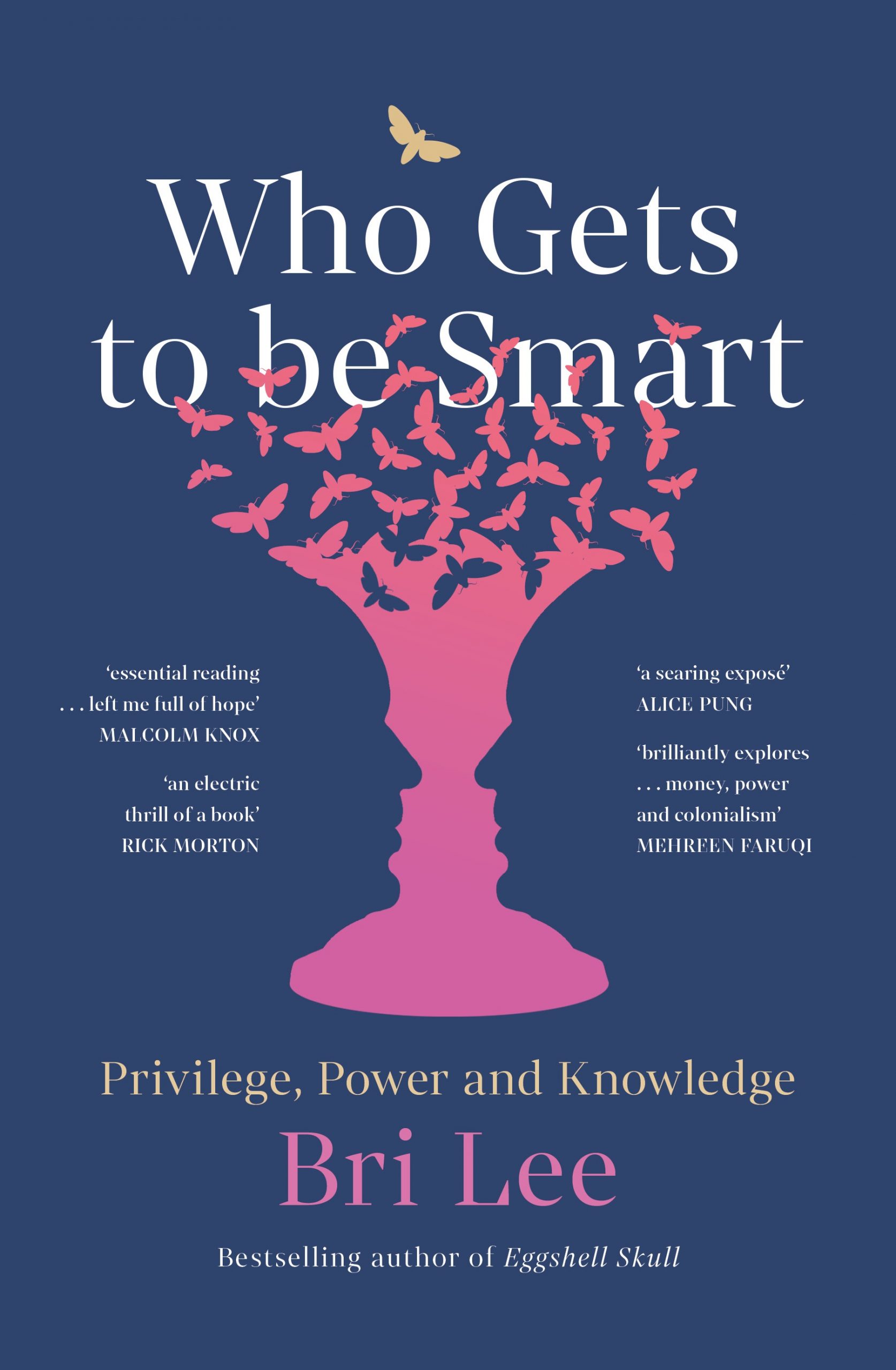
Who Gets to Be Smart
Bri Lee (Allen & Unwin, available now)

Who gets to be smart? It’s a deceptively simple question with an ouroboros quality, circling back on itself and yielding dozens of new questions. Questions like: Who gets to be powerful? Financially secure? Free? As Lee writes: ‘Knowledge is power, and when powerful people are allowed to shape knowledge and restrict access to knowledge, they are able to consolidate and strengthen their hold on power.’

Lee artfully analyses the state of education, from primary to tertiary, demonstrating how these systems are governed by a vexing set of circumstances. Starting at the University of Oxford, ‘the apex’ of education and privilege, Lee visits a friend who is a Rhodes Scholar. Lee notes that ‘his student ID was like a rare and expensive passport.’ After learning that she is ‘too old’ to apply for the scholarship, Lee momentarily turns her gaze inwards, sharing her self-appraisal (‘my not-good-enough brain’) and fears (‘I was back to this old loop: do I want to be smart, or am I simply insecure about looking dumb?’), before quickly setting off on the task of investigating the title question.

Timely and precise, Lee’s expose will kickstart an essential conversation about power.

Lee steers us through the maze of elite institutions and inherited power, skilfully unpacking the influence of conservative rhetoric and politics. ‘Digging around for information about these men is like getting lost in a labyrinth of interconnecting corridors with milky windows and dead ends.’ Drawing heavily on source material, at times Lee’s voice disappears from the page, but her verdict of the state of education is clear and irrefutable: ‘Integrity: compromised.’

Despite Lee’s nuanced exploration of the flawed science behind measuring intelligence, the book is peppered with ableist phrases and euphemisms (‘stupid’, ‘blind to’, ‘a special kid’, ‘idiotic’, ‘fool’). As someone who has a brain that has been categorised as ‘deficit’, ‘deprived’ and ‘underdeveloped’, I have become keenly alert to these phrases and know how easily they are normalised. They appear everywhere, in books, movies, social media posts, schools, workplaces. As a society we punch down.

The book truly shines when Lee unpacks how Australian high schools are funded. Lee had a very good high school education. At $12,000 per annum, she calculates that these fees ‘paid for a minuscule fracture of the new multi-level arts centre.’ Her analysis is thrilling, eviscerating, and deeply empathic: ‘If the way we fund schools doesn’t change, it will continue to entrench already-dire intergenerational inequality.’ Timely and precise, Lee’s expose will kickstart an essential conversation about power.

— Fiona Murphy

Latest

My God, It’s Full of Stars

Jennifer Down

Goodbye to the Body

Jack Vening

Who Can Afford to Be a Writer in Australia These Days?

Nina Culley