Don’t miss out—Our EOFY sale is ending soon! Browse discounts on all writing courses. 

Culture

The Cost of LabourCold Enough for SnowFound, WantingThe Torrent

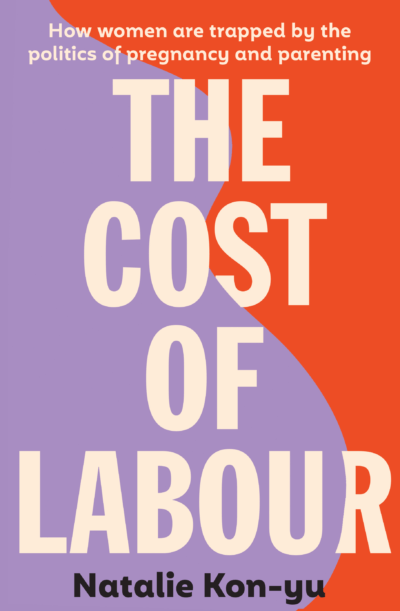
The Cost of Labour
Natalie Kon-yu (Affirm Press, available now)

The Cost of Labour is our First Book Club pick for February—Stay tuned for features on our website and podcast throughout the month!

When Natalie Kon-yu was pregnant with her first child, she experienced severe symptoms: insuppressible nausea, restless legs, chronic insomnia and more. With this set of problems, her mental health began to suffer. Kon-yu struggled through pregnancy, and was dismissed and mistreated by the medical staff who were supposed to be caring for her. Even as a middle class, well-educated person with a supportive partner, friends and family, it was a battle to get the physical and psychological care she needed. Early in the book, Kon-yu reflects that what helped her through such a difficult pregnancy was ‘the idea that it was a singular experience… surely other people were not, are not, treated like this. But what I’ve found in writing about this subject is that I’m not so unusual.’ 

The Cost of Labour is the best kind of feminist writing: sharply intelligent, fierce and tender.

The Cost of Labour looks at pregnancy, birth and parenting through the lens of Kon-yu’s own experience, sources from academia and literature, and through interviews with women who have had harrowing experiences with pre- and post-natal healthcare in Australia. To understand how the Western world arrived at its present-day views on pregnancy and birth, Kon-yu gives historical context, going back to the 1870s:  

Male doctors started to speak of pregnancy as a disease that required the care of a certified medical practitioner (who were, of course, all men). Women’s sexual organs were imbued with a kind of malice which male doctors argued made women susceptible to conditions like hysteria. They spent so long anthropomorphising women’s organs that by the end they figured women were feeble brains ensnared by a vicious biology.

As Kon-yu is a cisgendered woman, her book is centred on her own experience of pregnancy, birth and parenthood. But she makes a clear acknowledgement that pregnancy and giving birth can be experienced by people of all gender expressions. Throughout the book Kon-yu uses inclusive language while also dissecting the undeniable misogyny behind so much of the maltreatment of those who give birth. It is with this inclusive spirit that Kon-yu considers many of the problems of parenthood—she interviews and quotes people from a broad range of cultural backgrounds. In a section on the ongoing traumatic legacy of the Stolen Generations, Kon-yu asks: ‘If I, as a relatively privileged person feel uneasy in speaking out about how difficult parenting can be in our culture, then how must a First Nations parent feel?’ This question frames much of Kon-yu’s thinking in the book; she is always aware of the fact that the stigma around discussing these problems is amplified by already-existing discrimination. The intersectionality of The Cost of Labour is one of its greatest strengths—many readers will be able to see their own lives and experiences represented.   

This is an elegant work of nonfiction that is enjoyable, thought-provoking and leaves its reader with so much to think about. The Cost of Labour is the best kind of feminist writing: sharply intelligent, fierce and tender, and acknowledges the work of the writers and thinkers who came before. 

— Ellen Cregan
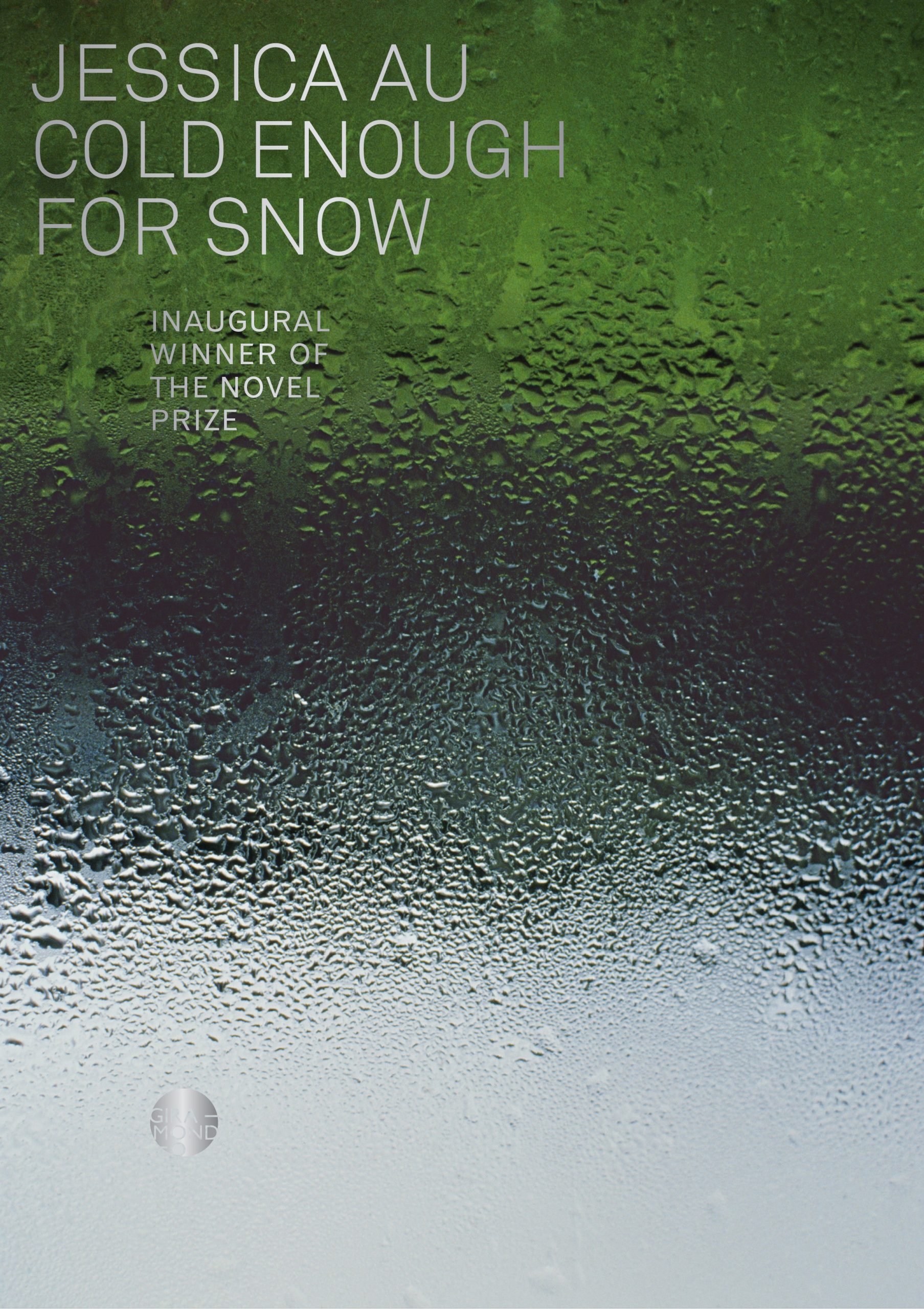
Cold Enough for Snow
Jessica Au (Giramondo, available now)

Cold Enough for Snow, Jessica Au’s second novel and the winner of the inaugural Novel Prize, is an intimate and transportive elegy that asks: is it truly possible to know another, and what are the ways in which we attempt to?

A daughter and mother travel around a rainy Japan, a country that is both familiar and unfamiliar to the two, and it is through this act of travelling where histories of the mother’s childhood in Hong Kong and the narrator’s life as a young adult are revealed. As each moment in the present unveils a memory that speaks to the narrator and her mother’s past, the narrator’s desire to know and be known (not only to her mother but the wider world) is also observed.

Deceptively slim in size, Cold Enough for Snow paints a deep and tender portrait.

A dinner at a restaurant evokes a strange and vaguely familiar scene for the narrator, who realises it reminded her of not her own childhood, but of her mother’s. ‘It was strange at once to be so familiar yet so separated,’ the narrator says, and it is this feeling of the uncanny that lingers throughout the book, rooting itself between mother and daughter. It is through this distance—and the friction and tenderness between a first generation daughter and her migrant mother—where Au explores the trickling effects of migration. What is lost when there is no one to remember our histories with? What happens when there is not enough fluency in language? What do we inherit and how do we remember and understand each other?

Moving at a pace reminiscent of Edward Yang’s film Yi Yi, Au’s Cold Enough for Snow is suspended in the details and movements. The formality of a pose when the camera is taken out, a passing interaction with a bookseller where commonalities arise, a mother asking her daughter to help her with her shoes. The narrator and her family are all unnamed, except for her partner Laurie (perhaps because he has bridged that gap and knows her ‘well, fully, and without reserve’).

What is left unsaid infers just as much as what is said. Au’s prose is intricate and clear, evoking a ripple of feelings that are difficult to name but felt to the brim. Deceptively slim in size, Cold Enough for Snow paints a deep and tender portrait of the impossibility of knowing and how actions can sometimes offer a clearer path than language.

— Anthea Yang

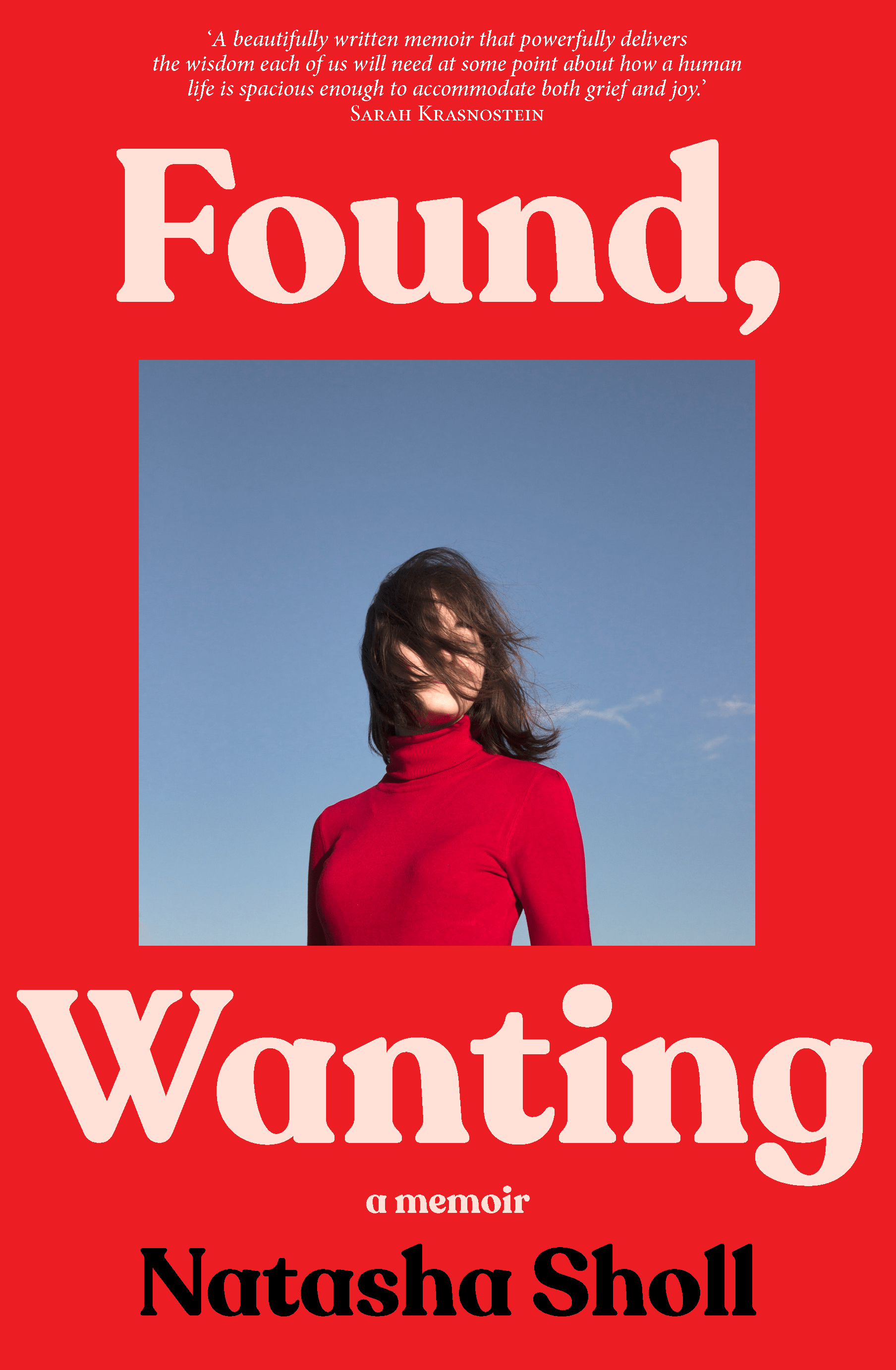
Found, Wanting
Natasha Sholl (Ultimo Press, available now)

When she was twenty-two, Natasha Sholl went to bed on Valentine’s night only to be awoken hours later by her partner lying on top of her. ‘What are you doing?’ she asked. Rob didn’t answer, as what he was doing was dying. Her memoir, Found, Wanting, opens in the hours immediately following his death.

There is a farcical nature to Sholl’s depiction of what happens next. She describes sitting on a brown leather recliner on the night. ‘Occasionally people would come and check on me or lean in to give me a hug but when they did the back of the recliner would take their weight and fall back, forcing them to land awkwardly on top of me.’ The barrage of quiches that keep arriving are so abundant they must be reproducing. ‘Caramelised onion quiche sat proudly with mushroom quiche, thick and creamy with their asparagus quiche babies.’ She juxtaposes the presence of firemen at the scene of the emergency when there was no fire and the fact that Rob was not unwell or injured before he died. ‘Healthy men, like new watches, don’t just stop.’ Sholl isn’t merely playing for laughs, but highlighting the heartbreaking absurdity of the rituals we’ve created around death. ‘There’s an assumption that the grieving process is a natural one. It’s not. None of us knew what we were doing. The grief had turned us insane.’

Found, Wanting’s relentless and heartbreaking depiction of loss could’ve been unbearable were it not for the moving beauty of the writing.

In her own reading about grief, Sholl repeatedly comes across a quote from CS Lewis: I am beginning to understand why grief feels like suspense. People crave a linear narrative to grief. From the opening pages of this book, I was anticipating the coda where it would all be okay, eager to be reassured that Sholl had found her happy ending. It can be comforting to think of the funeral and the sleepless nights as an essential step to overcome all in the name of moving on. But Sholl excels in revealing the paradox that you will only be relieved of grief’s suspense once you accept that it will always be there. Sholl’s refusal to concede to a redemptive narrative arc is so staunch that even the happy experiences that follow Rob’s death are described in relation to how they affect her grief. One refreshing aspect of this is her refusal to subscribe to a ‘post-traumatic growth’ mentality. She does not start any charities, nor does she run marathons to raise money for them. ‘What if something shit just happens and then you keep being the person you always were.’

That Sholl doesn’t let the reader off the hook easily speaks to her authenticity as a writer. Found, Wanting’s relentless and heartbreaking depiction of loss could’ve been unbearable were it not for the moving beauty of the writing. In one passage, she likens the experience of her fading memories of Rob to being unable to recall a word, but sensing that it is on the tip of one’s tongue: ‘He remains there. Without relief. Always on the edges.’

— Allee Richards

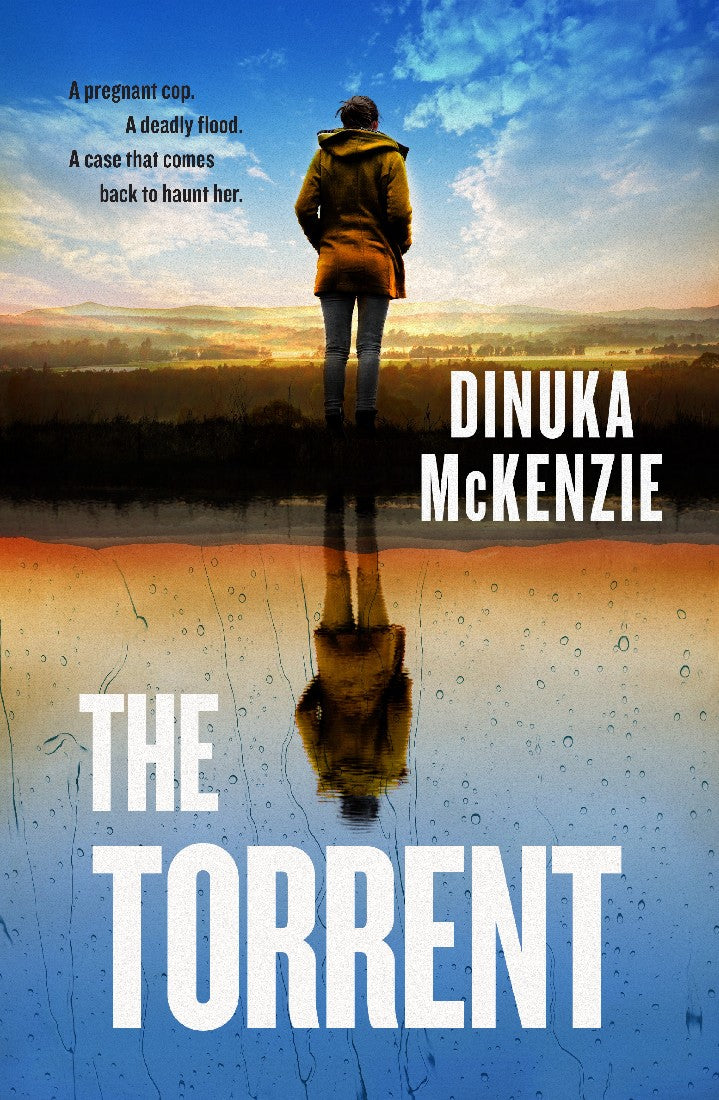
The Torrent
Dinuka McKenzie (Harper Collins Australia, available now)

Detective Sergeant Kathryn Aneesha Miles is just a week away from maternity leave when she is called to deal with a violent hold-up at a local McDonald’s. Very soon afterwards, she is pulled into an informal review of a closed case of a drowning in the recent floods, instigated by the victim’s mother. The Torrent, by debut Australian author Dinuka McKenzie, gradually uncovers how the two cases are intertwined in clever plot turns that are never too dramatic but build suspenseful tension.

The story is told mostly from Kate Miles’ perspective, but other characters provide backstory in flashbacks. Set in the fictional town of Esserton in northern New South Wales, McKenzie evokes a great sense of small-town suburbia: ‘A block on, he had reached the Sunshine Shopping Plaza, a sundry collection of shops clustered around an ageing Big W store.’ The descriptions also mark the landscape as uniquely Australian: ‘…she passed a ring of cockatoos, the bully boys of the bird world, raiding one of the external bins, picking through burger wrappers and discarded drink containers.’

Unlike many of its crime fiction predecessors, its version of small-town Australia includes characters from diverse backgrounds without any need to explain or justify why they are there.

The main character is half Sri Lankan. This is not seen as a complication (though others around her might see it as such), just a fact. We are shown Kate’s experience of the power plays and continual second-guessing that is part of being a woman of colour, and more specifically, a female detective of colour: ‘There was a slight insolence in his manner. Nothing obvious that she could put her finger on. Maybe it was because she was a woman. Possibly it was her colour, though she didn’t think so. He didn’t strike her as that kind of insecure.’ Incisive observations such as this litter the book, and McKenzie’s keen eye for human behaviour and social musings reminds me of the sharp insights of Liane Moriarty’s novels. Added to this, the main character is heavily pregnant, giving us a vulnerable, embodied detective—a contrast from the usual tough policeman character.

Australian crime fiction has received international acclaim, hammering a place for itself as a sub-genre that can appeal to a global audience. What is refreshing about The Torrent is that, unlike many of its predecessors, its version of small-town Australia includes characters from diverse backgrounds without any need to explain or justify why they are there. McKenzie is a welcome new addition to the genre.

— May Ngo

Latest

My God, It’s Full of Stars

Jennifer Down

Goodbye to the Body

Jack Vening

Who Can Afford to Be a Writer in Australia These Days?

Nina Culley