Don’t miss out—Our EOFY sale is ending soon! Browse discounts on all writing courses. 

Culture

Small Joys of Real Life, The Things We See in the Light, Lies, Damned Lies, My Body Keeps Your Secrets

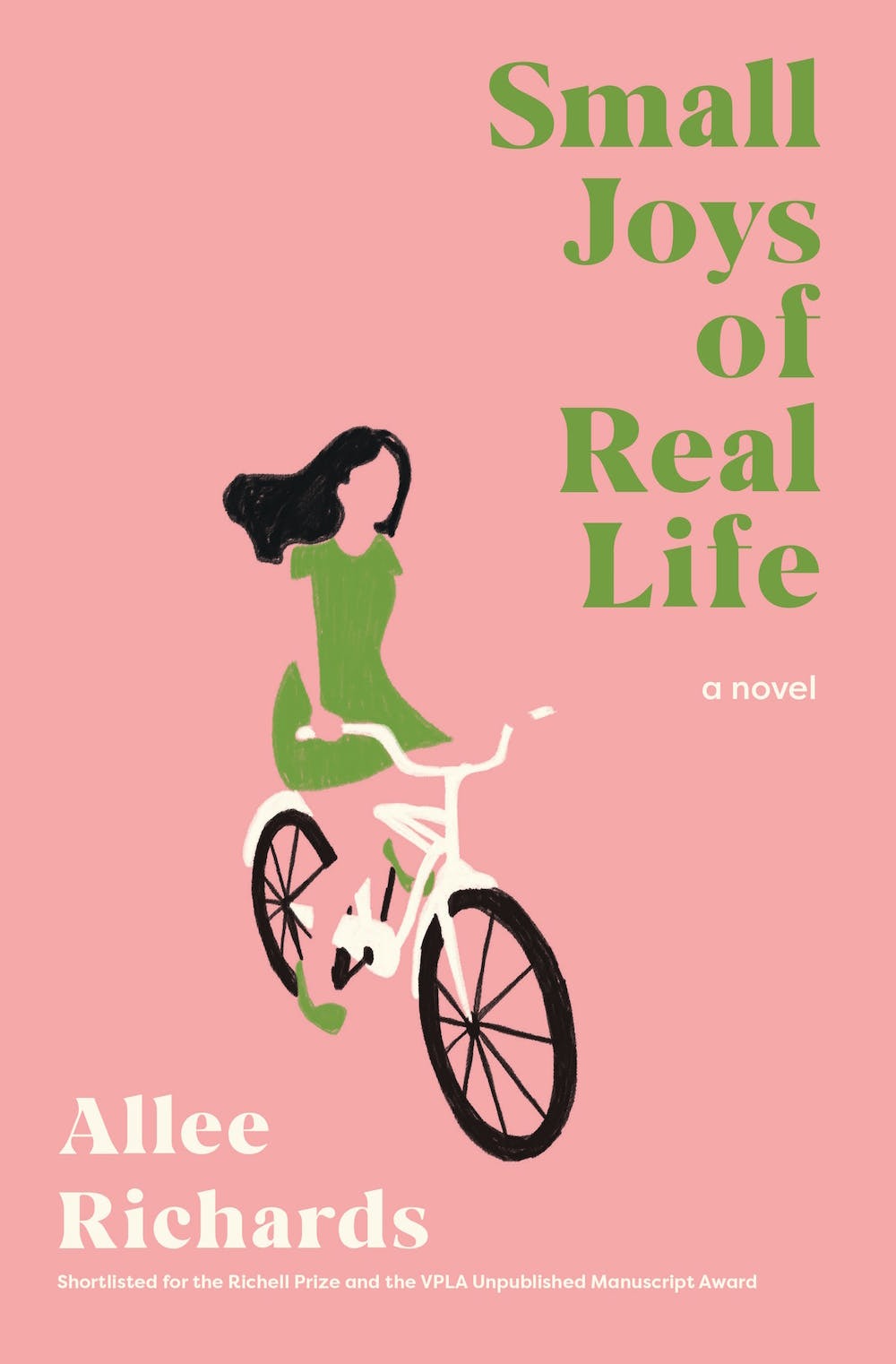
Small Joys of Real Life
Allee Richards (Hachette Australia, available now)

Small Joys of Real Life is our First Book Club pick for September—join Ellen Cregan and Allee Richards for a free online conversation event in partnership with Yarra Libraries on Tuesday 21 September!

Melbourne author Allee Richards’ debut novel Small Joys of Real Life begins with a startling premise. When Eva meets Pat, she hopes that a relationship will blossom between them. But soon after, Pat dies by suicide. As Eva reels from his death she learns that she is pregnant. At first she’s not sure what she wants to do: ‘Some women miss a dating scan because they don’t realise they’re pregnant. I realised I was, but I didn’t realise I was going to go through with it.’ Ultimately, she decides to keep the baby. Small Joys of Real Life is narrated by Eva as if she’s composing a letter in her head to Pat, bringing him up to date on everything that’s happened while he’s been gone. Richards paints a nuanced and memorable portrait of a character faced with a very strange and tragic set of circumstances. 

At a time where so many of us are faced with uncertainty about our futures, Richards’ novel reminds us how friendship can make difficult periods more manageable. 

Although Eva ‘speaks’ to Pat, she is aware and accepting of her reality: ‘I’m addicted to the fantasy that if we’d got on to the topic of suicide I could’ve stopped you. Even though I know that it is just that—a fantasy. Even if I could’ve stopped you, it’s not what happened.’ While Pat’s death is a central focus of the story, Eva barely knows him. Pat himself is almost a hypothetical person to Eva, which becomes apparent as she connects with people from his life.

Friendships are a central theme of this book. Parallel to the absence of Pat is the important presence of Eva’s two best friends, Sarah and Annie. Richards’ depiction of the rough patches in best friendship is spot on. In the very beginning of the novel, Eva supports Sarah through an abortion, only to reveal soon after that she is going to have a baby, which unsurprisingly upsets Sarah. Meanwhile, Anne goes through a hard break-up. Later Eva imagines her friends in a ballroom, ‘Sarah barrelling towards destruction and Annie with her shit together. Then they swap. As I picture them turning in circles again and again, the image grows bigger and bigger until the dance floor is infinite and this is what the rest of our lives are going to be—taking it in turns to fall apart.’  Despite many crises, when one woman is falling apart the others are there to help put things back together. 

Small Joys of Real Life is a tender and clear-eyed novel of millennial life. Richards successfully captures the quirks and anxieties of young Melburnians—bike rides on the Merri Creek trail, beers in Edinburgh Gardens, house parties in suburbs the characters will be priced out of in a few years, and the messiness of relationship breakdowns and career woes. At a time where so many of us are faced with uncertainty about our futures, Richards’ novel reminds us how friendship can make difficult periods more manageable. 

— Ellen Cregan
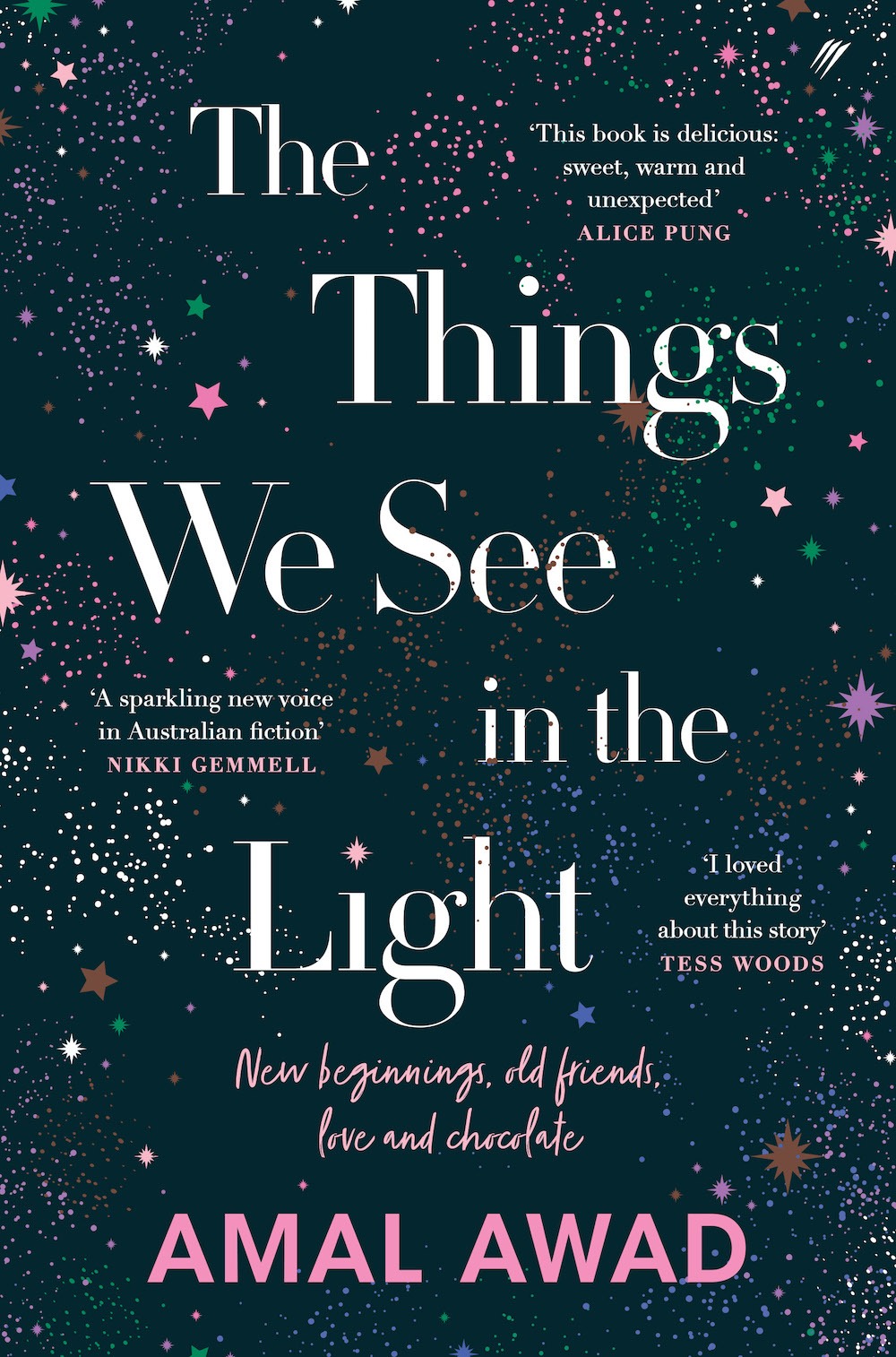
The Things We See in the Light
Amal Awad (Pantera Press, available now)

Friendships are a trope of the ‘Chick Lit’ genre, from Lizzy Bennet’s camaraderies to Sex and the City’s famous foursome. It’s often within friendships that heroines reveal the stronger, more fully-realised versions of themselves that we know they’ll be by the end. In Amal Awad’s The Things We See in the Light, the platonic bonds between characters feel more significant to the story than romance.

The novel opens with the protagonist, Sahar, standing outside an apartment building, contemplating her role in her friendship group. In her circle there are three archetypes: the imaginative dreamer, the life-loving wild child and the boring one. Sahar—a successful baker who married a man named Khaled and left behind her friends, family and a cake business to follow him to Jordan—believes she’s the dull one. But now, eight years later, she’s back in Australia without her husband, standing at her best friend Lara’s door, ready to hit the reset button.

In The Things We See in the Light the platonic bonds between characters feel more significant to the story than romance.

The story moves between the past and the present, filling in the gaps of the past years in Jordan while in the present, Sahar begins to rebuild her life in Sydney. With her parents now passed and her marriage over, she finds herself free to explore life without the expectations of others holding her back. At first, she’s thinks returning to Australia is change enough, but when she gets a job at a trendy Newtown café, her co-workers challenge her to try new experiences. These dual timelines are a nice touch, and the two stories unfold at a satisfying pace.

The Things We See in the Light is billed as a romance, but the story’s heart is the way Sahar grows into her own identity. The love story is, as promised, sweet but not central. Sahar’s friendships drive important change in her life. Arriving back in Australia, Sahar picks back up with her best Australian friends: the wild Lara and the dreamer Samira. Also added into the mix are new friends from work: pinup-dressing, burlesque dancing Inez, straight-talking queer ‘wog’ Kat, moody chocolatier Luke, and their strong-but-kind boss Maggie. In each friendship, Sahar finds the strength within herself to challenge her identity as the boring one.

It’s worth noting too that if you haven’t read Awad’s early fiction books Courting Samira and This is How You Get Better, you may feel like you’re missing some minor details about the friendship dynamics between the central trio—Sahar, Samira, and Lara—because the three books are linked. It doesn’t detract from the overall narrative and I came to this story without having read the others. Excitingly though, Pantera will be re-releasing these currently out of print titles as e-books in October. A testament to the characters and world-building in this book, I look forward to diving back into this friendship group again!

— Melanie Saward

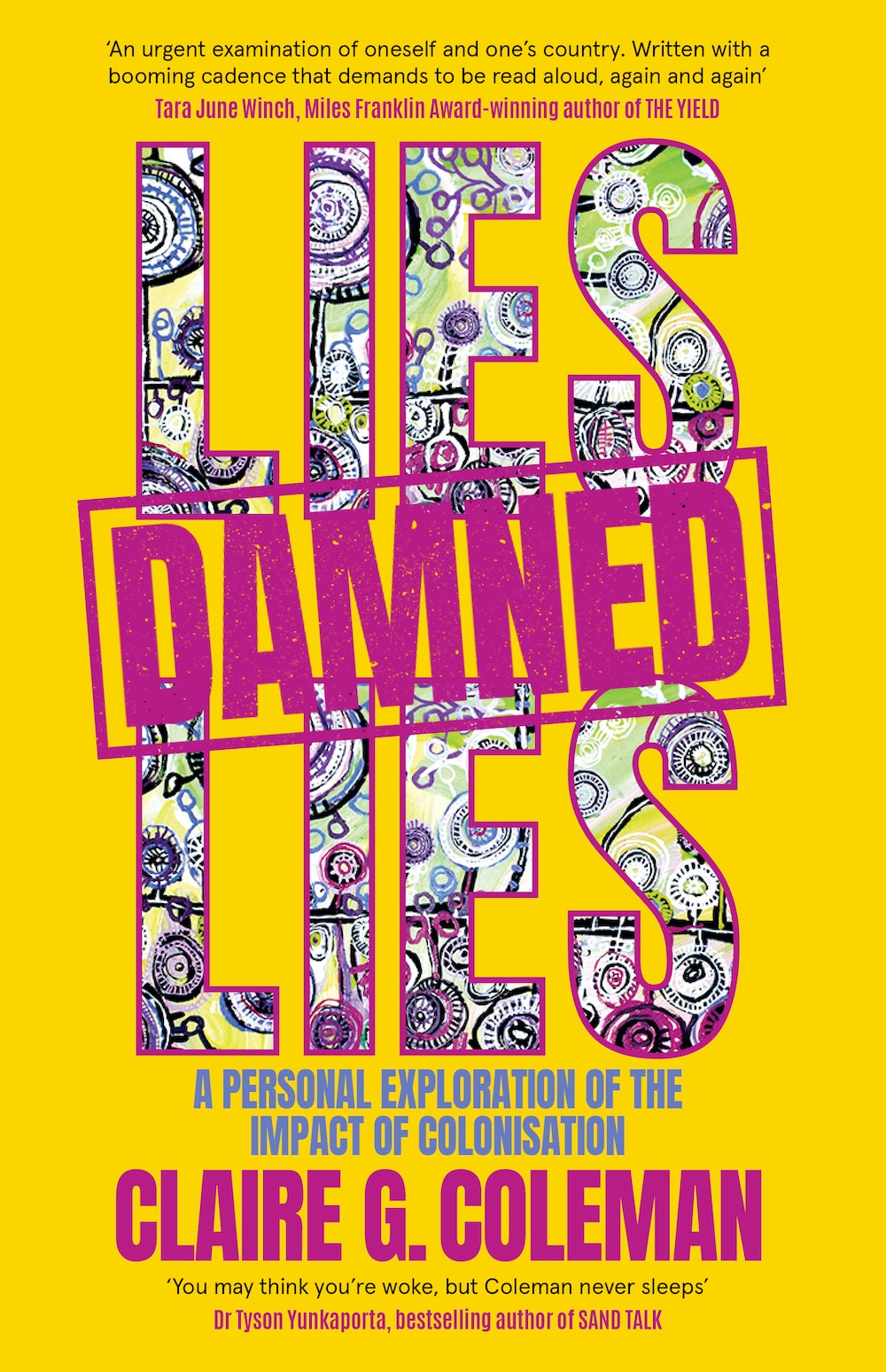
Lies, Damned Lies
Claire G. Coleman (Ultimo Press, available now)

‘Australia’s mythology is written in sand and the tide is coming in. The tide is coming in,’ writes Claire G. Coleman in her debut non-fiction book Lies, Damned Lies. While her highly-acclaimed books Terra Nullius and The Old Lie explored colonisation through speculative, dystopian allegory, in Lies, Damned Lies Coleman steps through the veneer of fiction to confront colonisation as a proud Noongar warrior.

With words as weapons, Coleman’s mission to slay generations of lies, propaganda and rhetoric to reveal the truth is personal. A child of the Hidden Generation, her family is working to reconnect to Noongar culture after her grandfather, trying to protect them from massacres and child removal policies, kept their Aboriginality a secret. Coleman’s ‘despair and anger’ guide her as she offers us a supercharged manifesto that calls for decolonisation, historical archives to be re-examined through an Indigenous lens and a return to a sustainable existence based on respect for Aboriginal sovereignty.

With words as weapons, Coleman’s mission to slay generations of lies, propaganda and rhetoric to reveal the truth is personal.

Coleman interrogates and debunks 230 years of fake history—from Captain Cook’s declaration of ‘Terra Nullius’ to recent events, including the Northern Territory Intervention where people were dispossessed of land with troop carriers, forced onto income management and corralled with alcohol controls. Anchored with research and determination, Coleman exposes the inherited propaganda of white supremacy and governments that force mob to ‘accept conditions that no other Australian would tolerate’, conditions that reduce life expectancy and are directly related to issues of intergenerational trauma, addiction, depression, mass incarceration, deaths in custody and youth detention.

Coleman questions ‘how long fake news can continue to propagate when left unchallenged’ and reminds us that in 2019 the current Liberal Government budgeted $48.7million to celebrate the 250th anniversary of Cook’s circumnavigation of Australia, an event that never happened. When elected leaders continue to fabricate fake history, what hope does this country have to end racism? Maintaining drive and purpose, Coleman also surveys ‘Australia Day’, walking on Uluru, the grog wars and the Coon cheese spin.

No serious political issue is unchallenged and if Coleman has her way, there will be no ongoing amnesia. In Lies, Damned Lies she capsizes the Cook myth and its ‘discovery’ culture of paternalistic greed, sharing a vision of Aboriginal ideology where ‘landscape, environment and everything that lives on is part of identity, a loved member of the family and something to protect.’  In the wake of inequalities and climate catastrophe, it’s a matter of urgency: ‘the tide is coming in.’

— Monique Grbec

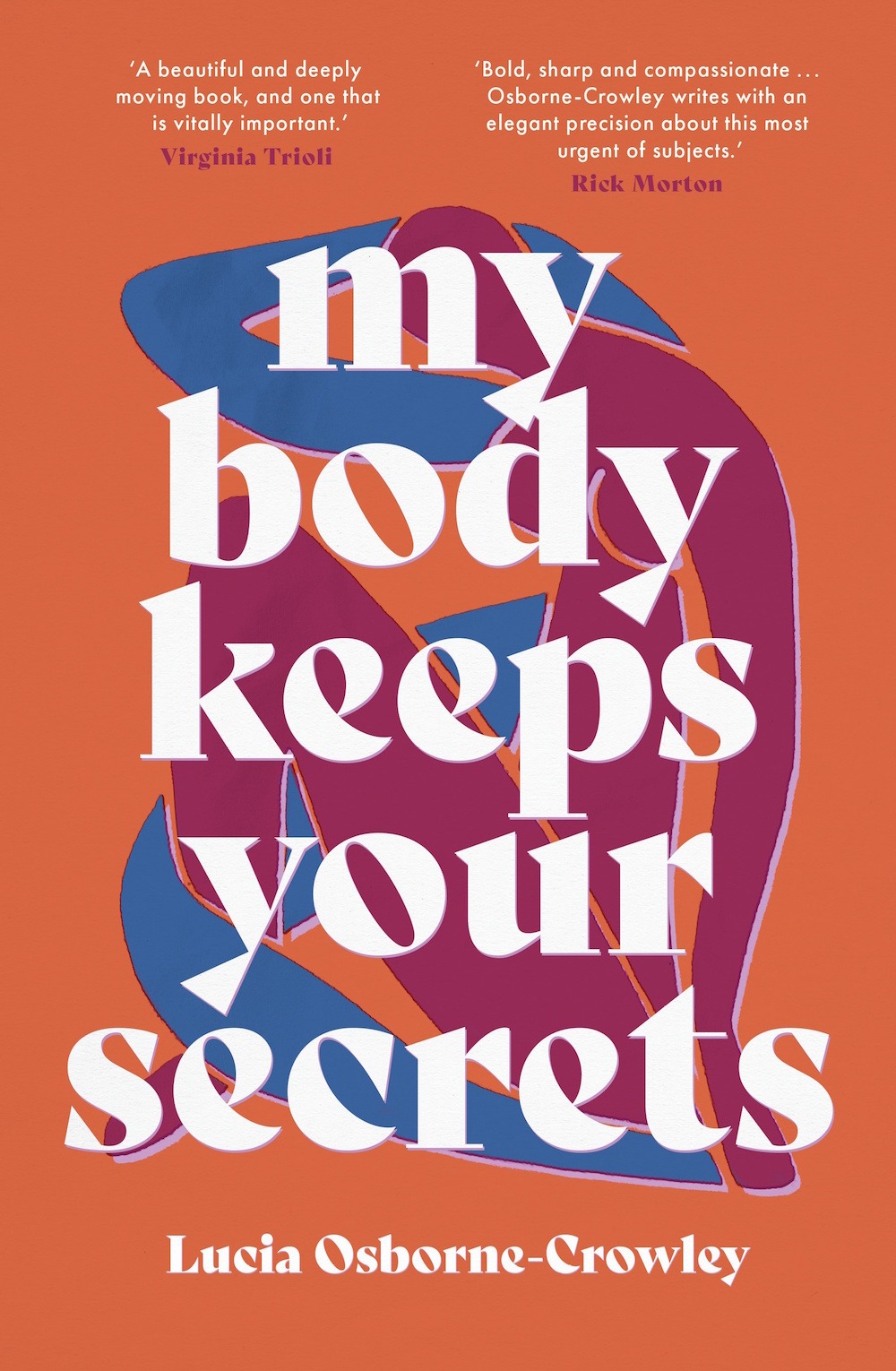
My Body Keeps Your Secrets
Lucia Osborne-Crowley (Allen & Unwin, available now)

My Body Keeps Your Secrets is a meditation on shame, trauma and the ways women and those of marginalised gender identities are forced to carry these heavy burdens in their bodies. Writer and journalist Lucia Osborne-Crowley presents a mix of research and memoir, shaped around the testimonies of women and nonbinary folk. Between their narratives, Osborne-Crowley weaves her own, describing how her personal trauma led to chronic illness and disability.

At the heart of this book is a strong message: It is through the stories of others that we can finally understand our own and render visible the structures of our own oppression. One interviewee credits Osborne-Crowley’s debut, I Choose Elena, with helping her to understand her diagnosis of vaginismus. Another explains how difficult it was to recognise her coercive and controlling partner as abusive because of how rarely this kind of abuse is discussed. In heartbreaking testimony, she describes her partner punching her in the face as a moment of clarity because suddenly her experience fit into a more familiar narrative.

There are passages in this book that will sing for trauma survivors … I see you, so I see myself. The pure magic of recognition.

While reading, I was frequently compelled to recite lines aloud, announcing them as the topic of conversation at the dinner table. Illness as structural oppression. Attention seeking as moral failure. The transmission of shame from one person to another. I turned sentences over in my head, marvelling at their truth or shirking their absolutes. Tension sometimes surfaced between the kind of shared experience that can make a reader jump up, hot with recognition, shouting ‘This! This!’, and an implied universality that can fall short of lived experience. Osborne-Crowley makes some claims I’m challenged to question: To what extent is pornography responsible for the rising cases of femicide during sex? Do women seek justice for crimes committed against them as a way of externalising trauma when the process itself is so traumatic? However, the day after I raised an eyebrow at Osborne-Crowley’s assertion that social media revolves around thinness and beauty as a conduit for success and happiness, a fit young influencer posted a ‘before-and-after’ pic bemoaning how much she had ‘let herself go’ in lockdown. I spent the rest of the evening with a scarf wrapped around my chin so I didn’t have to think about what my side profile looked like.

My Body Keeps Your Secrets works to broaden what is recognisable by representing it on the page. Osborne-Crowley herself draws from a wealth of resources, literary and academic, to help make sense of her experiences. She talks about her dog-eared copy of Leslie Jamieson’s The Empathy Exams, saying, ‘[Jamieson] had found something that yielded, and she had made something of it. And the thing she had made was in my hands, had been in my top drawer since I was twenty-two, and that was pure magic, and it was something worth staying alive for.’ There are passages in this book that will sing for trauma survivors in the same way Jamieson sung for Osborne-Crowley. I see you, so I see myself. The pure magic of recognition.

— Emily Clements

Latest

My God, It’s Full of Stars

Jennifer Down

Goodbye to the Body

Jack Vening

Who Can Afford to Be a Writer in Australia These Days?

Nina Culley