

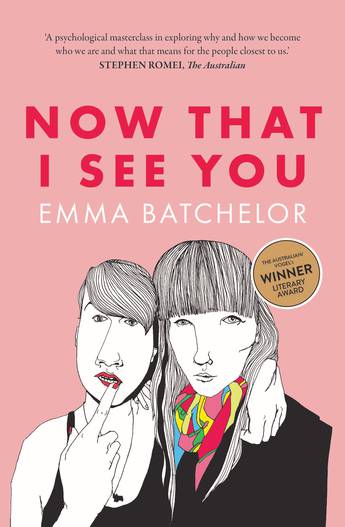
But it’s clear that Jess has not been gaslighting. The narrator reports to us that Jess keeps saying that they are overwhelmed by their transition and can’t support her emotional needs in this time, an expression she characterises as selfish. It is the narrator who refuses to let go despite Jess explicitly (albeit hesitantly) asking for time apart. Jess comes across not as abusive but as exceptionally patient and understanding while the narrator pinballs between various states of martyrdom. The level of projection the narrator excuses in herself is troubling. At various points throughout the book, she states:
Maybe I don’t love Jess as they are. Maybe I actually want them to be someone else. I am asking them to be someone who can love me. And that isn’t fair.
On the other hand, I don’t really want to move on from Jess because I want to continue to love them just as much.
After an entry where the narrator stops referring to Jess as They and starts using He: ‘Fuck. I forgot to use the correct pronouns. It is harder when I am upset or angry.’
In the middle of an entry where she is referring to Jess as He: ‘Fuck. Fucking pronouns. Even after everything they have done, they still get to be the good person because they are trying to help me.’
‘I know Jess is a broken person who is deeply unhappy and that this is something they will have to work through for themselves.’ Girl, they’re trying!
I don’t need a narrator to be a good person. I love an unhinged narrator in literature. Do I think Patrick Bateman is an admirable person, do I like the way he thinks or acts? No, but I think he’s one of the most well-constructed characters in modern literature. Batchelor’s narrator isn’t charming or alluring in her need for control, she’s delusional. The narrator reports: ‘Rachel [her therapist] told me that I’m an empath.’ And then later, again reporting from therapy: ‘Rachel said that it can be more straightforward to process some forms of grief, such as that resulting from the death of a loved one…Which explains why I sometimes wish Jess was dead.’ Very empathetic! By all means have your character behave irrationally, but go all out. Wallow in heartbreak, but at least make it thrilling.
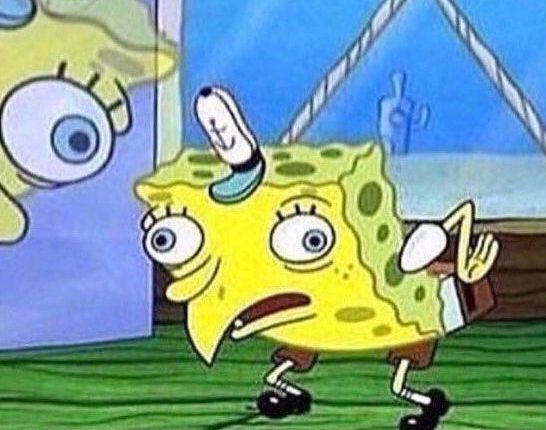
There are interesting ways to explore transness from a cis perspective, nuanced questions about the extent to which gender is essential to our ability to intimately know another person. But this book doesn’t do any of that—it just goes *SpongeBob meme*: tHiS is HaRD foR mE ToO!
*
Why am I referencing memes in what should be a straightforward book review? Why am I saying things like ‘go off’, ‘girl’ and ‘SpongeBob meme’? I think something is happening in literature and art that is a result of the internet and the internet’s assertion that anyone can do anything. In his column for Spike Art Magazine, Dean Kissick takes on mundane art and NFTs. Non-Fungible Tokens are an innovation causing ripples in the visual art world. Memes, images, and gifs are being minted as unique digital objects and being sold for millions of dollars in auction houses like Christie’s. Kissick writes: ‘Now everything can be traded or shared online…images and capital have become the same thing; welcome to the total financialisation of reality!’ NFTs have shown that something can have no formal artistic value but huge market value based only on the fact of it being uniquely ‘ownable’ on a block chain. NFTs are something for people who spend too much time online to trade and outdo each other with. Australia’s literary market is heading towards this as well. A book doesn’t necessarily need to be good, it needs to be programmable, which is to say it needs to be live-tweetable, which is to say it needs to appeal to internet discourse, which is to say it needs to emanate from lived experience and speak to non-specific feelings of trauma. Not that this is what all books in Australia have become, but there is a palpable sense that when publishers are considering the market, this is the thought process.
There are interesting ways to explore transness from a cis perspective… But this book doesn’t do any of that.
No one in Australian literature is at the level of rich of art traders, not that I know of anyway. We’re exceptionally small fish. We’re those Sea Monkeys you’re never sure even come alive (mine always looked like strands of banana floating in stagnant water). But a book like Now That I See You, and the Vogel prize in general, feels like the Australian publishing equivalent of an NFT. It is chosen because it pantomimes ‘edge’, it is a simulacrum of modern ‘issues’, it has no literary value but represents, compared to most debut publishing deals (and honestly, many non-debut publishing deals) a bloated financial value. Dean Kissick, again: ‘The most popular series of NFT collectibles are algorithmically generated. And what they reveal, compared to the rest of culture, is a broader and more prevalent trend of art and entertainment that has the uncanny feeling of having been made by algorithm, even though it wasn’t.’ If I could compare Now That I See You to a piece of visual art I’ve seen on the internet, it would be that meme from a couple of years ago with a picture that bears the caption: name one thing in this photo. It all looks like it should be recognisable, but it’s visual nonsense. It feels like someone fed Australia’s bizarre book market (namely, a love of accessible, easily digestible language, an unfounded sense of intellectual superiority, and an unsettling fervour for the idea that white people can be marginalised too) into an algorithm, and this is what it spat out.
Name one thing in this photo pic.twitter.com/zgyE9rL2XP
— 𝒅𝒖𝒎𝒃𝒂𝒔𝒔 𝒂𝒔𝒔 𝒊𝒅𝒊𝒐𝒕 (@melip0ne) April 23, 2019
One could make the argument that simplified literature is more accessible. But in making art accessible we haven’t actually de-institutionalised art at all, we’ve just made it so that anything can be an art object in order for anything to be ascribed a value and have its value blown out. Watered-down art, to me, is in many ways more classist than elitist, exclusionary art. To water down art both implies that if you put complexity into a work ‘the masses’ won’t understand it and also rather patronisingly implies that art must be dumbed down because everyone should like it. But this doesn’t eliminate class striation, it simply means the market expands for what can be sold at astronomical value, making it easier to create rich people or make existing ones richer. Isn’t it a good sign when people feel comfortable rejecting the importance of art in their lives? That symbolises freedom. That reflects the (against-all-odds) astonishing dignity of human life more inspirationally than some boring book or artwork that could have been a blog post or Instagram story.
*
In 2019 the Vogel didn’t award anyone; this was framed as being out of the judges’ ‘respect for the award and their desire to maintain the excellent standards of previous winning manuscripts.’ But while the Vogel loves to cite Kate Grenville, Tim Winton, and Andrew McGahan as writers whose careers it kick-started, many of the subsequent winners have struggled to build sustainable literary careers. Can anyone even say anymore why the Vogel exists? Why one of our richest manuscript awards goes to books that appear in big stacks in bookstores for a few months and then quietly slip from memory?
One could make the argument that simplified literature is more accessible. But in making art accessible we haven’t actually de-institutionalised art at all, we’ve just made it so that anything can be ascribed a value and have its value blown out.
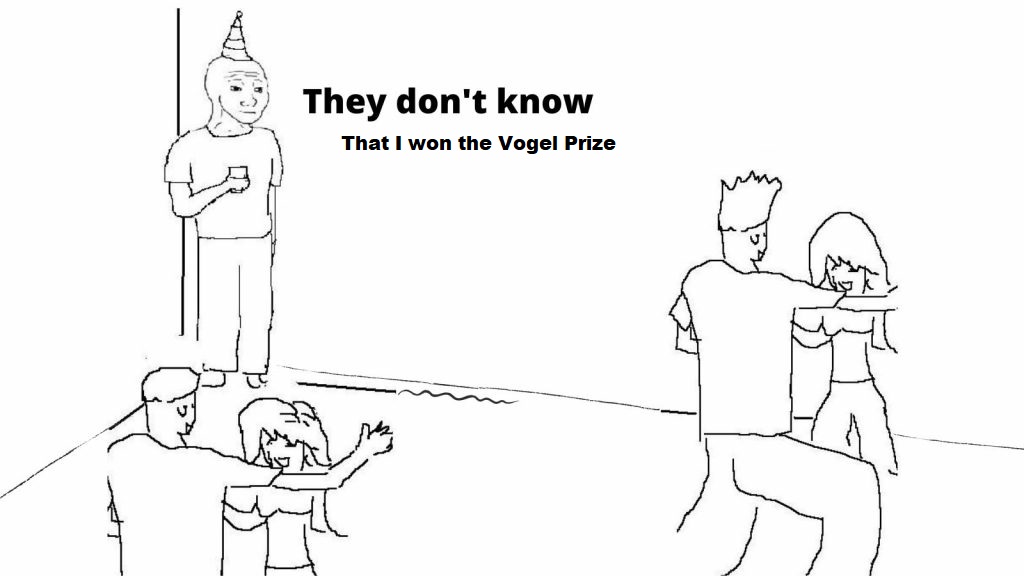
Outside of tertiary institutions there are very few opportunities for emerging writers to develop and learn. In America there are conferences like Tin House, Bread Loaf, AWP, where writers have access to workshops and craft talks from advanced career writers. In Australia, The Wheeler Centre’s Next Chapter Fellowship (of which, disclaimer, I am a recipient) has been a welcome recent addition to the landscape. It provides a financial ‘prize’ comparable to the Vogel but it also awards mentorships, sustained support, access to workshops and development. The focus is not on creating a product for market but rather evolving a writing practice. And the resulting books (such as Evelyn Araluen’s Dropbear and Adam Thompson’s Born Into This) have arguably offered more than recent Vogel winners. Young writers in this country are told to submit their work everywhere, hone their craft, participate in festivals, behave like a professional, all with little to no renumeration, and then the Vogel awards $20,000 to a writer it demonstrates no intention of developing. Bruh…
*
I don’t think this book is good. Yikes! A bland statement in a book review, for sure. But I don’t know how else to review it. It’s a product of the internet so I am responding to it as one. It reads like a Livejournal, like writing that doesn’t aim further than being a tool of self-expression and personal emotional exploration.
There is an email towards the start of Now That I See You. It goes:
Hello my love,
I’ve been doing a lot of reading this week, more of the things you suggested and other things I’ve found. I read one of the articles you sent me twice. It didn’t make me cry but I can see why it moved you. It was beautiful.
I’ve actually been finding it difficult to come across things from my perspective. There is so much out there for you, but not so much for me.
I get the sense that based on the novel itself and the press surrounding it, the author went through something in her life, couldn’t find books that got her experience exactly right, so decided to write her own. I think that is a valid exercise for someone experiencing turmoil in their personal life. People do this a lot and they publish it on the internet, which has become a place for us to wallow in a murky soup of emotions and traumas and privileges and occasionally smug successes, so it often has a readership there. As a book, as literary fiction, Now That I See You fails. Utterly. But I don’t see this as a failure of the author. I see it as the failure of a literary prize which has come to see manuscripts not as potential literature but as a product they can churn out with as little effort as possible.
I’m curious what the future holds for artistic marketplaces that have struggled to catch up to the internet and now, having exerted themselves entirely, can barely keep in step. It seems inevitable that the value of these works will collapse. I don’t understand the economics of that inevitability, but I do understand, or think I can understand, a certain moment in the life of the buyer. The moment where they encounter the thing they once bought and they can’t, at all, remember why. The initial enthusiasm, the adrenaline rush of buying something hyped, faded. I imagine this moment and I don’t picture anger or resentment directed at the artist or maker; rather, I imagine the buyer sort of shaking their head, as if becoming lucid after a stupor and asking: who sold me this? It’s an important question and it’s the publisher, not the author, who should answer to it.