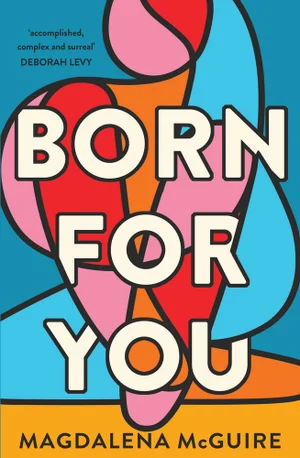
Magdalena McGuire plumbs the surreal and the mundane in her debut short story collection on the peculiar nature of maternal caregiving.
05 Oct, 2023
Share This Story
URL has been copied successfully!
Image: Unsplash.
Care work is an enduring feature of the motherhood genre. From Rachel Cusk’s A Life’s Work (2001) to Jenny Offill’s Dept. of Speculation (2014) to Kate Mildenhall’s The Mother Fault (2020), these ongoing concerns continue to be contemporised as the complex burden of women’s work remains unresolved. Magdalena McGuire pursues this examination in her short story collection Born for You. Familiar existential questions of ambivalence, isolation, care and labour echo across the collection—mothers stuck in suburbia, nursing homes, airports and Covid bubbles grapple with the demands of external worlds on their interior lives.
In short, vivid bursts, Born for You blends the surreal and ordinary to examine the material conditions of mothering against a backdrop of life-changing global events. Several stories are set in the Covid pandemic, such as the opening story ‘Pause, Remember?’ Here we meet Lottie, trapped with her teething ‘bubble-baby’, Arie, and her toddler son, Max. The extreme conditions of our recent reality are highlighted by Max, who after three months of isolation sings, ‘If you go to the playground the police will come and take you away.’
It is within this apocalyptic scenario that Lottie’s husband points out the family ‘can still order takeaway’. This is one of many absurd details where hotspots, closed borders and endless hours at Kmart feature as agonising reminders of Melbourne’s long lockdowns. An entire collection about this period could quickly become repetitive and tedious, but the short story format provides relief, particularly as the episodic narratives create breathing space away from the pandemic storytelling, making temporal and location shifts to places like Germany, Poland, London and Darwin.
Care work is an enduring feature of the motherhood genre.
Playing with the dynamic between domestic and political worlds, a Polish family in ‘Principles of Chemistry’ moves from Warsaw to Wałbrzych in the aftermath of World War II. Previously part of Germany, Wałbrzych becomes Polish territory as Germany is annexed by the Allied forces:
Poland was expanding, Germany was shrinking. These were the Recovered Territories, her father explained. Wanda mustn’t think they were moving to Germany. No, this was Polish land, rightfully returned.
The peculiarity of a shifting geopolitical landscape is not lost on the Jankowskis as they move into their chosen new home occupied by a German family. The two families coexist peacefully for some time, dividing the property between them under an unspoken fact that soon ‘the Woolfs would be expelled’. When the Poles have no sugar to bake a cake for a daughter’s ‘name-day’, Frau Woolf ‘unlock[s] the cupboard door’, offering sugar ‘for the girl’s special day’. The hospitality seems implausible given their opposing positions in the war and the zero-sum game in which one family’s gain is another’s loss. But the bond between the matriarchs stretches across the political and national divide, reflecting the interminable nature of mothering which they are able to share in this moment. Despite the extreme circumstances, the connection between the two is largely unaffected, pointing to the solidarity engendered by the motherhood experience.
In the more experimental and syntactically ambitious story ‘In Here’, McGuire creates enough of a distance from the domestic world to proffer alternative models of care work. A chorus-like voice emerges as the protagonist, representing an amalgamation of mothers speaks in incantatory, spellbinding language. These overprotective, witchy characters live inside a dim hospital away from the outside world:
We hunch our backs like street cats when our babies cry. We console them with half-remembered lullabies, sore breasts stuffed in gaping mouths, and IV-needled hands that pat their muslin-clad skin. With these comforts, our babies grunt and snuffle themselves to sleep. And us? We gift ourselves moments of jagged rest, always listening for the sounds of our babies’ in-out breath.
When a group of people called ‘The Others’ tell them ‘it’s time to come home’, the mothers are frightened of the outside, where there are ‘stampedes in supermarkets’ over toilet paper, sanitary pads and painkillers. Similar to the ghosts in Louise Erdrich’s The Sentence (2021), and the prophecies in Clare Pollard’s Delphi (2023), supernatural elements heighten the strangeness of parenting during the pandemic, upturning the romanticisation of childrearing. This also gestures towards collective care as resistance in an individualistic external world; inside the hospital, the mothers can protect their children as a communal ‘we’, but this is ruptured as they are dispersed into ‘I’s, isolated and separated to their own homes.
Born for You blends the surreal and ordinary to examine the material conditions of mothering.
Beyond these unusual, uncanny stories, familiar tropes pepper the collection. There are restless, crying babies; fatigued, self-reproaching mothers; and formulaic, cliched marvels, like in ‘Frog Song’ where the mother’s child ‘obliterates her with his beauty’. This familiarity creates a blandness in places, exemplified by the book’s closing lines where Lottie watches her sleeping children in wonderment:
Look at them. Look at the curves of their cheeks; look at their blistering beauty.
Yes. There is pleasure in this. There is pleasure in so many things.
This pedestrian description extends to the book’s depiction of middle class, white lives. Though largely racially and economically unmarked, the protagonists’ worlds in Born for You centre around childcare without interrogation of racial, economic or queer realities. For example, Rana struggles with a newborn during lockdown after choosing parenthood through sperm donation—an economic choice not afforded to all. Elsewhere, Lottie becomes overwhelmed while travelling with young children in tow. In the story ‘We, the Adults’, working actor Lorebei visits her friend Evelyn in New Zealand, bringing up her insecurities around career choices and ambivalence towards motherhood. And while no single text is responsible for examining the realities of all mothers, layering the collection with some more diverse representations of motherhood could have further distinguished McGuire’s work from a plethora of similar writing.
McGuire does, however, find the opportunity to satirise middle-class privilege. In ‘We, the Adults’, when Lorebei says ‘I can’t get over your place’, Evelyn responds that ‘it actually belongs to Randall’s parents […] they’re super, super generous’. Lorebei, on the other hand, still continues to live in the same house with her children that she house-shared with Evelyn as young adults: ‘Remember those giant cracks in the living room walls? The landlord still hasn’t fixed them.’ In this context, McGuire sets Lorebei’s life up as a working creative against wider current issues of housing security and class privileges. This broadens the collection’s scope and opens up character self-awareness that is not afforded to other protagonists whose desires and voices tend to blur.
Beyond these unusual, uncanny stories, familiar tropes pepper the collection.
The book’s movement between the mundane and absurd threads labour as a unifying condition of motherhood, undermining sentimental, conventional messages around parenthood. Born for You ends by returning to Lottie’s domestic reality, this time stranded at the airport. Arie, now a toddler, ‘screams, and throws himself on the carpet, wailing’. Max flies his toy aeroplane on and off an imaginary landing strip, explaining, ‘[O]h Mummy, it doesn’t need to go anywhere.’ Though Lottie is able to find ‘pleasure in this’, the circularity of the collection gestures towards an underlying anxiety that can’t seem to be quenched: Lottie is as stuck now as when we first met her.