Do away with blurbs? I don’t think so.


Bestselling novelist John Birmingham called this essay of mine the ‘finest work of literary opinion since Nietzsche said the New Testament was God learning to write badly in Greek’.
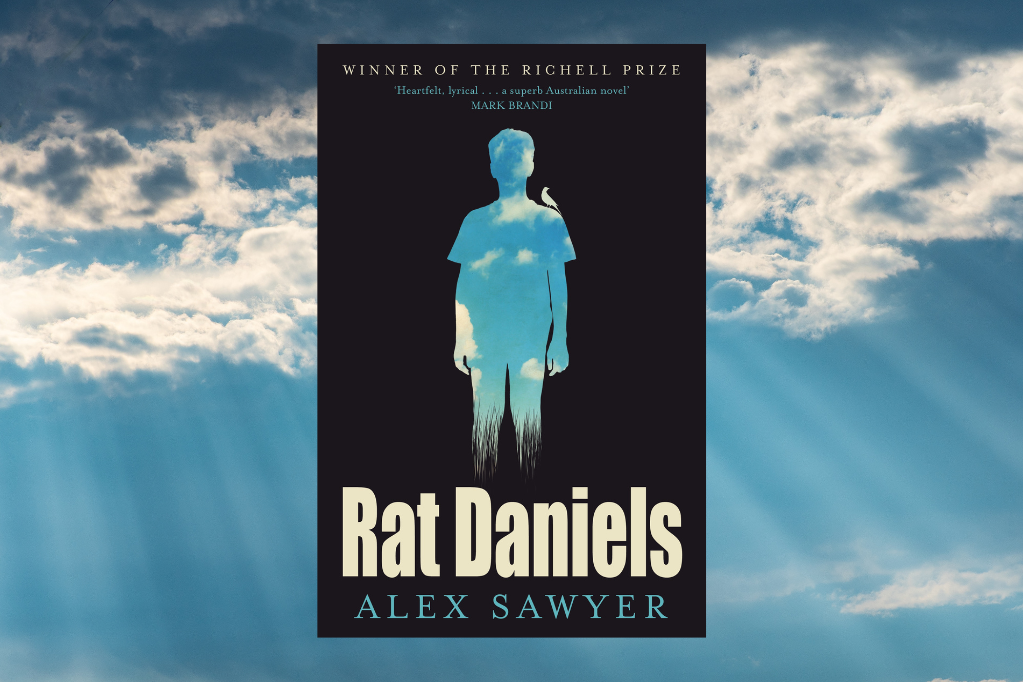
Now that I’ve established my literary mastery once and for all, I want to talk about blurbs, puffs, endorsements. They’re ubiquitous on covers in Anglophone publishing. Plaudits on the front, laudations on the back. Sometimes they’re massed together so tightly they look ‘defensive’, as Hemingway once complained.
But whether puffs are used sparingly or profligately, their ties to the actual experience of reading are often strained to breaking.
Subscribe to stay in the loop
Be the first to read new stories, discover publishing opportunities, and access resources. For people who love great writing.
To begin, many blurbs are just false. Did the big name author really go into raptures over the novel or was the job simply kicked down the hall to a smaller name? (I confess: I wrote John’s blurb for him.) And if they did write it themselves, was it done for cash or some other quid pro quo? ‘You scratch my back, I’ll scratch yours,’ wrote George Orwell to Cyril Connolly nearly ninety years ago, suggesting they froth over one another’s new books in print.
Because of this, all puffs are often taken to be mercenary fakes. Instead of arising from careful literary judgement, they come from commerce. Blurb as currency and cultural cachet: smug transactions and nothing more.
Puffs are often taken to be mercenary fakes.
This is an overly cynical view, which suggests an ignorance of working authors’ lives. We’re often anxious when we ask peers for endorsements because we don’t know how they’ll reply. With a polite no? With generic guff? With silence? There’s no huge golden buzzer that can be slapped for applause and confetti. And we’re even more apprehensive when we’re asked to endorse, because we don’t know if the manuscript’s any good. Writing matters to most writers, which is why we committed to the vocation in the first place. While we well understand the labour involved in writing a book (even a bad one), we don’t want to lie about art.
Still, I grant that plenty of blurbs are favours. This was one of the reasons given by Simon & Schuster’s publisher, Sean Manning, who recently announced that he’d no longer require his authors to seek puffs for their books. He said that the trade in endorsements creates an ‘incestuous and unmeritocratic literary ecosystem that often rewards connections over talent’.
Nepotism? In publishing? Never! Also, can I recommend this ghostwritten celebrity children’s book? The publicity pack was put together by an intern who’s living in her family’s third rental property while she works for free.

I can’t quibble with Manning’s criticism of publishing. Our average author is university-educated and living in a capital city—probably from Sydney or Melbourne. They’re more than likely a woman and probably white. Interestingly, this purely statistical person resembles our average publishing professional. This is more diverse than my discipline of philosophy, but that’s a low hurdle to clear. Publishing is a walled garden, and only a handful of writers and editors get to smell the honeysuckle.
But Manning also suggests that blurbs don’t really sell books, observing that many of Simon & Schuster’s best works had none at all. (He’s betting on online marketing instead.) I’m less convinced by this. Sure, there’s no evidence that puffs by bestselling authors always make books widely popular. In fact, not even books by bestselling authors are always widely popular.
But then we don’t need an absolute guarantee of sales or prestige to acknowledge that blurbs can play some role in commercial or literary success. Perhaps they get bookshop staff to take a second look at a debut and order more copies, or to suggests where these might best sit on shelves. Perhaps they nudge newspaper and magazine editors to have the book reviewed rather than left on the pile. Perhaps they give radio and television hosts a little something more to talk about confidently. Perhaps they make a reader pick up a certain book over all others. Publishing so often runs on perhapses like this—the industry is full to bursting with hallowed rites, hunches, magical thinking.
Nepotism? In publishing? Never!
In this universe of maybes, big names often matter. One blurb for the Australian edition of my book The Art of Reading was provided by Tara Moss, known for her bestselling crime novels. She didn’t testify to my scholarly genius. Her chief point was that my book was friendly for bibliophiles like her—educated, curious but not trained in philosophy. So the puff was less about quality control and more about market niche. Did it help beyond making the already-keen less cautious? I can’t say. Did it help that Tara was far more popular than I? Absolutely. So, while I doubt Simon & Schuster’s changes will be ripping down the bricks and barbed wire from around our literary estate, they might offer one less way for the connected to use their connections.
Yet endorsements from strangers or nod-in-the-green-room acquaintances can also be breathless hyperbole, prompting rightful mockery. I read one bestselling Australian novel blurbed as hilarious, intelligent, triumphant, big-hearted and so on. The book was plodding, superficial and seemed more calculating than kind. Clockwork fiction, ticking its way from the plot’s one to twelve; its thin characters turned obviously by gears and springs. It took skill and various artistic virtues to put together this little machine, but its puffs promised so much more than it was—or could ever be. These blurbs are supposed to make the works stand tall in the crowd—but everyone’s already wearing stilts of outlandish commendation. The praise reaches ever higher to stand out, its absurdity growing as it does.
This disease of deceptive hype is chiefly a symptom of capitalism. Publishing in Australia is dire in many ways: low pay, precarious jobs and funding, little public recognition. Patrick Marlborough put this neatly on Substack: ‘Being an Australian writer is a bit like being one of those buskers who paints themselves silver and pretends to be a robot, only you’ve spray-painted nothing below the waist and aren’t wearing any pants.’ (Yes, I know about bloody Substack.) Several independent publishers have been bought by much larger companies, which might mean fewer risks taken with local literature. Newspapers and magazines are commissioning far less literary criticism. In this atmosphere, commercial logic can easily overcome that of the arts.
Literature is not somehow beyond capitalism—as I observed earlier, it walks hand-in-hand with class and status. Yet good books, like all works of art, can be created and appreciated within the market without being sucked into it wholly. They have their own forms of aesthetic and moral worth beyond exchange or even use value. They can offer experiences for their own sake: subtle, suggestive, perhaps simply beautiful. They can speak to their own natural and cultural origins instead of sitting mutely on the shelf. The panting, dizzy puff is a sign that these kinds of artistic values are struggling—that advertising is shoving aside literature.
But even the most modest, clear-eyed blurbs offer no guarantee of reliability or relevance. This is because books themselves offer no such guarantees. The author doesn’t complete the text—the reader does. We pick up a series of dots, lines, curves and we make meaning from these marks. Yes, the author commits to a form and genre, to the words and their unique order. They decide when the work’s ready to be witnessed. But the reader must choose to turn these words into worlds—and how they’ll do so. Which passages will they imagine most fully, and with what atmospheres? With what rhythms will they slow or hasten their reading? How bravely or proudly will they explore what might sadden or shock them?
Good books, like all works of art, can be created and appreciated within the market without being sucked into it wholly.
There’s no perfect guide to reading any book; no definitive manual that tells the reader how it’s ultimately supposed to be understood. And if there somehow were, this manual itself would have no manual, and so on (criticism never ends; everything’s up for review). The reader can make a settlement with the text, deciding what it’s all about for now. But this negotiation can break down at any word. The reader meets the author’s freedom with their own. As Jean-Paul Sartre put it: ‘One does not write for slaves.’
Which brings us back to blurbs. Even the most trustworthy, truthful puff ought to mean very little for us as readers. Because our job is not to find some perfect certainty before we parse the first page. Our job is to exercise our liberty upon the text—to make our own minds up as we go, seriously and sensitively. As a reader, I say: take every blurb with a grain of salt.
As an author, I confess to tasting my own blurbs with more than a pinch of salt. But it feels good when a writer I respect praises my work. And it feels good to praise others honestly.
Does my satisfaction justify fraught, publisher mandated flattery? Nope. Ought this gratification guide your reading in any way? Not at all. But it’s a real compensation nonetheless for the toil of writing. And given the rusted chainmail wedgie that is a literary career, I’m wary of trivialising even the mildest, momentary contentment.