A fire roared in the hearth. Andrew took their wet coats to hang from the rack in the boot room, then steered Laura and Tilly towards the lounge. The house smelled of caramelised onions; Andrew had made pizzas, now cooking in the wood-burning oven next to the stove.
‘So, the party?’ he asked, accepting the collapsing gateau from Tilly’s outstretched hand. ‘Spooky?’
Tilly flopped down on the L-shaped couch, kicking off her sneakers. ‘A bit.’
She smiled at her father, and Andrew ruffled her hair.
He raised an eyebrow at Laura. ‘And what about you, my good wife? Have you sung for your supper this evening?’
Laura sat beside Tilly, savouring the warmth from the fire. ‘If you call supper cheap chardonnay and half-a-dozen Jacob’s crackers.’
Andrew leaned down to kiss Laura’s cheek. ‘I’ll take that as a no.’
She watched him move about the kitchen, humming quietly under his breath, his thinning hair standing on end. Andrew usually came to Laura’s local book events, but this time he had spent the afternoon working from home. Spread across the dining table were blueprints covered in scribbles and half-finished mugs of coffee. Laura wondered how the Zoom meeting went with the Gordon brothers; Andrew gave no indication. She would ask later, once Tilly was in bed, in case it was more bad news. Wind squalled at the windows, and a few stray branches from the climbing hydrangea slapped against the glass. Rain battered the roof. Andrew returned from the kitchen with a glass of syrah for Laura, a soda water for Tilly, and a small platter of antipasto. The pizzas would be ready shortly, he announced. They snacked together for a few minutes, Andrew flicking through Channel 4. ‘Something funny,’ Tilly said through a mouthful of tapenade.
In the end they settled on old episodes of Black Books. After dinner, Laura brought out her laptop and wrote a quick note to Anthea, a sign-off for the year, with thanks. She felt exhausted, though this was not uncommon after events where she had to be convivial with so many people. Putting aside the computer, she settled against the cushions, contented, and the flat screen on the other side of the room had soon narrowed to a small sphere of gilded light, while the canned laughter receded, as if banished to the bottom of a deep well.
Laura’s eyes snapped open at a loud bang. She sat up. ‘Mum,’ Tilly said, raising a lazy hand. ‘Was that the door?’
She and Andrew both had their eyes fixed on the television, clearly not intending to move from the couch.
Laura sighed. ‘I guess I’ll go investigate.’
The noise sounded as though it had come from the front of the house, and Laura lurched off in that direction, blinking and unsteady on her feet. Her mouth tasted of ripe tannins from the wine. Though it wasn’t far to travel, the hallway felt like an underground tunnel, with paintings and photo frames and side tables a blur as she guided herself towards the fan light above the solid oak door.
The flat screen on the other side of the room had soon narrowed to a small sphere of gilded light, while the canned laughter receded.
Eventually Laura reached the front, and when she drew back the door she was startled by the frigid air waiting to greet her on the porch. Two young male officers blinked nervously at her. Behind them sat a police car, its front beams trained on the pines lining the drive.
‘Mrs Townsend?’ said one of the young men. There were pimples on his chin. ‘Mrs Laura Townsend?’ He gripped the radio attached to his lapel as though it were the only thing weighing him to the spot. His fingers looked sore and chilblained, the nails bitten down.
‘Yes,’ Laura replied. ‘That’s me.’
The officers glanced at one another. The clear-skinned one removed his hat. His hair was very wispy and blond, like a duckling. ‘May we come inside?’
The officers had come to inform Laura that her parents, Eliza and Bruce, were dead. Their bodies had been found yesterday, somewhere in the Outback. Since Laura was their only registered next of kin, the authorities in Australia had contacted the British Consulate, who in turn contacted the local constabulary. Thames Valley had received the call an hour ago.
‘I’m afraid we have no further details,’ the blond officer told her. ‘We’re simply here as a community liaison. The bearer of this bad news.’
They had gathered in the lounge room. Laura sitting beside Andrew on the couch, the policemen standing before the fireplace, more in ungainliness than formality. Tilly wasn’t there—Laura supposed Andrew had told her to go to her room, but she may well have been lingering in the hallway. Laura stared at the policemen’s chunky shoes, and the faint steam rising from the backs of their trousers. She hadn’t been able to speak since they arrived; she could barely hear what they were saying now. It was as though a shutter had fallen, or a curtain on a stage. It had come down noiselessly and painlessly, but it was a collapse nonetheless. This must be what shock feels like, she thought dimly, for she wasn’t scared, or tearful, or particularly sad. She felt immune. It was a curious, almost empowering sensation, like she could have taken off for a half-marathon in the bucketing rain and returned unscathed.
‘They’re dead,’ she heard Andrew say through her blocked ears. ‘Are you sure?’
‘Yes, sir,’ said the blond one. ‘We’re very sorry.’
‘Mm, yes, very sorry,’ his colleague affirmed. Neither of them looked at Laura.
‘How did they die?’ Andrew asked.
A stricken look passed over the officers’ faces. ‘We don’t know.’ ‘But someone killed them, you’re saying? Oh my god. They were murdered?’
‘I’m afraid I can’t answer that either, sir. The investigation is ongoing.’
Laura put her face in her hands and squeezed her eyes shut. Her fingers felt cool against her hot skin. An image of her parents, standing on the other side of a sun-drenched room, took shape in her mind. How could they be dead? She thought about the last time she had spoken to them. It had been in August, when Laura suggested a visit to Australia. The conversation had not panned out as she’d hoped it would. That memory would stay with her forever, she realised. That the last time Laura had spoken to her mother, Eliza had hung up the phone on her.
Eventually she sat up. She wanted a cup of tea. Laura knew this wasn’t an appropriate response, but she didn’t know quite what else to do. She looked to the blond officer, who had a waxy complexion and dark circles beneath his eyes, and thought about asking him to flick on the kettle.
He was checking his phone. ‘We’re expecting a call from the consulate in Australia.’
‘They have been liaising with detectives in, er, Queens Land,’ said the other. ‘They’ll provide you with more information on the scene, as well as any updates in the investigation.’
Laura gave him a weak smile. They had probably never done a death knock before, or very few. She wondered how long they had each been in the force. Six months, a year. Boys, really, only a handful of years older than Tilly. The blond one’s uniform was a poor fit for his angular frame, his hat too wide and with the habit of slipping over his eyes. His gaze kept darting about the lounge room, and every now and then he squinted at the bright lights in the kitchen, pursing his lips as though he needed to speak but had forgotten his lines.
‘Ah,’ he suddenly cried, waving his vibrating phone with pantomime relief. ‘At last.’
He spoke for a minute or two with his back to Laura. Beside her, she sensed Andrew, and his warm hand on her knee, twisting on the couch every now and then and taking deep breaths.
‘All right,’ said the blond officer, pivoting to Laura. ‘Would you mind . . . ?’
‘Oh. Yes?’
Laura took the phone and proceeded to talk to an Australian woman in Sydney who wanted to confirm her identity. Date of birth, maiden name, passport number—which had Andrew off scrabbling through the bureau in the den. The whole thing was ordinary; the woman didn’t even offer any condolences. Laura preferred it that way. It distracted her from the feeling that her conscious self, the intellectual, thinking part, had left her body and was floating off somewhere near the ceiling. There was a lot of clacking and tapping at the end of the line, and a weird, whistling delay between Laura’s replies and the woman’s next question. She had the kind of blunt voice that sounded exasperated but probably wasn’t, and she breathed loudly into the receiver. Laura imagined her name was Pat. Eventually she was told that the detective leading the investigation in Brisbane was on the other line and Laura could now speak to him directly.
‘Well, I . . .’
Pat patched her through. While the phone rang on the new call, Laura watched the young officers and Andrew, who had now migrated to the kitchen. They spoke together in a quiet, amiable way, and Andrew wiped his nose with his woollen sleeve.
She wondered how long they had each been in the force. Six months, a year. Boys, really.
The detective, a man named Sandretti, answered. Unexpectedly he had a lisp, an endearing characteristic that must have served him well when dealing with bereaved relatives, softening the brute nature of their conversation. He explained to Laura that he was currently in Charleville in central Queensland, more than seven hundred kilometres west of Brisbane. It was the largest town before the desert plains began on the road to the Northern Territory. He had been flown in from the city to assist the local police.
‘Your mum and dad were found in a place called Hell Hole Gorge National Park. It’s desert country, the Outback. Do you know it?’ Sandretti asked.
Laura stared at the orange flames of the fire. Blood shrieked through her temples. ‘No,’ she breathed. ‘I’ve never heard of it.’
‘Your parents never mentioned it?’ ‘Not that I can recall.’
‘Travellers, though, were they? Keen on the Outback.’
An image of her father swatting a mosquito popped into Laura’s head, the smear of bright red blood across his thigh like a flourish of Japanese calligraphy. ‘Not particularly,’ she said.
‘Mm.’ Sandretti sounded disappointed. ‘Well, it’s more than two hundred and fifty kays north-west of my position here in Charleville. So, yeah, a massive drive from their place in Paddington. Accessible if you’ve a decent vehicle, but still remote.’ Laura’s eyes strayed to the coffee table in front of the couch.
On top of Elsie de Wolfe’s The House in Good Taste was a postcard from her father. Bruce sent them to Tilly now and then from overseas locations, never addressing Laura or Andrew as though it were a private communique, which recently had begun to sting Laura with the slimmest thorn of jealousy. This one showed off the colourful tiles of Escadaria Selarón in Rio de Janeiro, and in his spidery scrawl on the back Bruce had written: Counted 215 steps to the top, well worth the effort to climb. Laura took a deep, shuddering breath, then smacked a hand over her mouth to staunch the wail she felt pitching up her throat.
‘Mrs Townsend? You still there?’
Laura straightened. She gave her head a brisk shake. ‘Yes, I’m here. But tell me, please. Do you have any suspects?’
‘Suspects?’ Sandretti sounded surprised. ‘Oh no, Mrs Townsend. I’m sorry, I should have made that clearer from the start. Fatalities like these always trigger an investigation. But after my initial inquiries, I’m not treating your parents’ deaths as suspicious. In fact I’m finishing up in Charleville this morning and flying back to Brisbane to write up the case from there.’
‘I see.’ Laura wasn’t sure whether to be relieved by that or not. ‘So what do you think happened?’
Sandretti made a noise down the phone, and Laura pictured him leaning back in his chair, rearranging his feet on the desk, perhaps taking a fortifying swig of coffee.
‘Well, here’s what we know. Eliza and Bruce left Brisbane in a hurry,’ he said. ‘Drove through the night and into the next morning. Brought along very few supplies, and no satellite phone, which you really need in these parts for safe travel. They spent the next night in Charleville, at the Hotel Corones, then went on to the gorge the following day. They were alone out there—there is no evidence of any other campers during their stay. Some Germans found the bodies when they arrived at the site yesterday. Your dad was in the tent, but your mum . . .’ Sandretti paused.
‘Yes?’
‘Well, she was found below an escarpment a few hundred metres away. It appears she had a fall into the shallows below. It’s quite a way down, you see. Early indications are that she drowned in the water.’
The edges of Laura’s vision dimmed for a moment. The room and everything in it began to slowly rotate. ‘She drowned?’ she whispered. ‘All that way inland?’
‘Mm,’ said Sandretti. ‘Not something you hear all that often out here. We’ve had the forensic team out to examine the scene, but there’s nothing to suggest foul play.’
‘And Dad—what happened to him?’
‘We think your father passed away first. A heart attack, most likely.’
‘Oh, Dad. How . . . awful.’ Laura let out a slow, shaky exhale. ‘And Mum after that?’
‘Yes, probably soon afterwards. We found a camera on the escarpment belonging to your mother. It seems she took the last photo at around seven o’clock that same evening. We can’t be sure what caused her to fall. It might have been something sudden too, like her heart or a stroke. Perhaps brought on if your father had an episode in the tent. Or it could have been the exposure.
‘Well, here’s what we know. Eliza and Bruce left Brisbane in a hurry,’ he said.
Cracked forty-five degrees on Thursday and they’d been at the site all day. Sun that intense can be lethal. . .’
Laura pictured heat coruscating off the ancient red rock, a soundless desert backdrop.
‘But what were they doing out there? They were so far from home.’
‘It’s a curly one, that’s for sure,’ Sandretti conceded.
‘A curly one?’ Laura gripped the phone, belligerence rising. ‘Is that the official police line?’
Laura heard Sandretti cough. He was probably running a hand through his hair. Short and grey, she imagined. When he spoke again, his voice was quieter, further smoothed out by the lisp, which did half the work of placating her.
‘I appreciate you’re not getting many answers right now, Mrs Townsend, and that’s really difficult. I hope in the next day or two that I’ll know more, and we can better understand what brought them out here. When I’m back in Brisbane I’ll investigate further. This will be useful in building a fuller picture of your parents’ movements, and their states of mind before they left. By the way, was their GP still Margaret Leong at the Red Hill clinic?’
Laura clenched her fist, nails digging into the soft flesh of her palm.
‘I’m sorry, I’ve no idea.’
‘No worries. We’ll get that confirmed elsewhere.’ There was another noise down the line, the sound of a car door slamming. Sandretti must have been on the move. ‘For now, you just need to know that cases of unusual or unexplained deaths such as these are always referred to the coroner. So, once we’ve submitted our report, the coroner will review the evidence and make a determination as to whether there will be an inquest.’ He paused. ‘You’re in the UK, aren’t you?’
‘Yes,’ Laura murmured, her eyes drifting back to the dark window. The rain had stopped. The house was very quiet.
‘I’m sorry this has happened so far from home. But I’ll keep you updated on the coroner’s report and any other developments that may arise in the meantime,’ Sandretti said. ‘We’ll speak again, perhaps in person at Roma Street.’
‘I’m sorry?’
Someone else was talking in the background, and Sandretti’s voice for a moment became muffled as he replied. Then, clearer, on returning to Laura. ‘Well, I just assumed, that’s all. That you’ll make the trip back. To Brisbane. To collect your parents’ effects, and organise other matters.’
Stones crunched underfoot, the caw of a lonely bird. Laura could almost feel that throbbing sun.
‘Oh, yes,’ she murmured again. ‘I suppose I will.’
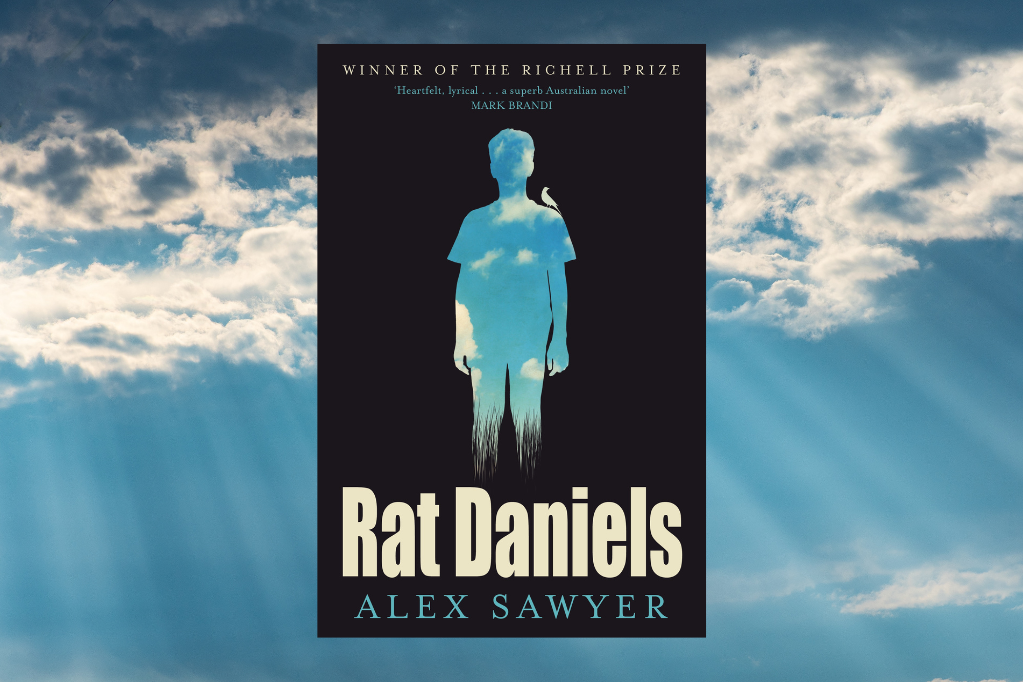
This is an extract from The Visitor by Rebecca Starford, published by Allen & Unwin, and available at your local bookstore.