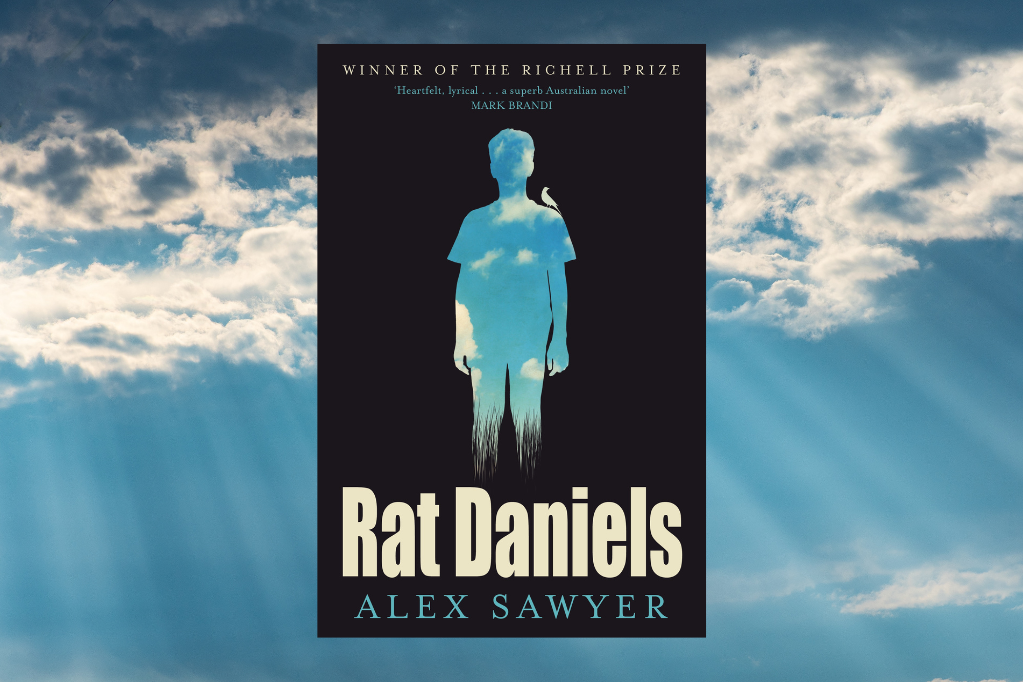
RF Kuang’s blockbuster Katabasis is a reminder that the modern university sector is something of a hellscape—but it doesn’t have to be this way.


Listen, no one fetishises academia more than me. I watched the movie Matilda when I was a child, and much like the main character, I found that the only good to come out of my abusive upbringing was that, because I was smart, libraries became a kind of sanctuary. Intellectual accomplishments were comforting; they offered me the illusion of control and a means to acquire validation I was otherwise sorely lacking. I was, in other words, doomed from the start.
At seventeen, I fantasised about enrolling at NYU, even getting partway through the application process before learning that one needs money to do these sorts of things. Later, as an undergraduate at the University of Sydney and vice president of the History Society, I used to conduct campus tours for incoming students. I had put together a guided walk based on research I’d done at Fisher Library, a place I visited throughout my studies at least twice a week for ten whole years. When I lived in Europe on exchange, I hefted my little tote bag emblazoned with the Jorge Luis Borges quote ‘I have always imagined that paradise will be a kind of library’ to many university campuses. I liked to go to one in every city I visited during this time abroad to palm old books and take dorky photographs of myself in places like the Old Library of Trinity College or perched next to a statue of Mark Twain sitting on a bench. In 2022, I got my first role lecturing and went out and bought a three-piece suit.
Listen, no one fetishises academia more than me.
I am, in short, exactly the kind of person who should find the protagonist of RF Kuang’s latest, the fantasy novel Katabasis, relatable. Alice Law is an ambitious graduate student of magick, studying at the University of Cambridge (one of four universities that RF Kuang herself holds a degree from—the others are Oxford, Yale and Georgetown). Kuang is, as her degrees might suggest, smart—she has written a book that caters to fans of dark academia. This is a thriving subculture, made popular by Tumblr and now TikTok, driven by romanticising higher education, but with some sinister gothic twists. Fans like scholarly aesthetics—preppy clothing, dark wooden interiors, an impractical amount of candlelight—think Donna Tartt’s moody campus novel The Secret History, with some Hogwarts nostalgia thrown in (pre-TERF meltdown). The setting and premise of Katabasis are peak #vibes for the crowd that this novel is marketed towards. Indeed, when I turned up to a literary event recently, a silent reading retreat—eager book-nerds splayed out on a rooftop balcony in the sun, drinking tea—I was one of four people reading this book.

Kuang, as her degrees also suggest, has a lot to say about the state of modern academia. Her preceding novel, Yellowface, published in 2023, was a biting and entertaining take on the publishing industry and identity politics; this time Kuang draws on her ample experience in the university sector to satirise another at times opaque world. Although Katabasis and her 2022 novel Babel share similarities—they are both set in Oxbridge and combine her interest in academia with a flair for producing page-turning, intelligent but playful fantasy—the criticisms that Katabasis offers are not nearly as sombre as its predecessor’s charged consideration of race and colonialism in the sphere of knowledge production.
Katabasis keeps it light, but the rebukes (I am qualified to confirm) are on point. Despite the fictional setting, Alice Law grapples with real obstacles faced by early-career researchers: she feels pressure to work with a lauded professorial advisor; she is exploited by said advisor whose impossibly high standards creep towards abusive; job prospects after she completes her doctoral studies are limited and competition for posts is vicious. As a woman of colour, these obstacles are compounded by racism and sexism in the academy.
Like Alice, I also made below minimum wage as a grad student, at the beck and call of an extremely esteemed scholar who once called me into their office to tell me that I yawn too much and that I must stop. Another time they had me take the bus to their house so I could deliver, by hand, two heavy boxes containing three hundred exam transcripts. The same advisor once asked me if I spoke English as a second language (‘Is that why your writing is so poor?’). I, too, experienced the kind of longing and determination to land one of these ever-dwindlingly available tenured roles that, in Alice’s case, drives her—literally—into the depths of Hell. She is there to retrieve her advisor, Professor Grimes—it is only he who can write the recommendation letter that will get her a job. Hell turns out to be a university campus—travelling through its various courts, she and her fellow graduate student, her competitor and romantic interest, Peter Murdoch, encounter many damned souls undergoing twisted academical punishments like attempting to complete dissertations on impossible topics like ‘What is the good?’ and always coming up short.
Kuang is, as her degrees might suggest, smart—she has written a book that caters to fans of dark academia.
It’s true, the modern Australian university is something of a hellscape. Since Covid, more than 20,000 jobs in the sector have been lost. Declining revenues have been worsened by government policy on international students as well as deleterious funding changes like the Job-Ready Graduates Package. As a swath of institutions across the country implement further rounds of restructures, an additional nearly two per cent of the existing workforce will be lost in the coming months. Redundancies are implemented coldly by external consultants who understand little about how universities operate, and even less about how to mitigate distress among staff who face months of precarity and uncertainty about their futures. Entire disciplinary fields are being disestablished before our eyes, especially in the humanities. Colleagues step into hallways to cry and then have to compose themselves enough to teach classes to students who, faced with declining staff-to-student ratios, experience palpable waning in teaching quality and burgeoning class sizes (when they’re not being arrested for exercising their right to protest). Beset by underpayment scandals and accusations of corruption amongst higher-ups, a senate inquiry examining governance at universities released an interim report in September calling for pay caps for vice-chancellors and senior managers (who earn an average salary of over one million dollars). Don’t get me started on the incomprehensible dissolution of Meanjin, ostensibly for ‘financial reasons’, and what it signifies for this country’s cultural production. This neoliberal state of affairs has spawned considerable public discourse about the reform prospects of the modern university, the darkest academia of all.
Kuang nods briefly to some of these concerns, making mention of conservatives in power and their funding cuts. The book uses it to explain why fewer jobs are available to promising magicians: ‘Most schools had stopped offering magicians tenure when it became apparent that their researchers were more interested in the trivial and esoteric than producing anything useful or profitable or at least somewhat resembling the next nuclear weapon.’ These words bear uncanny resemblance to comments Scott Morrison made in 2022, reported in the Campus Morning Mail, about academics who research things that are not ‘remotely interesting to anyone’ while ‘walking around in gowns and looking down on everybody’. To this end, Kuang captures something accurate about the political economy of higher education and institutional broken promises: universities should not be tied to weapons manufacturers, although this is a lucrative profit stream for a flagging sector. And, yes, it would be nice if there were more secure jobs.
Subscribe to stay in the loop
Be the first to read new stories, discover publishing opportunities, and access resources. For people who love great writing.
What Katabasis has to say about the modern academy—if this commercially viable blockbuster is saying something—is mostly worthwhile. University is no Paradise. You glean this by following Alice’s character arc, which is a relatable one. She begins the novel ambitious and willing to sacrifice almost anything for a professorial post, yielding half of her lifespan in exchange for entry into Hell. She wants it so bad and believes she can get it, as long as she wakes up earlier than everyone else, goes to sleep later and eats more shit than anyone else. She refuses to join the cohort of ex-academics who choose to pursue ‘alt-ac’ pathways, believing wholeheartedly that ‘the life of the mind, unfettered from commerce, [is] the only kind worth living’. When she meets Elspeth, a fellow graduate student in Hell, Alice is aghast to learn that her new acquaintance wants to return to the land of the living not in order to finish her graduate program but simply to savour a cup of hot tea. This is one of many simple pleasures that Alice has been denying herself, living off too little sleep and cold cheese toasties. I myself used to sit hunched in the library eating unheated spaghetti bolognese for breakfast, too time-poor while writing my thesis to make a trip to the microwave. When I advise my students now, I tell them the thing I regret most from my days as a student is that I did not love myself more, that I worked punitive hours, that I did not eat hot food and that I focused too much on Doing and not enough on Being.
Some of us have invested too much of our identities into our careers. Some of us have felt short-changed or duped because we thought we were entering into a particular kind of pact and now feel betrayed. My friend Andy, an academic, gives a great lecture on this topic, citing studies that show that those who become the most disillusioned with neoliberal institutions are those who hold strong pre-existing beliefs in meritocracy. In the novel, this insight is represented by Elspeth, so shattered by the grief of this realisation that nothing is ever enough that she has taken her own life. This materiality is equally applicable to academics as it is to those in other professions, creative or intellectual, that prize individual excellence.
Entire disciplinary fields are being disestablished before our eyes, especially in the humanities.
Some of us in these fields might have held the expectation that those of us who are bright, credentialed, skilled and worked hard could get good jobs. Now, we confront the fact that not even these pieces of armour and distinction are protective enough. This understanding is really a comprehension of the changing relationship between skill and class under neoliberalism. White collar workers form part of a new precariat, with casuals and other insecurely employed staff members at universities suffering the same indignities experienced by labourers toiling in call centres or on factory floors—our work is not special, our individuality does not matter, we are not paid well, we are highly casualised and we are replaceable.
The thing is, I actually have one of these jobs, one of the ones that Alice covets. It should be noted that the Australian university system lacks formal tenure. However, I do have a continuing lectureship at a university, a very rare and precious thing. My colleagues and I, folks who are lucky to have scraped these positions, sometimes talk about how we feel like we caught the last boat leaving a sinking island or hopped the last rung on the last ladder as it was being pulled away. We reflect on the fact that we’re meant to feel grateful, but mostly we feel guilty, because we are one of the few survivors. And our experiences of job satisfaction are mixed: some of us, like myself, are fairly contented. Others have to confront the fact that they can’t stand the working conditions, in particular the unmanageable workloads, even though they thought they would never want anything other than this. Others still do leave, and realise, in a way that forces them to recalibrate their identities, that they are much happier elsewhere.
Perhaps it is a sin to quest for recognition in the vainglorious way that Professor Grimes does in this novel. The best way to cope with this kind of transgression would indeed be to develop better values. But it seems to me that what myself, my colleagues and others are experiencing, is not frustration with the declining prestige of academic work. It is just that we, like anyone else, want our jobs to be good jobs. Although we should not derive our sense of worth from whether we wear tweed or not, the quality of our jobs does impact the quality of our lives. I do not think it a moral failing to want job security—not prestige but stability and humane working conditions.
Throughout Katabasis, Alice, Peter and Elspeth grow as characters—they unite, cast off the shackles of individualism, work together. And then, spoiler alert, they embrace love. By the novel’s conclusion, Alice is transformed. Her priorities begin to shift, and in one scene (which I admit made me cry) she wanders the campus, noticing for the first time its true beauty—the light, the feeling of grass underneath her feet, what it means to walk across a lawn at dusk and feel connected to other thinking, teeming bodies.
In Greek mythology, more often than not, the natural end of a katabasis, a journey to the underworld, was the anabasis. An ascent. Where do we go from here? The solution that the novel seems to offer—if it suggests one at all—is as follows: Why do we chase these jobs when we could chase happiness instead? To this I am called to respond, using the Socratic method, with an old standby of lecturers everywhere: Well, why can’t we want both?
We, like anyone else, want our jobs to be good jobs.
It may not be romantic, but I think collective action is also a form of love. Organising is a form of love. If there is anything that will save universities, it is the persistent grind of staff and students—working in union—to claw back some of these regressions, and even demand better than that. As Graeme Turner, academic and author of Broken: Universities, Politics and the Public Good, argues, pointing to the Australian Tertiary Education Commission operational in 2026 and tasked with delivering a more equitable sector:
An education is not something that can just be ‘delivered’, like a pizza. It is the product of complex and contingent relationships between the student, the teacher, the medium of instruction, the institution, an evolving body of knowledge, and the society […] Those relationships, and the practices that facilitate them, are among the things that constitute the distinctive value of a university education that is in danger of being lost. We don’t need to give up on this.
University does not need to be hellish. And no, nor is it a paradise—full of empty romance and superficial, sparkly things. It’s time to come back to earth.
Integral to what makes the modern university are the material circumstances enjoyed by staff and students, whose realities are structured by rising fees, insurmountable costs of living and intergenerational wealth transfer into the billionaire class. Academia can be made good if living and working conditions are made good. This is a core socialist demand, inverted: roses for all, yes, and bread too. This shouldn’t just be the stuff of fantasy.