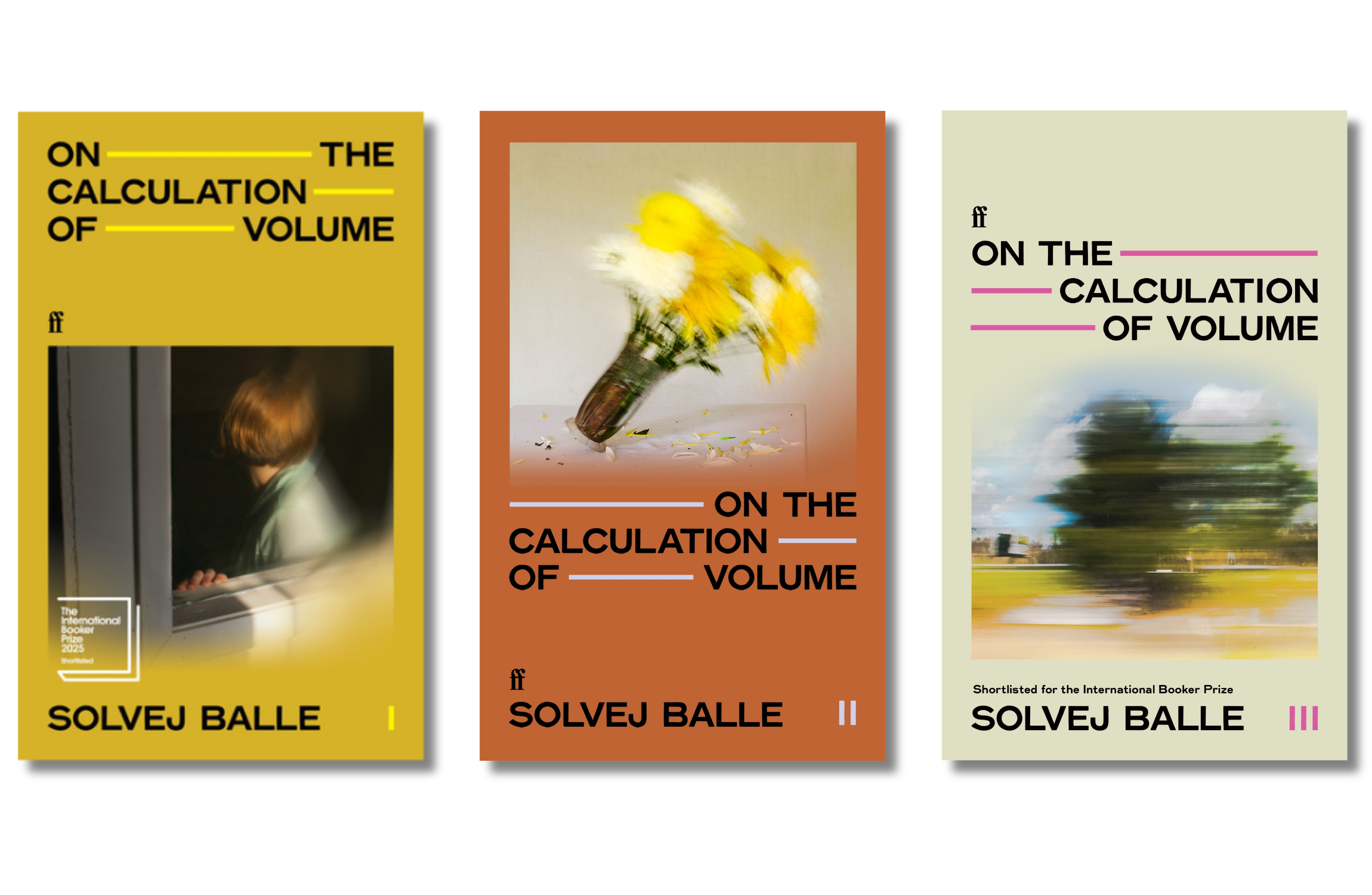
In our fast-paced attention economy, how did On the Calculation of Volume, a ruminative series about a woman living the same day on repeat, become an international bestseller?


Three days into 2026, the United States launches a large-scale military operation in Venezuela resulting in forty deaths and the kidnapping of incumbent president Nicolàs Maduro, along with his wife. On the same day, fifty-five-year-old Cuban migrant Geraldo Lunas Campos dies of asphyxia while in immigration detention in El Paso, having been restrained by multiple guards. Four days later, motorist Renée Good is gunned down by a masked ICE officer in Minneapolis. Another Minneapolitan, Alex Pretti, is shot at least ten times by border patrol two weeks later after attempting to film a confrontation between authorities and civilians. Donald Trump threatens to annex the mineral-rich autonomous territory of Greenland from Denmark. Grok is generating deep-fake child exploitation material. The Gaza genocide continues with fewer and fewer witnesses. A US armada is sent towards the Middle East. Three million pages of the Epstein files, released on January 30, simultaneously elucidate and lampshade the financier-sex trafficker’s deep ties to international figures in government, business and intelligence.
Closer to home, bestselling author Craig Silvey is arrested at his property in Boorloo on charges of possessing and distributing child exploitation material. A thirty-two-year-old white man, also in Boorloo, is calmly escorted away by police after throwing a homemade bomb (which fails to detonate) at a crowd of Invasion Day protestors. Adelaide Writers’ Week folds after a mass boycott prompted by the festival board’s cancellation of Palestinian-Australian author Randa Abdel-Fattah’s scheduled appearances. One Nation is polling better than ever.
Time’s passage, at this point, feels grievous—though whether a rapid assault or a sludgier torment is hard to say. I’m occasionally visited by a strange nostalgia for lockdown, those treacly days of home cooking, masked-up loops around my local oval, greening out in front of Netflix. Law enforcement was killing civilians then, too. Yet certain horrors—like how much water ChatGPT is guzzling and what a disembowelled toddler’s cries sound like and how many microplastics are probably in my brain right now—were unknown to me. The badness seemed more insulated, temporary. If we can get through this time, this glitch in time, it’ll be better, normal, I remember thinking. I don’t have such thoughts anymore. Normality seems too dubious, the present too urgent to simply be endured.
Subscribe to stay in the loop
Be the first to read new stories, discover publishing opportunities, and access resources. For people who love great writing.
Many with whom I speak about the first volume of Solvej Balle’s planned septology, On the Calculation of Volume, which follows a woman condemned to repeat the same November day indefinitely, comment on the novel’s redolence of lockdown. Indeed, when Volume I was self-published in its original Danish in February 2020, some found it ominous. Six years on, a wealth of pandemic-adjacent literature has emerged—from Charlotte Wood’s meditative Stone Yard Devotional to Ana Paula Pacheco’s fabulist Pandora to Megan Clement’s personal-political repudiation of fortress-nationalism, Desire Paths. As of yet, though, no work has captured the feel of that time—the blurring of days into months, the crushing mundanity, the isolation—quite so precisely as Balle’s.
But to read Volume I simply as an accidental Covid novel, or even an escape from the contemporary news cycle, would be narrow. Balle has been described as part of a generation of Danish woman writers who gravitated towards minimalism and eschewed psychology in favour of philosophical themes. In 1986, she released The Lyre Bird, a feminist retelling of Robinson Crusoe. Two works of short prose followed in the early nineties. Then Balle went dark, at least in a publishing sense.
Time’s passage, at this point, feels grievous—though whether a rapid assault or a sludgier torment is hard to say.
Most writers, I think, dream of going dark sometimes. Not releasing anything into the public for decades, just thinking and living and creating without being perceived, perhaps having one’s brilliance discovered posthumously. Competing drives get in the way of this fantasy: the excitement of the new, the need for validation, fear of losing momentum, irrelevancy, death. It is rare, perhaps a once-in-decades experience, to encounter work as long-range as Balle’s, as resolutely detached from the zeitgeist and industrial demands. Each volume has felt like an event to me.
To date, there are six books in Danish, four in English translation; the first pair courtesy of Barbara Haveland, the latter two a joint effort between Sophia Hersi Smith and Jennifer Russell. Volume I is the most likely to sort the casual readers from the zealots. Set across an unspecified 366 eighteenth of Novembers, it takes the perspective of Tara Selter, an antiquarian book dealer of indeterminate age who awakens during a business trip to Paris to find that the previous day is repeating. The revelatory moment? A slice of bread drifting floorward from a neighbouring breakfaster’s table.
Those who are unmoved by Volume I tend to characterise the novel as snail-paced, insubstantial and (funnily enough) repetitive; they complain about how much time Tara spends thinking about her Roman sestertius, how little she does, the plainness of Balle’s prose. To be fair, not much happens across the volume’s not-quite two hundred pages. Yet the laws of 18 November are established. Tara has freedom of will and body. She can take a train home and wake in bed with her husband. She can be injured. Her injuries heal and her hair grows. Objects that she acquires may disappear overnight or be trained to stay. While never at risk of penury, her bank accounts refreshing daily; what she consumes remains consumed. Her body is mortal, showing signs of ageing. Meanwhile, everybody else—her husband and business partner, Thomas, included—is preserved in 18 November, experiencing the day as if for the first time. The movements of others become predictable, their memories wiped with each repetition, making ongoing connection impossible.
But those who are won over by Volume I (and there are many) speak of radiator burns and falling bread, the quiet horror of a husband’s amnesia over fried eggs. They embrace a careful construction of an uncanny alternate reality; a lingering fog; a pang in the solar plexus. They need to know, if not how Tara escapes her state of limbo, at least how she withstands it.
As far as existentially tormented narrators go, Tara is strikingly knowledge-driven and free of destructive impulses. While she has episodes of depression and derealisation, she never once thinks of burning down the house she’s phrogging, or drinking herself into a stupor, or injuring another to see if they heal with the day’s renewal. She records her days. She becomes obsessed with stargazing and ancient Romans. As her hope of ever seeing the nineteenth of November dwindles, she seeks out ways to make her condition more endurable—constructing ‘seasons’ through travel and attending university lectures—and to minimise the impact of her consumption.
It is rare, perhaps a once-in-decades experience, to encounter work as long-range as Balle’s, as resolutely detached from the zeitgeist and industrial demands.
In the closing pages of Volume II, Tara meets another in her situation. The miracle of ‘a playmate in the eighteenth of November’ opens up both her purview and the novel’s speculative field. If two can be caught in the same autumnal day, could they have a shared history or mission, could there be more like them? By the same token, Tara’s fellow traveller reinforces her—and Balle’s—peculiarities of focus. Tara continues to pine for the marriage she once had, to be committed to sustainability and unbothered by vanity, sexual desire or violent urges. There is nary a whiff of eroticism between her and newfound kin; they are more like figures in a Platonic dialogue than a time-challenged Adam and Eve.
Midway through the septology, Balle introduces a new conundrum: a burgeoning community within 18 November.
Singular as On the Calculation of Volume may be, as a phenomenon, the novel’s virality has some precedent. Belgian author Jacqueline Harpman’s I Who Have Never Known Men, originally translated from French as The Mistress of Silence in the late nineties to a muted reception, became in 2019 an unexpected BookTok sensation after being reissued with an introduction by popular British novelist Sophie Mackintosh. It currently has over half a million ratings on Goodreads. Austrian author Marlen Haushofer’s novel The Wall, while admired by the likes of Doris Lessing and Elfriede Jelinek following its 1963 publication, has lately accrued a new generation of readers with Vintage Classics’ 2025 revamp, complete with millennialcore cover art by Manshen Lo.
What these translated works of speculative fiction share with Balle’s, beyond female authorship, solitary female protagonists and often soporific pacing, is a concern with the tenability of human life over interpersonal dramas or social politics. As such, they might broadly be considered descendants of Jean-Baptiste Cousin de Grainville’s 1805 prose poem novel, Le Dernier Homme (The Last Man). Often credited as the progenitor of sci-fi narratives dealing with the end of time, de Granville’s poem is narrated by the last man alive on a sterile, dying earth—a conceit that is feminised by Harpman and echoed by Haushofer.
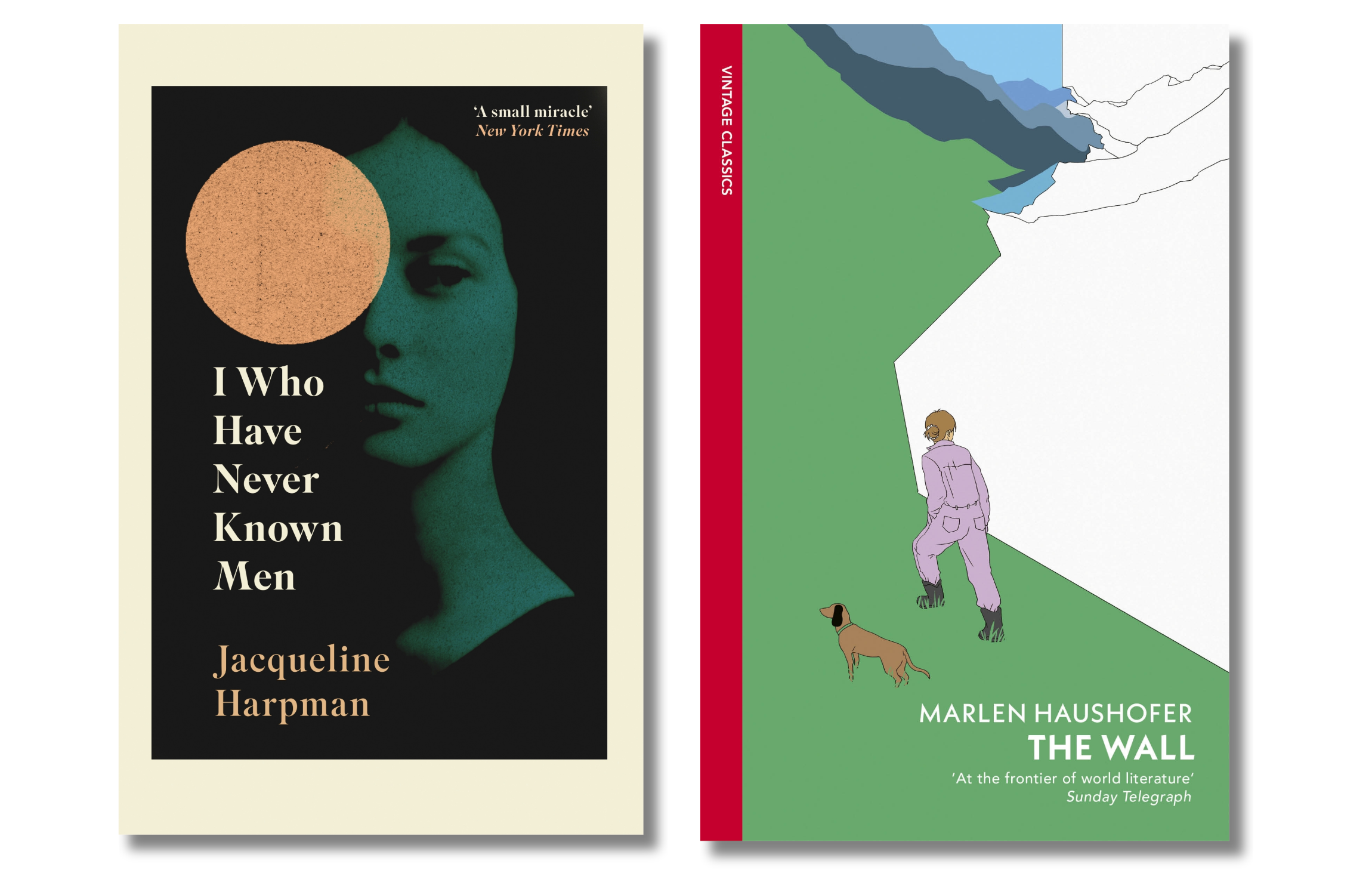
Narrated by the only surviving member of a group of forty women, Harpman’s novel has understandably garnered comparisons to A Handmaid’s Tale due to its initial configuration of female prisoners in a bunker presided over by male guards. However, this premise gives way to something more existentially horrifying than Atwood’s patriarchal dystopia once the prisoners are let loose into an arid, seasonless terrain marked only by identical bunkers full of dead men and women. Harpman, a Holocaust survivor who spent the wartime years as a refugee in Casablanca and lost most of her paternal family in Auschwitz, seems to allude to real-life atrocities while detaching her characters from a recognisable social context. Their imprisonment, which was formerly attributable to gendered oppression, becomes senseless, as their survival is.
Marlen Haushofer’s narrator in The Wall is similarly stranded amid the incomprehensible, awakening during a stay at her cousin’s hunting lodge to discover herself isolated in the mountains behind an invisible wall, beyond which all living creatures have been stopped dead. Surviving through a mix of hunting, agriculture, milk from her cousin’s cow and a hoard of supplies, she remains haunted by her absurd, unsustainable situation: it is chiefly concern for the animals in her care that deters her from suicide.
Haushofer’s novel certainly invites social criticism, with the narrator theorising that her misfortune may be the result of a nuclear event, voicing the anxieties of the postwar, Cold War-period of its authorship. The narrator’s inability to start a fire without matches or hunt without ammunition, what’s more, is linked to her pre-apocalyptic existence as a bourgeois twentieth-century Austrian woman. This critique is especially pertinent if one considers Haushofer’s wartime existence as a wife and mother in Linz, one of the five key cities of the Third Reich. It was only after the war, during Austria’s reckoning with its role in Nazism, that she began to publish.
Singular as On the Calculation of Volume may be, as a phenomenon, the novel’s virality has some precedent.
Meaning-making through the written word is a central conceit of these novels—and Balle’s. While I Who Have Never Known Men takes the form of an antemortem memoir, Haushofer and Balle’s heroines use diary entries as a way of mediating the absurd, with the latter assiduously numbering her ‘days’ within November 18. This first-person record-keeping reinforces these women’s status as mortals bearing witness to unprecedented times.
Unlike Harpman and Haushofer, Balle did not live through World War II, though she did grow up in a Denmark irrevocably altered by it. As well as being occupied by Germany from 1940 to 1945, Balle’s home country was crucial to the founding of NATO, the international military alliance established in 1949 to contain the global expansion of communism and the associated threat of nuclear war. Denmark also allowed the US to establish military facilities on Greenland in 1951 and the radioactive contamination of the ice sheet remains a ticking environmental ‘time bomb’. In interrogating what it means to live in an incomprehensible world, without specific reference to contemporary threats to civilisation, Balle’s project does not offer escapism so much as an urgent allegorical engagement with a troubling present.
Balle’s decision to frame her timeless question—what it means to live when life is absurd and death is inevitable—through the problem of an endlessly repeating, consuming November 18 cannot be parsed without reference to what is happening in the now. The septology is not a dusty work of posthumous genius after all but a work in progress. Tara and her milieu are contemporary-ish, with access to modern technology, though they do not doomscroll or receive notifications about having exceeded their daily screen-time limits. Despite Volume’s bleak inheritance and regular forays into the uncanny, there is something purposeful—even utopian—about how Balle chooses to have her characters engage with their mutual plight, and one another.
Volume IV, published in English on 14 April, often reads like a two-hundred-page compilation of the quietest, cosiest moments in a zombie movie: assorted travellers gathered in a safe house, warming their hands and breaking bread, sharing the lore of who they used to be and how they got where they are, building a common future from the ruins of various disrupted continuities. Tara’s first-person singular constantly gets lost in excitement of a new plurality; the ‘we’ pronoun dominates, polyphonic discussions about the nature of being in the eighteenth of November abound. In one of my favourite sections, a member of the group broaches the possibility that they are no longer human but something other, inciting an onslaught of suggestions. Are they mythical creatures, aliens, androids, homunculi, friendly furniture, heaps of sawdust, liquid in a glass?
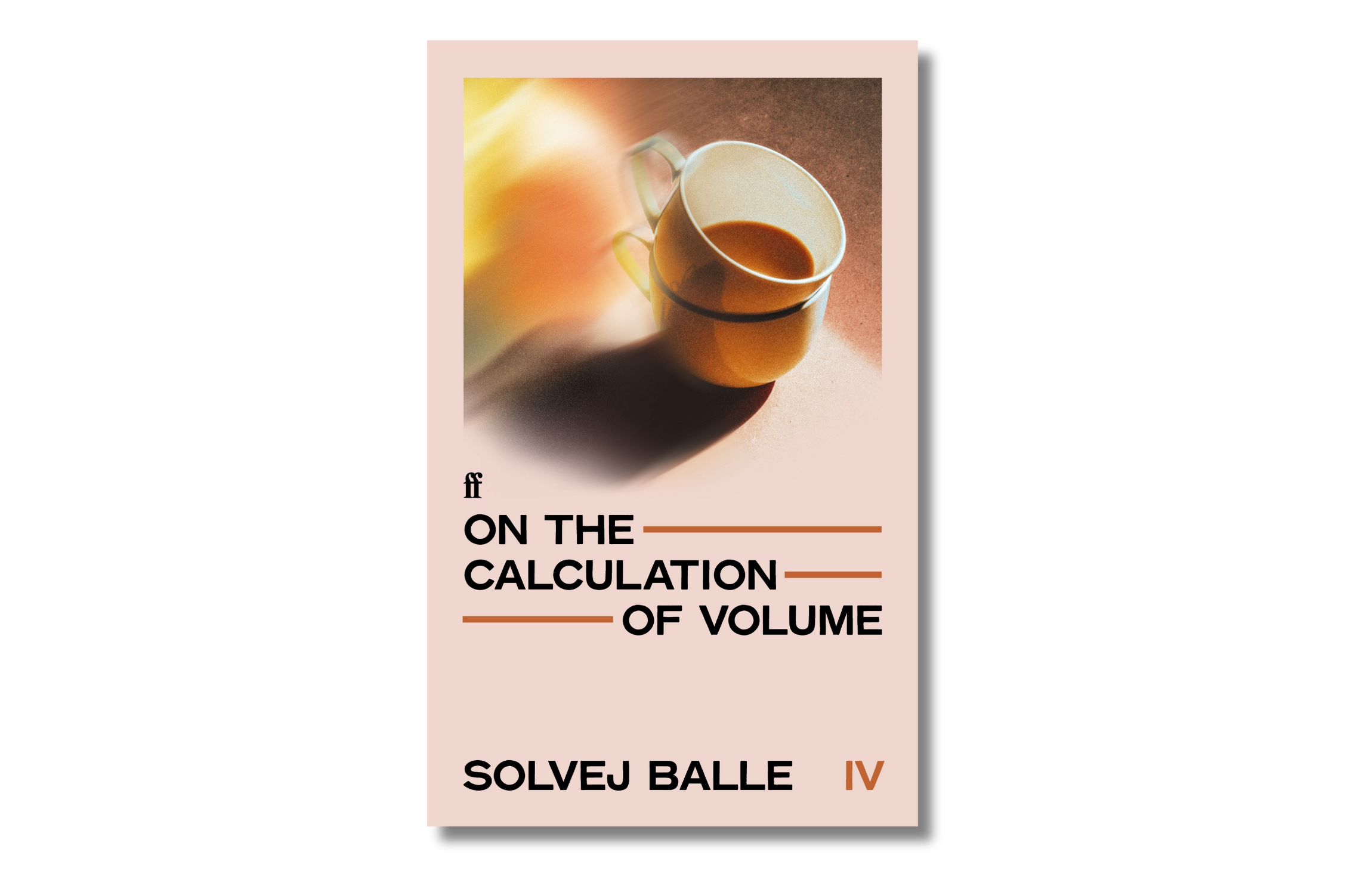
Another theorises that the disruption of time has released them from the endless pursuit of growth and momentum associated with capitalist society: ‘our arrested day had left us in an unusual position where we no longer had to constantly think about how to keep moving […] whether someone was in our way, whether we could keep up. A pressure had been lifted.’ The group are overwhelmingly in agreement that being stuck in November 18 is not a catastrophe so much as an anastrophe, an inversion of the ordinary that is neither fatal nor tragic, despite attendant griefs.
There is a lot of theorising in Volume IV and very little in the way of conflict, plot or characterisation in the conventional sense. When characters disagree, it is over definitions and terminology, whether they are humans or in fact woolly sofas, whether they ought to call themselves loopers or repeaters, tracers or erasers. The community is pan-European, strangely homogenous in their ability to discuss ideas at length, in a mishmash of languages. As in previous volumes, descriptions of physical appearance are almost nonexistent, as are demographic markers; indeed, it is not until halfway through Volume IV that we learn Tara’s age.
Such indifference to the usual laws of storytelling is likely to alienate some, even among those who persisted with earlier volumes on the strength of the Balle’s premise and world-building. At times, the frictionlessness of the November 18 community seems ludicrous in its defiance of social realism. Why is nobody in the commune having sex and causing drama? I found myself wondering. Where are all the bored, angry, uneducated, mentally ill people?
Perhaps it is because I have had my fill of contemporary narratives of stasis and decline, scrolling sad girls and mad girls burning it all down, that these quirks didn’t impede my enjoyment of Volume IV. Perhaps the ability to imagine people getting along in a changed world is both radical and necessary. Or perhaps the scope of Balle’s project inevitably elicits trust, an ease with unanswered questions and breached conventions.
There is something purposeful—even utopian—about how Balle chooses to have her characters engage with their mutual plight, and one another.
Much as Tara’s gender appears incidental to the novel’s ontological concerns, so do other aspects of identity. While same-sex couples exist, it is unclear whether the society of November 18 lacks racial diversity or is somehow post-racial; and, if the latter, whether the absence of discrimination is an upshot of ‘falling out of time’ or a pre-existing quality which has attracted the time-loopers to one another. Though these questions may not be central to the series, they are important enough for Balle to gesture at in the second half of Volume IV, when a group member, Martine, remarks, ‘We’re much too similar.’
This observation, as tends to happen in the novel, triggers a lengthy dialogue, during which similarities among the population are brought to the surface. It is satisfying to have such concrete factors as age and class referenced by the loopers, who generally come across as an ineffable, disembodied mass. With this recognition comes the possibility that there might be others whom they have simply overlooked due to their dissimilarity: the poor, the elderly, those driven insane or to death by their situation. The spectres of ageing, sickness and madness, once acknowledged, complicate the vision of living indefinitely as a community in November 18.
What it means for social realities to be discussed by those who have fallen out of time—and ordinary society—remains to be seen. Although there are members of the group who believe that their anastrophe has a purpose, that they might prevent accidents or change the social structures that lead to worldly suffering, the prevailing ambition appears to be a balance between enduring with a measure of joy and not becoming ‘ravaging locusts’, monsters who eat the world. ‘I was more inclined to believe in random chance and a simmering enthusiasm,’ Tara declares during a rare butting of heads with a more goal-oriented group member, Ralf. ‘The sound of pages turning. Quiet weather systems. A crackle in a fireplace.’
Is it enough to enjoy firelight and the company of others to minimise one’s individual footprint amid horrifying entropy and structural violence? To make individual sense of it all through the arrangement of words on paper? Or is organised action necessary?
This may be Balle’s overarching concern, as of Volume IV. Whether the septology is to be read as a parable of environmental destruction, or a metaphor for the human condition, or an argument for utopian socialism, or a lament for its unattainability, or something else entirely, won’t be clear until the final instalment, if ever. In the meantime, it is possible to be consoled, like Tara, by the prospect of solidarity within an alienating present; humanity divorced from the perpetual striving that would seem to make us human.
On the Calculation of Volume IV is out now via Allen & Unwin Australia.