Enjoy discounts across our wide range of courses with award-winning writers.

Show Your Working: Jennifer Down

Jennifer Down

Interview

Show Your Working is a regular column exploring how some of our favourite writers get things done. This month, we take a peek into the writing routine of author Jennifer Down, whose new novel Bodies of Light is out now from Text Publishing. Read Elizabeth Flux’s review!

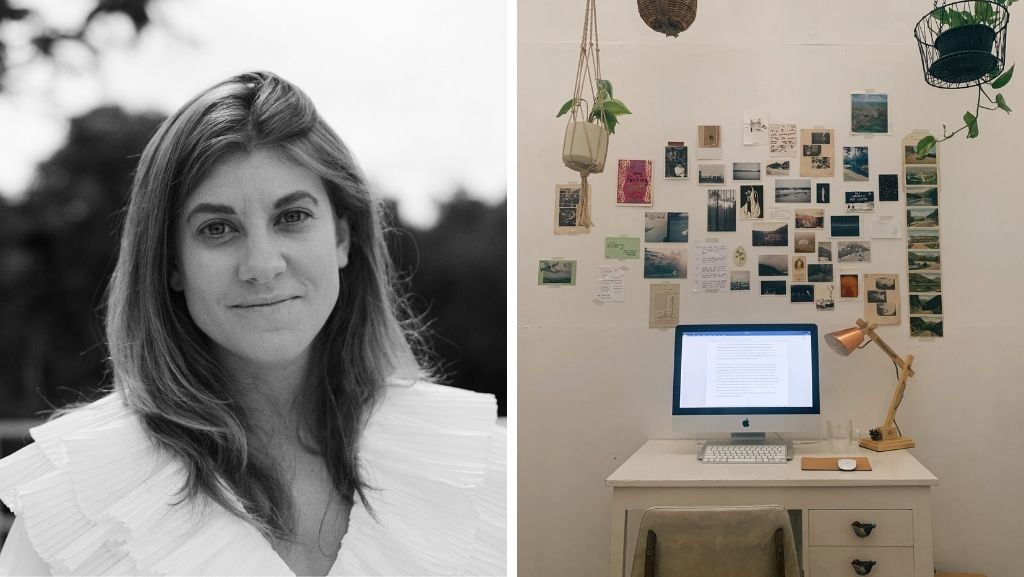
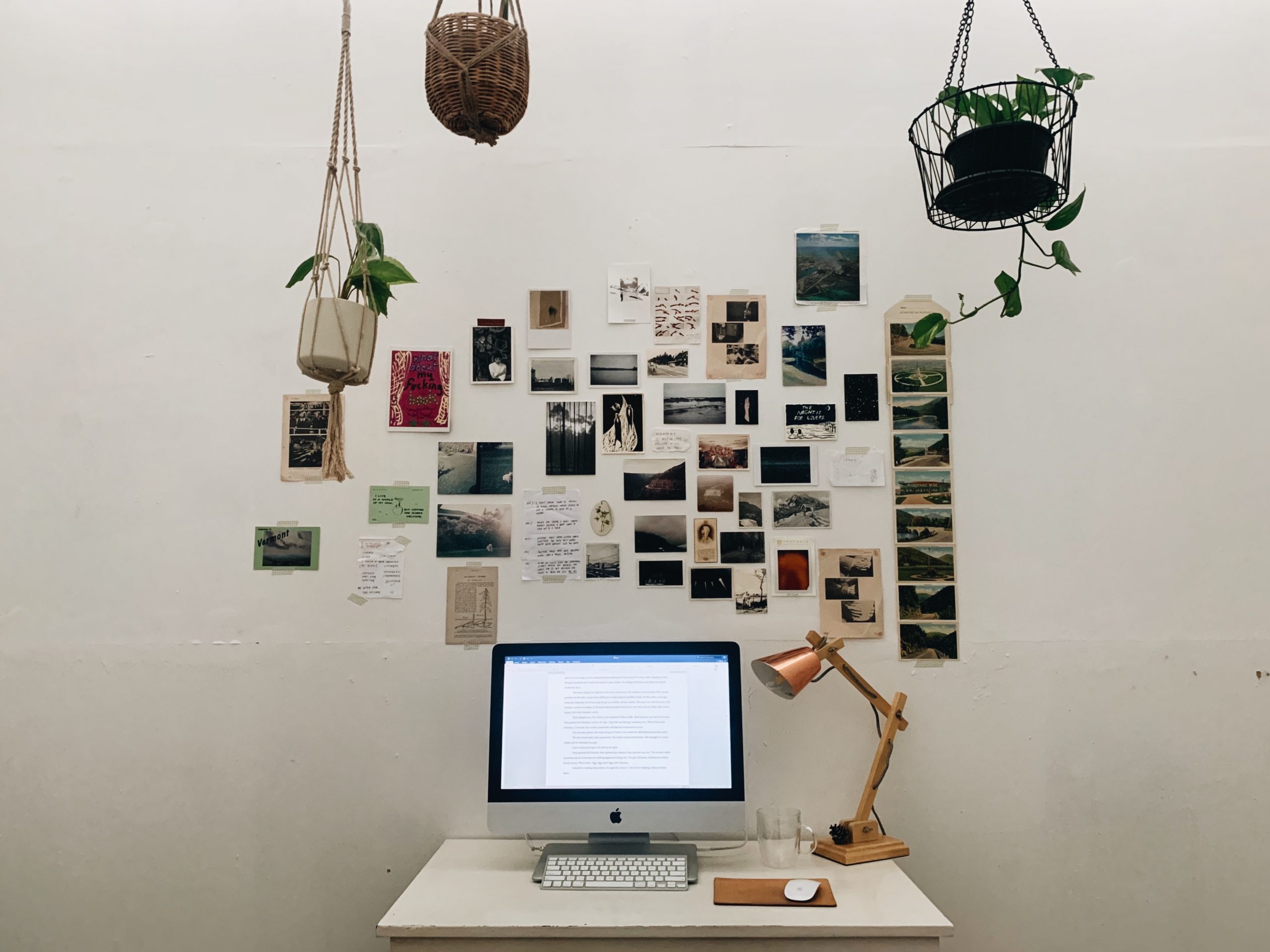
A silver iMac computer with an open Microsoft Word document on the screen, sitting on a white desk next to a timber and brass desk. Stuck to the white wall behind the desk are various photographs, postcards and other small items. Three small pot plants hang from the ceiling.
Jennifer’s studio. Image: Supplied

What does your workspace look like?

Earlier this year, I rented a small studio space to work in. It was the first time in my life that my desk was somewhere other than my bedroom. I never really minded until the pandemic hit, and we were all locked-down and working from home. I live in a 23-square-metre bedsit, and my computer was spitting distance from my bed. I realised it was badly affecting my sleep, especially as I often have calls with overseas freelance clients in the evening, and I thought physically separating labour from leisure might help. It’s also the first time in my life I’ve been in a financial position to rent a separate workspace, which I don’t take for granted! The bloke who manages the studios proposed that, in exchange for reduced rent, I help him with some writing jobs, so I struck it lucky there. But then, of course, lockdown hit again, and I don’t technically need to go to my studio to work…so I’m back to sitting opposite my bed with my laptop again for the time being.

All that is a long way of saying: my workspace right now is a small dining table in my sunny flat. Once restrictions ease, though, I’ll be back in my studio. It’s one of a dozen in a big draughty warehouse. It’s a modest space, but it’s quiet and private, and—importantly—close to Alasya and A1. There’s a shared kitchen and a rooftop garden of dubious structural integrity.

My desk was built by my grandpa Fred—he used it for drafting, then my mum used it through school. When I was a teenager, I sanded back her ‘70s lavender-and-lime-green colour scheme and painted it white, and I’ve used it ever since. The room is pretty spartan otherwise. Some poetry books, since that’s what I refer to most when I’m writing, lit journals that I’ve hung onto for one reason or other, and a few tchotchkes to make it less forbidding. (The previous occupant was a visual artist who left the outline of spray-painted bootprints on the floor, which are oddly grim, like a crime scene.) It’s incredible to have dedicated place for work. I like riding my bike there. It’s a good circuit-breaker after squinting at a screen all day.

Sometimes I discover things I wrote years ago that feel newly invested with meaning, or whose significance I’ve finally decoded.

Are you an analog or digital writer?

Mostly digital. I write a lot of notes by hand—to-do lists, shopping lists, notes from meetings and interviews, and so on—but I only ever draft things straight into Word. I keep a notebook for each new project where I collate ideas, phrases, images, quotes and references. They’re not very organised but they do have their own internal logic; and they’re good to look back on—sometimes I discover things I wrote years ago that feel newly invested with meaning, or whose significance I’ve finally decoded.

I also use my iPhone’s Notes app for convenience, or in public (sometimes I feel too self-consciously writerly to use a notebook) and copy them by hand later so everything’s in one place.

What sort of software and hardware do you use to get your work done?

I’m very boring—I use Word. I like Google Docs and use it for other stuff, like freelance work, but something about an offline document feels more conducive to fiction-writing. Maybe because I’m not tempted by the lure of new browser tabs. For my new novel, Bodies of Light, I used a Google Sheets spreadsheet to track the timeline of the narrative, cultural and historical references, and so on, because the narrative spans five decades and I am very bad at keeping track of dates and times. I save a lot of visual references, too, as well as any research­—for Bodies of Light, lots of government reports, inquests, Senate inquiries, legal documents and transcripts. I have a meticulous filing system, but it’s not very exciting or high-tech.

Describe your writing practice?

Until a few months ago, I had always worked a full-time job, and shoehorned in my own writing wherever I could; usually early in the morning or on the weekend. Freelancing has theoretically changed that, in the sense that I can organise my time however I choose, but I’m still adjusting to it. To be honest, the past two years have been fairly unproductive in terms of my own practice—my attention span, energy, and enthusiasm for writing and reading have taken a beating during the pandemic, but I know it’ll return, so I am trying to be patient with myself, and to evict internalised ideas about productivity and merit.

My attention span, energy, and enthusiasm for writing and reading have taken a beating during the pandemic, so I am trying to be patient with myself.

In some ways, I think I’m lucky to have always been a working writer: I rarely procrastinate, because I’m accustomed to making the most of small, weird slivers of time. It also means I have lots of time to sit with ideas and stories before I get them down. It’s not that I’m a great plotter or planner, but I don’t spend much time in front of the laptop hashing out problems of structure or character because by the time I open up the draft, I’ve been sitting with those knots for so long that they’re mostly untangled.

I don’t really know what my practice will look like when—if—things return to normal. Generally, I like a timetable and a to-do list, and my brain works much better first thing in the morning, so maybe my ideal day would be: get up, make coffee, go for a run, focus on my own writing before midday, and switch over to freelance writing after lunch.

Has your writing practice changed over the years? If so, how?

I don’t think it’s changed very much at all, but I try to take it more seriously as it becomes more of a job. In the past it’s sometimes been difficult to prioritise writing because it feels like a side gig. It still is, most of the time; but when a publisher has sufficient faith in your work to offer you a contract for its publication, it becomes something professional, not just a hobby.

I think I’ve also become more private with my drafts. I workshopped my first novel throughout three years of TAFE, and had shown several of the stories in my second book to friends and peers. But I didn’t share my most recent novel with anyone—my editor Alaina was the first person to read it. I think with age and experience I feel surer of what I want to say, and how I want it to sound.

How do you encourage inspiration to strike?

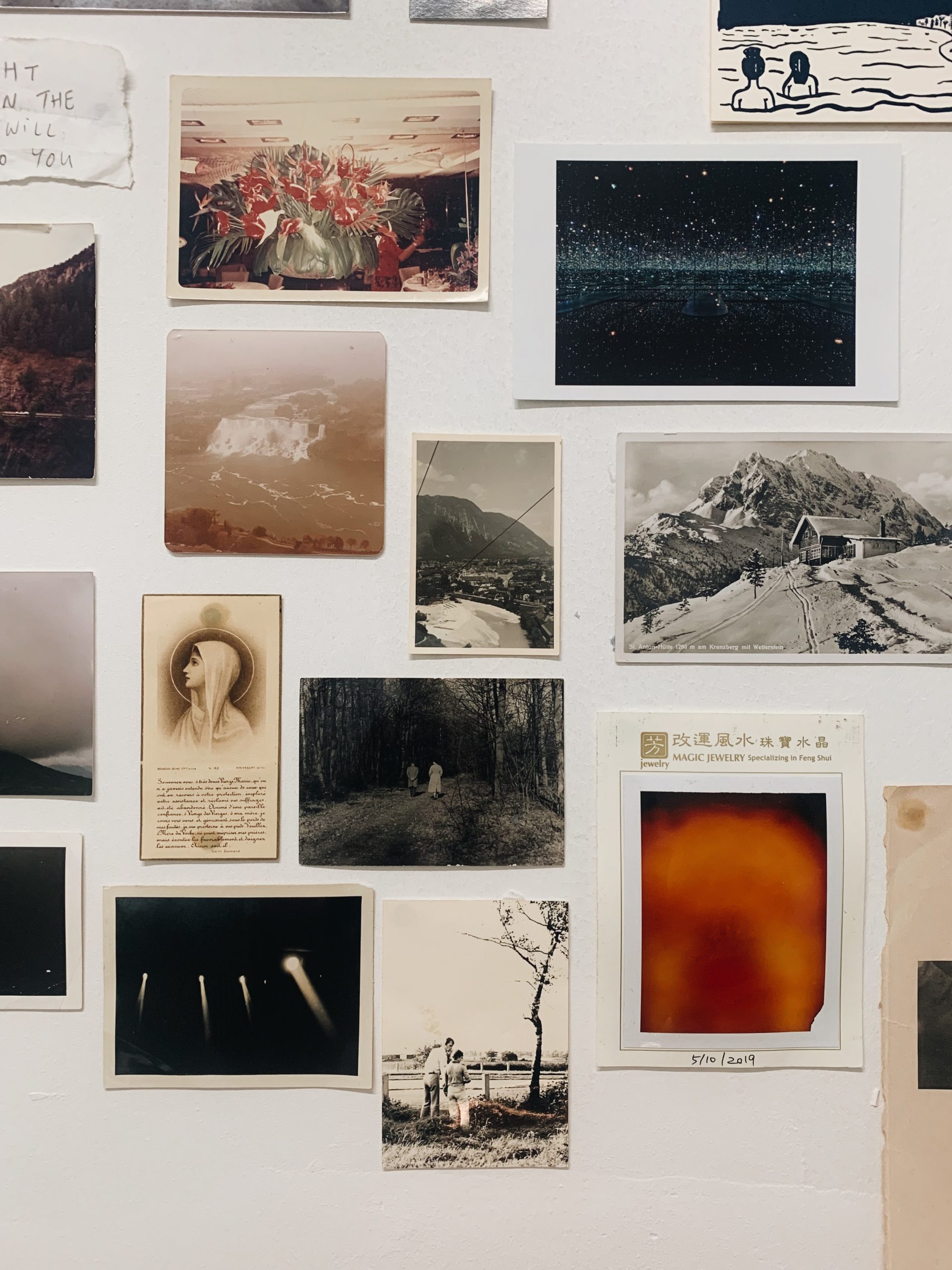
When I’m stuck, movement helps. It can be a drive or a train commute, a bike ride, a long walk. Something about new scenery is really good for unlocking my brain. Visual art is also great—I’ve really missed galleries and museums over the 18 months; and op-shops, because I’m a sucker for vernacular photography, and I like poking around in paper ephemera.

When I’m stuck, movement helps. It can be a drive or a train commute, a bike ride, a long walk. Something about new scenery is really good for unlocking my brain.

I like to research and read about things that I’m interested in, whether or not they’re related to whatever I’m actually working on. Sometimes work I’m doing for freelance clients winds up feeding my brain in surprising ways. Lately, for various reasons, I’ve researched the history of moon towers, pregnancy discrimination in American retail giants, different representations of gardens in The Odyssey, sociologist Avery Gordon and her concept of ‘haunting’, early female pioneers of synthesisers and electronic music, and NFTs. I don’t know if any of it will ever make it into a piece of fiction, but I often end up taking notes or saving images from unexpected places.

Bodies of Light is available now from your local independent bookseller. 

Latest

Who Can Afford to Be a Writer in Australia These Days?

Nina Culley

Have Gun Will Shoot

Vivienne Cleven

Shed a Tear for the Norman Mailers

Rebecca Starford