Few animals have generated such an outpouring of emotion as Perth Zoo’s late Tricia—a symbol of the changing role of zoos, and a lens for West Australians to see themselves through.


Babar is not quite happy, for he misses playing in the great forest with his little cousins and his friends, the monkeys. He often stands at the window, thinking sadly of his childhood, and cries when he remembers his mother.
——Jean de Brunhoff, The Story of Babar, the Little Elephant
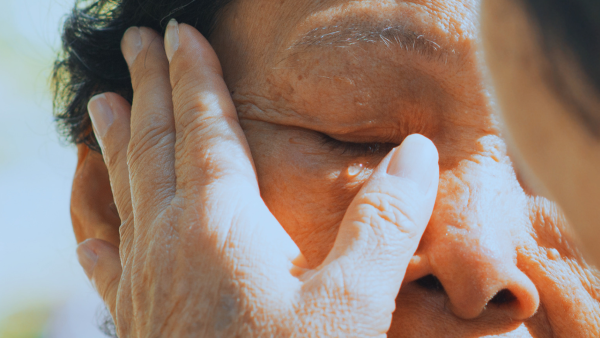
Elephants make me cry. It’s like they have a secret back channel to my tear ducts, and they quietly wrap their trunks around them and give them a little squeeze whenever I’m made to think about them. On the train back to Sydney from the National Young Writers Festival in 2017, my new friend Miranda showed me a viral video of an elephant mother whose calf was stuck in some kind of open drain. As the mother cried and panicked, a bunch of elephants from another herd rocked up—some forming a protective ring around the baby, others working together with the mother to fish her out. I was 27, with someone I wanted to think I was cool, feeling like an adult for maybe the first time in my life—and there I was, weeping like a baby. Elephants just have that effect on me.
And why shouldn’t they? How could you not be seduced by these enormous lumbering oddities that are so alien yet radiate an empathy—a humanity—as undeniable as it is overwhelming? Here’s a creature that talks, laughs, grieves, and most famously, remembers—one that has been dragged by humankind through the meanest indignities imaginable, only to persist with an unwaveringly singular essence of dignity and awe.
The last elephant that made me cry was Tricia. Like most Western Australians, she was my first elephant. A beloved icon of Perth Zoo, she passed away earlier this month at the grand old age of 65, surrounded by her friends and adopted family.
Perhaps the only thing more peculiar than finding yourself mourning an elephant is finding your entire state mourning alongside you. ‘Tricia wasn’t just well-known,’ said Premier Mark McGowan, ‘she was well loved. Her stature and grace were compelling…For six decades, she was an integral part of any visit to Perth Zoo. If you lived in Perth at some point in your life then you probably have a memory of Tricia.’
Perhaps the only thing more peculiar than finding yourself mourning an elephant is finding your entire state mourning alongside you.
Mine are countless. I all but lived at Perth Zoo as a kid. My mum would take me there so frequently that I had names for all the otters, did business with the meerkats, and struck up (what I believed to be) a serious friendship with a young gibbon. But my favourite part of any visit always came when I pushed my grandma’s wheelchair up the steep incline and onto the wooden lookout of the elephant enclosure, where Tricia would be standing munching bamboo or playing soccer with an exercise ball with her young elephant friends Permai, Teduh, and Putra Mas.
There was just something about Tricia. She was magnetic. She was magnificent. She was magnanimous.
It’s the magnanimity that made her so special, I believe. Tricia had a lot to forgive.
*
Tricia’s origins are murky. The official story, the one being repeated in the media this week, is that she was born in Ho Chi Minh City, Vietnam on 24 January, 1957. But the documentation is sparse and scattershot. The reality is that Tricia was poached in the wild and sold to professional animal trafficker Herbert Humphries de Souza (what was then a legitimate business), transported to his kennels in Singapore, and sold on to Perth Zoo in 1963, alongside another young elephant, Tania.
They arrived in Fremantle Harbour, lowered onto the dock in cramped wooden crates to the cheering of a gathered crowd.
Both Tricia and Tania were named after beauty queens, Tricia for 1962 Miss Australian winner, Tricia Reschke, Tania for Miss International 1962, Tania Verstak. They shared a small enclosure with the zoo’s other female Asian elephant, Tara. Their enclosure was a sandy square, bracketed by cement columns, which they’d reach their trunks through to the delight of the punters. Tara was sold to the Sole Brothers Circus in 1965, where she died in a road accident in 1987. Tania was sold to Olsen’s Bird Garden on the Gold Coast in 1971, where she died of liver problems in 2003.
Tricia spent the next twenty years alone in her cement enclosure. Elephants are herd animals, incredibly social creatures, but Tricia spent two decades with no one for company but the public and her keepers, all of whom developed a close bond with her, as elephant keepers tend to do.
Tricia’s enclosure was expanded into a large yard in 1986, and was upgraded again in preparation for the arrival of three young elephants in 1992: the male, Putra Mas (born 1989), and two females, Permai (1989) and Teduh (1990).
Elephants are herd animals, incredibly social creatures, but Tricia spent two decades with no one for company but the public and her keepers.
Tricia, alone and traumatised for the better part of two decades, slipped into the role of matriarch immediately, and by all accounts became a different elephant.
This was the Tricia I grew up with. I remember being a toddler in 1993 and watching the three kid elephants, linked trunk to tail, following Tricia around their dusty yard as she nonchalantly walked between choice patches of sun.
‘She was the one that the keepers knew was the most stable,’ Susan Hunt tells me over the phone, ‘which is strange, given her terrible experience.’
Susan is the former CEO of Perth Zoo, having arrived there in 2000 in a different role, and having left in 2017. She was responsible for pushing the zoo towards conservationist efforts, and for navigating the murky ethics of zoos as a private business in an age where animal welfare is prioritised over profit or entertainment. She knew Tricia well.
‘She actually laughed. I mean, that was bizarre,’ she remembers. ‘It was usually when someone had tripped over a bucket or had done something silly. She would literally laugh!’
Susan understands the pitfalls and complexities of anthropomorphising animals better than most, but notes how different it is with elephants, intelligent and communicative as they are, especially ones as open and agreeable as Tricia. ‘She was really sweet,’ she explains, ‘she was tangible in terms of our human interpretation of this elephant, right? She actually did things that we could, that made sense to our feelings. She seemed to have similar ones.’
One of the most remarkable things about elephants, what makes them so ‘relatable’ to us as humans, is that they grieve. Susan tells me about Teduh’s death from a wasting disease in 2007. It was a distressing time for the elephants, their keepers, and the zoo. Teduh was having trouble standing, despite Tricia and Permai’s best attempts to prop her up. Lying down can be death for elephants: their organs get crushed under their own weight. So the zoo made the decision to euthanise Teduh in 2007, to end her suffering.
The night Teduh died, Susan and the keepers watched the live CCTV feed of Tricia and Permai standing over the body of their friend, mourning her. This is unremarkable behaviour for elephants, who stand vigil over their dead and dying—but the moment that struck home for Susan was when Tricia left the room for a time, so that Permai, who had arrived in Perth with Teduh all those years ago, could have a moment alone with her friend.
Tricia’s keepers noted that she mourned Teduh’s passing for about a year, barely vocalising—laughing—until her grief had properly passed.
‘How can you measure happiness in an animal?’ Susan asks me. ‘Again, happiness is a problematic word. But you could tangibly see it in Tricia.’
*
To Susan, Tricia was an emblem of the changing nature and purpose of zoos. She had survived the bad old days, and spent the last half of her life as one of the most loved and best kept elephants in any zoo anywhere. Susan was the co-author of the world first World Animal Welfare strategy, and claims that Tricia informed a lot of her thoughts on the future of zoos and animal conservation.
Susan had pushed the Barnett government to open an elephant reserve outside the Perth hills, one where Tricia and friends could live out their days with a herd, a herd being necessary to truly ensure an elephant’s fullness of life: to allow them to live wholly, as elephants. Barnett, to his credit, took it to the election, in which he was resolutely trounced. The reserve was defeated with him, and in 2018 Perth Zoo announced that the elephant enclosure would end when Tricia, her health then fading, finally passed.
Tricia was an emblem of the changing nature and purpose of zoos. She had survived the bad old days, and spent the last half of her life as one of the most loved and best kept elephants in any zoo anywhere.
The remaining elephants are to be sent to large nature reserves overseas, in the hopes that they will be integrated into an existing herd, and finally find family, and instinct, beyond what the zoo could ever provide them with.
As much as I loved Perth zoo growing up, it also had the whiff of a haunted house about it. The grim cement bear enclosures of the old zoo remained as morbid museum pieces hinting at a dark past. My mum, grandma, and aunts would often tell me the story of the man who jumped the guard rails of the polar bear exhibit in 1972, wherein he was torn in half (‘the first bear had his entire head in his mouth’, a news story from the time reads) by the creatures. One aunt would tell a story of the hippopotamus choking to death on an errant cricket ball (I found no evidence of this), and the other of the time when, as a little girl, one of the elephants (perhaps Tara—this would have been before Tricia and Tania arrived) reached their trunk out of their enclosure to steal her ice cream (a favoured family story).
In my research for this piece I found the story of Jumboroo, the ‘racist’ elephant, a ‘vitriolic’ bull brought to the zoo in 1922. He escaped from his cage on the boat over from Singapore, fell 24 feet onto the ship’s hold, then continued to wreak havoc until he was chained and caged again by his captors and the ship’s crew. At the zoo, he developed a reputation for violence, but what seemed to irk the Perth public more was his noticeable disdain for white people—local newspapers going as far to call him out for it. He was sold to the Perry Brothers Circus for fifty pounds.
What Jumboroo and Tricia have in common, besides their similarly traumatic capture, transportation, and captivity, is their function as lenses for the people of Perth to view themselves through. For Jumboroo, his anger was taken as accusatory, his dislike of white people read as some kind of statement (hilariously), when he was no doubt distrustful of the kind of people who had poached, caged and cajoled him. For Tricia, her gentleness, humour, and consistency—the fact that she was there for generations of Western Australians—was read as proof of the worth in our own quiet persistence.
Tricia was a repository for generations of zoogoers’ memories, but also Perth’s memories of itself, and its ideas of what this place can be.
Reading through the comments left by the public on any story about her passing, you get a sense of something else also. Older commenters remember the cement pen, remember how lonely she’d been, remembered how bleak the zoo was back when they were kids. Listening to them, to Tricia’s keepers, to Susan, you get the sense that one of the things that made the people of Perth love Tricia so much was the feeling that she had forgiven us, and that when you visited her, when you stood and watched her wrapping her trunk around her keeper or painting with her friends or bathing in a mud puddle, you could be struck, if briefly, by that gentle relief that comes with being well and truly humbled. But perhaps that feeling of ‘forgiveness’ was just that: a feeling, the kind we’re prone to draw from an animal we’re keen to see as human.
‘She was the best therapist in the world if you were feeling down,’ wrote her longtime keeper and friend Steve Edmonds in his obituary to her. ‘You couldn’t spend time with Tricia without her lifting your spirits. ‘
This was always true to me when I visited her, as I think it was for most people. Tricia was a repository for generations of zoogoers’ memories, but also Perth’s memories of itself, and its ideas of what this place can be, and the size of the lives that can be lived within it.
‘You know, she’s an icon, everyone says it,’ Susan laughs towards the end of our call, a call throughout which I have been—sucker for elephants that I am—choking back sobs. ‘I mean, a minister said that she was like the bloody queen!’
Icon, queen, prisoner, matriarch, colleague, lesson, memory, friend: Tricia was all these things and more depending on who you talk to. But at the end of the day, she was first and foremost an elephant, and that alone was enough to make her remarkable.