Meet the Australian editor making waves in New York’s lit scene.


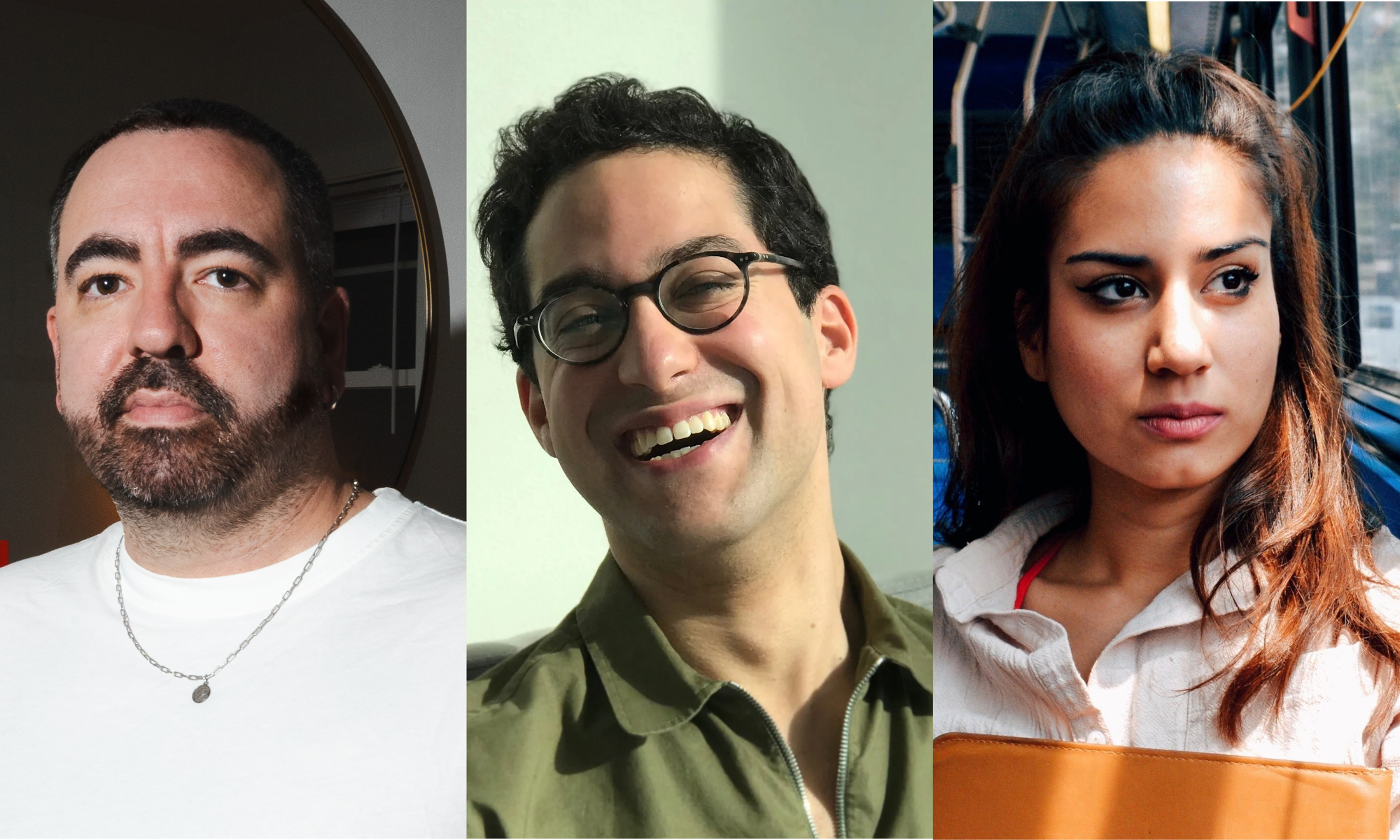
Frank Sinatra once said that if you can make it in New York, you can make it anywhere. Old mate may have the secret to Australian writers reaching international audiences, at least with the help of Samuel Rutter—writer, translator and the editor-in-chief of Kismet. Launching in 2025, the magazine boasts some of the world’s best alongside exciting up-and-comers. On video call from Brooklyn, the Melbourne-born polyglot lets me in on the challenges of starting a magazine from scratch, his obsession with AusLit and why the literary world is in desperate need of transcendence.
Big congrats—Kismet is wonderful and looks like a lot of fun to work on.
It’s got to be fun. If we’re not having fun making it, I can’t expect anyone to enjoy reading it, right?
You’ve published some incredible contemporary names.
We’ve been pretty lucky. So far we’ve reached out to a lot of our dream writers and we’ve been really blown away by the response. Sometimes you send these emails off into the void and you wonder, what are they going to think?
How did the magazine come about?
I had been a part of Astra Magazine when that started, and for a couple years after that wound up, I was doing part-time work for the Los Angeles Review of Books. But I also was working in corporate PR crisis management. I had been able to do a lot of the things that I was passionate about and all of a sudden I’m in my 30s, I’m in New York and I have this corporate job. I didn’t hate my job, but this was not the world I wanted to be in. A few of my friends knew that and they were keeping their eyes out for me. Thessaly La Force, who was my first editor at the New York Times, saw this listing that was sort of speculative: help start a literary magazine with a focus on religion and spirituality from scratch.
I remember thinking at the time, I don’t know about this. I’m not sure how religious or spiritual I am. But I thought there was no harm in having the conversation and had a meeting with Alec [Gewirtz], who’s the magazine’s publisher, and we very quickly realised how we could help each other make this something quite unique.
What have been the biggest challenges in starting the magazine?
We received a cease-and-desist a week in to change our name. (Laughs.)
I’m also going to gently say, a lot of people are very interested in writing and publishing, but the reading and circulating of these things is really important too. And I think that’s become a bit tough now. One of our challenges has been getting the word out. Literary magazines are very dependent on algorithms that we’re not in control of.
But I’m big on building what I’m calling an ‘opt-in’ literary culture. Rather than trying to throw things at a wall and hope people see them, we’re trying to use things like the newsletter. That’s why we’re excited to go to print as well—it’s going to be a physical thing that people can buy and leave in the toilet, leave on the subway, whatever.
Subscribe to stay in the loop
Be the first to read new stories, discover publishing opportunities, and access resources. For people who love great writing.
What’s been one of the pleasures?
I hate to use the word because it sounds a bit hoity-toity, but I really love that curatorial aspect of running a magazine. Getting the right writer lined up with the right topic, putting certain writers next to each other. In an early issue, we have Dante Alighieri up against a first-time writer from Thailand who’s written a short story about his mum turning in a crocodile. What happens when you have writers working across seven hundred years and in different languages side by side? That, to me, is what’s really interesting about magazines—you can do that issue by issue and try things out. And the other great thing is, if it doesn’t quite work, there’s another issue down the road.
I’m big on building what I’m calling an ‘opt-in’ literary culture.
You’re open to submissions. What kind of things are you looking to find?
We get a lot of things which are, not to be reductive, ‘how I grew up in X, Y, Z religious situation and that was X, Y, Z’. We’re always wanting to yoke the personal to some idea or question about what belief, faith, religion, spirituality means in a larger context now. Being able to step beyond the purely personal is usually something we’re looking for in the non-fiction. That being said, poetry submissions tend to be very personal. From the start, I knew that we would have no problem getting poetry that fit spiritual dimension. We get a lot of interesting submissions and have a wonderful poetry editor in Aria Aber.
With fiction, nothing I’m going to say here is going to be too outrageous. Something that’s surprising, delightful and stylish is the main thing. Style forward—that’s been my go-to. I always say that with the right writer, I’d publish their shopping list. I’m also interested in the contemporary.
I’m not one of those magazine editors who starts a new magazine and says that we’re not like anything that’s ever happened before. I guess that means that the remit is not as limited as people might think. The way short fiction works, for example, is often built on things like epiphany, moments of grace, moments of self-reflection, and it’s not too difficult to see how that could fit into the project that we’re putting together.
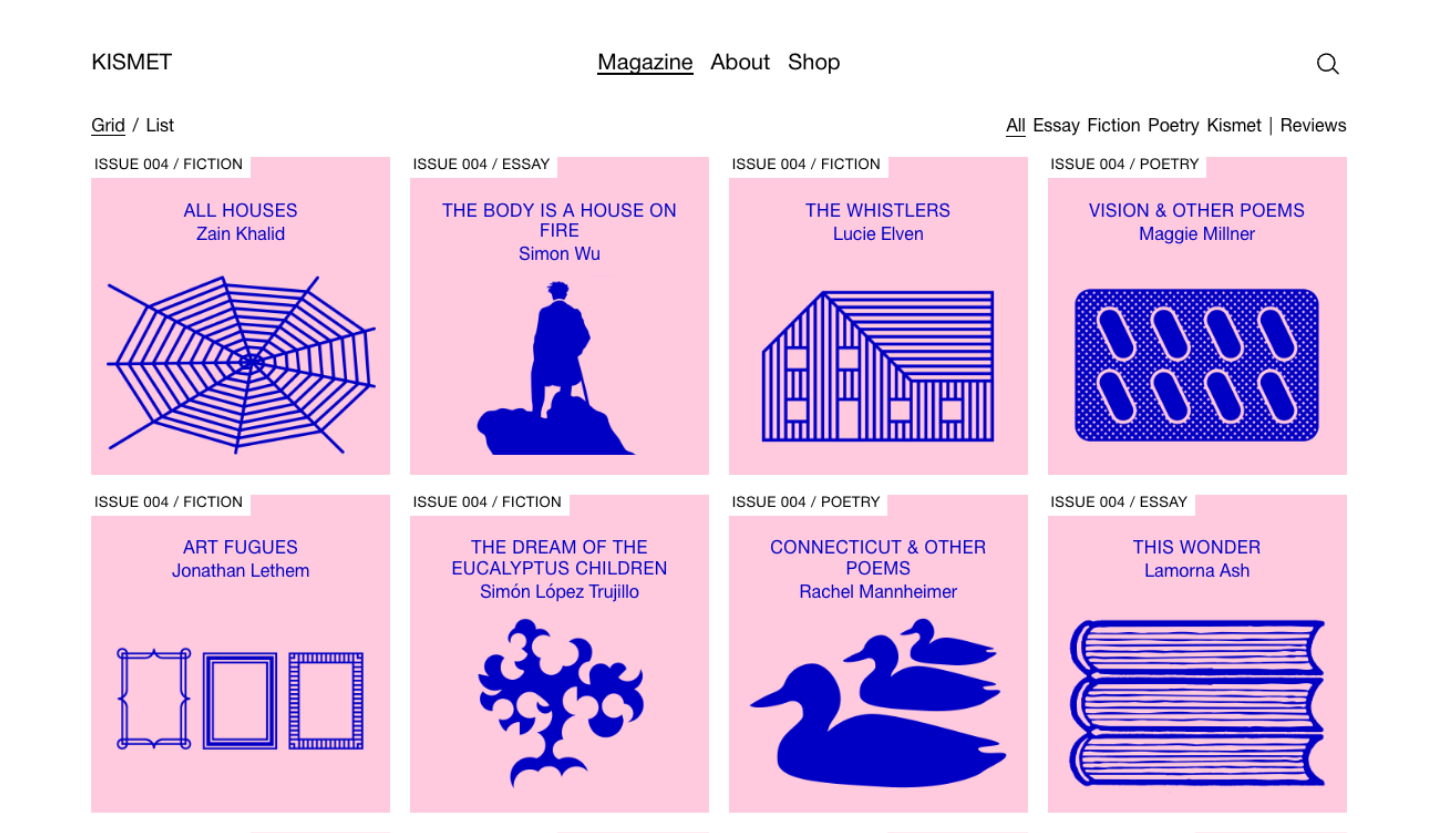
On the Kismet ‘About Page’ it says the magazine ‘aims to make space for diverging voices to pursue new ways of speaking to our longing for transcendence’. Why do you think that’s important right now?
In the context of the United States, and maybe even more globally, the right has had almost carte blanche over the space of religion and spirituality, and I think it’s been harnessed to ideas and to movements that are contrary to what those beliefs are about. So, without being browbeating or didactic, we wanted to carve out some space for people to be religious, spiritual, mystical, but also have the humanistic values—maybe you’d call them left-wing values—that we would ascribe to those things.
But I would also say that Kismet is first and foremost a literary magazine. For example, the first issue with César Aira, he was one of a few people who said, ‘I don’t think I’m religious or spiritual.’ Approaching these writers, I had to read some of their work back to them and explain that it was also what we’re talking about. Looking through our back issues, you can see we’re more about agony and ecstasy, not fire and brimstone. We don’t really have an agenda. We want to give space to writers to ask questions rather than provide answers.
I enjoyed your recent piece by Paul Dalla Rosa where he explored stoicism.
That’s going to be a monthly column, a little bit based on the ‘Grub Street Diet’, which is a column here in New York where a celebrity or an author writes down what they eat and who they eat it with all week. We thought with this one, to have a bit of fun with it, we’d get something sort of high-minded like Marcus Aurelius’s Meditations and get a writer like Paul to do his best to live stoically.
We’ve got more coming down the line with that. In November, it’s the 25th anniversary of The Secret. It’s going to be fun to assign a writer to live that for a week. Megan Nolan’s doing one that’s based on a book of advice from Catholic nuns. We want to strike a balance with the magazine where it can be fun, hopefully a lot of fun, but not just for giggles. There’s this wisdom in there. I am sanguine about the fact that you can be a little magpie with some of these things—you can read about Sufism and discover some things that will help your life without having a full-throttle conversion.
The right has had almost carte blanche over the space of religion and spirituality.
Living in New York, what do you make of the emergence of the Dimes Square set, a literary scene that’s had some media interest in part because of its reactionary elements and its connections to Catholicism? We don’t have a highly visible equivalent in Australia, though perhaps it’s growing in places like Substack.
There was a poll that found that over ninety per cent of Americans would claim to believe in some sort of higher being, but just over thirty per cent regularly attend a church or temple and so on. So there are a lot of people finding out about those things on their own. Lauren Jackson, who’s just started a weekly column newsletter at the New York Times called ‘Believing’, put it this way: you try and find another thing that ninety-four per cent of Americans agree on. And that’s something that is absolutely in the air here. We also launched around the same time as Cluny, which is a Catholic-backed literary magazine.
There’s a lot of scepticism around this idea of Dimes Square ‘tradcath’, whether it be performative or reactionary. For me, it still points to there being a longing and a yearning to be a part of something bigger than oneself. And I think that’s coming around in the literary world, as well as Substack and the online community. But it’s so fractured. There’s a real desire for people to be in the room together and that happens to be one of the ways it’s expressing itself at the moment in New York.
I also would say, for what it’s worth, living here, the amount of air space that Dime Square occupies compared to what is actually going on is really distended. I think that creates a bit of a bogeyman, which isn’t necessarily a bad thing—the idea of competing scenes or scenes that are at loggerheads can be healthy, you know? And you’re right, I don’t see that from a distance as much in Australia, but I’m sure it’s there. It’s maybe just happening online, in different spheres.
You’ve been publishing and reviewing Australian writers on the site. Do you keep an eye on what’s happening in Australia?
I’m obsessed with Australia. I read all the papers online still, and sometimes I pay exorbitant amounts of money to get Australian books sent over.
I think there are a lot of great writers in Australia. I’m always trying to squeeze them into my magazines where I can. As much as I moved around my whole life, I never did it because I thought Melbourne was some kind of backwater or too small or anything like that. I never get back to Melbourne and think this place is not connected with what’s going on.
Could you tell me a bit about your background and how you first got into the literary world?
I was born and raised in Box Hill. I started out doing law and arts at uni because I thought I wanted to be a diplomat. I hated law, but was learning Spanish and loved it. I wanted to drop out and they said I could do a year of the degree in Chile and keep my scholarship. That was the best student council meeting I’ve ever had in my life! I went to Santiago for a year and I got involved in the literary scene—I lived with three siblings who were from the same town as [poet and physicist] Nicanor Parra, and I was able to meet him and started doing writing workshops and things like that.
When I got back from exchange, I was studying French, Spanish and creative writing. I finished my honours and thought, What am I going to do? How am I going to have a writing life? I decided teaching would help me support myself while I wrote. I taught English in Spain and then did a PhD in Latin American literature with the University of Melbourne, but in part at the University of Buenos Aires. So, I started to get into the literary world in that way, and that is also when I started to do some translating, doing bits here and then, and then for Scribe in Melbourne.
I think there are a lot of great writers in Australia. I’m always trying to squeeze them into my magazines where I can.
What brought you over to the States?
I started doing translation at the same time as publishing fiction in places like Kill Your Darlings and some of the other great magazines, which was really exciting for me when I was still pretty young. And then it got towards the end of the PhD and it became clear to me that getting an academic position as a side job to writing just isn’t how that world works. I had this great mentor, and I was teaching Spanish 101, and I remember saying to him one day, ‘When are we going to be able to do Silvina Ocampo stories or Alejandra Pizarnik poems?’ And he’s a world-renowned Quixote expert, and he says, ‘I still teach the imperfect tense.’ I had the feeling that wasn’t really where I wanted to go.
But universities, with their travel bursaries, had allowed me to see the world and learn. I had a few friends who had done the MFA thing in the US. I applied for eight programs and all the great ones are in weird places. I ended up accepting an offer to go to Vanderbilt [University], which is in Nashville. I’d never considered going to Nashville in my life, but it was really wonderful. I got to work with Lorrie Moore and they pretty much leave you to your own devices to write. While I was doing that, I came to New York for a conference. I’d had a meeting with a publishing house where I’d done a translation, and I happened to run into Kendall Storey, who is now the editor-in-chief of [book publisher] Catapult. Long story short, we fell in love, we got married and I’ve been living up in New York for seven years.
I love a literary love story.
It gets even dorkier—we met in passing in the office, and then later that night, I was with some friends at a poetry book launch at McNally Jackson in Soho and we ran into each other. It was very New York and exciting.
As a writer and an editor, you know what it’s like to see publication from both sides. There can be a lot of emotional investment involved in that collaboration. What do you enjoy most about it?
There’s an incredible intimacy to the editing process. It’s wonderful to take a step back after the Word documents go back and forth and see where something has got to from where it’s come from. And then seeing it out in the world is also real joy.
It feels like eons ago, but last year, when I was still part-time editing for Los Angeles Review of Books, I commissioned Federico Perelmuter to write that Brodernism essay that went viral. He is in his mid-twenties, and it was meant to be a book review of a László Krasznahorkai novel, and it became this whole thing. The vitriol was out of control. He lives in Argentina, so I’m WhatsApping him, ‘Are you okay? This is getting crazy.’ And he said, ‘I’m loving every minute of this.’ (Laughs.) And now I’m seeing his career blossom. Which is to say, what I’ve loved to do as an editor is that one-on-one work but also helping someone get to where they want to go.
There’s an incredible intimacy to the editing process.
A piece of writing can take on a life of its own. It can be hard to predict how something will resonate with readers.
Absolutely. I’m not someone who chases clicks, but I definitely don’t shy away from publishing something that I think will be controversial or against the grain. The important caveat is making sure that you support the writer—if this is their argument, then you help them sharpen it and you stand behind them. I also think we’ve got to be better at disagreeing. As avenues for criticism and reviews shrink, and it becomes more what we might call coverage rather than criticism, I think it’s important to be able to have these places where ideas can butt up against each other in a productive way.
I noticed you keep reviews separate from other content on the website. Is there an ethos behind that?
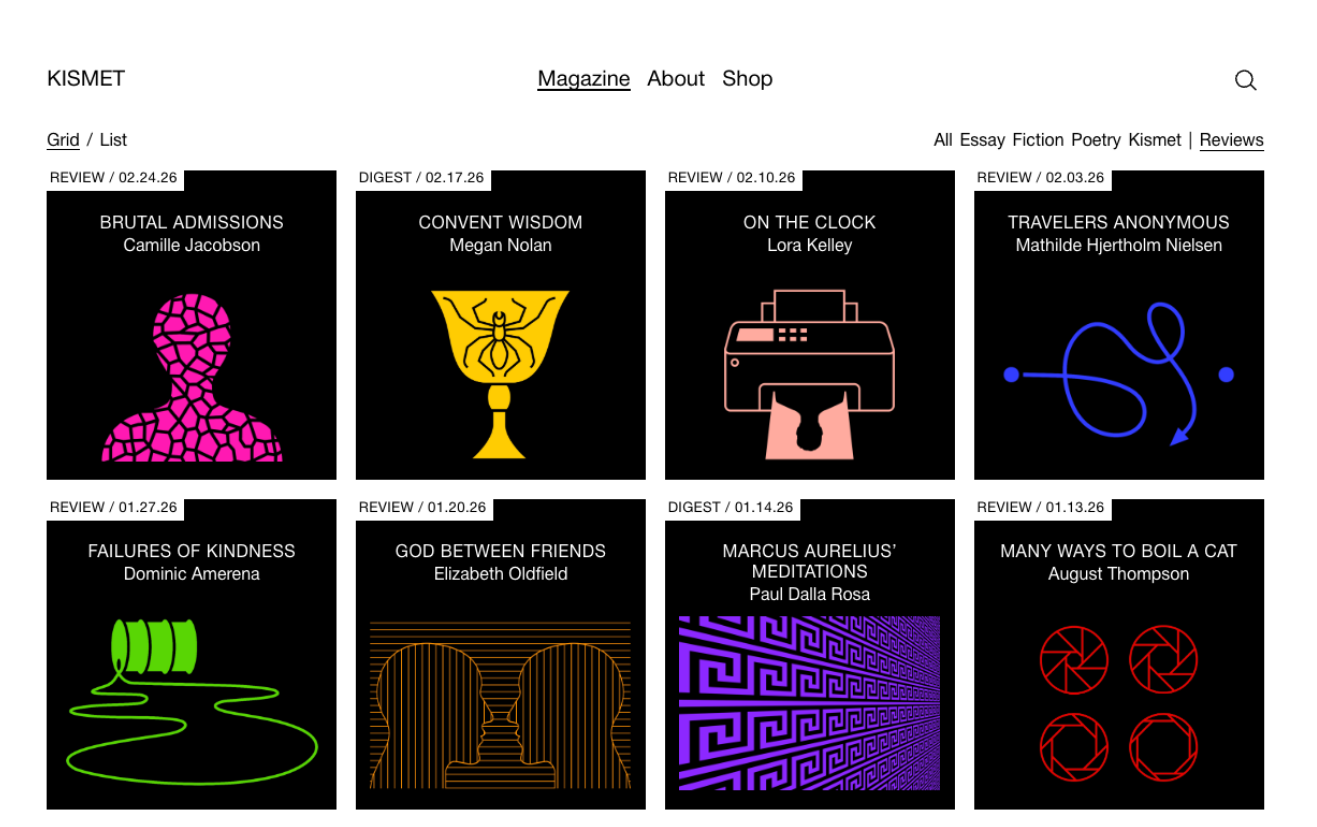
At the moment, everything’s free and online. As we go into print, we’re going to need to have some sort of subscriber system there, but we’re thinking reviews will always be online and free. We’re suffering at the moment in the US from closures of recognisable, straight-up reviewing spaces. There are still places that you might get broad-ranging essays that touch on a few different books, and we like that stuff too, but we wanted to create a book review section that is quite noticeably book reviewing.
So it’s not an ideological split like that, but we like the idea of having its own section and doing it every week as well. The rest of the magazine will probably be three times a year in big drops, whereas we like the idea of constant engagement with the literary discourse. We want to make sure that there’s an ongoing conversation.
Why do you think spaces for criticism are so important to maintain?
Criticism helps situate writing within the cultural context. We can bring literature into conversation with politics, with history, with the broader narrative. Where is the culture going? What is the culture saying?
Also, if you go and buy a new book, it might take a couple of weeks to read. You don’t know who else is reading it. Criticism is not a shortcut in a lazy way, but it allows a lot more people to participate in a cultural conversation. I absolutely love magazines like London Review of Books, New York Review of Books, Sydney Review of Books, where there might be an eight-page spread on, say, the history of shipping containers that reviews three books about shipping containers. And I’ll be honest, I’m not going to read or buy any of those three books, but that big spread probably tells me a lot of what I need to know. And I think that that’s a worthwhile role that’s more than cheating or cutting corners.
Do you have any advice for reviewers?
Meet the book on its own terms. It’s not fair to say the book should have been this when it wasn’t. I don’t think those are useful reviews. I hate those reviews personally.
Meet the book on its own terms. It’s not fair to say the book should have been this when it wasn’t.
In an interview with the Creative Independent, you talked about the flattening of literature, a homogenisation of voice that you’re seeing. What advice would you give to writers to avoid this in their work?
Obviously you’ve got to read a lot, but read things that you really respond to. I don’t believe that if you read too much Toni Morrison, you’re accidentally going to start writing like Toni Morrison. Unfortunately, if it were only that easy.
I don’t know if this is the other side of the coin of ‘kill your darlings’ as an expression, but do lean into your weird interests. One of the most bandied about workshop phrases is ‘get away from the general into the specific’. And I think that’s true of writing. I love weird, bodily things, smells, feelings, textures, niche knowledge, all that sort of stuff. I’ll follow anyone down a rabbit hole. If I can tell they’re interested, I’ll do it.
Are there any writers today who you think, as you put it on the Kismet site, capture the spirit of today?
It is always tough to put your finger on the spirit of the times as it happens. I think with literature there’s a natural lag. We’re seeing the second wave of Covid novels, for example, which have some critical distance. I think that’s been a mixed bag. George Saunders has also got a new book out, which to me has got the lag too—it feels very Obama-era liberalism that hasn’t caught up. He’s got that strong Buddhist throughline of wanting to practice radical kindness, but it ends up being a little limp, as Australian writer Dominic Amerena wrote in our pages in a review.
But in terms of writers that really have got their finger on the pulse, I think there are people like Anika J Levy, or Australian writers like Paul Dalla Rosa and Ella Baxter who, without inherently responding to the times, feel very of the time.
It is always tough to put your finger on the spirit of the times as it happens.
One of my favourite writers, who I’ve published now across four or five magazines, is Missouri Williams. Which might feel like a strange one to mention, because none of her writing is explicitly tied to even what is directly recognisable as our world. But I think there’s something stylistically and aesthetically going on that I think responds to where we’re going.
I like that Borges essay, ‘The Argentine Writer and Tradition’, where he basically says whatever you are will be inevitable in the work no matter what you write about.
All the great writers, I think, have that sort of fractal style. You could show me a page of Alexis Wright’s work and know it’s just ineffably her. Actively trying to respond to the times sometimes ends up reading as pamphleteering rather than particularly felt literature.
You’ve said that lit mags are the laboratory for what’s coming. Are you noticing any patterns or peculiarities emerging?
I’m seeing a particular tranche of influences come through—Simone Weil, Joan of Arc, a return to female mystical writing. These intense personal experiences have always been a mainstay of literature, but now we’re seeing them, at least at Kismet, inflected through some sort of miasmic greater thing, a new iteration. We’ve had our era of sad girl, boy, whoever, in an apartment in a major city, disconnected, drifting, and I think we’re starting to see a mystic element to it.
I’m also starting to see ideas around collectivity in fiction, the idea that people are working towards something and they’re not alienated, atomised individuals. Whether or not these ideas come to fruition for the characters is one thing, but I think there’s less interest now in disconnected alienation in the writing that I’m seeing, which I’m excited about, to be honest. I think we’re overdue for that.
There’s less interest now in disconnected alienation.
You mentioned print editions. What can readers expect?
It’s not going to be vastly different, but I love magazines that have bits and pieces that you wouldn’t put on a website. A classic here is the New York Review of Books personals and dating ads—you know, some fabulous eighty-five-year-old women seeking a lover on the Upper West Side who’s into French opera. Harper’s has its index. So it’ll still be recognisable. The meat of it will be fiction essays and poetry, but we’ve got a little historical, religious recipe in there. I’m trying to make a crossword in the shape of our logo, and it’s proving very difficult.
What are your hopes for Kismet in the coming years?
Just today we learned that the Washington Post is shuttering its whole book section. So we’re really keen on shoring up the reviews as a solid section. We want to expand and have more columns—art, cinema. Our plan is also to eventually branch out into books—Kismet Editions, or something like that.
What do you miss the most about Australia?
Obviously, my family and friends. But the true answer would be Pizza Shapes and sausage rolls.
Feature image by Mara Zalite. This interview has been edited for concision and clarity.