Nightclubs were a crucial part of my queer millennial coming-of-age. Current trends show a global decline in nightclubs, but is Gen Z really to blame?
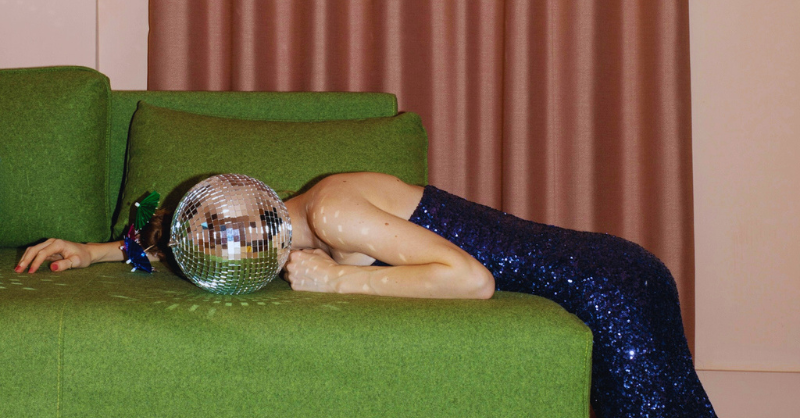


I know it’s all over for me when the lights start having a texture. By which I mean: that’s when the real fun starts. Metallic blue, cold to the skin. Fuzzy red, strobing down from the ceiling. White, in prickly shards, bursting from a disco ball. Strips of green, like wet lichen or Y2K wormlings come to life. By this point, a film of sweat covers my body, which has overridden my consciousness. My feet stomp in rhythm to the beat, my arms flailing or geometric to match the melody, the challenge accepted less about choreographic precision than physical abandon. I know I’ve hit the peak when my eyes are more often closed than open—a primary sense forgone in favour of feeling every drop, trill and tempo change that reaches my ears. When my eyes do open, it’s a tsunami of stimulation.
That special May night this year when I made it into the Berghain—the Berlin nightclub infamous for its exclusivity, ultra-long queues, twenty-four-hour weekend roster and notorious lore—was a sensory overload. Light shows. Decibels. Metal scaffolding. Leather, lace, mesh and Doc Martens in black, black, black. We’d lined up alongside folks from across the world, each hoping to be deemed worthy of entry by the bouncer—a woman with a shaved head in a floor-length coat, who wouldn’t be out of place in Dune. The third group before us in the queue, dressed more hipster than grunge: denied. The second, a straight-looking couple: also denied. The fashionable Slavic girls in front of us, whom I was sure would get in: nein. Hiding our trepidation, my partner, best friend and I—all millennials, the latter two in customary black ensembles, while the former smuggled in an all-white outfit under an oversized dark sweater—approached the bouncer. Perfunctory questions, a judgey glance up and down, and… we were in.
When I was nineteen, I both lost and found myself every Saturday night at the Melbourne nightclub Brown Alley. It was 2007 and on the agenda was Click Click, an indie-themed event whose soundtrack included VHS or Beta, Patrick Wolf, Van She and more—an oasis of art and colour that set itself against the prevailing gloominess of emo.
Perfunctory questions, a judgey glance up and down, and… we were in.
It’s probably laughable now, but we took it very seriously back then. There was an unspoken dress code (think 80s nostalgia, skinny jeans, asymmetrical haircuts, apolitical wearing of the keffiyeh), and the indie subculture prided itself on knowledge of a song or band so underground you’ve probably never heard of it. What drew me to this environment of pretentious revelry? What motivated this repeated pilgrimage involving an hour of travel by bus, train and sometimes taxi from outer-suburban Hoppers Crossing? It had something to do with the sense of communion it engendered. When you look around a dark room full of people dressed like you, moving along with you to music you mutually love, it’s a form of ecstasy in tandem—one I’d venture to compare to what devotees experience in places of worship or during big sporting matches. Something takes hold and you dissolve the boundaries of the self, relinquishing individual existence for an ephemeral shared moment. It’s almost Zen-like: a shedding of quotidian concerns as you become part of a greater whole. I was hooked on this feeling.
In the years following, as university taught me sociological concepts like Pierre Bourdieu’s cultural capital and Georg Simmel’s imitation versus differentiation, I realised it wasn’t entirely about de-selfing. Amid the dis- and reintegration was a sense of affirmation, a reminder that you—what brought you joy, what validated your taste, how you presented yourself—mattered. In the club, even if you knew no-one by name, you were never really alone. Even if you’d come from the wrong side of town or another country altogether, as long as you resonated with the ‘scene’ and it with you, you belonged. It helped my young-adult self feel less powerless in a world that told me to get my shit together quickly.
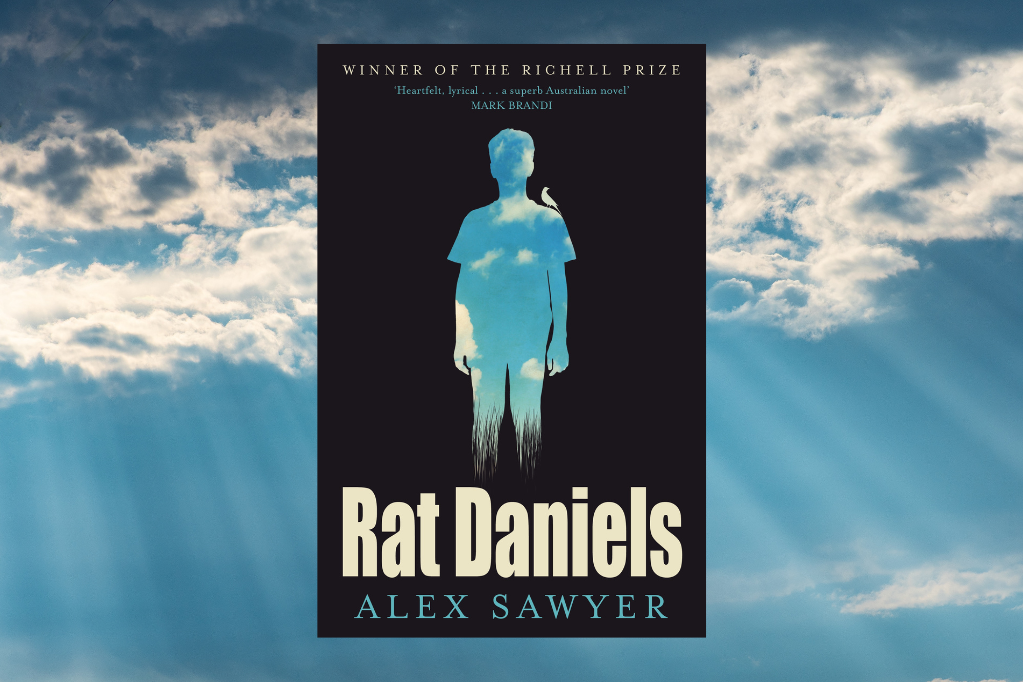
‘The club wasn’t really called the Bunker,’ narrates Nila, the protagonist of Aria Aber’s 2025 novel Good Girl. ‘But that’s what I will call it, because that’s how we experienced it: a shelter from the war of our daily lives.’ Like I was, Nila is a nineteen-year-old nightclub regular who is othered as a non-heterosexual diasporic young person. Coming of age in 2010s Berlin, she is torn between her identity as an ‘honourable girl’ who wouldn’t dare bring her Afghan parents shame and a fledgling adult ashamed of her refugee origins. Filled with rage at the world, she defies the strictures yoked to her gender and ethnicity, mirroring my own little rebellions as a queer overachiever shoehorned into the mould of the model minority.
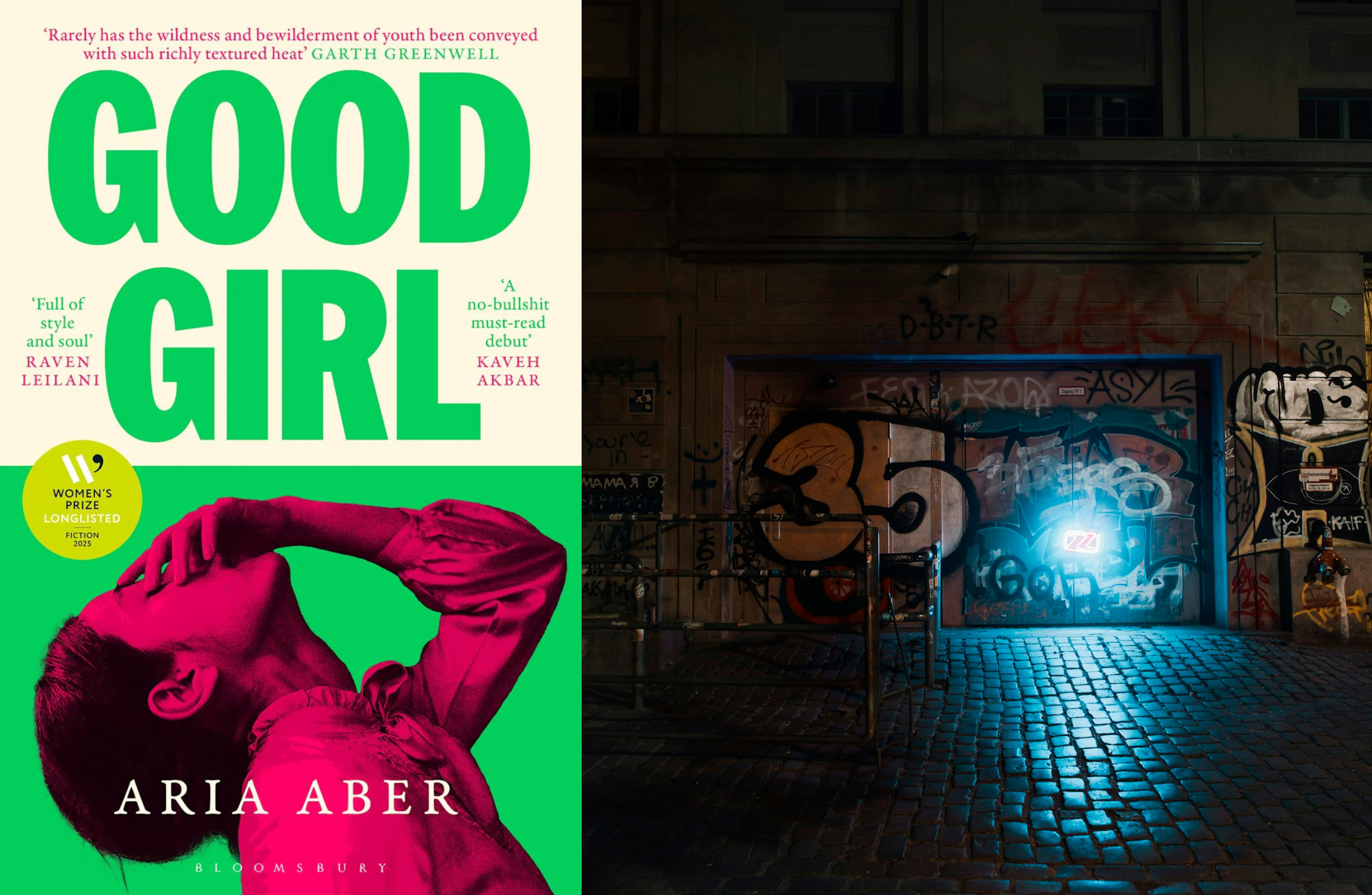
With striking evocativeness, the novel captures the club’s transcendent quality—the way that ‘any semblance of sentience was abolished and you were just a molecule’ in the sea of euphoric bodies. At heart, Nila’s dilemma is that she’s trying to find her way but exasperated by the time it’s taking; this is exacerbated by the fact that her dream of becoming a photographer jars with the ‘ugly’ multicultural neighbourhood in which she lives. And so, just as I did, she overcompensates, play-acting various guises until the right one fits. ‘Here, truth had no place,’ Nila says of the Bunker, evading for the umpteenth time the question of where she’s really from. ‘It was easier to tell a lie than to watch pity distort someone’s face.’
With striking evocativeness, the novel captures the club’s transcendent quality.
This notion of the nightclub as a sanctuary from the real world isn’t new. The earliest nightclubs—New York’s Webster Hall (founded in 1886) and the Haymarket (revamped in 1878); Paris’s Moulin Rouge (opened in 1889)—sought to unshackle their patrons, who would mingle regardless of class, colour and creed, from the repressive norms of life in the light of day. This subversive, egalitarian spirit would continue into the twentieth century. In the 20s, New York’s underground jazz clubs and Berlin’s sex- and queer-friendly venues. In the 60s and 70s, Italy’s youth-centric spaces and the USA’s countercultural discotheques (such as the infamous Studio 54). Even when commercial interest began to infiltrate the club scene in the 80s, the recalcitrant ethos persisted, giving rise to techno in Black-predominant Detroit and post-reunification Berlin, and to rave culture across Europe over the following decade.
These nocturnal cathedrals weren’t just about debauchery. Across societies, human bodies have been increasingly treated as mere raw material in the grand capitalistic production line, isolated and pushed to their limit to optimise output. But in the transgressive darkness of the dance floor, it’s the carnal, the thrill of sensual pleasure, that is prioritised. There, revellers can indulge our species’ instinct to dance—a joy-filled behaviour that’s been pivotal to relationship and community formation since before recorded history.
But something is changing—there’s a global downturn in nightclub culture. Not even Nila’s ’hood, whose techno scene was enshrined in the UNESCO Intangible Cultural Heritage list last year, has dodged this fate. While Berlin’s first techno club, Tresor (opened in 1991), and the Berghain still stand, it’s curtains for two of the city’s techno institutions: Watergate and Renate. More than half of its clubs have weathered a drop in attendance, almost two-thirds report a significant fall in revenue, and around forty-six per cent are considering shutting their doors in the next twelve months. Elsewhere, in Australia, over a quarter have called it quits, with profit margins steadily descending since 2018. In the UK, around three-quarters have ceased activity since 2005, and in the US, some nightlife operators doubt they can stay in business beyond the next three years. Since 1990, Italy has lost 2100 nightclubs—a downward trend that has halved the country’s total number. A similarly downhill outlook is seen in Singapore, South Korea and Nigeria.
In the transgressive darkness of the dance floor, it’s the carnal, the thrill of sensual pleasure, that is prioritised.
Of course, there’s no single explanation for this decline; nightclub proprietors have identified an array of causes, from inflated expenses, stricter liquor licensing, gentrification and noise complaints, to post-pandemic recovery, dwindling tourism and competition with ‘chill’ bars. Governments have their role to play in revitalising night-time economies. However, one issue many seem to agree on is that Gen Z are much less likely than their predecessors to hit the clubs. This, too, can be owed to myriad issues: the prohibitively high cost of living, a preference for socialising online and at home, and an avoidance of alcohol. That last one is a kicker, as Gen Z associates alcohol with loss of control—the same escapist sensation that enticed earlier generations onto the dance floor—and it’s from alcohol sales that nightclubs make most of their money.
Have the young Adolfos and Nilas of today truly renounced this century-long bastion of youth culture? Do they really prefer Discord watch parties while wearing pyjamas and getting turnt at frozen-yoghurt shops instead? It would be reductive to flatten an entire generation into a single, generalised wet blanket, and it’s certainly misleading to discuss ‘the nightclub’ as a monolith. If clubs have anything going for them, it’s that they’ve always been on the pulse of changing tastes and times. Nowadays, we already have a range of dance-party types, each attracting a distinct crowd: some are permanent, like the Berghain; some are scheduled within a larger venue, like Click Click was; and others cater for a particular musical genre or cultural community.
Instead of a death knell, then, perhaps we’re facing a turning point where the nightclub must continue to evolve. The world has changed so substantially, and so fast, that Gen Z are transitioning into adulthood in a drastically different way. Instead of anger at the world, their defiance stems from a desire for a better one—a world that is safer, more inclusive and more eco-friendly, which they expect to see mirrored in their entertainment spaces. They’re also more drawn to parties with a strong sense of community and novelty, ones that offer curated and less fleeting experiences. Most notably, fun from a Gen-Z perspective doesn’t preclude responsibility, and so, on top of low- and no-alcohol drink options, they’re eager for earlier start and end times. We’re even witnessing the birth of what’s been dubbed ‘soft clubbing’: wholesome daytime or evening celebrations in more intimate sites like cafes and shops. Whereas we exited the Berghain past 8am and lost most of the day to recovery, Gen Z may simply prefer to rest well and have a proper full day post-club. I can imagine that, for them, the nightclub is less an escape that blocks out ‘the war of our daily lives’ and more like a game session or livestream among many to log into. If they’re to let go and let loose as we did, they’ll do so without straining their bodies, brains and bank accounts.
In 2024, I was roped into attending a Chappell Roan–themed night at Brunswick’s Stay Gold—back when I shamefully hadn’t heard of Chappell Roan at all. The doors had opened at a respectable 11pm, and my companions and I (again, all millennials) were surrounded by Gen Zs in cowboy hats, flared pants, 80s-style make-up and assorted shades of pink. Punctuating the free dancing were several drag shows, which the young’uns sang along to, seemingly knowing every word and melodic flourish. I realised then that this event wasn’t intended for me—the crowd was cutesy and earnest, and the venue didn’t have Berghain’s anarchic vibe and explicit transgression (no multi-use toilet cubicles nor kinky darkrooms here!). So I couldn’t quite lose myself in the moment nor forget that, after this, my alcohol-free self would have to drive all the way back home to St Kilda. Yet, by the end, swept up in the communal merriment, my friends and I felt that we did belong. Elated by association, I was reminded that the nightclub’s allure remains strong, and that the kids are damn well gonna keep on dancing, at the Pink Pony or some other club where, as Nila muses, ‘the machines of our bodies [can] roam free and dream’.