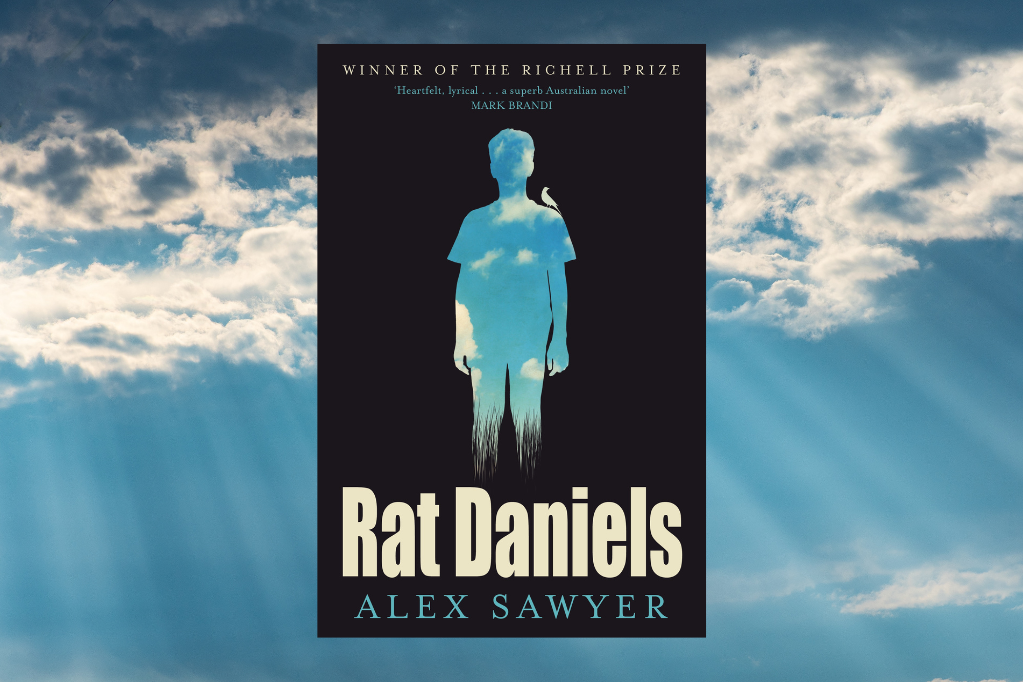
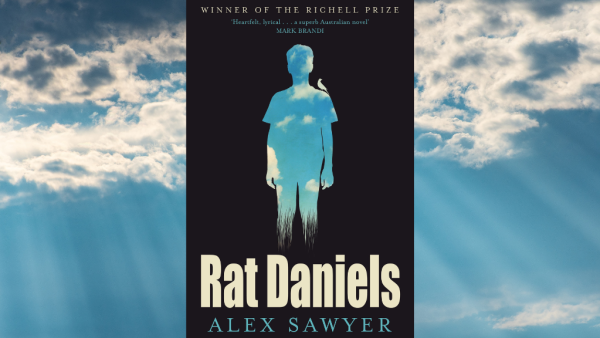
History meets horror in this spine-tingling twist on the colonial bush story.


Coming back up the track to his cottage, Arthur saw lights burning in the big house while the night wind carried to him the sound of laughter and voices. He stopped with one hand on the rotting fence to listen.
Arthur was surprised that the family were still awake. He could hear all three of them: McCabe, his wife and young Penny. It sounded like McCabe was retelling some happy story. His deep voice seemed to roll like a marble through the groove of a practised narrative. Penny sometimes interjected sweetly. McCabe’s wife chuckled and spoke half to herself, her hands occupied with a piece of needlework, rather like his own mother—so Arthur imagined, as he stood there in the dark, listening, unable to distinguish individual words, only the interplay of the voices, like a routine performed by three dancers.
As he watched, the lights in the windows of the house began to gutter and burn low. Drawing his coat around himself, Arthur continued on into his cottage. He could still hear, very faintly, the family talking. Amazing how their voices travelled.
The letter from Anne was lying on the table in the kitchen. He saw with regret that he had torn the envelope in his haste to access its contents. He should have gone up to the house and borrowed a penknife.
He could still hear, very faintly, the family talking. Amazing how their voices travelled.
He lay down on the narrow bed and re-read the letter once more by moonlight. At heart you are an honest man, she had written. Those words resolved nothing but left him the sensual pleasure of admiring her calligraphy. Her dark and elegant script recalled to him the ninety-nine names of God as he had seen them inscribed on the sky-coloured dome of a little mosque—a tekke they had called it, shrine of a holy man, in a city on the Black Sea. He remembered the smell of fried fish drifting in off the street, the sound of gulls, murmurous prayers all around…
He drifted away with the letter resting on his chest. When he woke the sun had risen. He folded up the letter carefully and placed it back in its envelope. He walked to the doorway and looked out across the half-cleared countryside. It was a lovely day; the branches of the eucalypts formed a shimmering band of green and grey along the edge of the pasture. A few wallabies had come out of the bush to graze amicably amongst McCabe’s sheep. The curtains were drawn in the windows of the big house. He saw Magpie coming slowly up the hill to the cottage, his shadow interrupting the sunlit path.
‘Hullo, Magpie,’ Arthur called. ‘Have you come to help me with my garden?’
When Magpie heard his name, he looked up and smiled. He opened his mouth as if to utter a greeting but did not speak.
Magpie was attached to the family in a capacity that was obscure but apparently permanent. He clearly had an immediate white ancestor, with his honey-coloured complexion and bluish eyes. His features were broad, at once weathered and youthful. Arthur found Magpie’s appearance fascinating; it reminded him of descriptions he had read of Huns and Tartars and other steppe peoples. He had never asked McCabe about Magpie’s origins, and he hardly ever saw the family speaking with him. Arthur wasn’t even sure where he slept at night.
Subscribe to stay in the loop
Be the first to read new stories, discover publishing opportunities, and access resources. For people who love great writing.
Magpie came to the door of the cottage and looked about with his hands resting in the pockets of his grey woollen trousers. The buttons were misaligned on the old shirt he wore and some strands of the dark hair on his belly poked out into view. He glanced up at the dying eucalypt that stood next to the cottage and pointed out a kookaburra resting on one of the lower branches.
‘Yes, Magpie, I see it,’ said Arthur.
Magpie threw his head back and convulsed his golden throat, producing the amplified sound of a kookaburra. His eyes rolled in Arthur’s direction for his approval. Arthur smiled and nodded.
‘Very good, Magpie,’ said Arthur. ‘You know, I have plans of taking you to the opera someday. I believe you could teach them a thing or two.’
All of the natives were good mimics, but in Magpie the skill was heightened to a preternatural degree. It gave him a great facility with animals; they often seemed to wonder whether he might be one of their own. As in this case: the kookaburra in the branch was looking down at him as if it had witnessed a startling metamorphosis. Then, after a few moments, it opened its brown-black beak and released its own defiant cry. Magpie laughed aloud in delight.
‘Come on inside, Magpie,’ Arthur said. ‘I’ll make some tea.’
They went into the house. While Arthur put the water on to boil, Magpie wandered about the room, his heavy feet scraping on the boards. He picked up and examined Arthur’s few possessions: a snuffbox, a pair of scissors, the blackened figure of an infantryman that had belonged to his son—blackened because his son had once cast it into the fire, and Arthur had had to fetch it out again with a pair of tongs. Arthur remembered the infantryman burning furiously, the colours of its regiment annihilated.
All of the natives were good mimics, but in Magpie the skill was heightened to a preternatural degree.
Coming back with the tea, he saw that Magpie had picked up Anne’s letter from the table and was staring at it intently. His lips were parted and his face was screwed up in concentration. Arthur froze and for a moment found himself enraged. But the feeling passed quickly. Magpie was such an innocent and had never, so far as Arthur knew, committed theft. He just had a child’s curiosity.
‘Put that back, Magpie,’ he said.
Magpie glanced up guiltily, and then with obvious reluctance placed the letter back on the table. Bending over the page, he traced with one hovering finger the shape of Anne’s lovely script, inscribing in the air the tops of the Ts and the curving tails of the Gs.
‘It’s from my wife,’ Arthur said. ‘Here.’
He took out his locket and showed Magpie the picture of Anne. Magpie peered at the tiny daguerreotype, but it did not seem to interest him as much as the letter. He nodded politely, smiling. A little offended, Arthur closed the locket and placed it back in his coat.
‘Well, let’s go outside and have our tea,’ he said. ‘It’s a pleasant day.’
They worked all day in the garden. In the late afternoon, Arthur walked up to the house to ask McCabe about borrowing some money. He wasn’t hopeful; McCabe still referred to him as ‘our guest, the swindler’ and joked that he had taken to sleeping with his lockbox beneath his bed ever since Arthur had come to the estate.
Arthur felt a sense of apprehension as he came up the path to the big stone house. The house’s name was engraved on the stone above the door in big letters: PARNASSUS. There was silence except for the sound of a raven calling out from nearby. At the top of the slope he had a good view of the sheep standing motionless in the pasture or resting with their legs folded beneath them. They had a healthy appearance; the lambs born in the past spring were beginning to swell with grey wool.
He knocked on the door and called out for McCabe. He knocked again and waited. He heard footsteps on the gravel and, turning, saw Magpie coming around the side of the house. There was still red dirt on his hands from their work in the garden.
‘Pic-nic,’ said Magpie. His voice had a pleasant nasal quality.
‘Ah,’ replied Arthur, ‘they’re out, are they? Well, come have a bit of bread with me…’ thinking, as he said it, I really am very lonely out here. No conversation, not a book to read, just birds and sheep and this smiling barbarian.
Early the next morning, while he was in the outhouse, Arthur heard the sound of hooves on the road and the creak of carriage wheels. It was Sunday; the family were leaving for church. They would see friends in town and perhaps stay the night. As the carriage passed, he heard Penny complaining to her mother. ‘I’m so cold,’ she said, ‘my whole body is cold.’ Her mother shushed her, saying that she was cold as well.
‘Yes, it’s cold down here,’ McCabe interjected gruffly, ‘but we shouldn’t complain on the Lord’s Day.’ The sound of the voices dwindled as Arthur listened, and by the time he left the outhouse the carriage had moved out of sight.
A few hours later, he heard Magpie’s kookaburra call from the garden. He went to open the door and saw Magpie standing there, grinning, with a big joint of kangaroo meat in his arms.
‘Is that for me, Magpie?’ he asked. ‘That’s very generous. Did you kill that yourself?’ He imagined that hunting was easy for Magpie, with his gift of mimicry. He could probably fool an animal right onto his spear tip.
Arthur took the joint from Magpie and went to place it in the larder. He came back and washed the blood from his hands with water from the trough.
‘Well, it’s Sunday,’ he said. ‘Nothing to do today. The family are off to church. You know, McCabe never even asks me if I’d like to come with them. Not that I would, but he says that I’m a Moslem and I spent too long with the Turks. He’s a stupid man, isn’t he, Magpie? As stupid as a pig.’
Magpie listened to this with an expression of grave concern. Arthur wondered how much he had understood. Magpie hardly ever spoke and never formed a sentence when he did, but he always appeared to grasp Arthur’s meaning. There was a kind of quickness and stealth in the motion of his porcelain-blue eyes that seemed to Arthur a sign of intelligence.
‘Come on inside, Magpie,’ he said.
The letter from Anne still lay on the table, with a roll of paper and a pen beside it. Arthur had sat down the previous evening to begin drafting a reply, but the words had not come, and he had decided to wait until he knew exactly what he wanted to tell her—until he found the perfect set of phrases that would somehow restore to him what had been lost.
Magpie hardly ever spoke and never formed a sentence when he did, but he always appeared to grasp Arthur’s meaning.
He went into the kitchen to boil the kettle. When he came back, he saw Magpie holding the letter very close to his face. He was squinting, face screwed up with concentration, as if the meaning of the letter could be discovered through a determined act of seeing alone.
‘Would you like a magnifying glass, Magpie?’ asked Arthur.
Magpie looked up sharply, crestfallen, with an expression of betrayal. Arthur felt guilty immediately.
‘I’m sorry,’ he said, ‘that was rude of me.’
Magpie placed the letter back on the table and glanced towards the open door. His large hands picked at the loose wool of his trousers.
‘Sit down,’ Arthur said. ‘Shame on McCabe, for never teaching you to read. But I’m sure he barely knows how himself.’
Magpie sat, and Arthur drew up the other chair beside him. He took the roll of paper and the pen and began to copy out the alphabet in upper and lowercase.
‘A,’ he said, ‘this is A—B, this is B, then C…’
Magpie watched the pen move across the page, engrossed. Arthur had a lot of experience with imitating the handwriting of others, and he was able to reproduce the entire alphabet in a good facsimile of Anne’s script. When he finished, Arthur was a little unsure of what he should demonstrate next. He didn’t remember being taught to read himself; it felt like something he had always known how to do.
So there’s a different sound for each letter, Arthur continued. ‘Here you go, cuh, ah, teh, that spells cat. Or deh, oh, geh—that spells dog. Or—muh, ah, geh, peh, ai, eh—but you don’t say the “e” in this one—that spells Magpie.’
He drew a little bird beneath Magpie’s name. Magpie nodded. They were both silent for a few moments. Then, parting his lips, as if he were blowing smoke out of the side of his mouth, Magpie cawed three times loudly.
‘Yes,’ Arthur said, putting the pen back in its holder. ‘That’s right, a magpie. I had better get out to the garden. We’ll pick this up again later. Why don’t you go and take some rest? Keep the Sabbath day holy, and all that.’
He picked up the page, dried the ink with his breath, and handed it to Magpie. Magpie folded it carefully and placed it in the pocket of his trousers. Then with a smile he strode towards the open door and vanished into the cold sunlight, leaving Arthur standing alone by the table with the letter from his wife.
That night Arthur woke with his arms held out to grasp Anne’s dream-figure, to close around and catch it before it could dissolve again. He realised with shame that he had been crying in his sleep. He heard laughter and animated conversation from the big house. When he looked out the window he saw a full moon with silver clouds driven like horses before it.
He threw back the bedclothes and placed his feet on the icy boards. He massaged his temples and recalled all the times he had come near to completing an act of self-murder. He would write to Anne and tell her that this situation was intolerable for him and he was coming back to Sydney; she had written that he was an honest man at heart, he would make her believe it.
Suddenly he felt wide awake. He saw that there was a candle burning on the table in the kitchen, nearly burned down to its base.
He got to his feet and went to the table. There were two letters illuminated by the candle’s dying glow. They were both, he saw, in Anne’s handwriting. He bent to inspect them closely, afraid, for the moment, to disturb the letters.
The first letter was that which he had received from Anne a week earlier. The second letter was identical to the first, a masterful imitation by a hand even more skilful in forgery than his own; and in fact he could only distinguish the two letters because the ink on the second had not quite had time to dry and glistened with a viscous appearance in the moonlight.
The ink on the second had not quite had time to dry and glistened.
He stepped back from the table. The family’s voices seemed to have grown louder; they might have been right outside the cottage, although their words were still indistinct.
He had heard the family morning and night, but when had he last seen them in the flesh? It had been a few days at least. Almost a week. And he’d enjoyed being spared McCabe’s sneering jibes and the contemptuous glances of his wife—but when had he last seen them in the flesh?
Arthur put on his coat and walked to the door of the cottage. When he looked up at the big house he saw lights burning merrily in the windows; the family’s voices seemed to wind sinuously into the depths of the sky.
He walked up the hill, watching the lights and the dancing shadows they cast. The voices became clearer as he approached.
‘What a wonderful night we’ve had,’ said McCabe’s wife. ‘It’s not so cold anymore.’
‘Yes, I can feel my hands and my feet warming up,’ replied Penny. ‘It’s so nice to have visitors.’
There was a pause, and then McCabe declared in sonorous, patriarchal tones, ‘Yes, it’s been a fine evening with our family, but we must remember the bad times with the good and keep our Lord in mind always.’
Arthur heard the crackling of the hearth of the parlour, and when the firelight bathed his face and his hands, he could feel its warmth as well.
‘You’re right, Father,’ said Penny. ‘The bad times with the good.’
When Arthur came to the window and peered inside he saw Magpie sitting alone on McCabe’s mahogany chair with his hands folded on his belly. The voices of the family still chattered in the room like caged birds as Magpie conjured phantoms with the expressive power of his tongue, his golden throat seeming to swell slightly with all the lives it contained.
All at once the voices of the family were cut off in mid-phrase; the silence was as abrupt as a black shroud thrown onto a birdcage. For several moments, Magpie seemed lost in thought, looking down at his folded hands, their colouration. Then he spoke aloud, in a high, unfamiliar voice:
‘He called me Magpie because I was black and white at the same time.’
Arthur stirred and fell back from the window. He saw Magpie glance in his direction and begin to rise from McCabe’s chair; and then Arthur turned and fled, away from the big house and the warm light that spilled into the garden. Soon he was running in darkness, through fields and amidst flocks of dreaming sheep. He was pursued at first by a chorus of friendly voices that sought to draw him back with expressions of kindness and fraternity, but eventually the voices gave up, or he escaped their reach. Then he was walking in solitude beneath moon and trees. And in the parlour of the big house, the family had gathered again to reminisce.