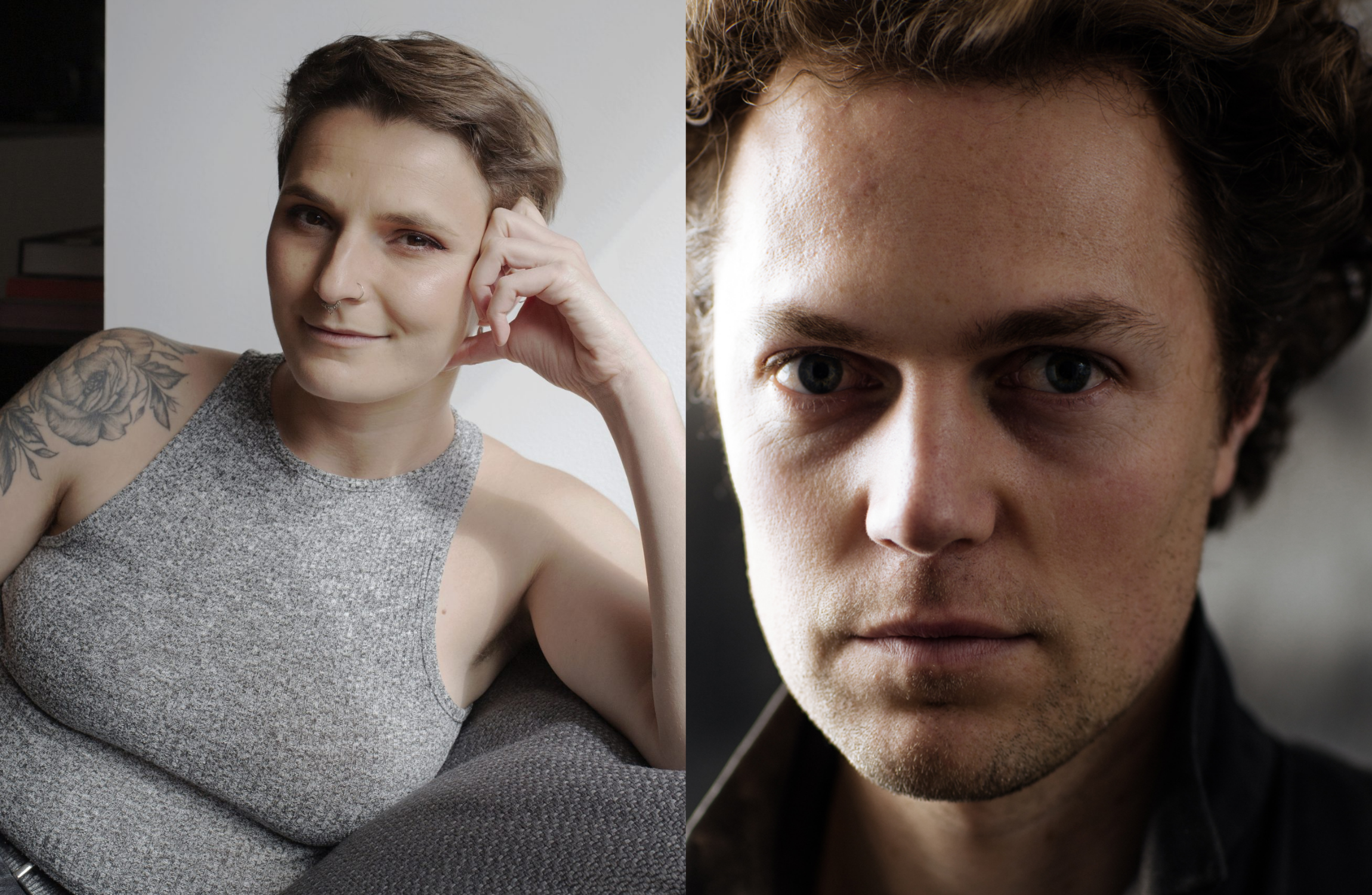
An interview with Cannon author Lee Lai.


The cartoons of Melbourne-born, Montreal-based writer-illustrator Lee Lai have graced the pages of the New Yorker, the New York Times and Granta, but she burst onto the book publishing scene in 2021 with her highly acclaimed debut, Stone Fruit. Now Lai’s follow-up, Cannon, has made Stella Prize history as the first graphic novel to win the top spot. One the eve of the announcement, Lai shared her surprise at winning, who she would have picked from the shortlist and insights into the craft of making comics.
What was your reaction when you found out you won?
Quite a decent amount of incredulity. I had literally, like the day before, been saying that I think graphic novels are on longlists and shortlists because of the novelty aspect of them—and that often trans people are as well. But I love being on the longlist and the shortlist for the Stella because it means I discover cool books. Also, it’s one of the prizes that gives money to people on the shortlist, which is really special. It’s quite celebratory in that sense. But I was completely convinced that was it for me.
I’m extremely grateful and very honoured. It is really outside of the subculture that I’m used to. Promo is not comfortable for me generally, but I’m used to doing it in comic spaces, which is quite a small niche of the literary community. And this feels very outside of that niche, and that feels very spectacular to me and also very scary. A decent amount of imposter syndrome, you know what I mean?
Who was the first person you told the good news to?
I was told to tell nobody for the entire time. And I’m not good at lying. I know that sounds kind of like a humble flex, but whatever—it’s genuinely a problem sometimes. But I did tell my sister, because she is someone who’s very good at keeping a secret—and she is also very good at bringing me out of the neurotic little holes that I can get my brain into.
Subscribe to stay in the loop
Be the first to read new stories, discover publishing opportunities, and access resources. For people who love great writing.
The Stella Prize had never been won by a graphic novel before. What does it mean to see this form be recognised by a major national award?
I have so many other cartoonists to thank who were making work ten, twenty, thirty years before me. I have those cartoonists to thank for having a career. Every time there’s a win in the comics community, everyone celebrates because it means the whole medium gets a little bit more acknowledgement. I think that work was done a little earlier in North America, where I live now, and it’s still a bit more fringe in Australia. It’s really hard to get published if you’re a cartoonist. It’s really hard to get media if you’re a cartoonist. That is the part that I feel, in a very uncomplicated way, completely thrilled about, because it’s still really hard to get comics any kind of mainstream awareness in the Australian cultural sector. I think graphic storytelling has a lot to offer the rest of the literary world. I think it’s a really special way of telling stories, and there’s a lot of incredible strangeness and subtlety to the medium. I’m really excited about this aspect of winning the prize.
It’s still really hard to get comics any kind of mainstream awareness in the Australian cultural sector.
Could you give readers who haven’t read Cannon an idea of what it is about?
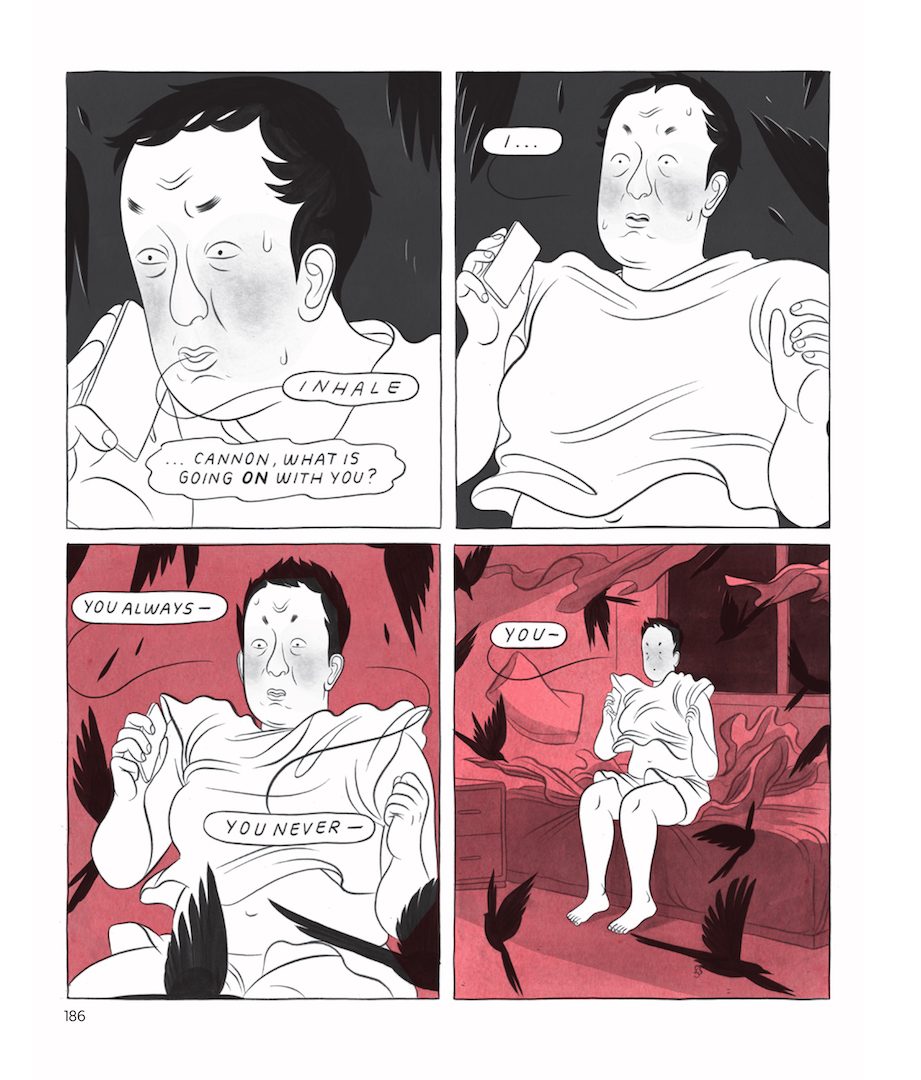
Cannon is a story that opens with a very mild-mannered, queer Chinese millennial woman who lives in Montreal and has just trashed her restaurant completely to pieces. It tracks the three months of a Montreal heatwave leading up to how she would do such a thing.
A central theme is the complexities of friendship. What do you want readers to take away from it?
Thanks for saying that. I think that’s a great take. I hope that is the take. I hope that readers take away a renewed sense of appreciation for their platonic relationships, thinking about how precious and potentially fragile and indispensable friendships can be. They are often deprioritised in stories for romantic storylines. But I think especially in queer spaces—but increasingly I’m feeling like this is for everybody—friendships are really, really special, and spaces in which we can know each other in ways that nobody else can.
Do you have any favourite books about friendship?
The one I will say with my whole chest because it’s such a great book is Detransition, Baby by Torrey Peters. The friendship between the two trans women in the book is so intimate and so special and so multifaceted. It’s such an antagonistic and beautiful and sometimes really wretched friendship. I loved every aspect of the different kinds of relationships that were happening in that book.
Were you inspired by other work when you created this book?
Little Fires Everywhere by Celeste Ng, which is not a graphic novel. It’s a really good novel. I thought the way that she moved between different characters’ subjectivities was magic. I was so envious. I immediately vowed to myself that I would try to write more intimacy between different characters as much as possible. I wanted the idea of these constellations of characters interacting with one another and affecting the relationships with one another. So that was one book that really did it for me.
But every time I read a comic or a graphic novel something about it inspires me, whether it’s just like, ‘oh, the quality of this line is really enviable and wonderful and expressive’ or ‘this kind of pacing and the panelling is really special’ or ‘I love the way that this person incorporated dialogue in this way’. There are so many Australian cartoonists I can think off the top of my head who have done that for me—Mandy Ord, Pat Grant are two.
Did you also draw from your own personal experiences?
I don’t write autobiographically. I think I would make really bad work if I wrote memoir. I don’t know how to be emotionally honest in that way. I feel like I have to cloak everything in heavy levels of fiction to be candid. But everything about the story is emotionally similar to my life. I have experienced difficult friendships, especially ones that are long-term and getting a bit messy and confusing in their longevity. And I’ve experienced resentment and a feeling of martyrdom. I’ve been selfish and petty. All these things the characters are going through, I have experienced, which is why I feel comfortable writing about it. But in fact, pretty much everything in the story is made up. Except, well, I’m queer and I live in Montreal and I’ve worked in a kitchen… so there’s a lot of proximity in that sense. But the actual events of the story have to be fictional or I’m way too embarrassed to write.
I hope that readers take away a renewed sense of appreciation for their platonic relationships.
Could you share more about your creative process?
Graphic storytelling is so fun because there are all these storytelling decisions that you make in the drawing, and then there are all these image-related decisions that you can make in the writing aspect of it. I write my script somewhat like a screenplay, and I try to edit that as rigorously as I can. And that process looks pretty much the same as your standard fiction writing in the sense that you write out a sense of the summary, you try to figure out the beats and the structure of the story, and then you flesh it out in detail.
But when you draw it—for me, there has to be a level of surprise and fun in that element. I won’t do thumbnails, for example, which a lot of cartoonists do, because there’s something about drawing the book straight onto the page and figuring it out—figuring out some of the emotionality, for example, the body language of the characters, sudden looks and how that’s affected by things like the panel grid itself. If one character is up in the top-left panel doing something in a specific emotional way, what’s happening in the bottom-right panel? How does that diagonal affect the experience of the page? The page construction itself is something that’s fun to think about. So those kinds of decisions have to be made on the fly, I think. That part means the spontaneity of it is a strength. It also means I end up having to redraw all the time.
What does the graphic novel format offer you over prose?
I wish I was the kind of writer who could do both. For me, it was just the thing I knew how to do. I come from an illustration background more than a writing background, and writing is relatively newer to me. And I think that’s part of what contributes to me feeling the imposter syndrome of winning a prize like this.
But I’ve been doing visual stories as long as I’ve been alive, so that part came first. If I could write fiction, I would, because there’s so much fiction that I read where I feel really envious of what fiction authors can do. But then maybe there are fiction authors out there feeling that way about comics. There are so many things that only comics can do as a medium distinct from film or fiction or sound or music. They all have enviable qualities. Combining them can also be beautiful.
I feel like you could write fiction.
I would like to try one day. Drawing is really hard on the body. It takes a really long time, and it’s really rough on your posture and your eyes and your hands. I gave myself carpal tunnel with this book. As I age perhaps I will stop drawing and start writing more. I feel more romantic about the writing than I do about the drawing process right now. It feels out of my skill realm right now, but I think if I tried really hard, maybe I could get there.
One of the real foundations of advice that I got coming into comics was that it doesn’t matter if the art is bad—the story has to be good. The story is the thing that comes first and the art is secondary. Obviously the art is important, but you’ve got to be a good writer. I’ve read a lot of comics, so really beautiful art does not wow me in the way that it might someone who’s just picking it up for the first time. The stuff that stays with you and the stories that you actually remember tend to be the ones where the writing is really tight and you don’t even notice the art.
You’re in really good company with the rest of the shortlist. Did you have a favourite?
Shamefully, I have not been able to read all of the books, because they’re not available in Canada where I live. It’s not like I can just run out to the store and grab a copy. But I’m biased because I discovered Evelyn Araluen’s work when we were both shortlisted in 2022 and I loved Dropbear. I’ve only read a few of the poems in The Rot but I just think she’s amazing. So that is my favourite.
I haven’t read Memorial Days by Geraldine Brooks either, but I read her work in high school. She’s a legend. But the pleasure of being on a shortlist is then slowly reading the books and being like, ‘Holy shit, I’m listed.’
Not just that—you won!
I don’t think about it that way, but, yeah, it’s wild.
This interview has been edited for concision and clarity.