For a long time, I felt like the books I consumed needed to be worthy. Seeking pleasure instead has reminded me why I fell in love with words in the first place.


Between the ages of maybe sixteen and thirty-five, I was a Very Serious Reader. Before then, I inhaled books from my local small-town library until I’d made my way through most of what they had for young people. Some things were good enough to read twice (Sweet Valley books, I remember you well). Eventually, Dad and I started taking trips to the outer city suburbs to a far bigger library that could better sate my appetite for stories. The building felt tall and grand, with enormous sections dedicated to different kinds of writing. Not just ‘Here are the children’s books’, but ‘Here’s the children’s fiction, non-fiction and picture books’, each laid out beautifully in their respective sections. Surrounded by such a bounty, I remained indiscriminate about what I read—if I liked it, it was good, and I read so much trying to find out what I liked.
I was a half-hearted Baby-Sitters Club girl, and then a whole-hearted Sweet Valley girl, even when they got dark and objectively messed up. I loved choose-your-own-adventure stories. I inhaled everything John Marsden wrote (so when he did choose-your-own-adventures, gosh, was that a good time)—I felt powerful from the trust Marsden put in young readers to make sense of complex ideas. I sank deeply into Juliet Marillier’s historical fantasy novels that reimagined folk stories. As a young reader, there were popular books and there were genre books, but there was no such concept as ‘high brow’ or ‘low brow’, or the category some consider most cringe of all, the ‘middle brow’. As a child, all books made me think and feel, and this made them worthwhile.
As a young reader, there were popular books and there were genre books, but there was no such concept as ‘high brow’ or ‘low brow’.
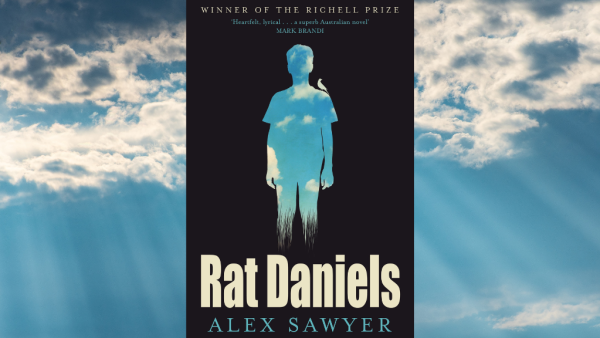
As I got older, though, something about how I read shifted. Reading came to have different uses and significance for me. I developed an awareness of social justice and felt a pull toward books that engaged with politics, even in small ways. That felt urgent and energetic, with the power to shift prejudices. At first, the injustice was simply the unbelonging of early adulthood—but later this broadened as I moved from a small town to the city and all my understandings of what the world offered different individuals shifted. A brief scan over the reading lists from my undergraduate studies shows titles like The Outsider, Wide Sargasso Sea, The Boat and Beloved. These books were formative for me. My worldview was constantly toppled and rebuilt.
I identified that I wanted to be a writer myself, and this also crowded out any books that didn’t lean heavily toward craft, experimentalism and the surprising and beautiful mastery of language. As I began aspiring to be a ‘literary person’, and then surrounding myself with like-minded people, at least part of what I read became a performance, like some kind of public measure of my taste and value—the ticket that proved I had a right to be there. Reading was partly about keeping up. The people around me talked about capital-L Literature, and to participate in those discussions meant I needed to have read all the books on all the lists. I’m a slow reader compared to my peers, and there were so many lists. I always felt like I was woefully behind.
Subscribe to stay in the loop
Be the first to read new stories, discover publishing opportunities, and access resources. For people who love great writing.
All this is not to say that I don’t enjoy literary books. There’s a zingy thrill that comes from a well-crafted sentence, a big and knotty idea, an intellectual stickiness that rewards revisiting—or at least a good chew. The rewards of this kind of writing were so new to me, so heart-shining and enormous, I found myself choosing the ‘worthy’ book over the page-turner every time. Read enough of these, I figured, and I’d conquer…something. Was it a competition? Not quite. But it was something I would never win.
Becoming a Very Serious Reader meant developing a distaste for the kinds of fandoms that had fuelled my earlier love of the written word. Those books taught me that community can be found in the silent moment when you peer over a book cover and your eyes meet with those of a fellow fan. There’s electricity in that moment—a shared secret. However, as a Serious Reader, the fervent love of a page-turner felt like it could set me apart as intellectually lazy. And so I began avoiding popular fiction.
How many books does a person get to read in a lifetime? The average lifespan of a woman in Australia is 85.1 years. Last year I read twenty-six books. If nothing else changes, I have 1224.6 books left (what book will I be partway through reading when I die, I wonder?). I have to choose what I spend those remaining books on wisely.
As a Serious Reader, the fervent love of a page-turner felt like it could set me apart as intellectually lazy.
At thirty-eight years old, I have only just rediscovered the absolute elation of fiction that moves quickly and fulfils wishes (but not too easily). During a particularly cold and bleak stretch of Melbourne’s lockdowns, I was drawn back to the power of stories to uplift my mood. I sat in my sunroom, transfixed by the audiobook of Claire Christian’s It’s Been a Pleasure, Noni Blake. I listened as the protagonist was slammed up against a wall and ravished (spicy-level five). My partner walked in and saw me staring at the sky in rapt silence. ‘What are you doing?’ he asked, and I fumbled to press pause on my private joy like a teenage boy slamming his laptop shut so his mum can’t see his porn.
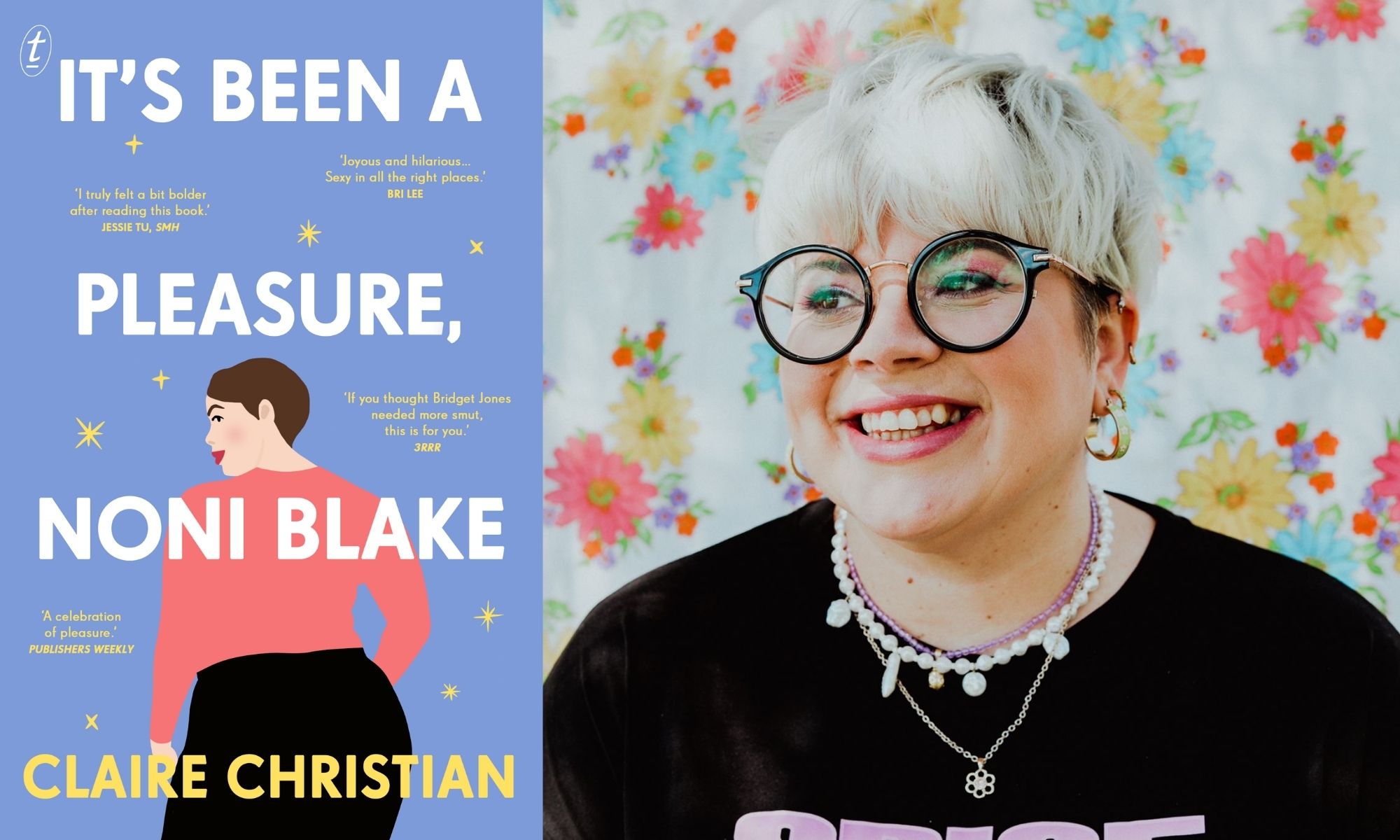
The allure of this book in particular wasn’t just the steamy, spicy bits (even though they are particularly good). The protagonist is plus-size and bisexual, and there are absolutely no questions about whether she is deserving of being the central character in a book about a pleasure quest. Christian, in writing this book, spoke to two parts of my own life that I don’t recall having seen represented in my reading before without it being A Big Deal. Noni Blake isn’t a book about fatness or bisexuality, it’s just a book where those two things exist.
Claire Christian’s work acted as a gateway, ushering popular fiction back into my reading stack. I have since taken chances on more conspicuous genre books—particularly romantasy, whose BookTok popularity provides a ready-made fandom to step straight into and whose enormous sales figures mean that many of my friends are also on board. It feels like there’s a lot more permission now to embrace fandoms—or maybe I’ve just stopped caring as I get older. They’ve long been derided because they so often are made up of young women—and anything young women find meaningful must be derided, lest they grasp the full extent of their powers and topple the whole fucking thing.
Popular and genre fiction might easily be dismissed as a meaningless escapist distraction. The belief (which I held too, until recently) is something like, ‘Literary works tap into what is deeply true about the human experience, while popular fiction can only provide a portal through which to ignore all complexities of the real world.’ And there’s no shortage of things we’re looking to distract ourselves from right now: a live-streamed genocide, literal neo-Nazi parades, a wildly unpredictable and yet somehow crushingly unsurprising rise of authoritarianism led by the US. Of course I want to look away. Sometimes.
Yet part of my newfound love of genre books comes from the way that some of them casually look at identity and systemic issues without it being a big deal at all. This was a surprise to me. Where literary books often promise a level of ‘seriousness’, genre fiction doesn’t carry the same haze of expectation. The terms of engagement set the bar lower.
Where literary books often promise a level of ‘seriousness’, genre fiction doesn’t carry the same haze of expectation.
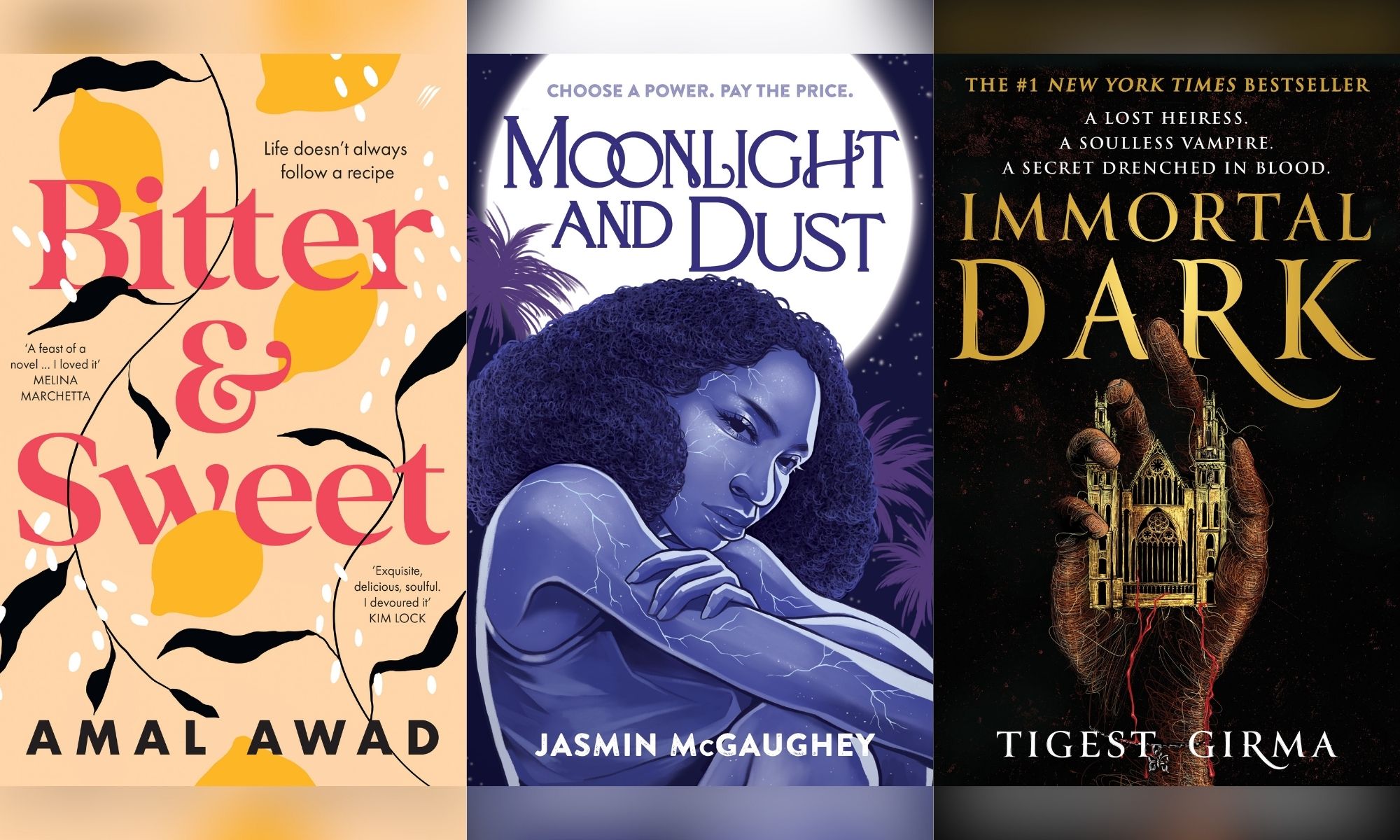
Sometimes that’s exactly what I’m looking for. I don’t want to always think explicitly and hard about big problems, but I don’t want to deny them either. I want characters who represent the world as it is, full of intersecting identities and experiences. A handful of these books have become my all-time favourites because of the ways they incorporate difficult existence into pacy, rewarding storytelling that still thinks about the things that the real world is grappling with. Rebecca Yarros’s fantasy bestseller Fourth Wing features a badass disabled protagonist—and it’s one of the most read books of the last year. Talia Hibbert’s romance Get a Life, Chloe Brown tackles medical racism. The authors’ experiences inspire both stories—indeed a valuable kind of activism on their own terms. These books sit in a canon of genre fiction offering intersectional narratives, alongside local authors like Alison Evans, Amal Awad, Kay Kerr, Jasmin McGaughey, Tigest Girma and Will Kostakis. Even the fairies are smutting against a backdrop of impending authoritarian doom, stealing steamy moments as they fight oppression.
To be a good writer, you must be a good reader—I still believe this. Now, though, I don’t believe in shirking everything else in favour of the ‘worthy’ books that I will be expected to be able to discuss in terms of the merits that might commend them for a prestigious literary prize. ‘Good’ reading means trying some of everything, the joyous and the thoughtful, the pacy and the meandering, the works whose point is to examine identity and those who wield it more casually. Perhaps even more polemically, I’ll admit this doesn’t just mean consuming the books where the craft is bang-on or demanding absolutely watertightness in every idea. Sometimes all I want is a trashy read. Given the messy but undeniable fact that people are reading less across the board, maybe reading for reading’s sake fulfils a civic duty to support the writers of the world and an industry facing significant challenges.
When faced with a day that feels like not much more than a to-do list, I’m so enjoying the permission to lose time and answerability in what I’m reading. I’m finding value and escape, representation and redress in books like Jessica Townsend’s Nevermoor, a middle-grade local alternative to Harry Potter that explores themes like the dangers of unchecked authority through a cast who aren’t white and straight by default, but whose diversity is demonstrated in ways both mundane and important. (Miss Cheery + Roshni, you have my heart.) I’m listening to fairy smut on the way to protests because I need to down-regulate before putting myself in a crowded and super-stimulating environment. A distraction can be a useful tool in a struggle too.
‘Good’ reading means trying some of everything, the joyous and the thoughtful, the pacy and the meandering.
Who is this reader? Not one whose tastes I would’ve comfortably laid claim to a few years ago. But she is happier. She is reading more widely and more consistently. She’s showing up for a quarterly ‘ancient and medieval texts’ book club (so far: The Iliad, Gilgamesh, Beowulf and Rumi’s poetry) with the same enthusiasm she harnessed for literal years waiting for the fourth instalment of the Nevermoor series, which finally arrived to whisk me away for a magical murder mystery party in April. Rhett Davis’s cli-fi magical realism novel Arborescence is next on my stack (Davis’s last book, Hovering, was a five-star read). And just like that, the whole thing regains the feeling of a buffet that I remember from the libraries of my childhood.
Given my 1224.6 remaining books, I need to be deliberate—so I am shifting my lens, shucking the internalised sexism and classism that had me carefully curating for optics, and instead reading with curiosity for what might show up in unexpected places. It has been a delight to discover that choosing reading that brings me joy doesn’t void all the other things I hope that reading can bring, as I had so carelessly assumed.
I won’t finish all the books on all the lists. I won’t enjoy some of them, and it’s okay to DNF (did-not-finish) books that don’t speak to me. I also won’t finish all the romantasy books I pick up (some are just bad). Completion is not a price I need to pay for participation.
Leave the world strewn with your half-finished books until you pick up the thing that lights you up. Read, first and foremost, for the love it.