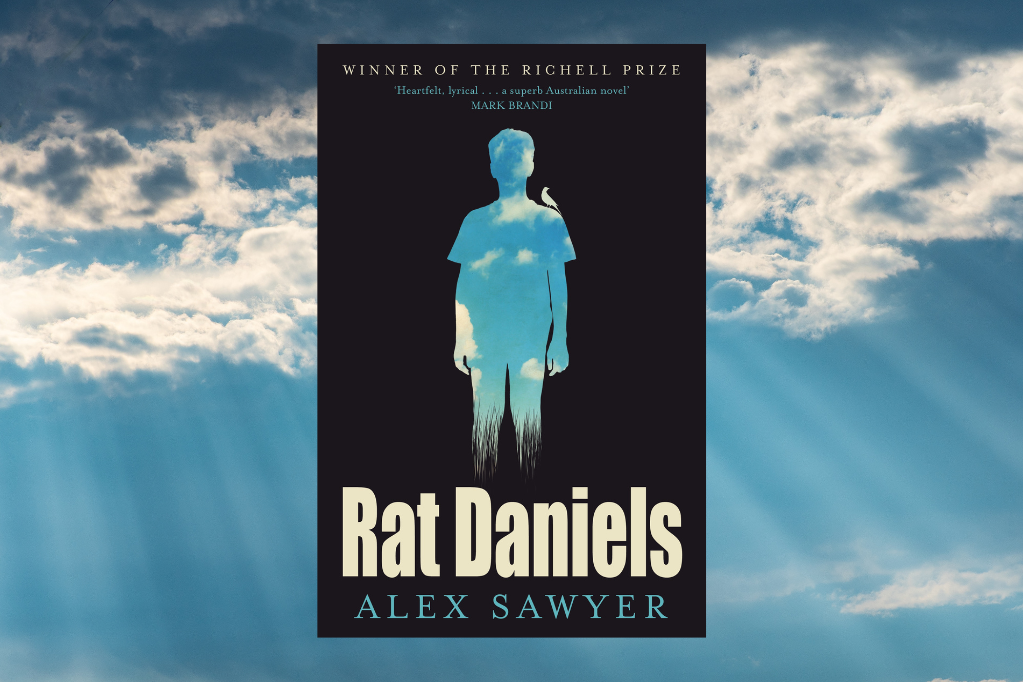
Koalas begin a great exodus in this short story by the bestselling author of All That’s Left Unsaid.
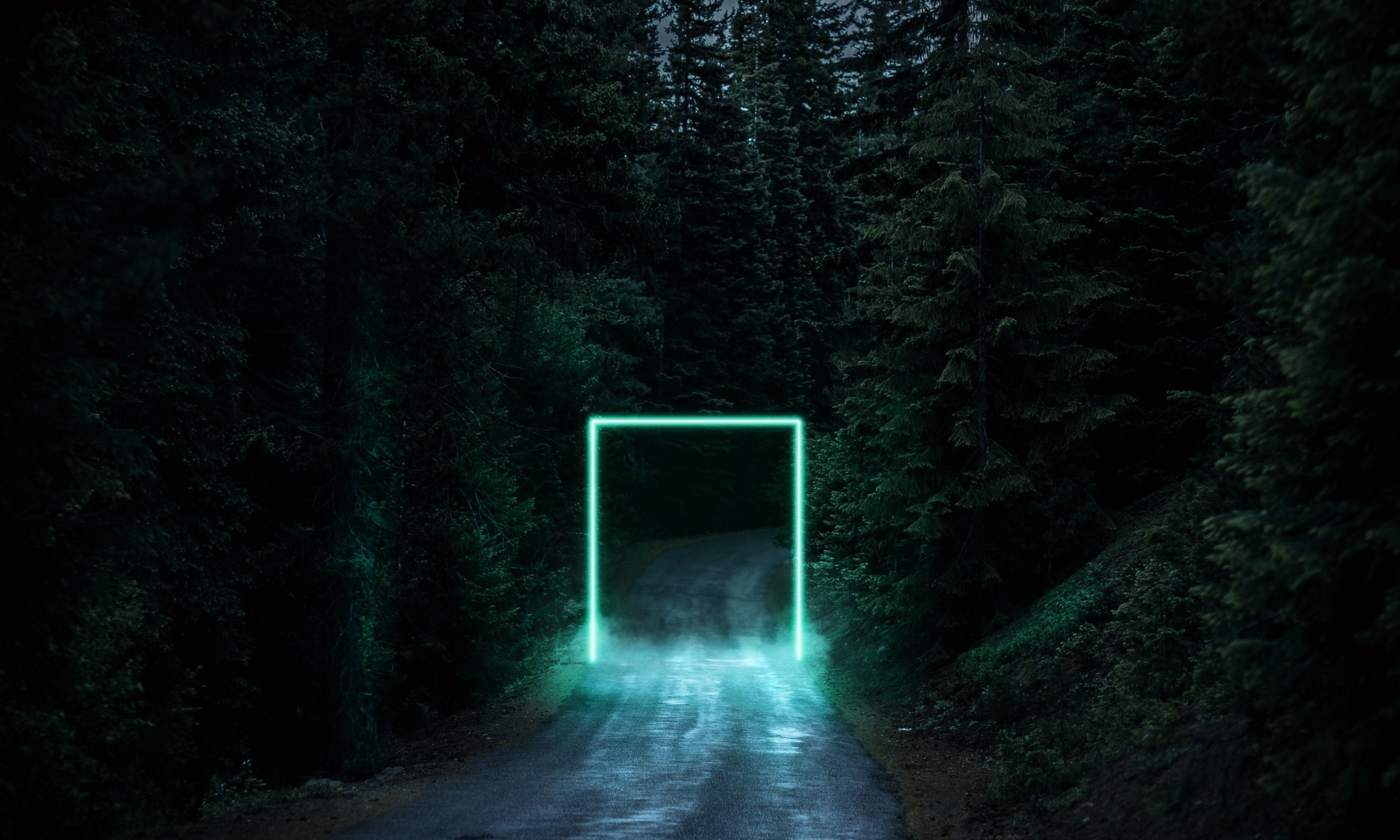


The koalas are disappearing through portals and no one knows why. Sammy listens to the reports on her kitchen radio, reads about it in the news. She sells home-and-contents insurance for Woolworths, doesn’t know much about animal behaviour, is used to staying in her lane. But, on the vanishing marsupials, she has her suspicions.
Once a month, Sammy makes the four-hour drive from Fairfield to the Port Macquarie Koala Hospital to volunteer her weekend. They don’t need her, but they don’t turn her away either. She does it because she likes the coastal drive. She does it because it feels like a grand gesture when everything else in her life feels like it fits in a teacup. She does it because, like most people, she loves koalas and, unlike most people, she has the time.
When the koala numbers begin to dwindle, volunteers and rangers suspect that it’s from recent bushfires. They were already down from deforestation, road accidents, dog attacks and marsupial chlamydia. The latest fire season, fuelled by yet another unnaturally dry and unforgiving summer, must have done the rest of them in. But then the rangers in Port Macquarie hear from the rangers in the Blue Mountains that more than a hundred koalas have been found going single file through a koala-sized portal. One second, they’re here; next second, poof!
The Blue Mountains rangers try getting through too. The University of NSW sends bug-sized robots—the kind with infrared sensors used in search and rescue. Boston Dynamics volunteers the latest iteration of its robotic quadruped, Spot. The portals always close for anything but koalas.
The koalas are disappearing through portals and no one knows why.
‘Thing is,’ says Matty, a Port Macquarie volunteer in his sixties who used to teach high-school English, ‘do we even know if the koalas are going anywhere?’ He pulls freshly laundered towels from the hospital washing machine and hands them to Diane, a retired nurse who started volunteering after she lost her husband of forty years to melanoma.
‘Another universe,’ Diane says, dropping the towels into a basket.
‘Like in Sliders?’ Sammy asks.
‘I’m sorry, hun?’
‘Sliders,’ she says.
‘The show from the nineties—’
‘I’m afraid I’m too old for that.’
‘What if they’re evaporating?’ says Matty. ‘What if they become atmosphere? What if they’re neither here nor there?’
Diane frowns.
‘I wanna write them a song,’ Matty says.
‘You should,’ says Sammy.
‘But I don’t know how.’
‘I can help you, love,’ says Diane.
‘My Larry taught music, you know. He taught me a thing or two.’
Sammy begins driving down to Port Macquarie twice a month. Folks wanting to get ahead of koala disappearances start scooping them up from the wild in laundry baskets and bringing them to the hospital. The head vet at Port Macquarie, Dr Lozza, begs locals to leave the koalas alone, that it does more harm than good to ambush a koala for no reason, that a koala will fight back if provoked.
‘Stop it!’ she pleads when more people bring healthy koalas into the hospital. ‘We’re a koala hospital, not a koala jail!’
Sammy eavesdrops on the vets as she feeds eucalyptus mush to Barbara, a grey-brown adult koala. The first time they met, Barbara, then an adolescent, had been struck by a Toyota Echo. After being patched up, she was attacked by a dog. During the recent fire season, a firefighter sweeping through a charred swathe of forest came across a tiny lone figure searching for water. Barbara’s foot pads had been roasted. Her nose— normally glossy and black—had crusted pink. Patches of fur had been scorched off her body.
‘You hear that?’ Sammy whispers to Barbara as she brings more mush to the tired creature’s mouth. ‘Can I tell you my theory?’
Barbara chews. Sammy lays out why she thinks the koalas are leaving, thinking of her parents and how they fled Vietnam. She asks Barbara, ‘Have you heard of refugees?’
The koala slow-blinks. Sammy thinks it could mean she gets it. But, then again, everything Barbara does is slow.
The animal hospitals and wildlife parks grow chaotic. Sammy begins driving to Port Macquarie every weekend to take up bandage-changing and mush-feeding duty for sick and injured animals while the other volunteers talk civilians out of kidnapping koalas from the portal lines and keeping them in their homes. The parks, nature reserves and clinics have never been better funded after an outpouring of donations. But for once they don’t know what to do with it. Physicists can’t figure out why the gateways formed or where they lead. Animal psychologists don’t know what’s causing the koalas to leave.
A portal appears inside an enclosure at Australia Zoo. The Irwins, seen holding koalas Margie and Bill, sob: ‘We’ll let them go, if that’s what they want.’ The federal government, fearful of what this means for tourism, finally decides to talk policy. The prime minister appears on air, belligerent. He blames: the Chinese, the Russians, climate change activists, environmental terrorists, tech giants, the Chinese (again), calls it a hoax, walks it back. A senator from Queensland who has spent her career disparaging First Nations people pens an op- ed in a national newspaper titled: ‘Dear Aboriginals—now is the time to do something.’ A First Nations elder responds on live TV: ‘Dear Senator—now is the time to fuck off.’
The Irwins, seen holding koalas Margie and Bill, sob: ‘We’ll let them go, if that’s what they want.’
‘I don’t know if I want to live in an Australia without koalas,’ Matty confides in Sammy after spending a morning freeing half a dozen koalas from a woman’s van. The woman, a kaftan-wearing realtor, had planned on driving the koalas she’d kidnapped from a portal line in Newcastle to Alice Springs, where she was convinced the power of Uluru would keep them safe. The woman was not aware that koalas can’t survive in the desert. ‘I mean, what does it say about us if we can’t even save something so precious?’ Matty drops his head. ‘When the world looks at us, what will they see?’
Sitting in her childhood living room, cups of tea between the three of them, Sammy and her parents watch a morning show host interview two mammologists who are at odds on what to do about the koala crisis. As the mammologists are introduced, infographics appear across the screen: Around the time of federation, humans shot and killed eight million koalas for their pelts. In a single month in 1927, eight hundred thousand koalas were killed, turned into gloves and hats.
Recently, the news bulletin reports, the official nationwide koala count was just under two hundred thousand. Although today, post portals, no one can be sure if that figure is accurate.
‘Why would anyone do that?’ Sammy’s mother says in Teochew. ‘Shooting a sleepy animal for fur? Shameful. If a koala wanted to live in our mango tree, I would allow it.’
Sammy’s parents are both retirees who spend their days in their home highlighting deals in shopping catalogues, tending to their tropical fruit trees and watching Paris By Night and Asia DVDs. They prefer the episodes with the old songs, often replaying the ones they heard back in Vietnam. Sammy once asked her father why they listened to the same ones on loop. Her father had thought for a moment. ‘It proves that we were there, that our memories are real,’ he said. ‘It proves that it was home, even if not anymore.’
The mammologists now talk about animal extinction. They talk about the last known Tasmanian tiger, Benjamin, who died alone in concrete and chicken-wire captivity in Hobart, September 1936. They play black-and-white footage of him pacing in his final days. The video is silent.
‘I had a dog in Vietnam that looked like this,’ Sammy’s father says.
‘I never knew you had a dog.’
Her father lowers his eyes.
‘We couldn’t bring the dog when we fled,’ her mother says, looking at Sammy’s father. ‘It was an old dog.’
‘We had to leave him behind,’ her father says, his eyes now on his cup of tea. He looks like he might cry.
Sammy and her mother decide to give her father privacy by looking away, at the TV. On screen, the two mammologists are in a heated debate.
Camp One: Stop the koalas from leaving. Find space in zoos, wildlife reserves, house them somewhere so that they can’t get to a portal.
Camp Two: Let them go. There’s nothing that continental Australia has left to offer. The trees are charcoal, the air perpetually choked with smoke. The threats against their lives are unabated. To make them stay would be an act of cruelty.
‘Are you asking us to give up on our national icon?’ asks Richie, the morning show host. ‘No,’ says the Camp Two mammologist. ‘I’m asking, how much can the koala bear?’
On Sammy’s next drive up to Port Macquarie, the frothy blue ocean to her right, layers of jagged rock to her left, the waves inspire a memory, the same memory she’s replayed on every drive since the portals opened, the memory that’s inspired her theory.
She’s ten years old, legs dangling over the armrest of a brand-new recliner. Her parents, faces plump, hair still mostly black, re-enact a story.
‘And then I saw a pirate ship riding the waves, coming towards us!’ her mother said, on her feet, pointing into the distance. Sammy’s eyes followed the line of her mother’s finger, landing on a bunch of Paris By Night tapes stacked on top of the VCR. ‘And I told your father, throw me overboard! I’d rather die than be taken by pirates! Because that was what pirates did back then—they would ambush your boat at sea, kidnap all the women, kill all the men. So I jumped! I jumped off the boat!’
‘And I grabbed her because drowning is a terrible way to die,’ her father said.
‘So now I’m hanging off the side of the boat, telling your father to let me go because I was ready to die, and he wouldn’t let go, so I was just dangling there like a sweet sausage! You know the sausage I put in fried rice?’
‘Yeah.’
‘Dangling, like that!’
‘And as I was pulling your mother up—’
‘And as he was trying and failing to pull me up, because we’d been at sea for five days—no food, no fresh water—we were so weak, we were going to die, your father had no strength to pull me up—’
‘As I was pulling your mother up—’
‘The pirates’ boat collided with ours and crushed my leg! I went blind from pain! I felt so much pain there was no pain! I was dead but not dead!’
‘Turns out they weren’t pirates,’ her father said.
‘My leg! It was broken all over the place!’
‘It was another fishing boat carrying refugees that had lost its way.’
‘It was broken in four places! Five places! Six places! My leg!’
‘And it turns out we were only hours from Pulau Bidong. Once we got there—’
‘They said I’d never walk again! They said I might die from having a leg so broken!’
‘They let us leave the refugee camp to go to a hospital.’
‘I had to learn to walk again!’
‘The guards let me sneak out of the refugee camp to visit your mother.’
‘It was a miracle!’
‘And once your mother recovered, she joined me in the camp, and we had to stay there a full year before resettlement.’
‘Miserable! My leg!’
‘Then why did you do it?’ Sammy asked.
‘Do what?’ her father said.
‘Become refugees. Why not just stay in Vietnam?’
And here her parents—the most youthful she can remember them being, their cheeks still fleshy and smooth, their joints not yet inflamed with arthritis—made her shuffle to the centre of the recliner so they could each take an armrest.
‘My daughter,’ her father said, resting a hand on top of her head. ‘Why do you think someone would risk everything to leave the only home they’ve known?’
Sammy shrugged. She vaguely knew that her parents had left Vietnam because of communism, but she had never really understood what that meant.
‘It’s when staying is the same as dying,’ her mother said.
‘If staying means dying, but leaving means the possibility of something else,’ her father said, ‘even if you don’t know what that something else is, even if you don’t know where you’ll end up or what will happen to you—’
‘Then,’ her mother said, leaning in and whispering into Sammy’s hair, ‘you leave.’
A koala portal opens a hundred metres from the Port Macquarie hospital. Barbara, whose paws are still in bandages, doesn’t take an interest. At least not yet. Sammy props her up in a cushioned laundry basket on the hospital’s porch. She strokes the koala’s soft head before Barbara gives her a lazy look—That’s enough.
Barbara, whose paws are still in bandages, doesn’t take an interest. At least not yet.
Together they stare at the rustling leaves on nearby gum trees. Sammy hums to avoid the silence that can swallow a species into extinction. She hums a Kylie Minogue, the theme to Blinky Bill, a few from the Backstreet Boys. She hums the Vietnamese songs her parents like from Paris By Night—the ones whose lyrics she doesn’t understand but gets the gist of.
When Barbara falls asleep, Sammy takes her inside and joins the volunteers on the grassy knoll where the portal glimmers. Matty sits on the ground with a guitar in his lap.
‘Turns out I’m pretty useless at songwriting,’ he says. ‘Not Diane’s fault. She did her best with me.’ He begins picking the chords to ‘Waltzing Matilda’. ‘How about I play us a classic instead?’
Diane is crumpled beside him in tears. Dr Lozza stands and stares with her arms crossed. Koalas—dozens of them, full-grown, lone teens, mothers with joeys on their backs—walk at a leisurely pace through a shimmering hole in the air.
Sammy sits cross-legged with her fingers in the grass. She feels her shoulders droop, her face numb. She misses the koalas. She misses them while they’re here. She knows she’ll miss them even more when they’re gone.
Matty starts to sing, those lyrics they all learned in primary school, lyrics about a different time, a different life, but whose melody rings of home. Sammy joins in. Dr Lozza too. Diane fits in song between sobs. They sing to seek forgiveness. They sing to feel less alone. They sing to quash the silence, to bid goodbye, goodbye and good luck, wherever you go.
‘Goodbye, Blinky Bill’ first appeared in New Australian Fiction 2024.