Will Albanese’s astonishing election victory mean Labor will finally address wealth inequality in Australia?



On stage at a rally this March in Colorado, American senator Bernie Sanders made a point that drew applause from the large audience: ‘I’m not a mathematician, but I do know that 99 per cent is a hell of a lot bigger number than one per cent. I do know that if we stand together, we are the vast majority of people.’
Sanders’ argument drew from a popular discourse about the state of society: a discourse about inequality. The phrase ‘we are the 99 per cent’, often erroneously credited to the late anthropologist David Graeber (he did not take credit; the source may have been a pseudonymous Tumblr), captured media headlines during the Occupy Wall Street protests. The call was taken up in Australia by prominent Occupy camps in both Melbourne and Sydney in late 2011 and early 2012. By 2013, a re-elected Barack Obama would label ‘dangerous and growing inequality’ the ‘defining challenge of our time.’
The prominence of ‘the 99 per cent’ in our contemporary discourse owes much to the work of French economist Thomas Piketty. Since the 2010s, and helped by fellow inequality scholars like Joseph Stiglitz and Tony Atkinson, Piketty’s research has swept like a cool breeze through the stuffy world of policy. His opus, Capital in the 21st Century, featured regularly on bestseller lists and the mild-mannered professor became a fixture on international speaking circuits. A researcher at the New York Federal Reserve claimed it was ‘a greater sensation upon publication than Karl Marx’s nineteenth-century Das Kapital.’
The prominence of ‘the 99 per cent’ in our contemporary discourse owes much to the work of French economist Thomas Piketty.
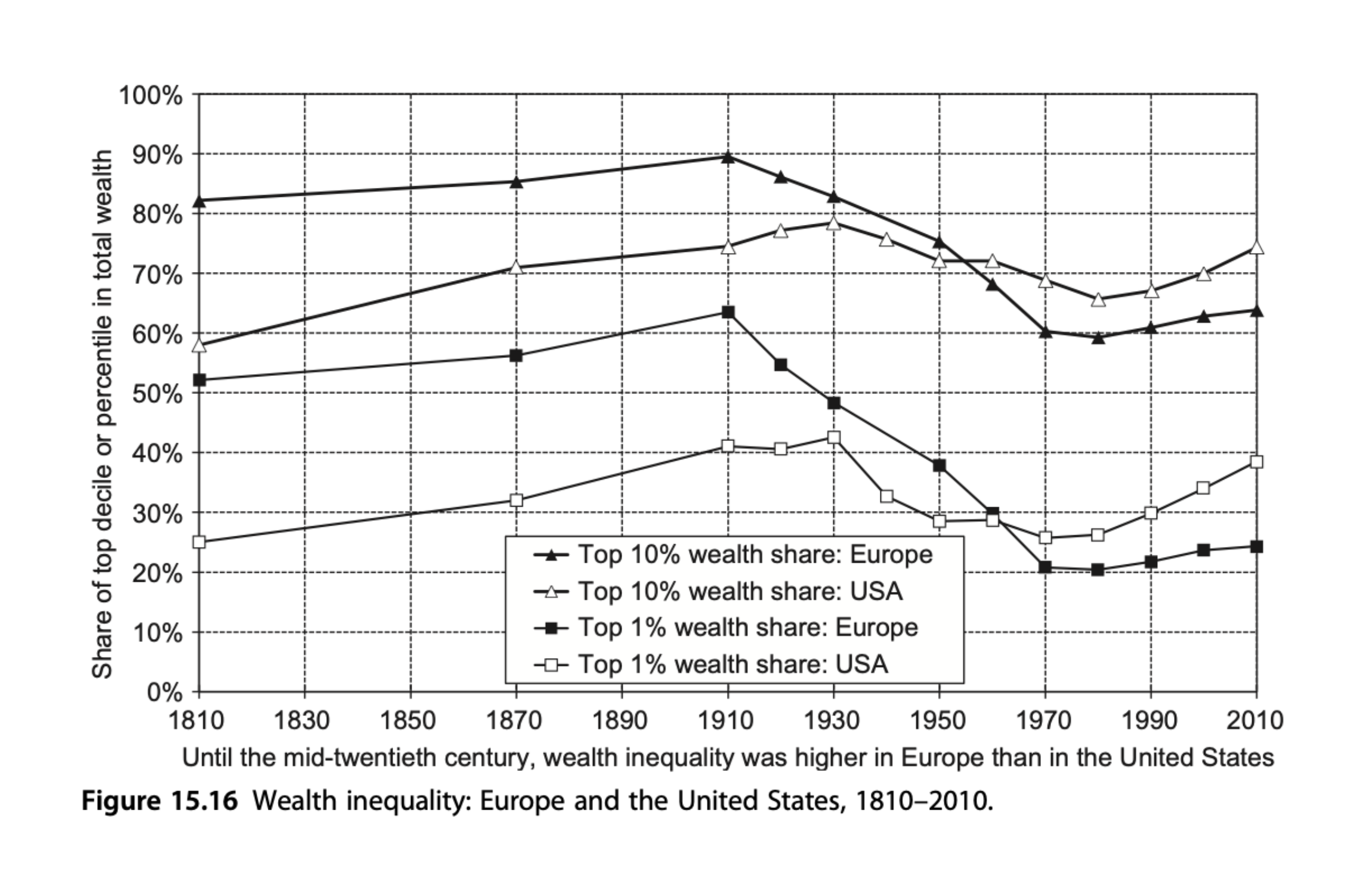
Piketty’s big claim was about the persistence of wealth. In crisp, granular analysis, Piketty charted the inexorable progress of wealth in western societies. The trend was captured in his formula, ‘r > g’. Technically, the concept was simple and well known: the rate of return to capital benefits from compound interest, a famously powerful method of accumulation, while the broader rate of economic output includes a large labour share of income, which tends to grow more slowly. As wealth accumulates, it therefore occupies a larger share of the national income. In short, wealth is accumulating faster than the economy grows.
A good example of this process, Piketty points out, is housing. We’ve just had a federal election to this backdrop: housing as an asset class has now outstripped wage growth for five decades in Australia. This has been disastrous for housing affordability but highly rewarding for owners of property. In the lead-up to 3 May, both major parties offered policies that claimed to help first-home buyers. But neither major party was prepared to touch controversial housing tax concessions like negative gearing or capital gains tax discounts. As a result, even though Labor is funding new housing investment and helping home buyers into the market by topping up their five per cent deposit, the medium-term result is likely to be steadily increasing prices.
The political implications of rising inequality are hard to miss. Wealth disparities are gaping: the 2010s saw the rise of the astonishing phenomenon of ‘centi-billionaires’, individuals like Jeff Bezos, Elon Musk, Mark Zuckerberg and Bernard Arnault who are worth more than $100 billion. Australia boasts one of the world’s richest women: Gina Rinehart, whose net wealth Forbes puts at more than $45 billion Australian dollars. We also have billionaire Clive Palmer shilling a reported $60 million on an election result that didn’t win a single seat like it’s hobby money. These plutocrats are not just the richest people in the world: they are the richest ever, enjoying day-to-day luxury on the level of the Yongle Emperor or Louis XIV.
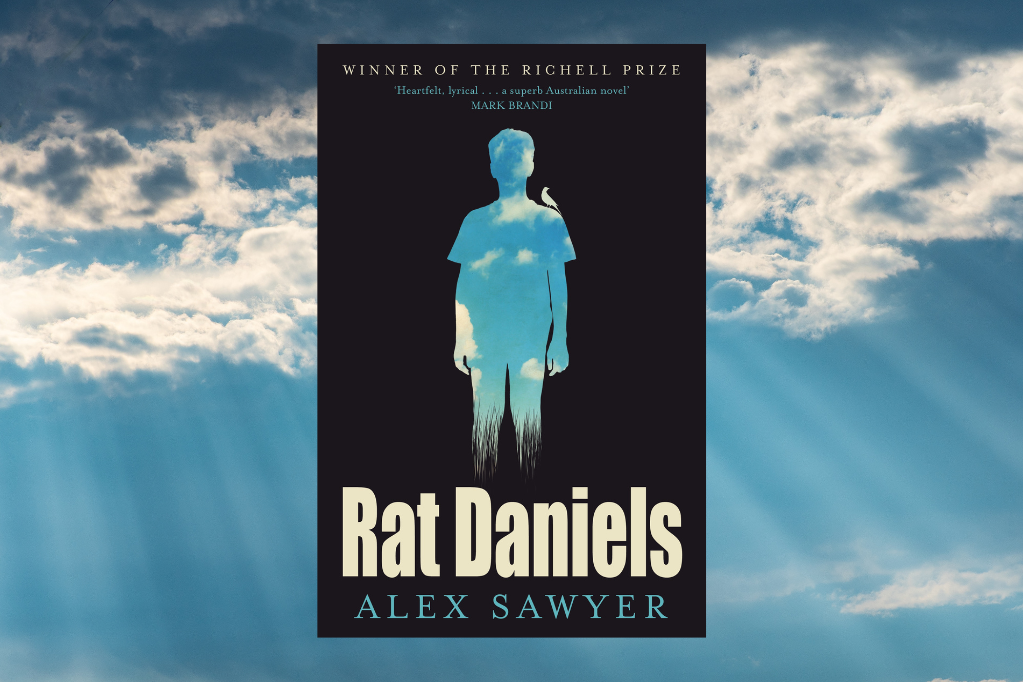
This is the context in which Piketty’s latest works, focused on the bigger picture of inequality, arrive. Two new books gloss his groundbreaking work and debate the opportunities to act on it. More like a guidebook or a policy paper, Nature, Culture and Inequality (Scribe, 2024) is a short and punchy introduction to the extent and consequences of inequality. Equality: What it Means and Why it Matters (2025, Polity Press) is a debate with the distinguished moral philosopher Michael Sandel. Both works attempt to push forward the discussion of greater social and economic equality, just at the time when the tides of politics have turned against it.
The political implications of rising inequality are hard to miss. Wealth disparities are gaping.
As Piketty convincingly establishes, human society has always been unequal, even if precise levels of inequality have shifted over time. He points out that historical events like wars and revolutions have forced big changes in wealth distribution. This longer lens allows him to see such fascinating developments as the rise of the postwar middle class and the tenfold increase in education spending in the century since 1913, measured as a share of national income. In Nature, Culture and Inequality, Piketty calls it a ‘paradox’: ‘our societies are still extremely inegalitarian, yet thanks to political battles and historical developments, they have made progress toward greater equality.’
Piketty’s other new book is a more sedate affair. Co-written with Sandel, Equality proceeds in a polite dialogue. There is a slightly Olympian quality to the discussion, which by turns veers from relatively doctrinaire moral philosophy on the limits of markets through to the motivations for Trump and Le Pen voters. Piketty’s contention that a key driver of working-class resentment in the US and Europe is job losses in deindustrialising regions is certainly plausible. But the discussion seems oddly coy about the more red-blooded enthusiasms of right-wing voters, especially on migration and race. After pandemic-related job losses, the US experienced near-full employment by 2022; unemployment has remained low since. Considering everything else that Trump says and stands for, can we really accept that working-class unemployment was the motive force of his ascendancy? The same can be said of the local rise of far-right sentiment considering Albanese’s government delivered the lowest unemployment rate in fifty years.
At the end of the dialogue, Sandel brings up the ur-text of inequality, Rousseau’s second discourse on the origins of inequality amongst men. Rousseau’s critique, Sandel reminds us, locates inequality in the origins of property rights. But ‘the idea of property depends on several prior ideas’, which Rousseau equates to human vanity and status-seeking. The rot set in early, Rousseau claimed. Because the book ends there, Piketty doesn’t get time to explore this direction. Perhaps that’s just as well. Nature-vs-nurture arguments for inequality are challenging for those, like Piketty, who might seek to re-engineer capitalism in a more equal direction.
Piketty’s policy prescriptions for more equality are indeed bold and vivid. You could call his broad position one of unusually perceptive and wide-ranging social democracy. Global wealth taxes, greater worker control of the means of production and massive North–South trade rebalancing would confiscate some of the wealth of billionaires, redress the imbalance between capital and labour, decarbonise the economy and begin the long process of helping the Global South catch up. While stopping short of Marxist revolution, such policy ideas would certainly meet savage reaction should they ever be tried.
The problem for inequality fighters, and the left more broadly, is that the political moment has turned decisively against such concerns. In the current context of what Jamie Peck has called ‘hard-shell neoliberalism’, Piketty’s agenda seems positively utopian. Around the world, reactionary forces have rallied around policies that are transparently opposed to social equality. In Hungary, an authoritarian government has dissolved universities and stacked the judiciary. In Italy, populist prime minister Giorgia Meloni pursues policies from the farthest right of any party since the second world war; her famous catchphrase is ‘I’m a women, I’m a mother, I’m Italian, I’m Christian’. In France, the Rassemblement National controls a fifth of the lower house. In Germany, the Alternative for Deutschland holds a quarter of the Bundestag. The shadow of the populist right has also loomed large over the Australian election, though the Liberal Party’s implosion under Peter Dutton offers the tantalising opportunity for a renewed focus on equality in Anthony Albanese’s second term.
The Liberal Party’s implosion under Peter Dutton offers the tantalising opportunity for a renewed focus on equality.
In the US, we hardly need to note, a nationalist-populist administration is pursuing policies so breathtakingly radical that even cynical observers have been shocked. One of the second Trump regime’s signature policies is a full-frontal assault on diversity and equity policies—the ‘D’ and ‘E’ in ‘DEI’. Trump also wants to use revenues from his vast new tariff wall to slash an estimated $4.5 trillion in taxes, mostly benefitting high-income earners.
What accounts for this right-populist backlash? As Charlotte Cavaillé has argued in her incisive Fair Enough? Support for Redistribution in the Age of Inequality, political opinions about inequality are divided not just between those who disagree about whether redistribution should occur or not but between those who disagree about whom redistribution should benefit.
Many agree we should take from the rich, but opinions divide quickly about where the funds should flow. In Australia, a 2018 Australia Institute opinion poll demonstrated significant popular support for ‘doing more to reduce income inequality’, but when Labor took a mildly redistributive housing and franking credits policy to the 2019 election, it was soundly beaten by a Coalition scare campaign that played to the vested interests of property investors and self-funded retirees. Labor hasn’t been prepared to touch negative gearing since. In the UK, recent years have actually seen popular support for redistribution decline. As Cavaillé notes, ‘there are few reasons to expect the democratic process to bring about ambitious policy responses to rising inequality’.
Indeed, much of the energy in political movements in recent years has been on the populist right; Argentina’s president Javier Milei openly campaigned against welfare benefits, while Donald Trump promised to make his wildly regressive 2017 tax cuts permanent. As Quinn Slobodian argues in his book Hayek’s Bastards, the populist right is ultimately the successor to neoliberalism, not its replacement.
We could go further and ask whether culture itself has some role to play in the persistence of inequality. The far-right publisher Andrew Breitbart is supposed to have coined the phrase ‘politics is downstream from culture‘, in lopsided homage to Antonio Gramsci, and the right has long been obsessed with the left-leaning sympathies of universities and cultural institutions. Conversely, contemporary popular culture remains obsessed with narratives of wealth and power, whether they be hedge-fund moguls (Billions), sexy merchant bankers (Industry), multi-level marketers (On Becoming a God in Central Florida), rich people on holidays (The White Lotus) or the squabbling plutocrats of Succession. If we take Breitbart’s ‘culture upstream’ thesis seriously (the right certainly does), then it should not be surprising that a significant plurality of citizens who are dissatisfied with inequality may not necessarily wish for redistribution from the rich, even if they may welcome redistribution towards themselves.
As Piketty argues, a more equal society would also be one that better distributes the basic foundations of a good life, which should include not just food, housing, health and education, but the provision of cultural experiences and participation in the civic and social life of their communities. In Nature, Culture and Inequality, Piketty observes that ‘this important lesson applies not only to education and healthcare but also to culture and the media,’ and discusses the Guardian’s Scott Trust. Ireland’s current trial of a basic income for artists has drawn a lot of interest from around the world, for this reason.
Many agree we should take from the rich, but opinions divide quickly about where the funds should flow.
It’s interesting to contrast such lofty ambitions with the nitty-gritty of day-to-day political change. Somewhat depressingly, the Albanese government’s bright start in office with its Revive policy has not quite translated into a renewed push to combat cultural inequality. While Revive delivered a welcome boost to federal cultural funding, including more funding for the National Library, a lot of the program hasn’t been rolled out yet. A dedicated literature body, Writing Australia, will start in July 2025.
In a campaign dominated by hip-pocket issues, both cultural policy and inequality issues appeared well down the list of voter priorities. Labor released a relatively minor arts policy, with no formal launch or fanfare, though it did commit to completing some of the unfinished business of its first term. The Liberal Party didn’t release an arts policy at all. It will be interesting to watch whether the re-elected Albanese government follows through on promises to implement local content quotas for streaming platforms. The future of Creative Australia, an agency in crisis under the besieged leadership of Adrian Collette, is also up for grabs. Beyond this, bigger picture questions loom about freedom of cultural expression and the health of Australia’s cultural scene.
One of the downstream effects of inequality is an erosion of social trust, and a growing resentment of liberal institutions. This is bad news for the arts and culture. As the recent Sabsabi affair demonstrates, artists and cultural institutions have found themselves on the frontline of a new culture war. With many enemies but few powerful defenders, culture is being assailed on multiple fronts. On the right, the arts are seen as bastions of wokeness and degeneracy, while on the left culture is deprioritised as less important than necessities like health, education and housing. This makes advocacy for the arts all the more difficult in the coming conflict, which will require determined defence. Artists, libraries, museums and galleries are already in the firing line in Milei’s Argentina and Trump’s America. We already have signs that this may continue here.
The day after the election, Anthony Albanese served ice-cream at a cafe in Leichhardt while promising a ‘disciplined, orderly government’ in his second term. The result of the election promises little solace in the face of wealth disparity experienced by the 99 per cent. Labor’s 2025 election platform was measured and centrist. Investing in urgent-care clinics and Medicare bulk-billing, free TAFE, tax cuts for low-income earners and legislating penalty rates for weekend work are all progressive measures. But they won’t meaningfully change the wealth distribution of Australian society. Perhaps this dramatic victory will unlock bigger ambitions. Until then, there is little to suggest Labor really wants to address the most pressing issue of our times.