Contemporary novels have absorbed our cultural obsession with food in ways that are subversive and feminist.


I’ve always been obsessed with food—not reverent, small plate, foie gras on a Tuesday night obsessed, but as a source of everyday comfort and cultural connection. Sometimes I’ve thought about it in quite a punishing way, though we’ll come to that. But more recently I’ve become obsessed with what food does in fiction as a charged, elusive narrative device. It’s the backbone of a novel that I’ve been trying to write forever, and a subject so universal it draws an opinion from almost anyone.
While it may sound niche to some, food shows up in contemporary fiction far more than you’d think—from the slow, sexy sizzle of butter in Sally Rooney’s Intermezzo to the affectionate title of Lee Lai’s Stone Fruit to the insinuating pear talk in Yael van der Wouden’s The Safekeep (literature definitely has a thing for fruit). These references tend to do one of two jobs: they’re either symbolic or utilitarian, they either carry meaning or make you hungry. Though both are welcome, the moments that linger in my mind are almost always the ones loaded with ideas, souped with subtext, flavoured with everything from longing and refusal and rot (yes, I’m going to keep making food puns). As Maria Tumarkin writes, ‘Sit in any of the larger food courts long enough and you’ll begin to see that food can be both sublime and profane in the same mouthful.’ Which is to say: food is not always just food. Lately, though, in fiction the metaphor has shed some of its subtlety—and we’re lapping it up.
Food is not always just food.
Asako Yuzuki is one author bringing what we eat to the forefront of her fiction. Her breakout novel, Butter, became a word-of-mouth phenomenon in Japan when it was first published there in 2017. It sits in a canon of East Asian literature shaking up the book industry, more recently becoming a global hit when it was released to international audiences in 2024 with its audacious upside-down cover. Similar to translated bestsellers like Nobel-winner Han Kang’s The Vegetarian (2007) and Sayaka Murata’s Convenience Store Women (2016), food appears in ways that are revelatory and subversive.
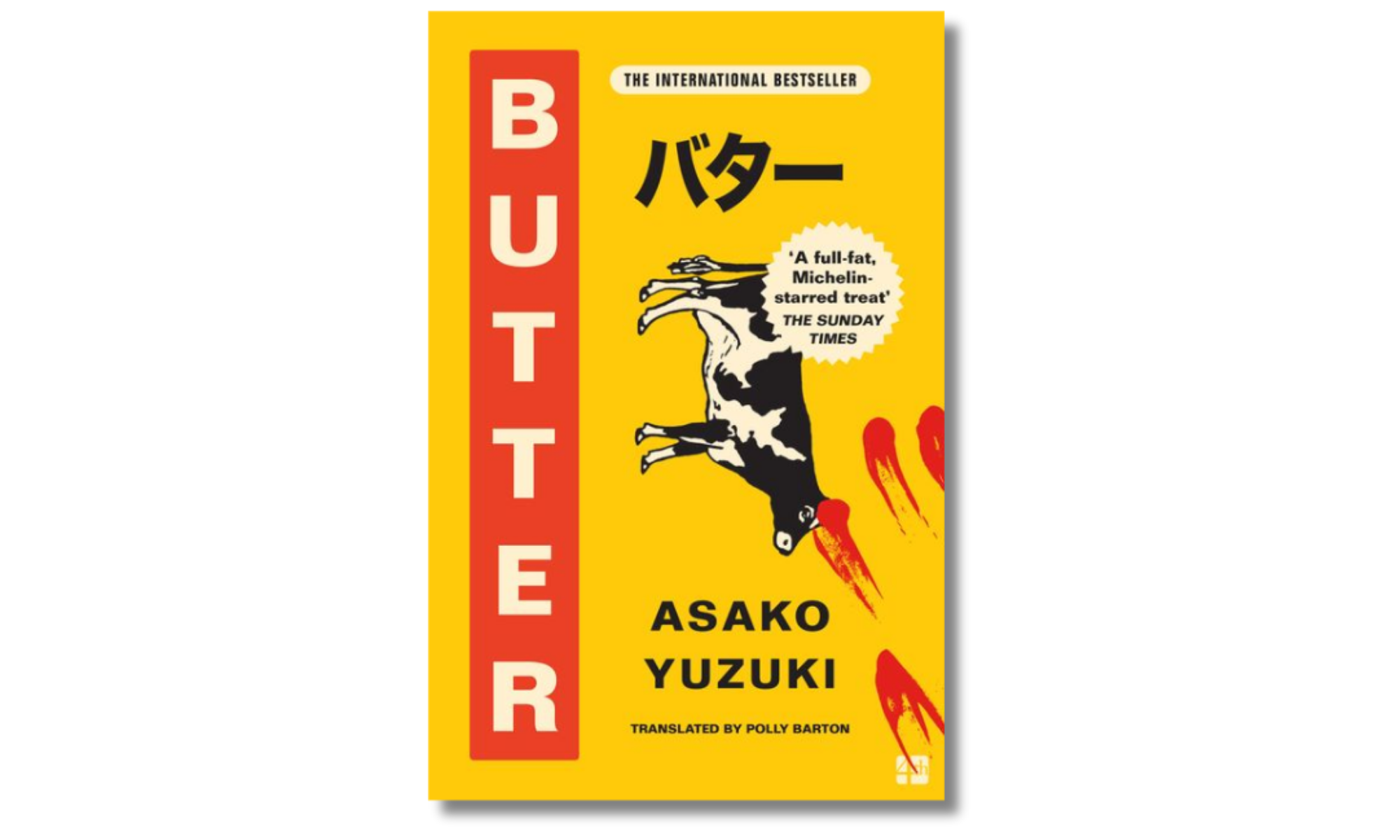
The psychological thriller follows the case of a gourmet home cook suspected of being a murderer. Her alleged weapon of choice? Rich, buttery recipes used to seduce and kill. Inspired by real case of Kanae Kijima, a Japanese woman convicted of poisoning three men she met on a dating site, the novel’s suspect, Manako Kajii, is tried twice over: once in court, and once more—far more ruthlessly—in the court of public opinion, where the press debate how a woman they deem ‘ugly and fat’ had managed to attract anyone at all. But Yuzuki is not content to let society’s standards dictate the mores of the novel—the story is a rebellion against the policing of women’s bodies. Her protagonist, Rika Machida, a journalist angling for an exclusive with the imprisoned Kajii, is drawn into a mouth-watering gastronomic exchange and dispatched on missions to seek out échiré butter, French desserts and a specific ramen only to be eaten after sex. Rika’s restricted eating patterns are contrasted with the sensual, unapologetic pleasure Kajii takes from food, and what makes way is a story that highlights the insidious nature of misogyny in contemporary Japan and its connection to body image—a situation that is unfortunately very familiar to the West.
Subscribe to stay in the loop
Be the first to read new stories, discover publishing opportunities, and access resources. For people who love great writing.
Since then so many titles have hit the shelves, glistening with fast food or sensual fruit on their jackets, that it’s hard to keep pace. The East Asian lit boom has particularly been driven by this food-centric marketing, steaming hot bowls of ramen ubiquitous on book covers to the point of aggressive commodification. As Ruby Tandoh writes in her 2026 non-fiction book, All Consuming, an exploration of modern appetites, ‘This expansive food culture is not, it bears saying, always pure of heart.’
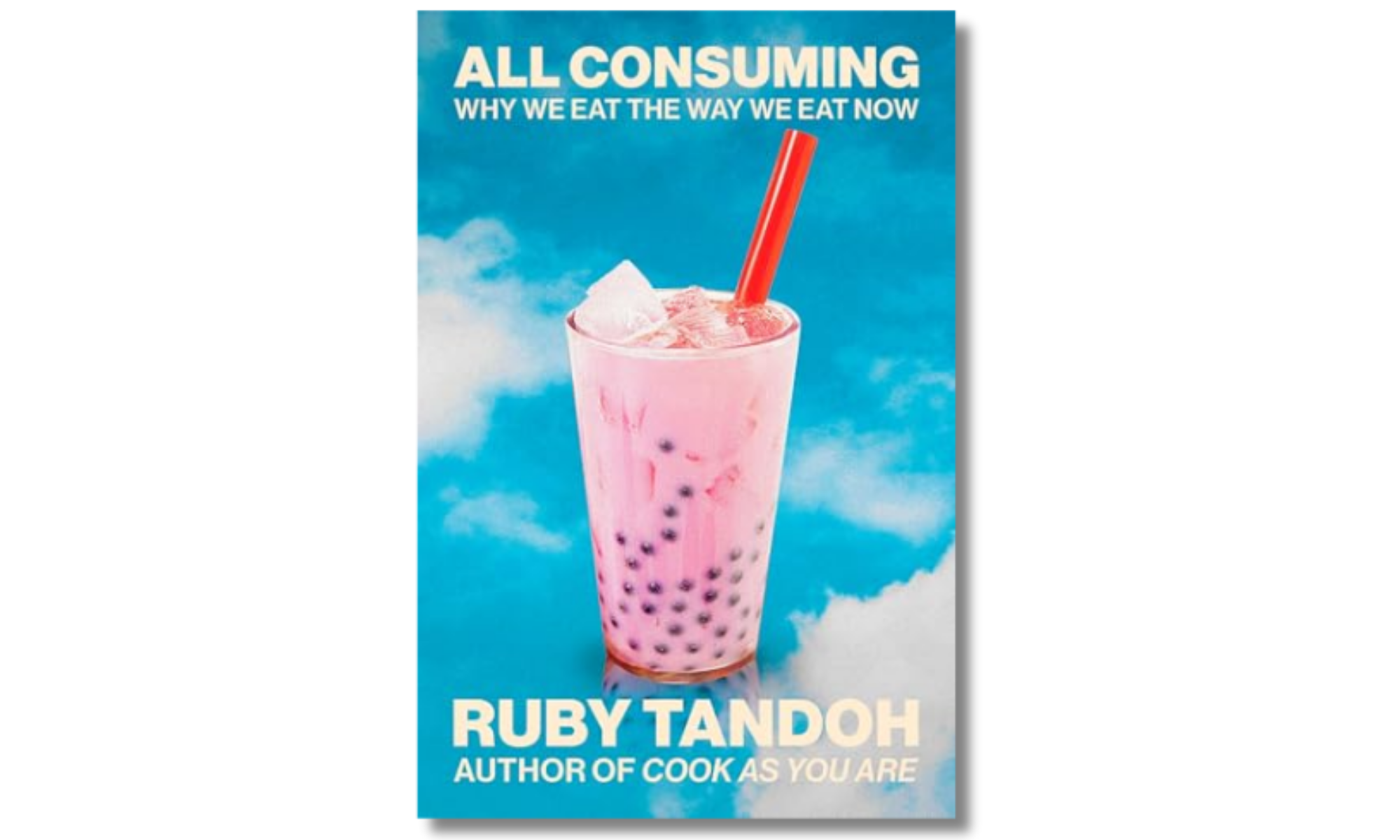
But as she notes, being into food—‘a level of obsession [that] used to belong to committed gourmands’—is mainstream culture now, and fiction, of course, is no exception: ‘People [are] reading Crying in H Mart, or Butter, or Lessons in Chemistry, or any of the other bestselling books of the last decade that are not recipe books or even food books, but are all about the connective power of what we eat.’ Readers are interested in how food can offer a small, consoling sense of intimacy in an increasingly fractured world.
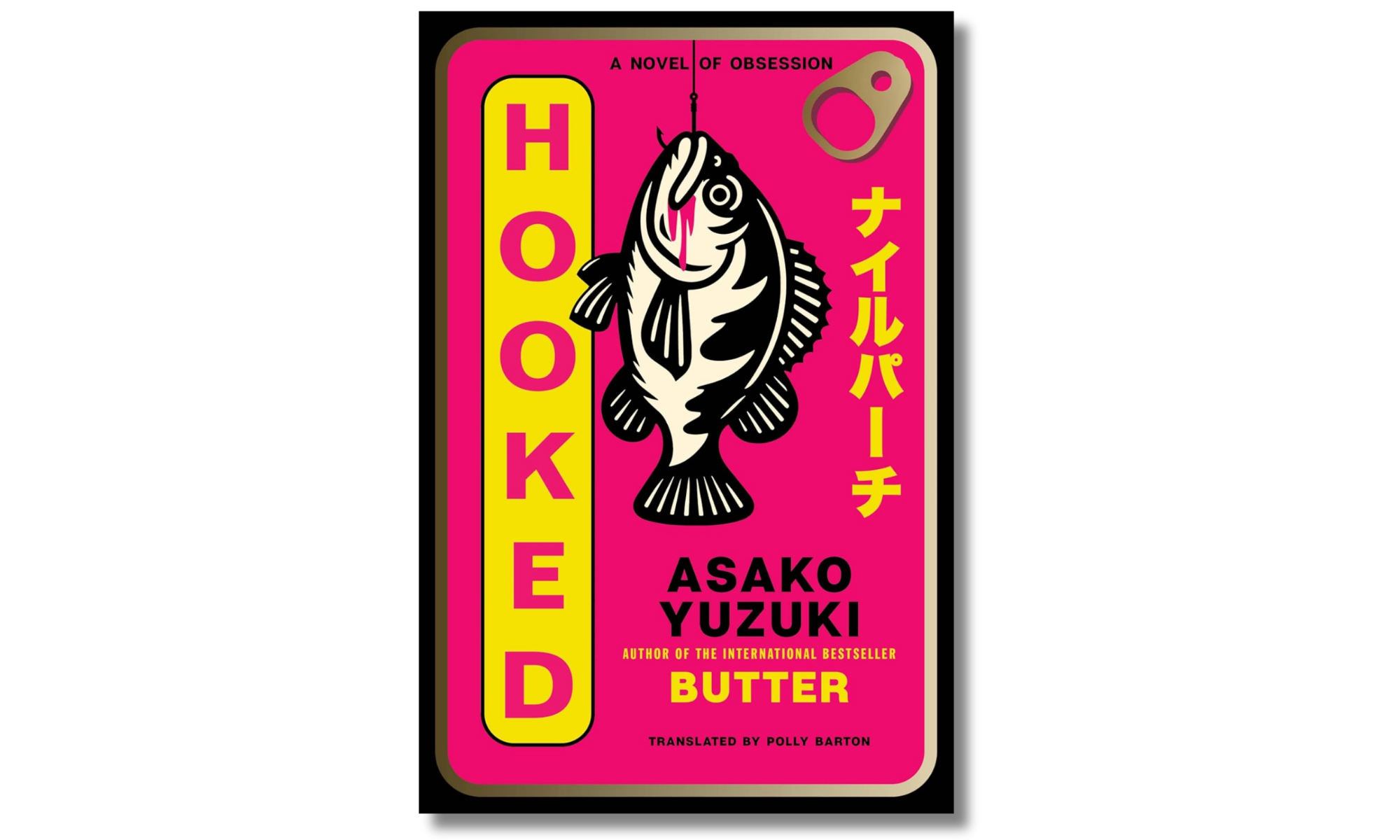
This year, Yuzuki’s follow-up novel, Hooked, originally published in 2015 in Japan with the title Nile Perch Women’s Club, and newly translated into English by Polly Barton, pushes the conversation further. It circles a question that has been gnawing at me in recent years: not just what we eat, but why now more than ever we’re so compelled to write and read about it.
While I didn’t find Butter particularly nail-biting (apart from being a vegan’s worst nightmare), Hooked amps up the psychological tension with its exploration of obsession. The story unfolds through the alternating perspectives of Eriko and Shoko—two women who, like Butter’s Rika and Kajii, embody competing, dichotomous visions of what a contemporary woman is supposed to want and who she is supposed to be. Eriko, a senior employee at a fish company, is tasked with rehabilitating the image of the ecologically damaging Nile perch. It’s a premise reminiscent of Günter Grass’s The Flounder (1977), with its wry satirising of power, domesticity and patriarchy. Alone at night, Eriko devours a blog called ‘Hallie B, The World’s Worst Wife’, run by Shoko, whose posts detail a languid convenience-store subsistence: pizza in front of the TV, packets of potato chips, corn-chowder ice lollies, alongside a husband nicknamed the Demon King.
We’re increasingly interested in how food can offer a small, consoling sense of intimacy in an increasingly fractured world.
In real life, this kind of content is so ubiquitous it’s hardly surprising it has infiltrated our fiction. The publishing industry, like appetite itself, is exquisitely sensitive to cultural weather: if we’re craving it, they’re supplying it. In the novel, however, Eriko is not only an avid reader but a participant. Friendless and lonely, she becomes fixated on trying the exact foods Shoko mentions—engawa from a revolving sushi bar, a specific brand of melon bun. This is another trend that has become so normal: a ‘cheesecake’ yoghurt-Biscoff video goes viral and suddenly we’re all attempting it; the whole internet is mukbang now. We have gone from learning how to eat from the people around us to learning from billions of voices across the world, via what Tandoh calls ‘the global food machine’.
Eriko, who conforms to Japanese beauty standards, as ‘flawlessly beautiful as any doll’, derives comfort from this mundane voyeurism of a messier kind of womanhood. She’s also representative of a sense of alienation so widespread that Japan appointed a ‘minister for loneliness’, with single working women a demographic most at risk. She extracts from Shoko’s blog a message that feels directed at her: ‘You’re fine just as you are. You can relax a bit. It’s okay to be alone.’ Her appearance begins to change, her fascination with Shoko deepens, and before long she finds herself engineering a very tentative friendship with the blogger IRL. All this fractures when the website attracts an agent and the prospect of a book deal: suddenly visible, Shoko begins cooking and photographing perfect wifely meals, reflecting that ‘without photos none of this would have any meaning at all’. Her once-casual posts stiffen into just another feed—curated, boring, conventional—and Eriko is livid. On tenterhooks too, it turns out, is Shoko’s relationship with the Demon King, which splinters under the weight of the same performance she has spent years avoiding.
Food has always been one of our most reliable connectors—to place, to memory, to other people—and yet we live in a moment where meals are simultaneously more aestheticised and more solitary than ever: hashtagged, optimised and monetised, marketed as communal and yet often eaten alone. All this while we’re witnessing people starve due to geopolitical evils, environmental collapse beckons and we’re experiencing loneliness at unprecedented levels. Maybe that’s partly why, like Eriko, we can’t stop reading and scrolling, peering into the daily lives of everyday people right down to what they consume. Hooked, like Butter, is as much about wanting community and transcendence as it is about food, a combination that East Asian translated fiction holds particularly well. Eriko watches her colleagues spill out to lunch while she remains at her desk, performing busyness, her shame feeding into the idea that for a woman to eat solo is to take up undeserved space.
And yet Hooked also represents a shift. We are, in many ways, adapting with the times—owning our aloneness and reframing it not as lack but as a quirky new autonomy. Callie Hitchcock captures the change in the essay ‘Don’t Pity a Woman Eating Alone’: a man dining solo reads as purposeful, even enviable—a professional between meetings, a flâneur with a notebook. But a lone woman with a bowl of ramen still registers as sad and a little suspicious. I feel this myself, having recently moved to the other side of the world. I’ve had to renegotiate my relationship with dining out in a way that comes so naturally to Shoko, who eats nearly all of her meals by herself. Eriko is not there yet—but she wants to be. Instead, she finds herself identifying with the Nile perch: a misunderstood creature introduced into foreign terrain by human intervention, rejected by the Japanese market and transformed by its environments into something more solitary, destructive and prone to eating its own. The metaphor lands subtly and then all at once: ‘It seemed like the shadow of an enormous fish. It took her a moment to realise it was the silhouette of her own torso, slumped over the computer, wavering from time to time.’
Perhaps unsurprisingly, Yuzuki’s novels were not widely popular when they first appeared in Japan; in fact they were criticised for being overtly feminist. ‘When I wrote Butter and Hooked, I was writing what I wanted to write,’ she remarked in the Guardian. ‘But since then society has got worse, and writing about women outsmarting each other is just going to reinforce the negative views of women.’ Her anxiety is telling: there is something uncomfortable about naming the ways women are set against one another, particularly within systems that already feed on them. To write it is to risk reinforcing it. And yet hunger in these kinds of contemporary novels keeps pulling towards something darker—women and cannibalism, women and birth, women and sex, women and violence, women and trauma. Appetite starts to feel gendered, complicated.
Like many women I know, I have a complicated relationship with food. When I was ten, my father choked on a piece of steak. His face turned pink, blue veins popping, then terrifyingly pale as he clawed at his throat. After a few hard thumps to his back, the steak flew out all grisly and bloodied—and, after a long gulp of water, he just continued eating. I couldn’t pretend as if nothing had happened. For months I chewed everything to liquid, then began eliminating meat, gummy worms, hot chips, anything that might lodge itself in my throat. Later, during my university years, I survived largely on coffee and cigarettes. Then I went gluten-free, which eventually tipped into a strict, unhealthy version of veganism—shedding clumps of hair, relying on long afternoon naps just to make it through the day. To be clear: my food-cutting was less severe than many other people experience, but it shared a familiar origin: fear and a craving for control, and the relentless pressures of digital and consumer culture definitely didn’t make it easier.
Appetite starts to feel gendered, complicated.
We’re living through a period of intense self-surveillance around eating—what it says about our discipline, our class, our politics, our bodies. Which is perhaps why there’s something almost transgressive about watching a fictional woman eat without guilt or anxiety. In Hooked, Eriko, after a breakdown at work, begins eating as she pleases and stops looking at herself in the mirror. When she finally catches her reflection, she’s horrified—before gradually settling into a calm acknowledgment: ‘This is really my original size, I was just restricting myself before and now I am not.’
Shoko’s arc runs the other way—she loses weight as she becomes more famous and her pressures mount, pointing toward a different literary tradition: the refusal. In fiction, self-denial can throw into relief the forces that produce it. Han Kang does something similar in The Vegetarian: Yeong-hye’s decision to stop eating meat is viewed as both an illness and an inconvenience by everyone around her. To abstain is, in a sense, to stop participating. The story isn’t really a commentary on vegetarianism but the deeper, darker nature of societal control.
Eating without inhibition and refusing to eat at all may seem like opposites, but in fiction they can function in the similar ways: both destabilise systems that seek to discipline the female body and challenge the notion that women’s appetites—for food, for sex, for space—must be managed, aestheticised or explained. At a moment when patriarchal structures feel newly emboldened—when bodily autonomy is being legislated away, and thinness is still being repackaged by politicians and influencers and the wellness industry and the media, and must I go on?—fiction that takes women’s hunger and agency seriously has never felt so important. As Evelyn Araluen remarks in her 2025 poetry collection, The Rot, a rail against political complacency, ‘Is my body the smallest it could be? Who wants to fucking know! There is profit in keeping you weak.’
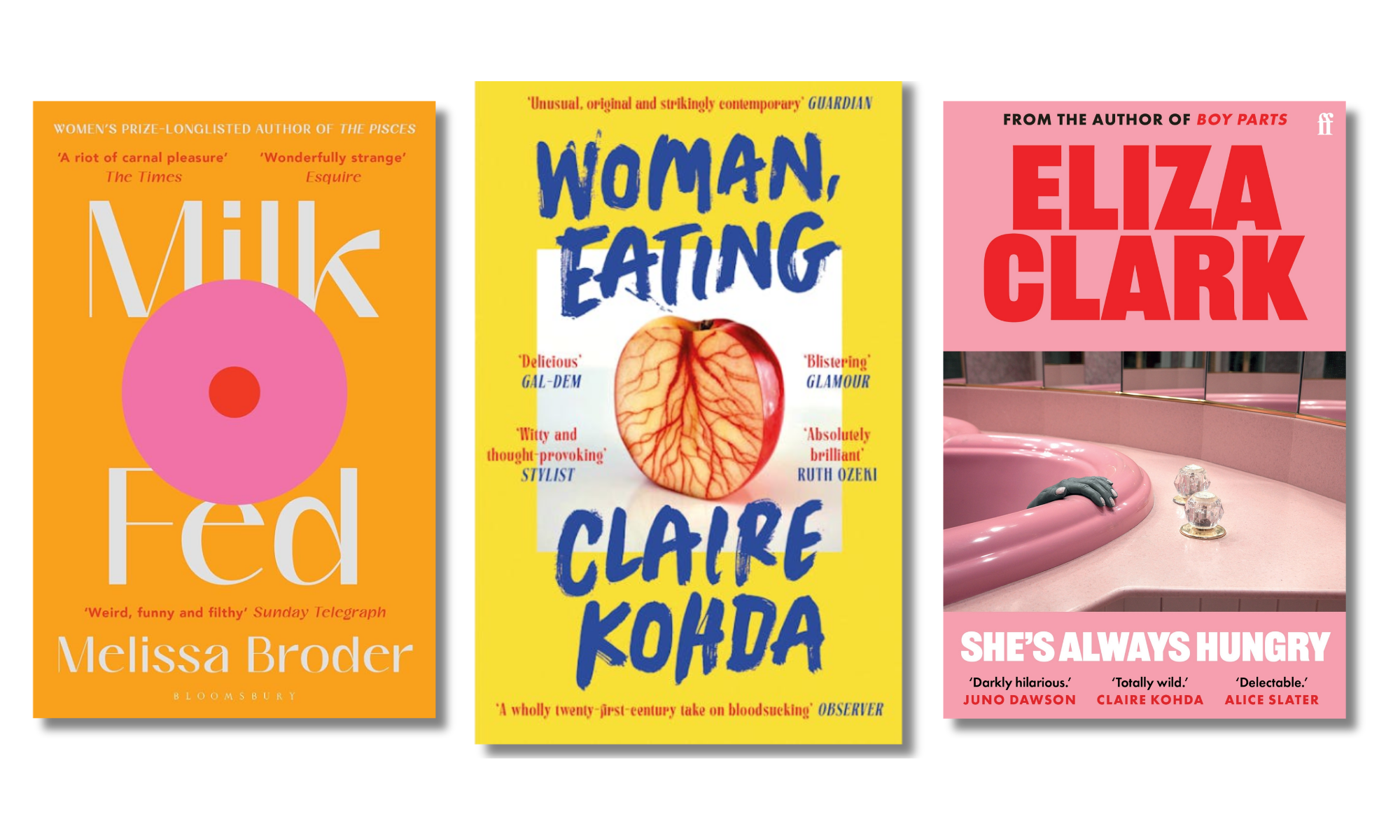
Still, why do I love to see food in novels, even when, as in RF Kuang’s Yellowface (where a character chokes on a pancake and dies), it should by all logic be triggering? Perhaps part of it is a hunger for something the literary canon has not touched on enough. Emma Specter articulates this absence in a Vogue article on Sally Rooney’s heroines, often markedly depicted as eating little or not at all, writing that ‘thin has long been the unexamined default in literary fiction’. She asks: ‘Is it possible [for a] protagonist to suffer in ways that aren’t externalized through increasing smallness?’ It’s a question this new wave of books is answering, or at least interrogating, with a defiant, almost violent, yes. Novels like Butter and Hooked, and others emerging of a similar ilk such as Melissa Broder’s Milk Fed (2017), Claire Kohda’s Woman, Eating (2022) and Eliza Clark’s She’s Always Hungry (2024), explore the connection between food and desire in ways that ask what it means to want viscerally, bodily, beyond the bounds of what society dictates, and to have those wants actually satiated.
I love these food-centric books in the same way I love horror films: they metabolise contemporary anxieties, fears and desires into something digestible—for the most part, anyway. And the best of them give you characters you genuinely root for: flawed, hungry people finding their way back to themselves, doing exactly what they damn well please in a world that would rather they didn’t. Which is exactly what happens by the end of Hooked—quietly, undramatically, one bowl of udon and one aggressively sugared snack at a time.