Does Publishing Have an Age Problem?
A special preview of the latest instalment of our members-exclusive How to Write series.


Welcome to the latest edition of So You Want to Write!
Each month, we send out a member-exclusive email series full of writing advice and resources from the best and brightest in the Australian writing and publishing community. Topics so far have included how to write memoir, establish a writing routine, start a new project and more.
In this article, we’re giving you a sneak peek into the series with our latest issue: How to Publish in Midlife. We chat with two acclaimed writers about their pathway into publishing fiction in their midlife years, how their early careers and experiences shaped their practice, and what advice they have for breaking out new work in a competitive industry.
If you want to be on the list to receive these emails in the future, you can become a member for less than $5 per month. Membership also gives you access to our short fiction and prize submissions.
So, let’s get into today’s topic!
‘Youth! Youth! There is absolutely nothing but youth!’ So says Lord Henry Wotton in The Picture of Dorian Gray. Our local publishing, it seems, agrees with this sentiment. A quick glance at a new release list and you won’t see many debut authors over the age of fifty. But how much is lost with this lack of age diversity? And what do writers with more life and career experience bring to their fiction that we can all learn from?
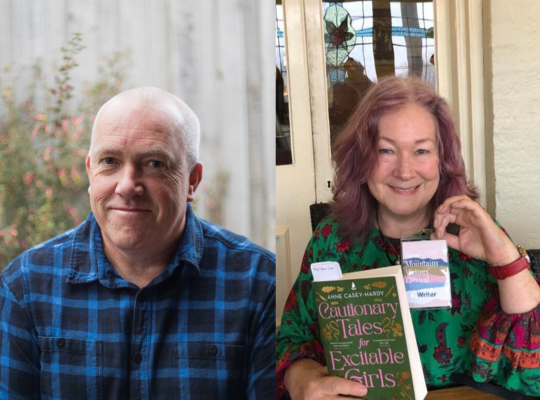
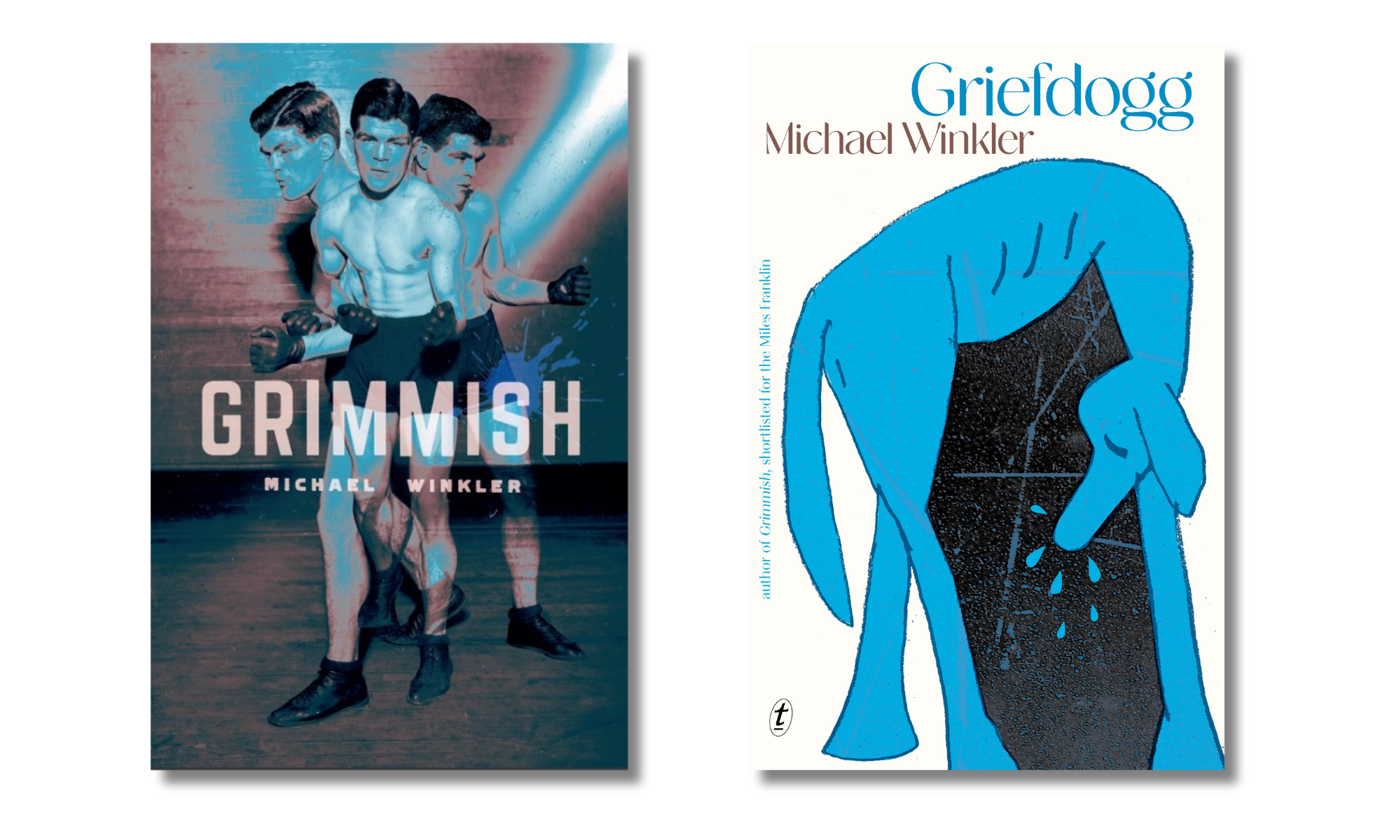
Michael Winkler is a writer of fiction and non-fiction, living in Melbourne on unceded lands of the Wurundjeri people of the Kulin nation. His debut novel Grimmish was shortlisted for the 2022 Miles Franklin Literary Award, the first self-published novel to ever do so. His next novel, Griefdogg, is due for publication by Text Publishing in March.
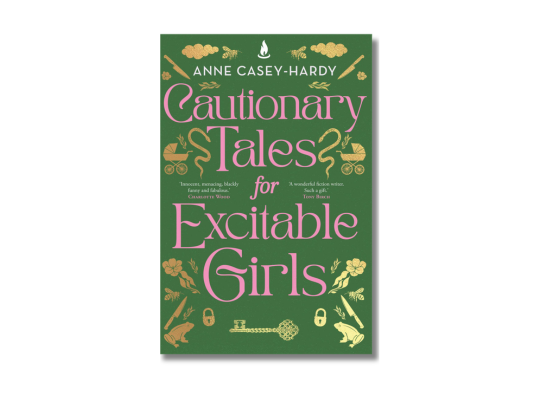
Anne Casey-Hardy is an award-winning fiction writer who lives and writes in Melbourne’s west, on Bunurong land. Her first book, Cautionary Tales for Excitable Girls, was published by Scribner in 2022.
Would you tell us a little about your pathway into writing long-form fiction?
Michael: The pathway has been long! Like so many people I was a writer as soon as I was a reader. From the age of three or four it has always been the thing that means most to me. Fast forward umpteen decades…
I have spent my whole life trying to write novels, and for almost all of that time I failed. I wrote a crime novel, a YA novel, a this novel and a that novel. None were good enough. My lack of success caused me genuine pain. I assumed I’d missed the boat but somehow couldn’t stop trying.
It is well documented that every publisher in the land rejected Grimmish, I self-published it, and on the back of support from generous writers and readers it achieved a level of success. When I finished writing my new novel, Griefdogg, I rang Text Publishing and a week later I heard back from publisher Michael Heyward, who liked the book. This was the happiest experience of my writing life. But I’d been waiting a while.
Anne: I’ve always wanted to write, but initially I preferred poetry. I loved the compression and intensity of it, and the way you could reach into mythology and mysterious metaphors to convey passion. I trained as a librarian, and once I was married, I worked full-time and we soon had a mortgage and then a baby. There wasn’t much room for writing.
I had a near-death experience when our son was born three months premature. Life became entirely serious and that was the end of the person I was. As time went on, I focused on research and became an advocate for extremely premature babies and their families. I wrote for medical journals, including the Lancet, and helped change the way those tiny precarious little beings were regarded and cared for. I gave my whole heart to this while caring for my little son with cerebral palsy, and his traumatised sister, who was two when her world switched overnight from a secure place to a nightmare.
By my fifties, after thirty years of full-time work plus research, I was desperate to find a way to write long-form fiction. I just didn’t know that it would take additional years to become a halfway decent writer.
How did you juggle writing along with other responsibilities? Has this changed at all over time?
Michael: I used to think that when writers congregated they discussed plot structures or syntax. Nup. They discuss money. In enlightened Ireland they now have a Basic Income for the Arts (€325 per week), plus a range of bursaries, grants, loans, residencies and tax exemptions on creative earnings. The recent efflorescence of Irish writing is no accident. Their writers are afforded time to write by reducing the burden of needing to scratch together enough money to live.
In the mid-1990s I earned $1000 for winning the Cosmo Erotic Fiction competition. It was another twenty years until I made an equal or larger sum from a piece of creative writing (when I won the Calibre Essay Prize). If your writing isn’t commercial, it’s hard to make much money at all. I have a partner and children and chose a life of comparative financial stability. Apart from difficult periods of unemployment, I’ve worked more or less full-time. Our kids have left home now, and we live on the money my partner earns, a sacrifice I do not take for granted. I still take on occasional paid work, but for the first time in my life, I can pursue creative writing without restrictions. But, again, this has been a long time coming and a privilege many writers never get.
Anne: I had to outlast the other responsibilities and almost left it too late. I had to finish work and get out of the permanently enraged state of mind that work stress put me in. I had to get some juice into the shrivelled walnut my creative brain had become. A psychologist told me that I’ve survived in life because I’m good at ‘hanging on’. I’m a human barnacle. In order to write the novel that has taken me two years to create, I’ve had no social life, no holidays, no downtime and no skiving off. That’s how I do it. Because what if I die before the novel is finished? I have a ruthless taskmaster in my repertoire of inner selves.
Become a KYD Member
Unlock writing and publishing resources, discounts on writing courses and editorial services, plus exclusive workshops and events.
How did your early career shape your fiction writing?
Michael: I left school when I was fifteen to live and work on a farm, and this experience has more impact on my fiction than any subsequent employment. I returned to do Year 12, but I don’t have a tertiary education. I spent some post-school years unemployed, then had miserable jobs in factories and on building sites.
In my early twenties I started writing freelance pieces for magazines and newspapers. A few were published and a lucky break got me a job in journalism. I was a sportswriter for a while, gave that up, started writing about education, then moved into communications roles. I was good at leaving jobs, not so good at finding them, and as I got older (and without the pesky tertiary degree that HR managers insist upon) my roles became increasingly humble. Good for the ego, still not much grist for writing.
Anne: I had no career in my twenties and was a total hedonist. My career since turning thirty has been as a librarian, where I developed research skills and learned how to organise information. I also learned about grief, rage and madness—always good fuel for a writer.
Has your practice evolved compared to when you first started out writing?
Michael: Not really. I’ve never had any routines. The thing that has changed is confidence and a better understanding of what the reader might want or need.
Anne: I’d hope so. I wrote for years before I was any good. Publishing Cautionary Tales for Excitable Girls gave me confidence in my voice, in the risks I could take and the addictive excitement of writing from a weird and secret place that gave me joy. I learned how to recognise that feeling and go with it. If something I write makes me laugh, I know it’s truthful. I’m speaking the unspeakable and that’s what I’m interested in.
What does a writer in midlife bring to fiction that perhaps a writer in their twenties or thirties can’t?
Michael: ‘Midlife’ is kind. I’m older than that, sadly. TS Eliot wrote ‘The Love Song of J Alfred Prufrock’ at twenty-two. Melville finished Moby Dick at thirty or thirty-one… Wisdom doesn’t necessarily inhere in the aged, as anyone who has spent five minutes looking at boomer Facebook will understand. The only thing I can offer is that I work harder now on my writing than I did when I was younger and more impatient to get pieces out the door.
Anne: Worldly experience, I guess, and the ability to dig into the buried psyche with remorseless intention. A writer in midlife can have more steel, more tenacity and be more compelled to take risks because there’s nothing to lose. It’s do-or-die if you come to writing after a lifetime of delayed desire.
Do you think the Australian publishing industry supports writers of different ages and life experiences?
Michael: If we are talking fiction—particularly the stuff that gets called ‘literary fiction’, but this might apply to genre fiction as well—I think it’s extremely difficult to break out as an older writer. A curious anomaly: every literary festival reveals the existence of an army of enthusiastic older readers, but older emerging authors are uncommon. A blue-chip writer like Helen Garner will have publishers clamouring for their work until the day they die. However, getting a debut book accepted after a certain age is very hard.
In terms of different life experiences, there has been a powerful and overdue push this century to publish non-Anglo writers, especially First Nations authors, but also first- and second-generation migrants. There have also been laudable efforts to increase opportunities for LGBTQIA+ writers. Less work has been done to empower writers who are not tertiary educated and middle- or upper-class. This is one of the reasons I was electrified by Excitable Boy: Essays on Risk by Dominic Gordon, a high-wire feat of creative non-fiction. This is the authentic voice of the sort of person often not afforded a place at the table of Australian literature.
Anne: No.
What, if you had to choose, would you like to see change about Australian publishing?
Michael: I’m rereading my previous answer, and now want to say something opposite: I am not hugely engaged by identity-based fiction. I think the emphasis on the author rather than the work, often for marketing purposes, is miserable. However, publishing is a business. Too many writers whinge about publishers, and it’s usually unfair. People who work in publishing care deeply about reading and writing, and many toil mightily for insufficient pay. It’s not their fault that they are labouring in an industry subject to international economic forces. Most publishers want good books, and all publishers want more readers. But how many books do you see each year that would have been better left as trees? Heaps. I’d like to see a reduction in quantity and a lift in quality, but without government intervention to underpin publishing profitability that is a pipe-dream.
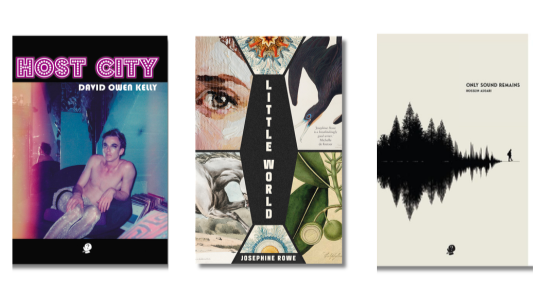
It is both a cliché and a truism that most of the best novels in Australia come from small publishers. As a consequence, very few get the readership they deserve. Here are the first six sitting beside me on my bookshelf: Host City by David Owen Kelly; Exhibition Text by D. Frederick Thomas, Little World by Josephine Rowe; Only Sound Remains by Hossein Asgari; Bird by Adam Morris; Fourteen Ways of Looking by Erin Vincent. We need far more support for all publishers, but especially the indies that take risks and uncover excellence.
Anne: I’d like it to be less faddish, for the books published to have the expectation of a longer life. I’d like to stop the churning that makes us all so anxious all the time. And I’d love publishers to stay with their authors and not reject writers whose first book wasn’t a bestseller.
On my wish list as a writer with a second book about to test the market (or not), I’d love to have training in successful promotion, how to be interviewed, how to appeal to festival directors, how to be good with social media, how to have a winning persona. Some writers seem to do this effortlessly, but I know it’s because they work hard to make all those connections and be shiny. It is as much a skill as writing, and we all need both. If you’re an introvert to start with and become a hermit in order to write, how do you then become a warm and engaging author on the circuit, if you’re lucky enough to be published? I would like this training to be more readily available.
What advice do you have to writers who aren’t in the full flush of youth but burn to be published?
Michael: I have compassion and empathy. If you truly burn to be published and you can’t break through, it can feel like your life’s purpose has been thwarted. I’m not being glib. It is that profound, that painful, that existential. Yes, there is self-publishing, and I encourage people to consider it, but distribution and connecting with potential readers is desperately hard. If you write to be read, however, then anything is better than nothing. How many readers are enough? I hope for one great reader—because for me, my writing doesn’t have a life until it has been read—and then progress from there.
I have no other advice as such, but I can share something that I’ve discovered about myself. Whenever my writing falls short, which is almost all of the time, it is because I have not risked or dared enough. I fall short through timidity and regressing to the quotidian. When I am willing to go further, I usually get closer to the target.
Anne: We joke that our family’s motto is never give up and never give in, but it has a basis in truth. We have all learned how to stay alive. So, staying alive would be my first piece of advice.
Find a writer whose work you admire, who is exceptional in how they write, and see if they are running courses, workshops or mentoring programs that you could join. The turning point for me was discovering Tegan Bennett Daylight’s Six Bedrooms. I then had a chance to do a short story focus week with her, during which I wrote two stories that both went on to win prizes. I am so lucky to have found her.
Read a lot and analyse what it is that makes that piece of writing unique. Take risks because you don’t have time on your side. Find a writing group to exchange critiques if you can. Learn to give good feedback if you can. Your chances of being published will be better if your voice is distinctive. Write about the forbidden. Find the things in you that make you afraid and write about them.
If you feel like you’ve given it your all, and you’d rather spend your life differently, at least for a while, it’s your call. You don’t owe anyone anything. It doesn’t mean your writing isn’t good.
Do you have any favourite writers who had an unconventional pathway to publication?
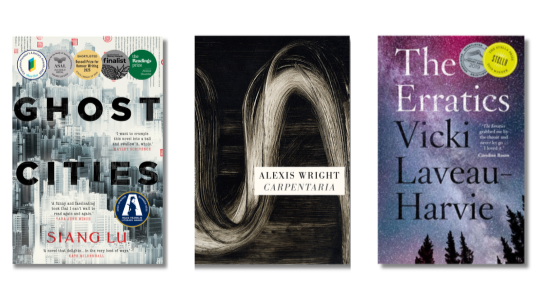
Michael: I thought there would be heaps, but there aren’t. Alexis Wright. She had a whole life before Carpentaria was published. It wasn’t her first book, or even her first novel, but she was a little-known fifty-something author, and it was a breakthrough—not just for her but for world literature. While undertaking meaningful work in the field over decades, Alexis evidently accumulated knowledge and ideas. And then she dared. She was in her seventies when Praiseworthy came out, the most shockingly avant-garde Australian novel in living memory. It has a heft that can’t be bought but has to be earned. I would like her to win the Nobel.
Anne: Michael Winkler is a legend. And according to the legend, Michael’s novel Grimmish was unanimously rejected by the usual suspects and consequently self-published. In this form, it came to the attention of Helen Garner, whose subsequent endorsement included: ‘Grimmish meets a need I didn’t even know I had.’
Siang Lu’s book Ghost Cities was notoriously rejected two hundred times, both in Australia and overseas, before being picked up by UQP and winning the 2025 Miles Franklin Award. Who knew that many publishers even existed?
I was on a panel with Jessica Au at Brisbane Writers Festival. She said it had taken her ten years to write her second book Cold Enough for Snow, which is novella-length. She took incredible care with it, and I was struck by her patience. It paid off. People loved the book and didn’t wish it was longer. Good writing takes time, which feels scarce when, for whatever reason, you don’t get started writing until later in life.
Vicki Laveau Harvie’s memoir The Erratics is a wildly humorous, heartfelt and recognisably truthful work. It was her first book, which fell out of print before winning the 2019 Stella Prize and being consequently reissued by a major publisher, something she describes as a fairytale. She was seventy-five when she won the Stella, and it almost didn’t happen, despite being brilliant.
I’d love to see a prize for debut writers over sixty, and a different prize for carers and volunteers who give so much of their lives to others before scrounging the time to do something for themselves. Publishers are further than ever from recognising this kind of voice which doesn’t ever count as a category in itself.
 Thanks for reading the latest instalment of So You Want to Write. Remember, if you want to be on the list to receive these emails in the future, you can become a member for less than $5 per month. Membership also gives you access to our short fiction and prize submissions.
Become a KYD Member
Unlock writing and publishing resources, discounts on writing courses and editorial services, plus exclusive workshops and events.