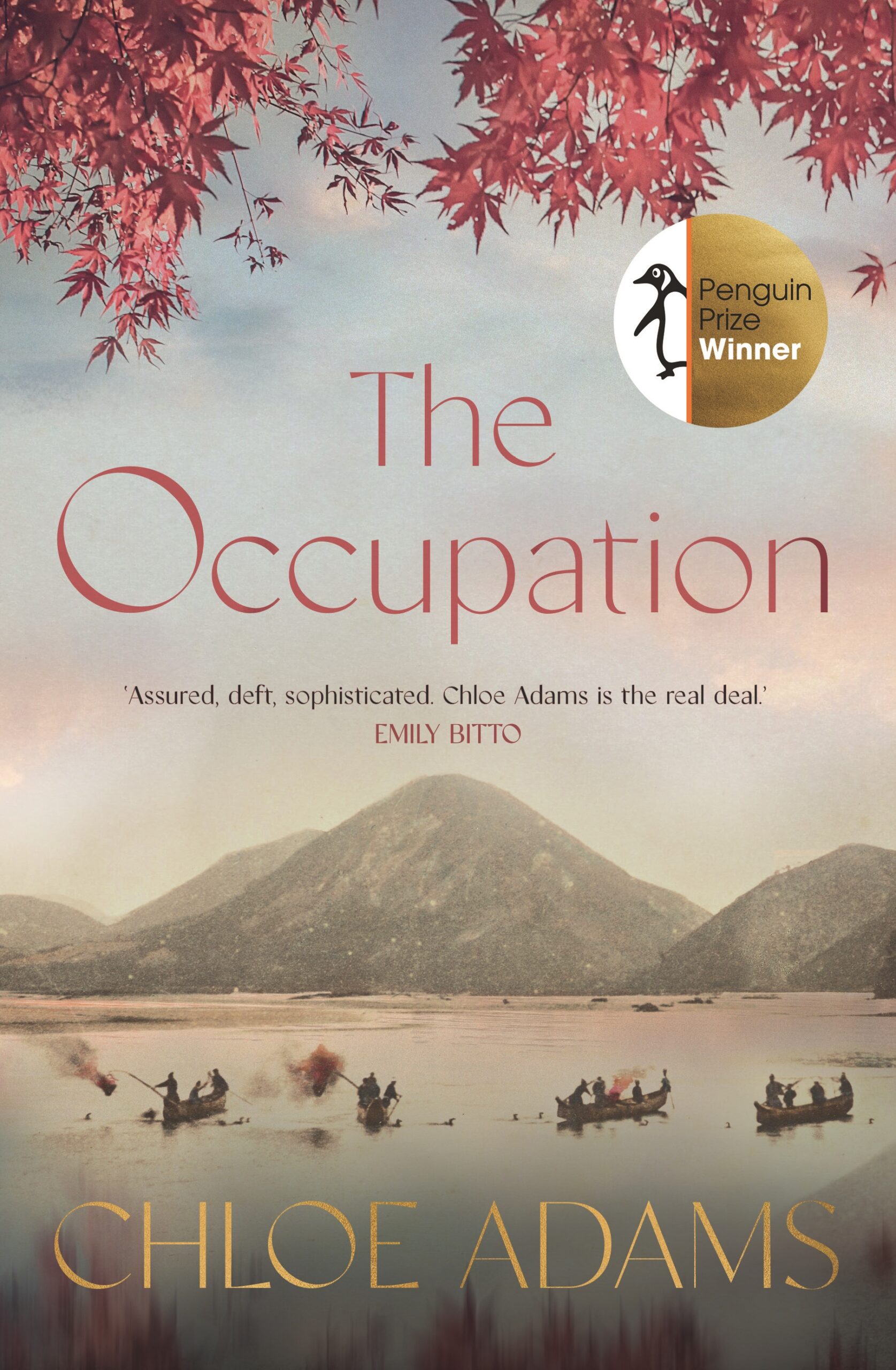
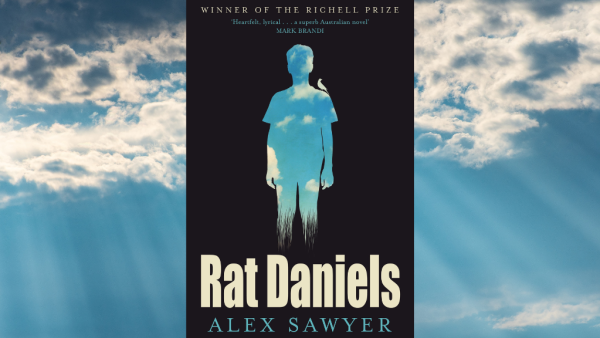
Firstly, congratulations on winning the Penguin Literary Prize in 2024! Can you tell us about how it shaped your journey to publication?
Thank you! It’s been the most incredible experience. A decade after I made the decision to commit myself fully to fiction writing, this opportunity finally emerged. Apart from the obvious and substantial external rewards, on a personal, almost existential level, it was affirming. Finally, I could say I was a writer without feeling the need to offer caveats, apologies or nonchalant throwaways (not that I recommend doing that!).
Receiving feedback from Penguin publisher, Meredith [Curnow], and editor, Jojo [Johannes Jakob], has been utterly wonderful. Like most emerging writers, I’d spent a lot of time writing alone, receiving only small snippets of feedback here and there, wondering if I was even doing it right. In contrast, the editing process offered by Penguin gave me the opportunity to really see my work through fresh eyes and explore thematic elements that existed in the text more deeply. The whole Penguin team has been exceptionally supportive and generous, and I highly recommend that unpublished writers consider applying for the prize.
Inspired by true events and your grandmother’s experience working in the Allied Occupation of Japan, what does sharing this story mean to you?
It’s hard to articulate just how this story has changed me, professionally and personally. The experience of discovering a part of my own familial identity, and certainly a huge part of my mother’s identity, has been at times unsettling, fascinating and devastating. I know this might sound a bit woo-woo, but when I visited Japan for research purposes, I began to feel as if I was being guided in some strange and inexplicable way by my grandmother, a woman I met only once as a child. And so, I’m left with an even more unlikely feeling—that this process has healed a small rupture I’d inherited through an adoption that occurred thirty years before I was born.
The book begins in 1949 in Australia with a tense and immediately gripping interaction between two cousins. Did you always know you wanted to start with this interaction or did that decision come later?
That scene in the hotel in Melbourne was the very first scene I wrote for this novel. The idea had been planted by a story my mother had told me, and I began to feel a creative compulsion to imagine it more fully, in all its complexity. Once I had that down, the logical thing became clear—go back and imagine what might have come before. I did play with the idea of that scene coming later, in chronological order, but as the work progressed, it became clearer to me that it should open the novel. Aside from the narrative tension it transmits, I felt very strongly that this book must begin and end in Australia. Even though the bulk of the story takes place in Japan, I felt that the impact of travel can only be truly understood by reflecting on and contrasting it with home. That is, Mary can only begin to understand how she has changed when back in Australia and she sees the dominant cultural with fresh and profoundly changed eyes.
At the end of the book, you say that the story is ‘inherently limited in its view of another culture and should be read with this in mind’. Despite this, it’s clear that a lot of different perspectives have gone into the crafting of this story. Can you tell us about the research involved?
Absolutely—the research was a significant part of bringing this work to the page. I used scholarly research to get started, then moved into old newspaper articles and personal accounts (diaries, letters—including letters written by my grandmother), and finally travelled to the places I was writing about. In all honesty, the research consumed my thoughts for many months, and I found the more I learned, the more I wanted to learn. For example, reading about the occupation of Japan led me to reading about WWII, and that led me to reading about WWI. It’s hard to know when to stop!