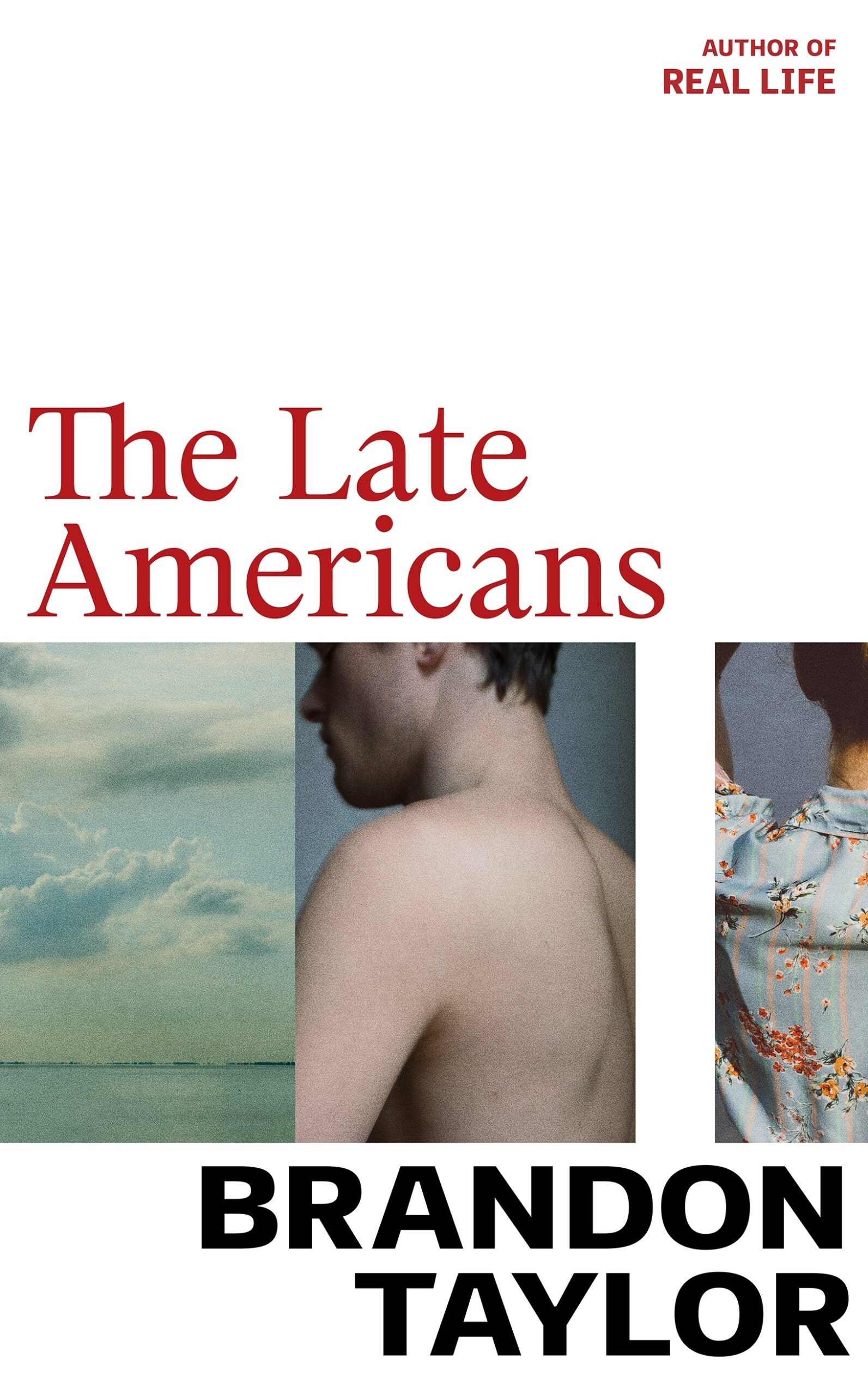
New Critic: Brandon Taylor returns to a university setting in The Late Americans, putting society under a microscope in this subversive exploration of class, race and sex.
24 Jul, 2023
Share This Story
URL has been copied successfully!
Image: Unsplash.
‘Late capitalism’ has become a shorthand critique of the pressures that plague contemporary life. From the precarity of the gig economy to individualistic self-care culture, to say that we are living under advanced capitalism means accepting the encroaching impacts of an economic system designed to commodify everything. Mark Fisher’s Capitalist Realism describes this as a ‘pervasive atmosphere […] acting as a kind of invisible barrier constraining thought and action’. The Late Americans, Brandon Taylor’s new campus novel, riffs on this sentiment, capturing the absurdity of the endless desire towards profit and consumption through the story of art school students clambering for success.
As a genre, the campus novel is enticing, offering a microcosm of societal tensions and clashing value systems in an intensified, insular setting. Power dynamics are at its crux—we can see this in Evelyn Waugh’s Brideshead Revisited (1945), Kerryn Higgs’ All that False Instruction (1975), Donna Tartt’s The Secret History (1992), and, more recently, Diana Reid’s Love & Virtue (2021), novels that each interrogate themes of class, sex and gender.
Some contemporary campus novels have further interrogated these ideas by introducing the intersections of race and class. Zadie Smith does this particularly well in On Beauty (2005), as does Taylor in his Booker Prize-shortlisted Real Life (2020) and short story collection Filthy Animals (2022). Both Smith and Taylor depict Black experiences of the university environment. While On Beauty explores the lives of professors, Taylor’s books are rooted in the student experience set in mid-west America.
As a genre, the campus novel is enticing, offering a microcosm of societal tensions and clashing value systems.
Taylor is well-versed in writing about the intricacies of sex, race, desire, queerness and violence. The Late Americans develops these themes found in his previous work, this time including a comprehensive range of characters of different socioeconomic positions and backgrounds, writing a type of 19th-century style novel that interrogates social issues like class, work, sex and inequality. As in Wharton’s examinations of the upper class, houses appear as an extended metaphor—in The Late Americans, they are ‘stripped by the wind […] crumbling brick; low, dark roof’, signs of wealth disparity and class divisions in modern America. The book resists sentimentality, echoing Dickens’ gritty realism and Austen’s dissection of oppressive structures, presenting an uncomfortable and often violent reality for characters living in a morally complex universe.
The Late Americans comprises a revolving cast of protagonists, students and local ‘townies’—through them Taylor shows how their relationships with each other are constrained by the market and their positionalities heightened in a hostile campus environment. Retired from dance as a result of injury, Ivan chooses to pursue a finance degree, a decision that becomes contentious for the other art students. His relationship with music student Goran is enmeshed in economic and physical violence. Elsewhere, Noah, a mid-western dancer, is in a relationship with his violent landlord, Bert—who also abuses poetry student Seamus by burning a cigarette on his face after having sex.
Each chapter is a sophisticated character study in which we encounter the convincing interior worlds of solipsistic grad students as they navigate class tensions. For example, Goran’s white family’s wealth layers his understanding of race as a Black adoptee, while Seamus’s white working-class background complicates his poetic practice; pressured to write confessional trauma poetry, his classmates critique his ‘villanelles about a young Jesuit at the end of World War I’, insidiously policing his writing. There is also Fyodor, a local mixed-race meat factory worker in a relationship with Timo, a ‘Black Upper Middle Class’ professor absorbed in his family’s downward mobility: ‘but what differentiated this from the regular Upper Middle Class, meaning white, was that there was less money and the money was less durable as a whole.’
Introduced later in the novel, Fatima, a dancer who works at the local cafe, responds to her economic instability with electric, simmering anger. Her dance peers give her ‘a hard time’ for working so many hospitality shifts: ‘They resented the implication that they wanted it less than Fatima because they didn’t have to work for it as hard as she did.’ Perceiving her as a threat, this chasm between Fatima and her wealthier peers reflects wider neoliberal conditions of marketisation and competition that produce irreconcilable class divisions. Such class anxieties leave Fatima with no real choices—regardless of her decisions, her classmates would continue to perceive her with hatred through a zero-sum lens.
The book resists sentimentality, echoing Dickens’ gritty realism and Austen’s dissection of oppressive structures.
Taylor’s depiction of these dynamics leans towards the satirical. When debating barriers to higher education in a bar one evening, a fellow student tells Fatima that ‘people in the arts only come from like, wealthy families, you know? Because it’s hard to be as dedicated as you need to be to the art itself while also like, supporting yourself’. The students accept this inevitability and some even endorse it. Another student adds:
‘But also, like, I think it’s important to have gates. I know, I know.’ He bats his palms at them as if to fend off a horde of protests. ‘But hear me out—like, gates make it hard to enter, right? That is the very function […] But you have to admit, for the betterment of the art, we need practitioners who can give this fucking thing their all, who can be in it for the long haul, and you know, I’m not saying it’s right, some people just…can’t. And we have to acknowledge that.’
These moments capture the illogicality of economic inequality—moral outrage against the class divide and defence of classist gatekeepers are uttered in the same breath. It’s a brilliant manifestation of the subcutaneous tensions between cultural production and inequity—and its consequence on artmaking. Work, sex and art are all exploited under free market conditions and Taylor cleverly weaves cutting commentary through these tenuous relationships. For Fatima, this shows up as palpable anger at the precarious conditions of labour in contrast to her ‘walking trust fund classmates’: ‘She is ‘[i]rritated at the facility of the argument, its shallowness of thought. Here is mere posture, bravado, bluster’. While Fatima’s peers see these conversations as hypothetical, class is a key determiner for working class people, such as who gets to go to art school, who stays and who can pursue artmaking beyond university.
The frictional relationship between art and late capitalism is made clear from the novel’s opening pages, where MFA students are in a seminar setting and a female poet has ‘reversed the title of the Titian painting in order to centre Andromeda’s suffering rather than the heroics of Perseus—rapist, killer, destroyer of men’. In contemporary poetry, the subversion of Greek mythology to explore violence against women has grown so popular as to become a trope. Taylor parodies this as a critique of art’s commodification—art that sells influences art that’s created, leading to derivative and superficial work. The poet is lauded with praise, but the observer, Seamus, is cynical about this feminist revisioning: ‘This wasn’t poetry. This was the aping at poetry in the pursuit of validation […] Tethering their bad ideas to recognised names and hoping someone would call them smart, call them sharp, call them radical and right.’ The novel plays a game with the readers, portraying artists that oscillate between pretentious and authentic, suggesting that readers must consume art—including the text itself—with suspicion as an antidote to the inevitability of absurd commodification.
Taylor also touches on the commodification of trauma narratives (‘She was the kind of poet whose work was chiefly about herself’ and ‘Seamus hated it very much—not because he believed that trauma was fake, but because he didn’t think it necessarily had anything to do with poetry’), proposing artmaking that is less popular and more repulsive. Like the dark grotesquery of Bret Easton Ellis’ work, as in his own campus novel, The Rules of Attraction (1987), and the loosely connected American Psycho (1991), Taylor’s depiction of breathtaking cruelty can be read as a result of consumer capitalism. Shocking violence is everywhere—Bert has the potential to kill the men he has sex with, while women, such as Fatima and Noah’s ‘townie’ neighbour Bea, are threatened by sexual assault from men in their everyday lives.
The frictional relationship between art and late capitalism is made clear from the novel’s opening pages.
Taylor maintains an ethically ambiguous world, which is especially evident in his masterful portrayal of villainous Black and brown characters who are self-centred, hypocritical and manipulative. A striking example of this is the materially wealthy Goran who ‘threw a glass from the kitchen into the wall opposite Ivan’s head’, taunting Ivan for his economic precarity, using financial, emotional and physical abuse to coerce Ivan within the relationship.
As The Late Americans progresses, the style does become syntactically repetitive, and therefore tedious, at times, to read. But this tedium is also resistance to the sharp, brief, minimalist writing that has come to define popular fiction in an attention economy, described in Taylor’s Substack as ‘character vapour’ that ‘contain no lasting structures or anything of real permanence’. The 19th-century novel style works to counteract this, its lack of compression has a meandering effect, replicating the endless drive towards profit in a bleak world. Fisher’s ‘pervasive atmosphere’ has not just ‘constrained thought and action’ in every way possible for the art students, but also limits their options as they are faced with ‘the slow cancellation of the future’.
This milieu is challenged by Taylor as the novel itself becomes a site of defiance. Extraordinary pleasure and visceral horror sit side by side, and complicated human behaviours are difficult to process in one reading. Readers must make sense of a story that defies easy consumption. It is also this uneasiness that produces critical and compelling art objects like The Late Americans.